Comprehensive Guide to Mercury Removal Catalysts: Preventing Liquid Metal Embrittlement and CuS Chemisorption Guard Bed Operations
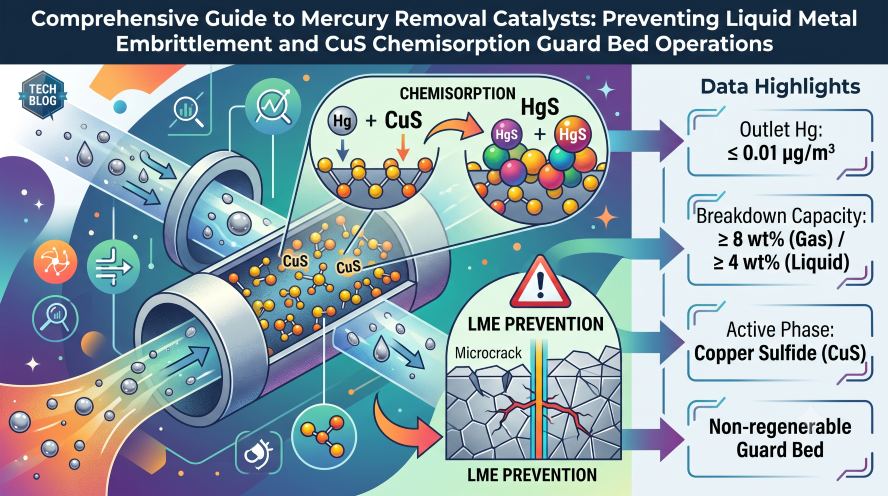
In the global natural gas processing, Liquefied Natural Gas (LNG) production, and petrochemical refining sectors, trace elemental mercury (Hg⁰) represents one of the most insidious and devastating contaminants. Naturally occurring in many subterranean gas and oil reservoirs, mercury concentrations in raw feedstocks can range from a few micrograms per cubic meter to over several thousand micrograms. Even at ultra-low, parts-per-billion (ppb) or parts-per-trillion (ppt) levels, mercury inflicts catastrophic metallurgical damage on plant infrastructure. The most severe threat is Liquid Metal Embrittlement (LME), a phenomenon where elemental mercury amalgamates with the aluminum alloys extensively used in cryogenic heat exchangers (such as LNG cold boxes). This amalgamation rapidly destroys the structural integrity of the aluminum, leading to sudden, catastrophic cracking and massive explosive hazards.
Furthermore, mercury acts as a lethal, permanent poison to the highly sensitive palladium and platinum-based catalysts utilized in downstream hydrogenation and reforming units. To neutralize this multi-million-dollar operational risk, process engineers deploy specialized Mercury Removal Catalysts (often referred to as mercury guard beds) as frontline sacrificial defense systems. This technical guide explores the deep-level chemistry of copper sulfide-based (CuS) mercury adsorbents, analyzes the fluid dynamics affecting capacity, and outlines engineering best practices for maintaining continuous, zero-breakthrough operations.
Key Takeaways
- CuS/Al₂O₃ catalysts use irreversible chemisorption to convert highly toxic elemental mercury (Hg⁰) into stable, insoluble cinnabar (HgS).
- Guard beds are critical in LNG pre-treatment to prevent micro-droplets of mercury from causing catastrophic Liquid Metal Embrittlement (LME) in aluminum cold boxes.
- Gas-phase streams allow deep pore diffusion (yielding ≥ 8 wt% capacity), while liquid-phase streams face higher mass transfer resistance (yielding ≥ 4 wt% capacity).
- These catalysts are strictly sacrificial and non-regenerable; attempting thermal regeneration vaporizes lethal doses of elemental mercury.
The Chemistry of Mercury Removal: Irreversible CuS Chemisorption
Unlike standard molecular sieves that rely on physical adsorption (physisorption) through van der Waals forces, industrial mercury removal operates via a strict, irreversible chemical reaction known as chemisorption. The industry standard for capturing elemental mercury from hydrocarbon streams is the metal sulfide pathway, utilizing high-surface-area gamma-alumina (γ-Al₂O₃) spherical carriers deeply impregnated with active copper sulfide (CuS).
When a mercury-laden gas or liquid stream permeates the macroscopic pore network of the alumina carrier, the elemental mercury vapor diffuses into the mesopores and encounters the highly dispersed CuS crystallites. A rapid, spontaneous solid-state chemical exchange occurs, driven by the exceptionally strong affinity between mercury and sulfur atoms:
Hg⁰ (gas/liquid) + CuS (solid) → HgS (solid) + Cu (solid)
The product of this reaction is mercuric sulfide (HgS), historically known as the mineral cinnabar. Because HgS is an incredibly stable, insoluble, and thermodynamically fixed compound, the captured mercury is permanently locked inside the ceramic backbone of the catalyst bead. This permanent fixation is crucial: it guarantees that even under severe process fluctuations—such as sudden temperature spikes (up to 190°C) or massive pressure swings (up to 5.0 MPa)—the trapped mercury will never desorb or leach back into the purified product stream. The macroscopic spherical structure of the alumina base, featuring a carefully engineered bulk density of 0.85 ± 0.10 kg/L, provides the necessary physical scaffolding to expose the maximum number of CuS active sites to the passing fluid, ensuring the mass transfer zone (MTZ) is kept remarkably short and outlet concentrations are reliably driven down to ≤ 0.01 µg/m³.
Guard Bed Engineering: Gas-Phase vs. Liquid-Phase Dynamics
A critical engineering consideration when deploying CuS/Al₂O₃ mercury removal catalysts is the profound difference in reaction kinetics and breakthrough capacity between gas-phase and liquid-phase hydrocarbon streams. While the chemical equation remains identical, the fluid dynamics fundamentally alter the efficiency of the active site utilization deep within the alumina bead.
In gas-phase applications (such as natural gas sweetening or syngas purification), the fluid viscosity is extremely low. This allows the highly volatile Hg⁰ atoms to diffuse rapidly and deeply into the internal mesoporous channels of the catalyst. As a result, the entire volume of the spherical bead is utilized, allowing high-quality catalysts to achieve a massive stoichiometric breakthrough capacity of ≥ 8.0 wt% mercury loading before the outlet concentration exceeds the 0.01 µg/m³ threshold. Consequently, gas-phase guard beds can process high gas hourly space velocities (GHSV) ranging from 300 h⁻¹ to 3,000 h⁻¹ while still delivering a multi-year service life.
Conversely, in liquid-phase applications (such as treating naphtha, NGLs, or liquid LPG), the higher fluid density and viscosity create substantial liquid film mass transfer resistance. The mercury molecules struggle to penetrate deeply into the core of the catalyst bead, meaning the chemisorption reaction occurs predominantly in the outer concentric layers of the alumina sphere. This localized saturation phenomenon limits the overall effective breakthrough capacity to ≥ 4.0 wt%. To compensate for this slower diffusion rate, liquid-phase reactors must be engineered with strictly controlled liquid hourly space velocities (LHSV), typically constrained between 2 h⁻¹ and 10 h⁻¹. Furthermore, selecting a smaller catalyst particle size (e.g., Φ 1.4–2.8 mm instead of 2.4–4.0 mm) is often recommended for liquid streams to maximize the external geometric surface area and shorten the diffusion path.
Critical Application Scenarios in Modern Petrochemicals
The deployment of mercury removal catalysts is non-negotiable in several highly specific, severe-service industrial environments where the cost of failure is catastrophic:
- LNG Pre-Treatment and Cryogenic Cold Boxes: The most critical application globally. Before natural gas enters the main cryogenic heat exchanger (MCHE) to be cooled to -162°C, it must be completely stripped of mercury. If even micro-droplets of mercury reach the brazed aluminum heat exchangers, Liquid Metal Embrittlement (LME) will propagate cracks through the aluminum matrices within hours, causing massive gas leaks, explosive risks, and requiring hundreds of millions of dollars in equipment replacement. CuS guard beds placed downstream of the dehydration units ensure the gas entering the cold box contains ≤ 0.01 µg/m³ of mercury, acting as the ultimate insurance policy for LNG mega-trains.
- Ethylene and Propylene Cracker Protection: Light liquid hydrocarbons (like naphtha and LPG) fed into steam cracking furnaces often carry trace organic and elemental mercury. If this mercury passes through the furnace, it concentrates in the cracked gas and aggressively attacks the impellers of the cracked gas compressors, leading to severe vibrational imbalance. Furthermore, it permanently poisons the highly expensive palladium (Pd) catalysts used in the downstream acetylene and diene selective hydrogenation units. Liquid-phase mercury guard beds (LHSV 2–10 h⁻¹) are strategically placed to scrub the feedstocks before cracking occurs.
- Coal-to-Chemicals (CTC) Synthesis Gas: Syngas derived from coal gasification contains significant levels of heavy metals. Copper-zinc-based catalysts used for synthesizing methanol and downstream derivatives are highly susceptible to mercury poisoning. High-temperature mercury guard beds (operating up to 190°C) are deployed to polish the syngas, ensuring prolonged life for the synthesis loop inventory.
Guard Bed Replacement and Safe Disposal Protocols
Unlike physical molecular sieves (which utilize thermal swing regeneration to drive off moisture), a CuS/Al₂O₃ mercury removal catalyst facilitates a permanent, non-reversible chemical transformation. It is fundamentally impossible to "regenerate" this catalyst within the plant environment. Attempting to apply a high-temperature regeneration sweep gas (exceeding 250°C) would induce the thermal decomposition of the trapped mercuric sulfide (HgS). This would instantly vaporize massive, highly concentrated, and lethal doses of elemental mercury gas directly into the regeneration circuit and potentially the atmosphere, triggering a catastrophic Health, Safety, and Environmental (HSE) crisis.
Therefore, mercury guard beds are designed exclusively as sacrificial, non-regenerable units. Operators must monitor the reactor effluent using continuous mercury vapor analyzers or routine gold-film sensor sampling. Once the bed reaches its terminal capacity (≥ 8.0 wt% for gas, ≥ 4.0 wt% for liquid) and the outlet concentration begins to creep above the ≤ 0.01 µg/m³ limit, the vessel is bypassed and isolated.
Because the spent catalyst securely encapsulates the highly toxic mercury within an insoluble solid mineral matrix, it prevents immediate environmental leaching. However, the unloading process must be conducted by specialized hazardous material contractors using vacuum extraction systems under strict respiratory protection protocols. The spent spherical beads are then securely drummed and shipped to certified environmental processing facilities, where the mercury is either safely recovered via specialized retort roasting or permanently sequestered in hazardous waste landfills.
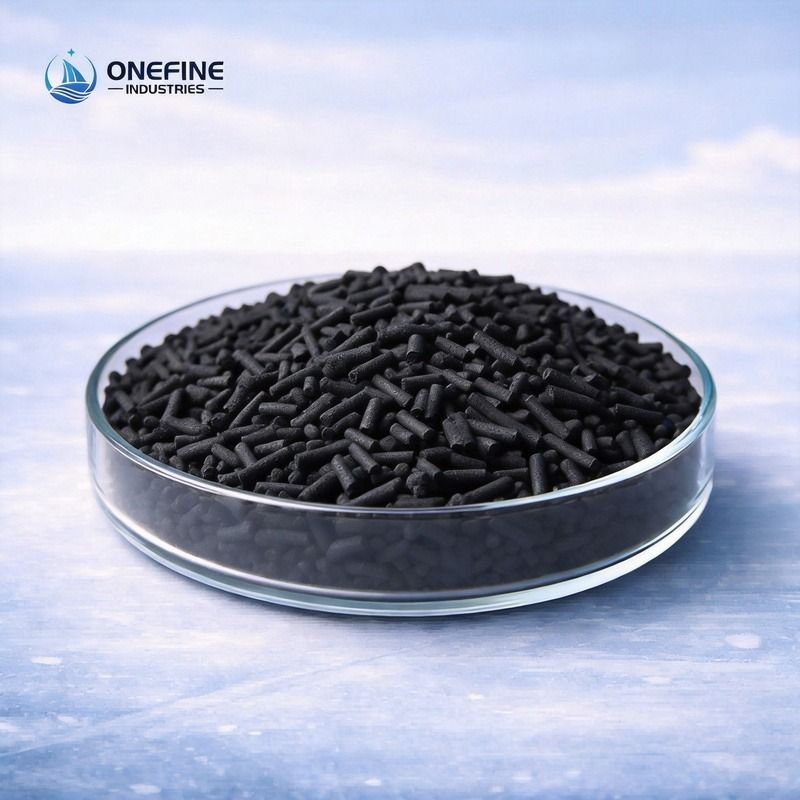
Recommended Products from Sorbsieve
Sorbsieve Mercury Removal Catalyst (Small Bead Variant: Φ 1.4-2.8mm) Engineered for liquid-phase hydrocarbon streams (NGLs, LPG, Naphtha) where fluid viscosity hinders internal diffusion. The smaller bead diameter drastically shortens the mass transfer zone, ensuring a rigorous ≥ 4.0 wt% capacity at an LHSV of 2–10 h⁻¹ while maintaining a high crush strength of ≥ 50 N per particle.
Sorbsieve Mercury Removal Catalyst (Standard Bead Variant: Φ 2.4-4.0mm) The industry standard for high-velocity natural gas and syngas purification. Provides exceptional bed void fractions to minimize pressure drop at high flow rates (GHSV 300–3000 h⁻¹), delivering a massive gas-phase breakthrough capacity of ≥ 8.0 wt% to protect LNG cold boxes for multi-year runs.
FAQ
Q1: Why can't we use standard sulfur-impregnated activated carbon for industrial liquid-phase mercury removal? While sulfurized activated carbon is cheap, it suffers from a fatal flaw known as capillary condensation. If liquid hydrocarbons or heavy condensates are present, they rapidly flood the micropores of the carbon, instantly blinding the active sulfur sites and dropping mercury removal efficiency to zero. Our CuS/Al₂O₃ catalyst utilizes a robust alumina ceramic carrier that is highly resistant to liquid flooding, maintains aggressive chemisorption in dense liquid phases, and possesses vastly superior mechanical crush strength (≥ 50 N/particle) compared to fragile carbon dust.
Q2: Does the presence of hydrogen sulfide (H₂S) or moisture in the feed gas harm the mercury removal catalyst? No. In fact, trace background hydrogen sulfide (H₂S) can actually be beneficial, as it helps maintain the active copper sites in a fully sulfided (CuS) state over prolonged multi-year campaigns. Furthermore, unlike standard activated alumina which acts as a desiccant, this specialized CuS formulation does not preferentially co-adsorb water to the detriment of mercury, meaning it maintains its ≥ 8.0 wt% capacity even in fully water-saturated natural gas streams.
Q3: What dictates the upper operating temperature limit of 190°C? The 190°C thermal ceiling is governed by the chemical stability of the copper sulfide (CuS) active phase and the resulting cinnabar (HgS) product. Operating consistently above 190°C risks the thermal degradation of the active sulfide sites and increases the vapor pressure of the captured heavy metals, which can lead to premature mercury desorption (slip) into the purified product. Maintaining operations between ambient and 190°C ensures the chemical bonds remain permanently fixed.
Q4: How do I know when the mercury guard bed is completely exhausted? Because there is no thermal profile (temperature exotherm) to track like in some catalytic reactions, exhaustion is monitored purely via analytical effluent sampling. Operators use online atomic absorption analyzers or offline sampling bags to track the outlet. Once the mercury slip consistently trends above the guaranteed ≤ 0.01 µg/m³ threshold, the MTZ (mass transfer zone) has reached the bottom of the bed, indicating the stoichiometric capacity has been exhausted and complete bed replacement is required.
Looking for Bulk Supply of Mercury Removal Catalyst?
Sorbsieve is a trusted bulk supplier of Mercury Removal Catalyst and complete industrial catalysts, serving industrial buyers across the Middle East.
We provide:
- ✅ Container-level supply (20'GP / 40'GP / 40'HQ)
- ✅ Full documentation (COA / TDS / SDS / COO)
- ✅ Multiple packaging options
- ✅ Technical support for Mercury Removal Catalyst selection and system optimization
- ✅ Fast quote response for industrial inquiries
Contact our team for bulk pricing, product samples, and technical consultation.
Related Reading
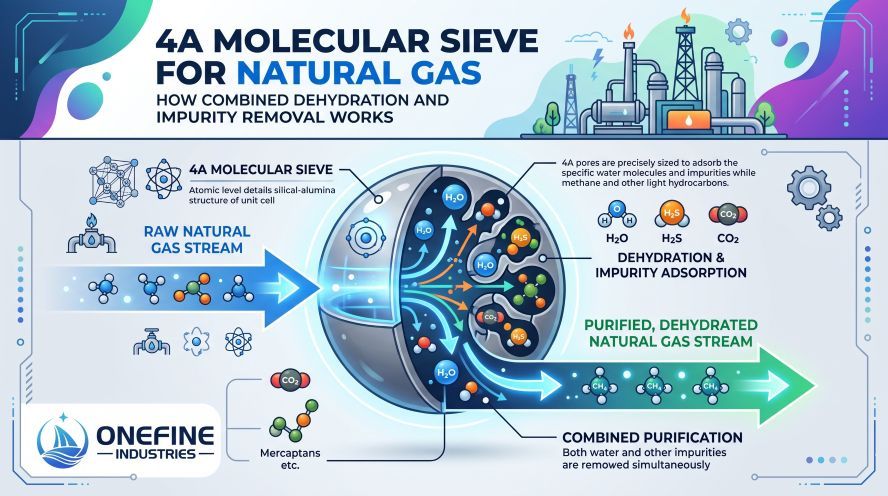
4A Molecular Sieve for Natural Gas: How Combined Dehydration and Impurity Removal Works
4A molecular sieve can dry natural gas and pull moderate CO₂/H₂S out of the same stream in one bed — how its larger pore enables that dual role, where it fits in the treatment train, and when 3A is the better call instead.
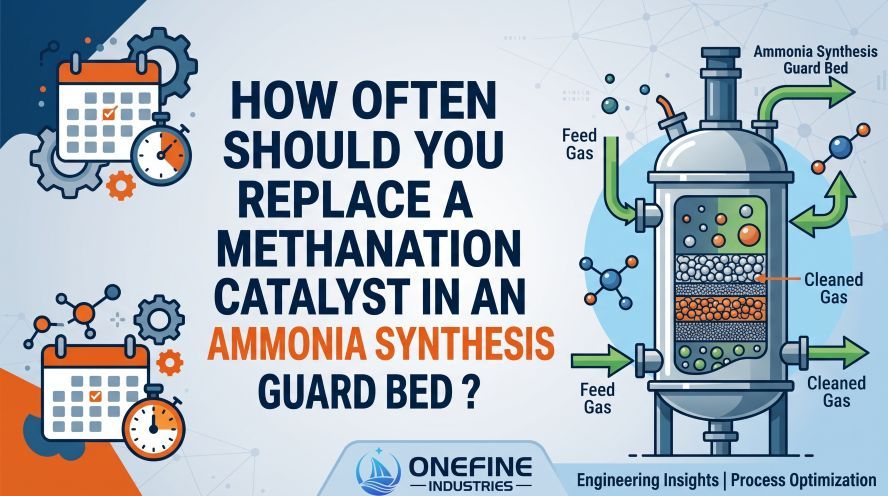
How Often Should You Replace a Methanation Catalyst in an Ammonia Synthesis Guard Bed?
There's no fixed replacement interval for a methanation catalyst — service life depends almost entirely on how well the upstream desulfurization train protects it. Here's how to read the real warning signs.
How Do You Know When to Replace an Ultra-Precision Desulfurization Catalyst?
Four real warning signs — total sulfur creep, falling COS conversion, rising pressure drop, and downstream poisoning — that tell you an Ultra-Precision Desulfurization Catalyst bed needs replacing.