Comprehensive Guide to Dehydrogenation Catalysts: Noble Metal Oxidation, Low-Silica Carriers, and Urea Synthesis Safety
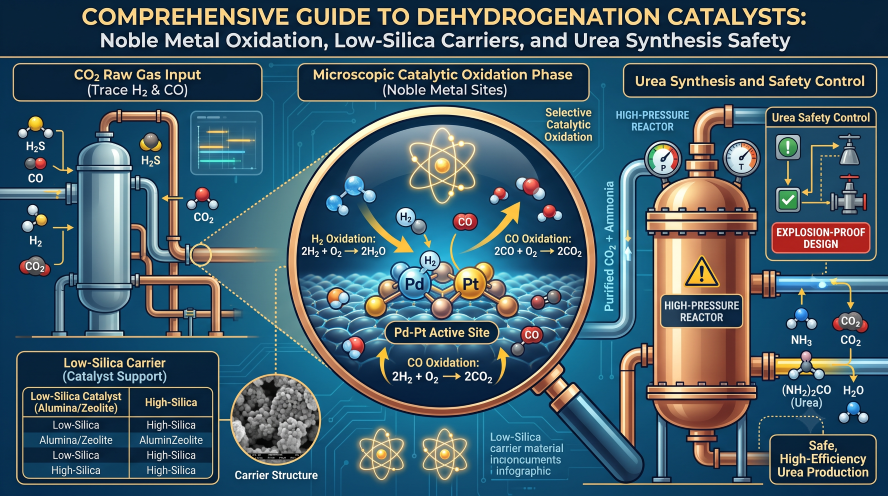
In large-scale ammonia and urea synthesis complexes, maintaining strict control over trace combustible gases is an absolute operational mandate. The carbon dioxide feedstock required for urea production is routed directly from the upstream ammonia plant's syngas decarbonization unit, and this raw CO2 stream inevitably carries over trace hydrogen and carbon monoxide. At the same time, to protect the urea reactor's stainless steel metallurgy from corrosive liquid carbamate intermediates, operators continuously inject a precise micro-dose of oxygen to maintain a passive oxide barrier on the reactor walls.
Put those two facts together and you have a problem: if the trace hydrogen and carbon monoxide aren't eliminated first, they mix with the passivation oxygen inside the urea loop under extreme pressure and temperature — a deflagration or explosion hazard. This guide walks through how a noble metal dehydrogenation catalyst (Deoxo guard bed) neutralizes that risk, why the carrier chemistry matters as much as the active metal, and what actually causes these beds to fail.
Key Takeaways
- Dehydrogenation (Deoxo) catalysts prevent explosive hazards in urea synthesis by combusting trace H2 and CO in the CO2 feedstock before they mix with passivation oxygen in the high-pressure loop.
- A low-silica, low-sodium alumina carrier is essential to maintain surface neutrality, preventing acidic side reactions like hydrocarbon cracking or CO methanation.
- The catalyst relies on highly dispersed noble metals (Palladium/Platinum) housed in a hierarchical macro-porous structure to support extreme gas space velocities without diffusion limits.
- The guard bed fails irreversibly from thermal sintering during a hydrogen spike, or from chemical poisoning by trace sulfur, halogens, or heavy metals blinding the active sites.
Why the Carrier Chemistry Matters as Much as the Metal
The core functional capability relies on highly dispersed noble metal crystallites — most commonly Palladium or Platinum — supported on an engineered ceramic matrix. When the contaminated CO2 or syngas stream passes through the bed, the noble metals lower the activation energy needed to combust trace hydrogen and carbon monoxide in the presence of oxygen. Full temperature, pressure, and space-velocity ranges are on the Dehydrogenation Catalyst product page.
What's less obvious is that the metal alone doesn't make the catalyst work reliably. Standard activated alumina carries measurable sodium and silica impurities left over from the bauxite refining process. Those impurities create concentrated acid sites (from silica) and basic sites (from sodium) across the pore surfaces — and in complex hydrocarbon or syngas streams, those sites trigger unwanted side reactions like CO methanation or acidic cracking of trace hydrocarbons, which leads to carbon deposition inside the pores. A catalyst built on an ordinary alumina carrier can look fine on paper and still gradually coke up in service.
To avoid this, the carrier here is built from an ultra-purified, low-silica and low-sodium pseudo-boehmite precursor, giving the calcined gamma-alumina a chemically neutral surface. That neutrality is what forces essentially all of the trace combustibles into the intended oxidation pathway instead of side reactions — it's a carrier-chemistry decision, not a metal-loading decision, and it's the detail that separates a bed that runs clean for years from one that quietly cokes.
Extreme Space Velocities Change What "Good Diffusion" Means
Because this is an in-line safety vessel, it has to process the entire volume of CO2 or syngas the upstream plant generates without becoming a bottleneck — which pushes gas hourly space velocities far higher than most guard beds see. At those velocities, a standard micro-porous adsorbent would hit severe Knudsen diffusion limits, where gas molecules simply can't penetrate the pellet core fast enough and unreacted H2 slips downstream.
The carrier's hierarchical macro-porous and meso-porous architecture is the answer: wide macropores act as diffusion highways that get the high-velocity gas stream to the noble metal crystallites housed in the mesopores almost instantly. That's what allows complete combustion even at the top of the design space-velocity range, and at relatively low initiation temperatures. Exact GHSV figures and mechanical specs (crush strength, bead size) are listed on the product page.
What Actually Kills This Catalyst
Unlike physical molecular sieves or zinc oxide scavengers, this catalyst isn't consumed by the reaction it performs — the noble metal sites just facilitate electron transfer. That means failure, when it happens, comes from one of two distinct and irreversible pathways rather than gradual saturation.
Thermal sintering. Hydrogen combustion is intensely exothermic. If a process upset causes a sudden spike in inlet H2 concentration, the resulting temperature surge can push the localized pellet temperature past the catalyst's upper thermal limit. Above that point, the nano-scale noble metal crystallites begin to migrate across the alumina surface and fuse together — a process called Ostwald ripening — which permanently shrinks the active metallic surface area.
Chemical poisoning. Noble metals have an extreme chemical affinity for volatile sulfur compounds, halogens, and heavy metals like arsenic or lead. If an upstream desulfurization unit fails and even ppb-levels of H2S reach the bed, the sulfur aggressively chemisorbs onto the Palladium or Platinum sites, forming stable, catalytically inert metal sulfides. This kind of poisoning completely blinds the active sites and cannot be reversed through in-situ steaming or hot nitrogen purging — the bed has to be replaced.
Recommended Products from Sorbsieve
Palladium Catalyst for Hydrogenation (Pd/Al2O3) — A high-performance palladium-on-alumina catalyst for industrial hydrogenation reactions, available in 0.1–2% Pd loading. Built for a different reaction direction than this Deoxo catalyst — worth knowing about if your site also runs hydrogenation steps elsewhere in the process.
Activated Alumina for Purification — High-performance γ-Al2O3 adsorbent and desiccant for industrial gas and liquid drying, water defluoridation, and general purification. Fully thermally regenerable, unlike the sacrificial noble-metal catalyst covered in this guide.
FAQ
Q1: Is the dehydrogenation catalyst itself vulnerable to the same poisons it's protecting downstream units from?
Yes — and this is worth planning around. The noble metal active sites are just as sensitive to sulfur, halogens, and heavy metals as the expensive synthesis catalysts downstream that this bed is meant to protect. In practice, that means the dehydrogenation catalyst is effectively the first line of defense and the first thing to take the hit if upstream desulfurization or chloride removal fails. Sizing and monitoring the upstream protection train matters as much as the dehydrogenation bed itself.
Q2: Is the oxygen used for hydrogen combustion the same oxygen injected for urea reactor passivation?
No — these are two separate oxygen doses serving two different purposes at two different points in the process. The oxygen combusted by this catalyst is dosed specifically to react stoichiometrically with the trace H2 and CO in the incoming CO2 feed, upstream of the urea reactor. The passivation oxygen is injected separately, inside the urea reactor itself, to maintain the protective oxide layer on the stainless steel. Conflating the two doses — or under-dosing the combustion-stage oxygen because "there's already oxygen in the loop" — is a common engineering mistake worth flagging to your process team.
Q3: What early warning signs indicate the catalyst is approaching end of life before a hard breakthrough?
Because failure here is either sintering or poisoning rather than gradual saturation, the warning signs are process-side rather than a slow capacity countdown. A creeping rise in outlet H2 or CO at otherwise stable feed conditions, combined with a known upstream event (a desulfurization upset, a temperature excursion, or a change in feed source), is the clearest signal. Unlike a sacrificial scavenger with a predictable capacity curve, this catalyst tends to perform at full efficiency right up until a specific triggering event causes a step-change in performance — which is why upstream monitoring matters more than tracking cumulative throughput.
Q4: Can this catalyst be used to remove trace hydrogen from streams other than urea CO2 feed?
Yes. While urea synthesis CO2 purification is the most common application, the same noble-metal combustion mechanism applies anywhere trace H2, CO, or combustible hydrocarbons need to be eliminated from a gas stream — cryogenic air separation polishing, synthesis gas purification ahead of oxo-alcohol or acetic acid units, and pre-treatment of gas feeds for semiconductor manufacturing are all established uses. The underlying chemistry doesn't change; what changes is the specific contaminant being targeted and the oxygen dosing strategy.
Looking for Bulk Supply of Dehydrogenation Catalysts?
Sorbsieve is a trusted global bulk supplier of molecular sieves, activated alumina, and industrial catalysts. We serve industrial buyers across the Middle East and worldwide with reliable supply, full documentation (COA/TDS/SDS), and container shipping support.
We provide:
- ✅ Container-level supply (20'GP / 40'GP / 40'HQ)
- ✅ Full documentation (COA / TDS / SDS / COO)
- ✅ Multiple packaging options, including custom packaging and private labeling
- ✅ Technical support for catalyst selection and system optimization
- ✅ Fast quote response for industrial inquiries
Contact our team for bulk pricing, product samples, and technical consultation.
Related Reading
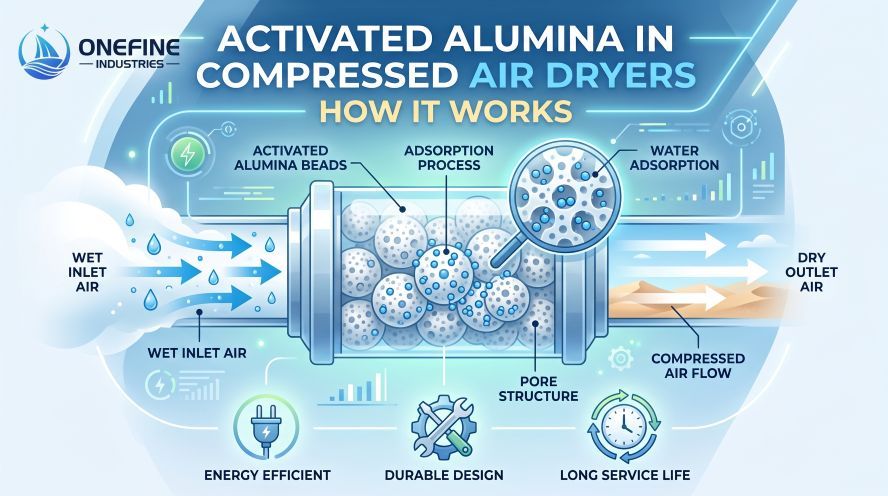
Activated Alumina in Compressed Air Dryers: How It Works
How activated alumina serves as the primary desiccant in heat-reactivated and heatless compressed air dryers, and when it's layered with molecular sieve for deeper dehydration.
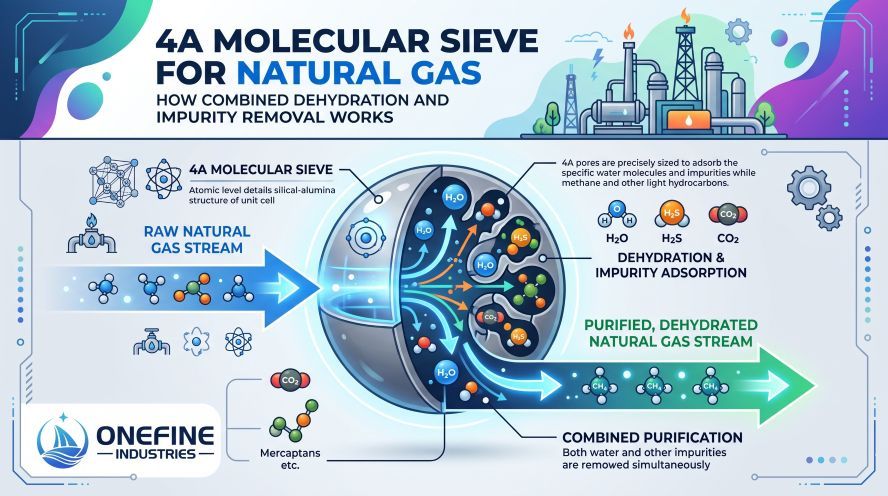
4A Molecular Sieve for Natural Gas: How Combined Dehydration and Impurity Removal Works
4A molecular sieve can dry natural gas and pull moderate CO₂/H₂S out of the same stream in one bed — how its larger pore enables that dual role, where it fits in the treatment train, and when 3A is the better call instead.
How Often Should You Replace a Methanation Catalyst in an Ammonia Synthesis Guard Bed?
There's no fixed replacement interval for a methanation catalyst — service life depends almost entirely on how well the upstream desulfurization train protects it. Here's how to read the real warning signs.