What Happens If You Skip CD Adsorbent and Go Straight from COS Removal to Polymerization?
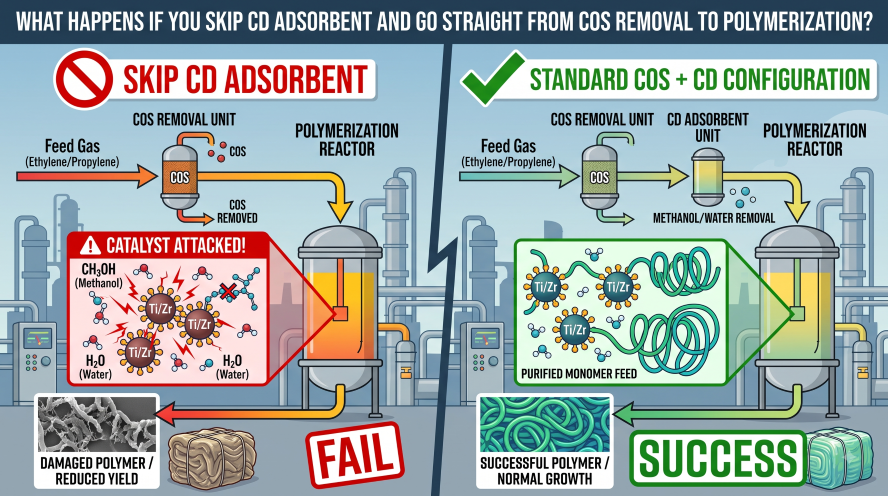
In modern olefin purification trains — for polymer-grade ethylene, propylene, and similar monomer streams — impurity removal is typically a two-stage process. The stream first passes through a COS Adsorbent bed to remove sulfur species, then through a CD Adsorbent bed to remove polar oxygenates and moisture, before finally entering the polymerization reactor loop.
A question plant operators sometimes ask when looking to cut capital cost or reduce bed pressure drop is: "Can we skip the CD adsorbent bed and route the effluent straight from COS removal into the polymerization loop?"
The short answer is no. Skipping the CD adsorbent stage risks catalyst poisoning, reactor fouling, and costly production downtime. This guide explains why the two beds handle fundamentally different classes of contaminants, and what happens when the second one is left out.
Key Takeaways
- COS adsorbents are engineered strictly for sulfur species and cannot capture bulky polar oxygenates or moisture.
- Bypassing the CD adsorbent stage allows oxygenates (alcohols, ethers) and moisture to behave as strong Lewis bases, irreversibly bonding to active metal centers.
- Poisoned polymerization catalysts lead to reactor fouling, loss of polymer particle morphology, and costly unplanned production shutdowns.
The Blind Spot of a COS Adsorbent Bed
- COS Adsorbent is engineered to chemically trap sulfur species — carbonyl sulfide (COS), hydrogen sulfide (H₂S) — and trace CO₂, down to very low levels.
- Its pore structure and surface chemistry are optimized for these acidic, sulfur-bearing molecules. They are not designed to capture bulkier oxygenated organics or polar compounds.
This is where a CD Adsorbent bed serves as a distinct and necessary second stage. It is an alumina-based adsorbent formulated with surface chemistry suited to chemisorbing a broad range of polar compounds and oxygenates that pass through a COS bed unaffected, including:
- Alcohols — methanol, ethanol, and similar species
- Ethers & ketones — such as MTBE, dimethyl ether, acetone
- Aldehydes and trace peroxides
- Nitrogen compounds — ammonia, amines, nitriles
- Residual moisture — one of the most damaging catalyst poisons in polymer production
If the CD adsorbent stage is skipped, this full load of polar species and moisture is carried directly into the polymerization reactor.
For deeper technical background on each stage individually, see our companion guides: What Is a COS Adsorbent? COS, CS2 & H2S Removal Explained and What Is a CD Adsorbent? Oxygenate & Water Removal Explained
How Oxygenates and Moisture Poison Polymerization Catalysts
Polymerization catalysts — including Ziegler-Natta and metallocene systems — rely on highly electrophilic active metal centers to coordinate incoming olefin monomers and build the polymer chain.
Oxygenates and moisture behave as strong Lewis bases. If allowed past the CD adsorbent stage, they can bond irreversibly to these active metal sites, blocking the catalyst from engaging with monomer and halting polymer chain growth.
Even trace levels of these contaminants can noticeably reduce catalyst activity. To compensate, operators often need to increase catalyst injection rates to hold production targets — raising operating cost and potentially affecting final polymer quality.
Beyond the active metal center itself, many polymerization systems also depend on an alkylaluminum cocatalyst to activate the catalyst. These cocatalysts react readily with moisture and alcohols, consuming the cocatalyst and disrupting the reaction chemistry the system depends on for stable operation.
Operational Consequences: Fouling, Sheeting, and Downtime
Poisoning does not occur evenly across the reactor. Uneven catalyst activity can lead to:
- Loss of polymer particle morphology — chains become sticky and irregular rather than forming clean, spherical particles
- Reactor fouling and sheeting — agglomerated polymer adhering to reactor walls and internal surfaces, disrupting heat transfer
- Off-spec production — polymer with inconsistent molecular weight distribution or degraded mechanical properties, which can fail quality control
In more severe cases, poor heat transfer from fouling can lead to localized hot spots and unplanned reactor shutdowns for cleaning — all of which translate into real production losses.
Recommended Products from Sorbsieve
CD Adsorbent An alumina-based adsorbent formulated for the removal of oxygenates, moisture, and polar compounds from olefin streams, positioned as the polishing stage after sulfur removal.
COS Adsorbent A guard bed adsorbent designed for the removal of carbonyl sulfide, H₂S, and trace CO₂ from monomer feeds — the upstream stage that precedes CD adsorbent treatment in a standard purification train.
FAQ
Q1: Can a standard molecular sieve replace a dedicated CD adsorbent in olefin purification?
A1: Not reliably. General-purpose molecular sieves are effective for basic dehydration but are not formulated with the surface chemistry needed to selectively handle complex oxygenates in a reactive olefin stream, and can introduce their own side reactions in some olefin service conditions. A purpose-built CD adsorbent is formulated specifically for this duty.
Q2: How can operators tell if oxygenates are slipping past the purification train?
A2: By the time oxygenates show up in standard analysis at the reactor inlet, some impact may already be underway. Common operational indicators include an unexplained drop in reactor temperature alongside a rise in catalyst or cocatalyst consumption needed to hold the same output. Continuous monitoring of the CD bed effluent is the more reliable way to catch slip early.
Q3: Does a CD adsorbent also remove sulfur compounds like H₂S?
A3: A CD adsorbent may have some residual capacity for trace moisture and heavier sulfur species, but it is not designed as the primary sulfur removal stage. That role belongs to the upstream COS adsorbent bed. The CD bed is the final polishing step for polar oxygenates and nitrogen compounds that the sulfur bed does not target.
Q4: Can a poisoned polymerization catalyst recover once the source of oxygenates is removed?
A4: Generally, no. The bonding between oxygenates or moisture and the catalyst's active sites is typically not reversible under normal operating conditions. Once poisoned, those active sites are effectively lost for the remainder of that catalyst charge.
Looking for Bulk Supply of Industrial Adsorbents?
Sorbsieve is a bulk supplier of CD Adsorbents, COS Adsorbents, and complete industrial purification solutions, serving industrial buyers across the Middle East.
We provide:
- ✅ Container-level supply (20'GP / 40'GP / 40'HQ)
- ✅ Full documentation (COA / TDS / SDS / COO)
- ✅ Multiple packaging options
- ✅ Technical support for adsorbent selection and system optimization
- ✅ Fast quote response for industrial inquiries
Contact our team for bulk pricing, product samples, and technical consultation.
Related Products
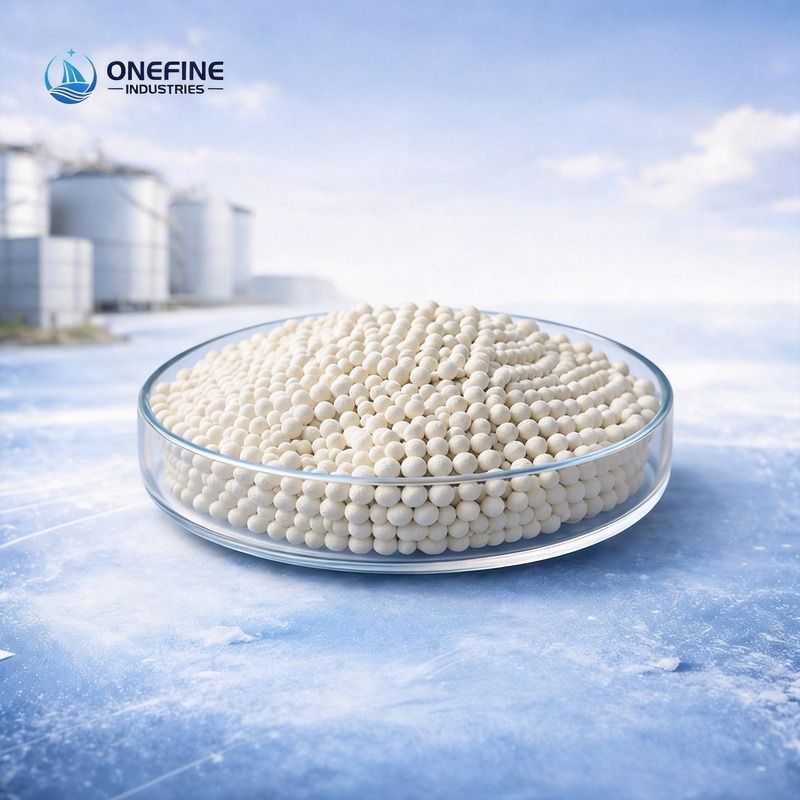
COS adsorbent
An advanced purification adsorbent catalyst based on specialty alumina with active components. Performance equivalent to imported Selexsorb COS adsorbent. Strong chemical adsorption capacity for selective removal of trace COS, CS₂, and H₂S from cracked C₂–C₄ unsaturated hydrocarbon streams. Also effectively removes CO₂, H₂O, chlorides, cyanides, and other common poisons. Operates at ambient to low temperatures for deep feedstock purification.
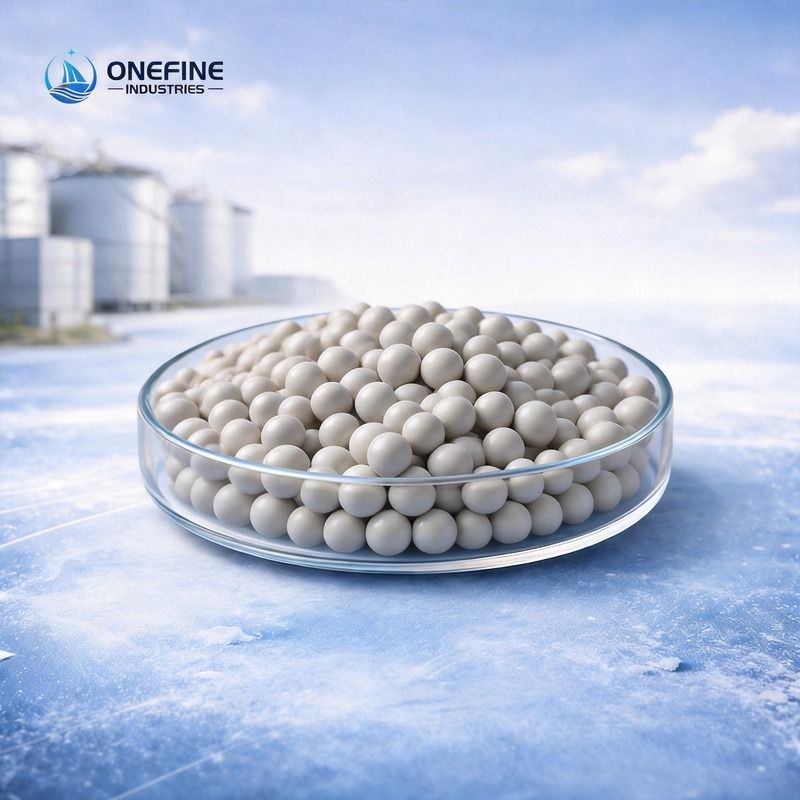
CD adsorbent
An advanced purification adsorbent catalyst based on specialty alumina with special modifiers. Performance equivalent to imported Selexsorb CD adsorbent. Strong chemical adsorption capacity for selective removal of trace oxygenated organic compounds (alcohols, ethers, aldehydes, ketones, peroxides) from C₂–C₄ unsaturated hydrocarbon streams in polyethylene and polypropylene units. Also effectively adsorbs water and mercaptans for deep feedstock purification. Operates at ambient to low temperatures.
Related Reading
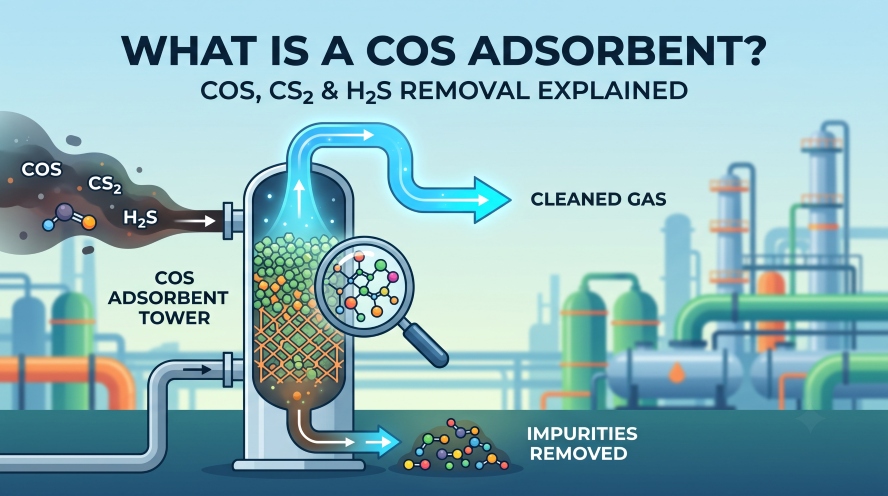
What Is a COS Adsorbent? COS, CS2 & H2S Removal Explained
A COS adsorbent removes COS, CS2, and H2S from cracked C2–C4 olefin streams, protecting polymerization catalysts. Learn how it works and where it fits in the purification train.
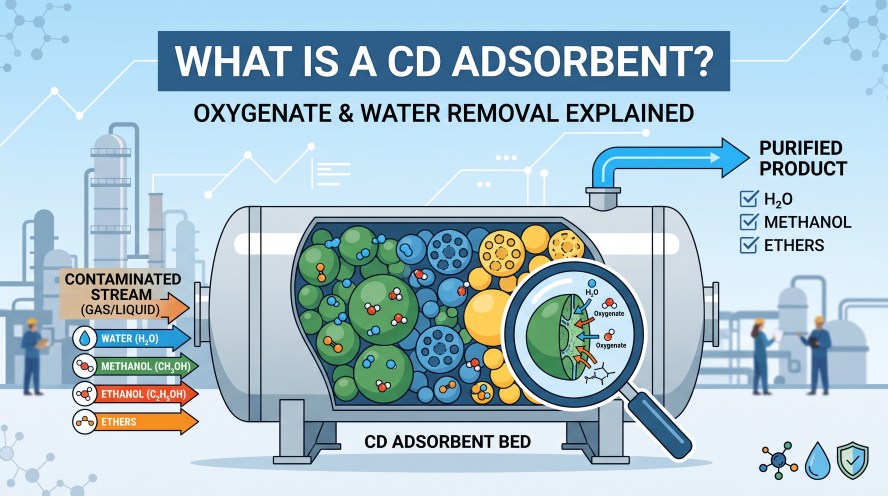
What Is a CD Adsorbent? Oxygenate & Water Removal Explained
How activated alumina protects the carbon molecular sieve bed in a PSA nitrogen generation train — bulk moisture removal upstream of precision gas separation.