A Comprehensive Guide to Methanation Catalysts: Reaction Mechanisms, Thermal Runaway, and Ammonia Synthesis Guard Bed Operation
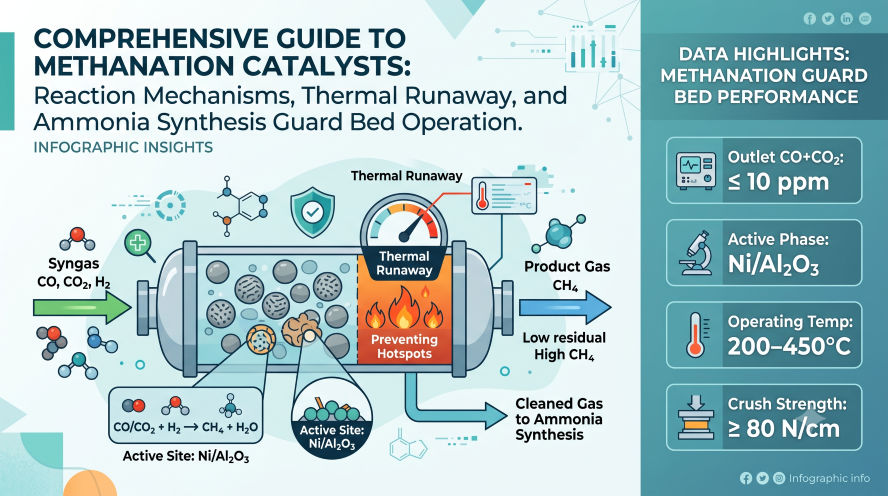
In modern large-scale chemical processing, particularly within Haber-Bosch ammonia synthesis plants and high-purity hydrogen generation units (such as Steam Methane Reforming or SMR), maintaining an ultra-pure synthesis gas (syngas) stream is an absolute non-negotiable operational requirement. Following primary and secondary steam reforming, as well as high-temperature and low-temperature water-gas shift (WGS) reactions, the syngas mixture still contains residual trace amounts of carbon monoxide (CO) and carbon dioxide (CO2). Typically, these unreacted carbon oxides exist at concentration levels ranging from 0.1% to 0.7% in the process gas stream. If permitted to pass downstream into the primary synthesis loop, these oxygen-containing compounds will irreversibly oxidize and permanently deactivate the highly sensitive, finely tuned iron-based or ruthenium-based ammonia synthesis catalysts. To prevent this catastrophic catalyst failure and subsequent massive plant downtime, plant engineers deploy methanation guard beds as the final, critical purification step.
A methanation catalyst chemically scrubs the process gas by reacting the residual carbon oxides with the abundant hydrogen already present in the syngas, converting them into inert methane (CH4) and water vapor. This irreversible chemical transformation effectively reduces the total carbon oxide slip to stringent sub-10 parts per million (ppm) thresholds. This technical guide will systematically unpack the fundamental catalytic chemistry of these specialized nickel-based materials, examine the severe threat of sulfur poisoning, analyze operational thermal runaway risks, and provide engineering best practices for optimizing guard bed pressure drops and overall reactor performance.
Key Takeaways
- Methanation catalysts use highly dispersed metallic nickel (Ni) on alumina to hydrogenate residual CO and CO2 into inert methane and water vapor, achieving sub-10 ppm purity.
- The reaction is highly exothermic; sudden spikes in inlet CO/CO2 can trigger a thermal runaway above 500°C, causing irreversible thermal sintering of the nickel crystallites.
- The active Ni phase is extremely sensitive to sulfur poisoning, strictly requiring feed gas total sulfur to be maintained below 0.1 ppm.
- The catalyst must be carefully activated in-situ via temperature-programmed reduction (350–400°C) to convert inactive NiO into catalytically active metallic nickel.
The Chemistry of Trace Carbon Oxide Hydrogenation
Methanation is fundamentally the reverse reaction of steam methane reforming. At the core of a commercial methanation catalyst is the active component, metallic nickel (Ni), meticulously dispersed across a high-surface-area gamma-alumina (γ-Al2O3) carrier matrix. The alumina support provides structural robustness and prevents the sintering of nickel crystallites at elevated temperatures, maintaining a high density of active sites for the gas-solid chemisorption process. When the sour syngas enters the guard reactor, the carbon monoxide and carbon dioxide molecules adsorb onto the active nickel sites. Simultaneously, molecular hydrogen dissociates into highly reactive atomic hydrogen on adjacent metallic sites. The subsequent hydrogenation reactions proceed rapidly:
CO + 3H₂ ⇌ CH₄ + H₂O (ΔH = −206.3 kJ/mol)
CO₂ + 4H₂ ⇌ CH₄ + 2H₂O (ΔH = −165.0 kJ/mol)
Because both of these methanation reactions are highly exothermic and volume-reducing (consuming four or five moles of reactant gas to produce two or three moles of product gas), the thermodynamic equilibrium heavily favors the formation of methane at lower temperatures and higher pressures. Industrial methanators typically operate within a strictly controlled temperature window of 200°C to 450°C and process pressures ranging from 0.8 MPa up to 4.0 MPa. The catalyst must possess sufficient intrinsic activity to initiate the CO and CO2 conversion at the lower end of this temperature gradient (often around 270–290°C inlet temperature), driving the residual carbon oxide concentrations from typical inlet levels of up to 0.7% down to guaranteed outlet concentrations of ≤ 10 ppm.
Furthermore, because the catalyst is typically delivered in an oxidized state (containing approximately 25 wt% NiO), it exhibits absolutely no catalytic activity until it is properly reduced in-situ. Plant operators must carefully execute a highly controlled, temperature-programmed reduction procedure using a dry hydrogen-nitrogen mixture at 350–400°C. This specific pre-reduction step converts the inert nickel oxide into catalytically active, zero-valent metallic nickel without inducing thermal degradation of the pore structure.
Catalyst Poisoning Mechanisms: The Sulfur Threat
The most critical operational vulnerability of any nickel-based methanation catalyst is its extreme susceptibility to sulfur poisoning. In industrial environments, synthesis gas derived from natural gas, coal gasification, or heavy fuel oil partial oxidation frequently contains trace sulfur compounds, primarily in the form of hydrogen sulfide (H2S), carbonyl sulfide (COS), and mercaptans. Metallic nickel possesses an exceptionally strong chemical affinity for sulfur. Even at parts-per-billion (ppb) concentration levels, sulfur molecules will aggressively chemisorb onto the nickel crystallite surfaces. This reaction rapidly and irreversibly converts the catalytically active zero-valent nickel into inert nickel sulfide (Ni3S2 or similar non-stoichiometric phases).
Once the active nickel sites are blocked by surface sulfides, the chemisorption of carbon oxides and hydrogen ceases, causing an immediate breakthrough of CO and CO2 into the downstream ammonia synthesis loop. To guarantee the expected 3 to 5-year operational lifespan of the methanation bed, plant engineering mandates that the feed gas inlet total sulfur concentration must be strictly maintained at < 0.1 ppm.
While some oxidative regeneration procedures utilizing dilute oxygen at elevated temperatures can theoretically convert adsorbed sulfur into sulfur dioxide (SO2), this practice is rarely implemented in commercial ammonia plants. The harsh oxidation process often triggers irreversible structural changes, such as the formation of bulk nickel aluminate spinels or the catastrophic sintering of the active metal phase. Consequently, industrial methanation catalysts are universally treated as non-regenerable, sacrificial materials regarding sulfur exposure. If the upstream sulfur removal units (such as zinc oxide guard beds) fail and bulk sulfur breakthrough occurs, the poisoned methanation catalyst bed must be completely discharged and replaced with fresh material. Additionally, operators must continuously monitor for trace chlorine (< 0.2 ppm) and oxygen (< 0.3%), as these contaminants also accelerate active site degradation and promote unwanted side reactions.
Thermal Runaway & Temperature Control in Guard Beds
Temperature management is arguably the most critical parameter in operating a methanation guard bed. As previously established, the hydrogenation of carbon monoxide and carbon dioxide releases substantial thermal energy. In practical plant operations, every 1.0% of CO converted generates a bed temperature rise (ΔT) of approximately 74°C, while every 1.0% of CO2 converted generates a ΔT of approximately 60°C. Under normal, steady-state operating conditions with an inlet CO+CO2 concentration of ≤ 0.7%, the total adiabatic temperature rise across the catalyst bed remains manageable, typically stabilizing between 30°C and 50°C.
However, process upsets in upstream units—such as a failure in the CO2 removal section (e.g., amine wash system) or a bypass in the low-temperature shift converter—can cause massive spikes in carbon oxide slip entering the methanator. If the inlet CO/CO2 concentration abruptly exceeds 1.5% to 2.0%, the resulting extreme heat release will cause the reactor temperature to rapidly surpass the maximum design limit of 450°C. This uncontrolled thermal excursion, known as a thermal runaway, poses severe risks.
Temperatures exceeding 500–600°C will cause the immediate and irreversible thermal sintering of the nickel crystallites, drastically reducing the active surface area and permanently destroying the catalyst's conversion efficiency. Furthermore, severe thermal runaways can exceed the metallurgical design limits of the reactor vessel itself, leading to catastrophic equipment failure. To mitigate these risks, industrial methanation reactors are equipped with redundant, high-speed temperature monitoring matrices and automated trip systems. If the bed temperature accelerates beyond safe limits, the emergency shutdown logic will instantaneously isolate the reactor and vent the sour synthesis gas to the flare network, preserving both the catalyst inventory and the mechanical integrity of the plant.
Guard Bed Engineering: Pressure Drop and Catalyst Morphology
The physical engineering of the methanation catalyst particle is just as crucial as its chemical formulation. Methanation reactors process massive volumetric flows of synthesis gas, operating at high gas hourly space velocities (GHSV) ranging from 2,000 h⁻¹ up to 10,000 h⁻¹. At these extreme throughputs, the aerodynamic resistance of the catalyst bed generates a systemic pressure drop (ΔP). Minimizing this pressure drop is vital, as excessive ΔP directly increases the energy consumption of the massive synthesis gas compressors located downstream.
To accommodate varying reactor geometries and flow dynamics, methanation catalysts are manufactured in multiple morphological shapes, primarily spherical beads and cylindrical pellets. Spherical catalysts, typically sized between Φ 2–4 mm, offer an inherently high geometric surface area per unit volume and pack with exceptional uniformity. This uniform void fraction (typically around 0.36 to 0.40) prevents localized gas channeling and ensures an even distribution of the reactant gases across the entire bed diameter, which is critical for maximizing carbon oxide conversion.
However, for reactors constructed with exceptionally deep catalyst beds, cylindrical pellets (such as Φ 5×5 mm dimensions) are often preferred. The cylindrical geometry yields a higher bed void fraction and significantly lower flow resistance, effectively mitigating pressure drop constraints. Moreover, both forms must exhibit tremendous mechanical durability to withstand the crushing weight of the bed and the immense fluid shear forces. Industrial specifications mandate a radial crush strength of ≥ 80 N/cm for cylinders and ≥ 50 N/particle for spheres. This exceptional physical robustness prevents the catalyst from fracturing into fine dust over its multi-year service life, eliminating the risk of bed compaction and the associated exponential spikes in reactor pressure drop.
Recommended Products from Sorbsieve
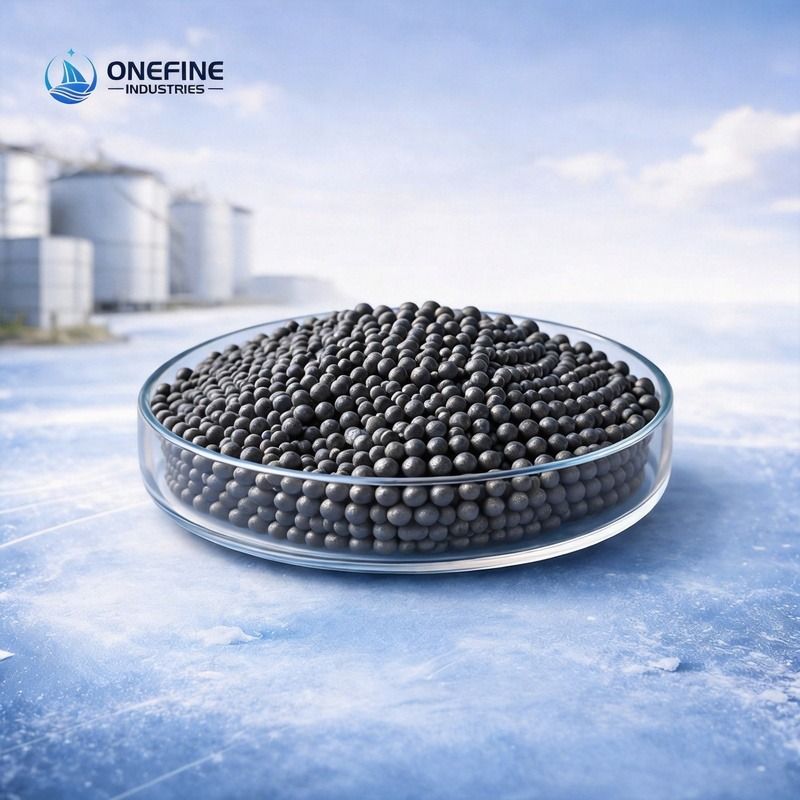
Sorbsieve Methanation Catalyst (Spherical Type) Engineered for uniform gas distribution and maximum mass transfer efficiency. Featuring a highly active Ni/Al2O3 formulation formed into robust Φ 2–4 mm spherical beads, this variant provides a bulk density of 0.70–0.90 kg/L and a minimum crush strength of ≥ 50 N/particle. It easily processes space velocities up to 10,000 h⁻¹, consistently driving outlet CO+CO2 levels below 10 ppm.
Sorbsieve Methanation Catalyst (Cylindrical Type) Designed specifically for deep-bed reactors where pressure drop mitigation is the primary operational constraint. Manufactured as solid Φ 5×5 mm cylinders, this catalyst offers a superior radial crush strength of ≥ 80 N/cm and a bulk density of 1.00–1.20 kg/L. It guarantees zero dusting, prevents bed compaction, and maintains exceptional structural integrity across extreme thermal and pressure gradients up to 4.0 MPa.
FAQ
Q1: Why is methanation deployed instead of physical adsorption (PSA) for the final removal of carbon oxides in ammonia plants? While Pressure Swing Adsorption (PSA) is highly effective for bulk gas separation, it struggles to economically achieve the extreme parts-per-million (ppm) purity levels required by ammonia synthesis loops without incurring massive capital costs and high hydrogen losses. Methanation, conversely, relies on an irreversible chemical reaction. By chemically consuming the residual sub-percent levels of CO and CO2 via exothermic hydrogenation with the abundant hydrogen already in the syngas, the methanation catalyst guarantees an outlet purity of ≤ 10 ppm CO+CO2. This chemical scavenging process operates continuously without the need for complex, cyclical adsorption-desorption vessels, making it vastly more reliable, simple to operate, and economically efficient for final stage guard bed purification.
Q2: What is the precise procedure for activating a new batch of oxidized methanation catalyst? Standard industrial methanation catalysts are manufactured and shipped in a stable, passivated nickel oxide (NiO) state, which completely lacks catalytic activity. Before introducing the sour synthesis gas, operators must execute an in-situ pre-reduction procedure. This involves purging the reactor with an inert nitrogen stream, followed by the introduction of a dry, hydrogen-rich gas. The reactor temperature is then carefully ramped up, usually at a strict rate of 15-25°C per hour, until it reaches a sustained holding temperature of 350°C to 400°C. At this specific thermal threshold, the hydrogen chemically reduces the NiO matrix into zero-valent metallic nickel (Ni). This highly controlled ramp rate is critical; heating the bed too rapidly will trap moisture in the alumina pores, leading to hydrothermal sintering and a permanent loss of active surface area.
Q3: How does the Boudouard reaction impact methanation catalyst performance at low temperatures? The Boudouard reaction (2CO ⇌ C + CO2) is a detrimental side reaction that can severely foul methanation catalysts during low-temperature operations or improper startup sequences. If the inlet process gas contains a high ratio of carbon monoxide relative to hydrogen, and the bed temperature is dwelling in the sub-optimal range of 150°C to 250°C, the carbon monoxide can disproportionate. This reaction deposits solid elemental carbon (coke) directly onto the metallic nickel active sites and within the alumina mesopores. Over time, this carbon accumulation physically blocks the active surface area, drastically reducing the catalyst's ability to hydrogenate carbon oxides. To prevent Boudouard coking, plant engineers must strictly adhere to the minimum operating temperature limits and ensure a sufficient hydrogen-to-carbon ratio is maintained during all transient operational phases.
Q4: What are the primary diagnostic indicators that a methanation catalyst bed requires replacement? Because methanation is an irreversible chemical guard process, the catalyst bed will inevitably face end-of-life deactivation, typically driven by gradual sulfur poisoning (Ni3S2 formation) or progressive thermal sintering of the nickel crystallites. The most definitive diagnostic indicator is an accelerating rise in the reactor effluent carbon oxide concentration (CO slip). When the outlet gas consistently approaches or exceeds the strict 10 ppm threshold, the bed is exhausted. Secondary indicators include a progressive flattening of the internal reactor temperature profile (the exotherm moves downward through the bed as the top layers deactivate) and a steady increase in differential pressure drop (ΔP) caused by catalyst physical attrition, crust formation, or upstream particulate fouling. Once the primary exotherm reaches the bottom thermocouple layer, complete bed replacement is mandatory.
Looking for Bulk Supply of Methanation Catalyst?
Sorbsieve is a trusted bulk supplier of Methanation Catalyst and complete industrial catalysts, serving industrial buyers across the Middle East.
We provide:
- ✅ Container-level supply (20'GP / 40'GP / 40'HQ)
- ✅ Full documentation (COA / TDS / SDS / COO)
- ✅ Multiple packaging options
- ✅ Technical support for Methanation Catalyst selection and system optimization
- ✅ Fast quote response for industrial inquiries
Contact our team for bulk pricing, product samples, and technical consultation.
Related Reading
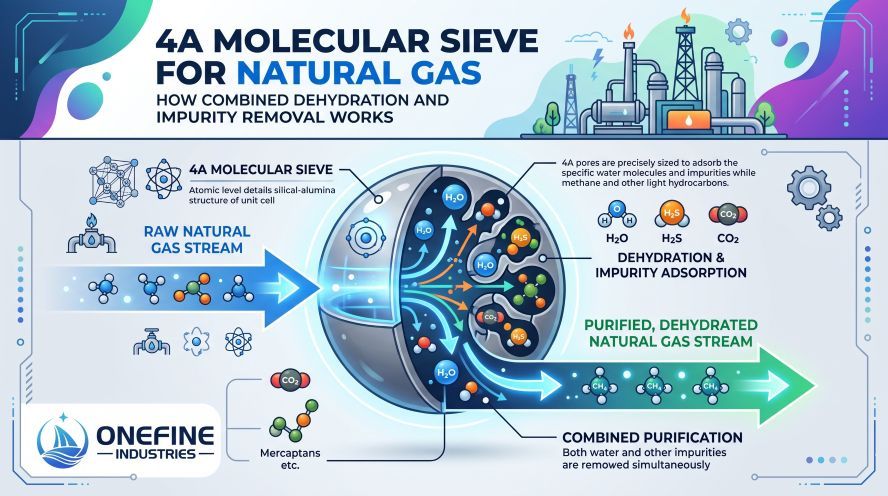
4A Molecular Sieve for Natural Gas: How Combined Dehydration and Impurity Removal Works
4A molecular sieve can dry natural gas and pull moderate CO₂/H₂S out of the same stream in one bed — how its larger pore enables that dual role, where it fits in the treatment train, and when 3A is the better call instead.
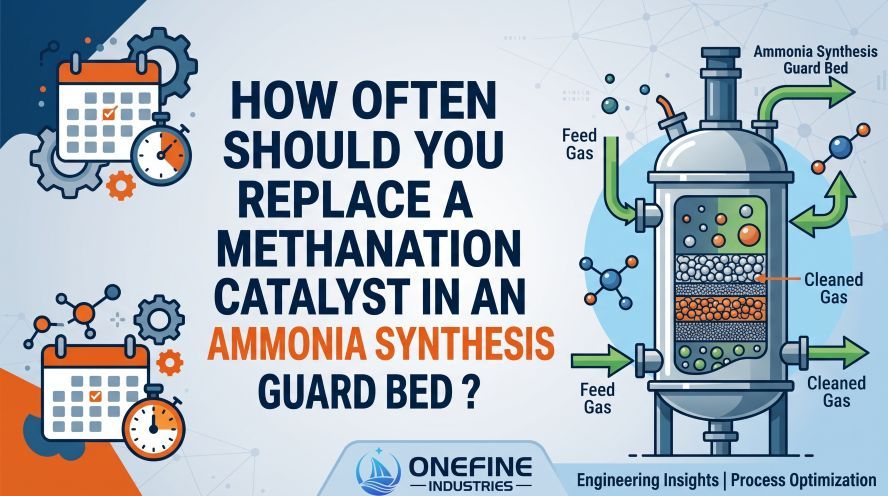
How Often Should You Replace a Methanation Catalyst in an Ammonia Synthesis Guard Bed?
There's no fixed replacement interval for a methanation catalyst — service life depends almost entirely on how well the upstream desulfurization train protects it. Here's how to read the real warning signs.
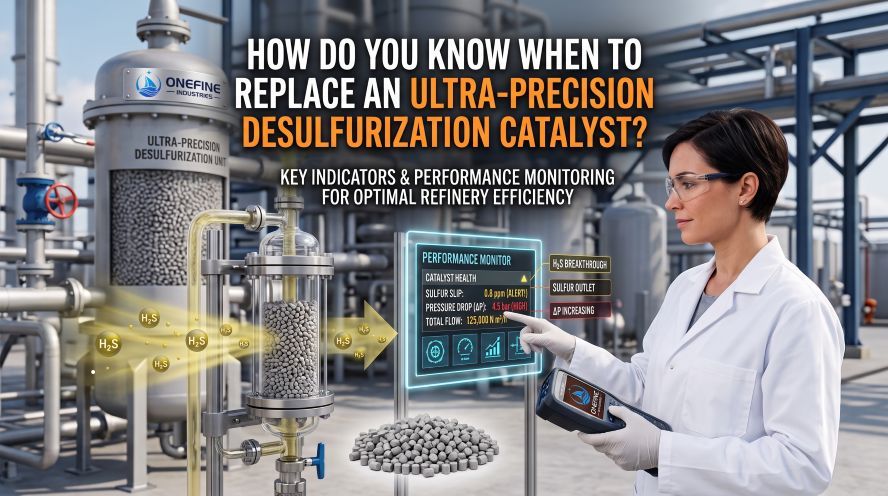
How Do You Know When to Replace an Ultra-Precision Desulfurization Catalyst?
Four real warning signs — total sulfur creep, falling COS conversion, rising pressure drop, and downstream poisoning — that tell you an Ultra-Precision Desulfurization Catalyst bed needs replacing.