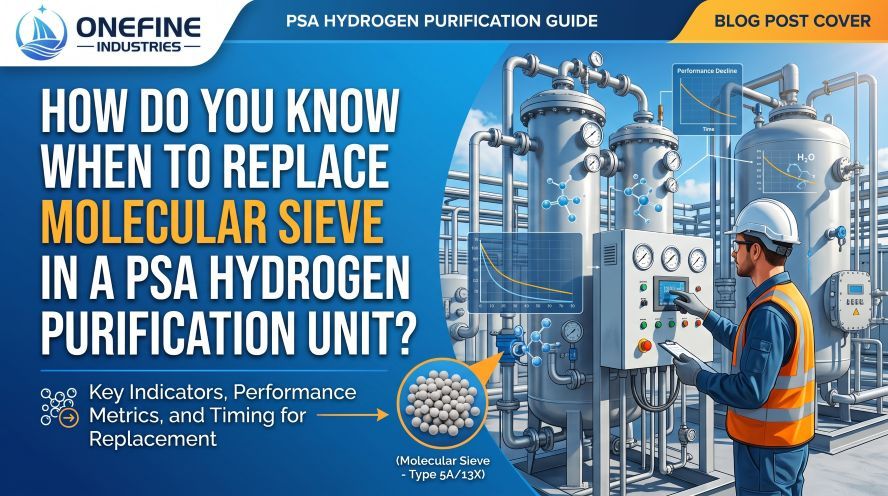
How Do You Know When to Replace Molecular Sieve in a PSA Hydrogen Purification Unit?
Key Takeaways
- A gradual decline in product hydrogen purity and shorter effective adsorption times are the primary early indicators of sieve capacity loss.
- Rising differential pressure across the vessel points to physical degradation, specifically mechanical attrition and dusting of the sieve pellets.
- Moisture competitive adsorption and contaminant fouling from heavy hydrocarbons can permanently occupy active sites, effectively reducing working capacity over time.
A pressure swing adsorption (PSA) hydrogen purification unit depends on the 5A molecular sieve bed staying in good condition cycle after cycle. When the sieve starts losing capacity — from moisture, CO2 slip, mechanical attrition, or simple thermal aging — the first symptom is rarely a dramatic failure. It's a slow drift: purity edges down, cycle times get shorter, and operators start compensating before anyone flags the adsorbent itself. Knowing the early warning signs lets you plan a changeout on your own schedule, rather than reacting to an off-spec hydrogen stream.
Why 5A Molecular Sieve Is the Core Adsorbent in PSA-H2
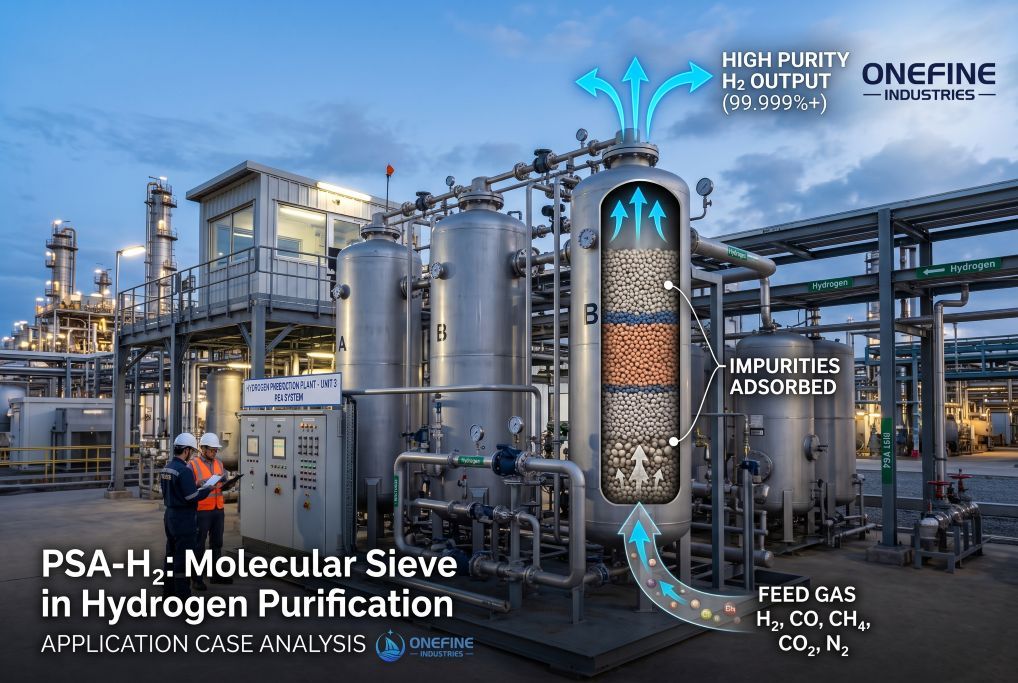
Most industrial PSA-H2 units — whether recovering hydrogen from steam methane reforming off-gas, refinery hydrotreater purge gas, or ammonia plant purge streams — rely on 5A molecular sieve as the primary adsorbent layer. Its pore structure is well suited to selectively adsorbing CO2, CO, N2, and light hydrocarbons while allowing hydrogen molecules to pass through, which is what makes high-purity hydrogen recovery possible in a cyclic pressure-swing process. In many bed designs, 5A molecular sieve works alongside an activated carbon or activated alumina pretreatment layer that handles bulk moisture and heavier contaminants before the gas reaches the sieve, protecting the zeolite's adsorption capacity over the long run.
Early Signs the Sieve Is Losing Capacity
A few operational patterns tend to show up before a full breakthrough event:
- Gradual decline in product hydrogen purity. As active adsorption sites become fouled or exhausted, trace CO2, CO, or N2 begin slipping through at the product end, even though feed conditions haven't changed.
- Shorter effective adsorption time before switching. If operators find themselves cutting adsorption step time or reducing throughput to hold purity specification, that's usually the bed compensating for reduced working capacity.
- Rising differential pressure across the vessel. Mechanical attrition and dusting of the sieve pellets over repeated pressurization/depressurization cycles increases pressure drop and can point to physical degradation, not just chemical fouling.
- Higher regeneration demand for the same result. Needing more purge gas or longer depressurization to bring the bed back to baseline is a sign the sieve's regenerability is declining.
- Visible fines or dust during unloading or vessel inspection. Attrition-related dusting is a mechanical indicator that's independent of adsorption performance but often accompanies it.
What Actually Degrades 5A Molecular Sieve in Hydrogen Service
Several mechanisms typically combine over the life of a charge:
- Moisture and CO2 competitive adsorption. Water has a very strong affinity for the zeolite structure; if upstream drying or pretreatment is inconsistent, moisture can occupy sites that would otherwise be available for CO2/CO/N2 removal, effectively reducing working capacity.
- Thermal cycling fatigue. Repeated pressure and, in some designs, temperature cycling gradually reduces crystal integrity over time — a normal aging process rather than a sudden event.
- Contaminant fouling. Heavy hydrocarbons, amines carried over from upstream treating units, or compressor lubricant vapor can deposit on the sieve surface and are not fully removed during standard regeneration, leading to permanent capacity loss in the affected layer.
- Incomplete regeneration. If purge flow, depressurization depth, or cycle timing drift from design over time — often due to valve wear or control drift elsewhere in the unit — the bed never fully desorbs between cycles, and residual loading accumulates.
Planning the Changeout
Because PSA-H2 systems typically run multiple parallel beds on a fixed cycle, a gradual capacity decline is easier to manage than it looks — most operators track purity and cycle-time trends over months rather than reacting to a single reading. When trend data (not a one-off dip) shows sustained purity drift or the pretreatment/protective layers show signs of breakthrough themselves, that's the point to plan a sieve changeout during a scheduled turnaround rather than waiting for an unplanned outage. Sampling spent sieve on unloading — checking for physical integrity, discoloration, or contamination — also helps confirm whether the root cause was mechanical, chemical, or simply end-of-service-life aging, which is useful input for specifying the replacement charge and reviewing upstream protection.
Recommended Products from Sorbsieve
5A Molecular Sieve (Calcium Type) — the core adsorbent for PSA hydrogen purification, selectively removing CO2, CO, N2, and light hydrocarbons while passing hydrogen through the bed.
Activated Alumina for Purification — commonly used as a guard-bed layer ahead of 5A molecular sieve to remove bulk moisture and protect the zeolite's working capacity.
FAQ
Can 5A molecular sieve be regenerated indefinitely in PSA-H2 service? No. Pressure-swing regeneration restores most of the bed's working capacity each cycle, but a portion of capacity loss from thermal aging, mechanical attrition, and contaminant fouling is not reversible. Over enough cycles, the sieve eventually needs replacement even with well-run regeneration.
Does a pressure drop increase always mean the molecular sieve needs replacing? Not necessarily — rising pressure drop can also come from an upstream filter, valve, or piping issue. It's worth confirming the source before assuming the sieve bed itself is degraded, since attrition and dusting are only one possible cause.
Is 5A the right molecular sieve for every PSA hydrogen application? 5A is the standard choice for most PSA-H2 units, but the right selection depends on feed gas composition and target purity. See our 13X vs 5A Molecular Sieve comparison if your feed stream includes components better suited to a different pore size.
Does replacement frequency differ between PSA-H2 and PSA oxygen generation? Yes — feed gas composition, contaminant load, and cycle design differ significantly between the two applications. See our guide on 5A molecular sieve replacement signs in PSA oxygen generators for that specific context.
Looking for Bulk Supply of 5A Molecular Sieve?
Sorbsieve is a trusted bulk supplier of 5A Molecular Sieve and complete industrial adsorbents, serving industrial buyers across the Middle East.
We provide:
- ✅ Container-level supply (20'GP / 40'GP / 40'HQ)
- ✅ Full documentation (COA / TDS / SDS / COO)
- ✅ Multiple packaging options
- ✅ Technical support for 5A molecular sieve selection and system optimization
- ✅ Fast quote response for industrial inquiries
Contact our team for bulk pricing, product samples, and technical consultation.
Related Products

5A Molecular Sieve (Calcium Type)
Calcium-exchanged 5A molecular sieve for PSA oxygen enrichment, natural gas sweetening, n-isoparaffin separation, and simultaneous desulfurization & decarbonization. Bulk supply with MOQ from 1 ton, serving industrial buyers across the Middle East.
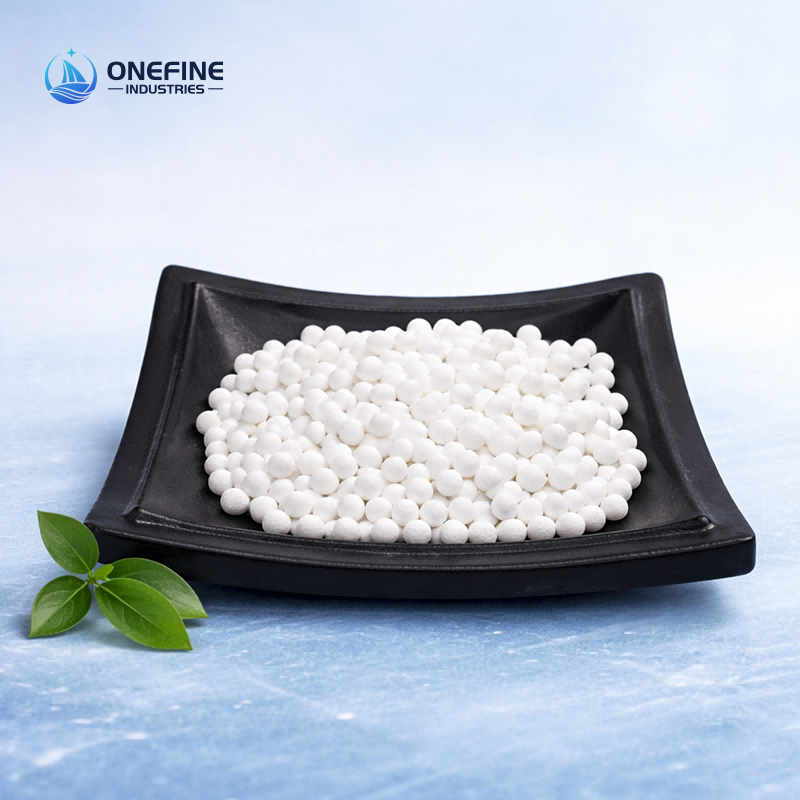
Activated Alumina for Purification
High-performance activated alumina (γ-Al₂O₃) adsorbent and desiccant for industrial gas/liquid drying, water defluoridation, and purification. White spherical beads with high surface area (≥300 m²/g), excellent crush strength, and full thermal regenerability. Available in multiple particle sizes for compressed air dryers, water treatment, and catalyst carrier applications.
Related Reading
How Do You Know When to Replace 5A Molecular Sieve in a PSA Oxygen Generator?
PSA oxygen systems regenerate 5A molecular sieve on every pressure cycle — but regeneration isn't the same as replacement. Here's how to tell the difference before purity drops for good.
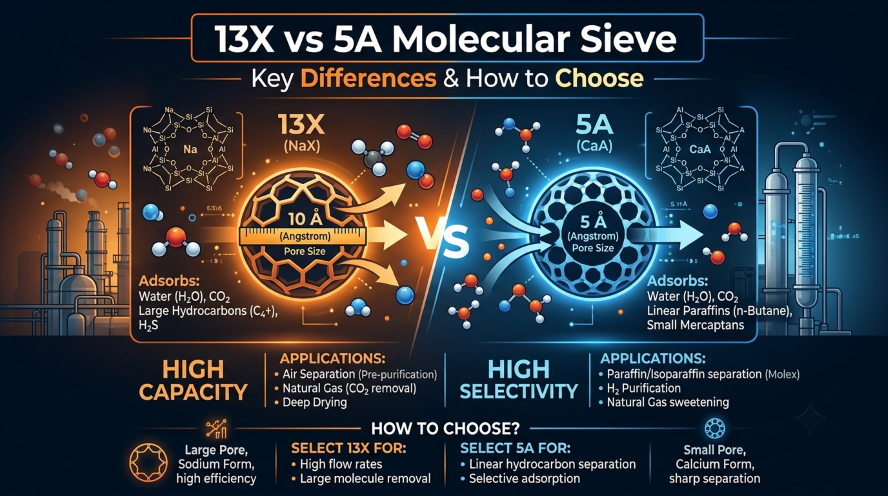
13X vs 5A Molecular Sieve: Key Differences & How to Choose
13X and 5A molecular sieve look similar on paper, but they're built for very different jobs. This guide breaks down the real differences — pore size, selectivity, and application — so you can pick the right one for your system.