Molecular Sieve in Hydrogen Purification (PSA-H2): Application Case Analysis
Industry Context
Key Takeaways
- 5A molecular sieve selectively adsorbs CO₂, CO, N₂, and light hydrocarbons while allowing smaller, non-polar hydrogen molecules to pass through unadsorbed.
- Layered bed designs frequently utilize activated alumina or carbon ahead of the 5A sieve to capture bulk moisture and prevent heavy hydrocarbon fouling.
- Unlike TSA systems, regeneration in a PSA-H2 unit relies entirely on depressurization and purge gas rather than thermal heating.
Pressure swing adsorption (PSA) is one of the most widely used technologies for recovering high-purity hydrogen from process off-gases — steam methane reformer effluent, refinery hydrotreater purge gas, ammonia plant purge streams, and petrochemical off-gas among them. At the core of the process sits a bed of 5A molecular sieve, cycling through adsorption and regeneration steps to strip out CO2, CO, N2, and light hydrocarbons while letting hydrogen pass through largely unimpeded. This case looks at where 5A molecular sieve fits in a typical PSA-H2 train, how it works alongside other adsorbents in the bed, and what operators watch for to keep purity and recovery on spec.
System Overview: Where PSA-H2 Fits in the Process
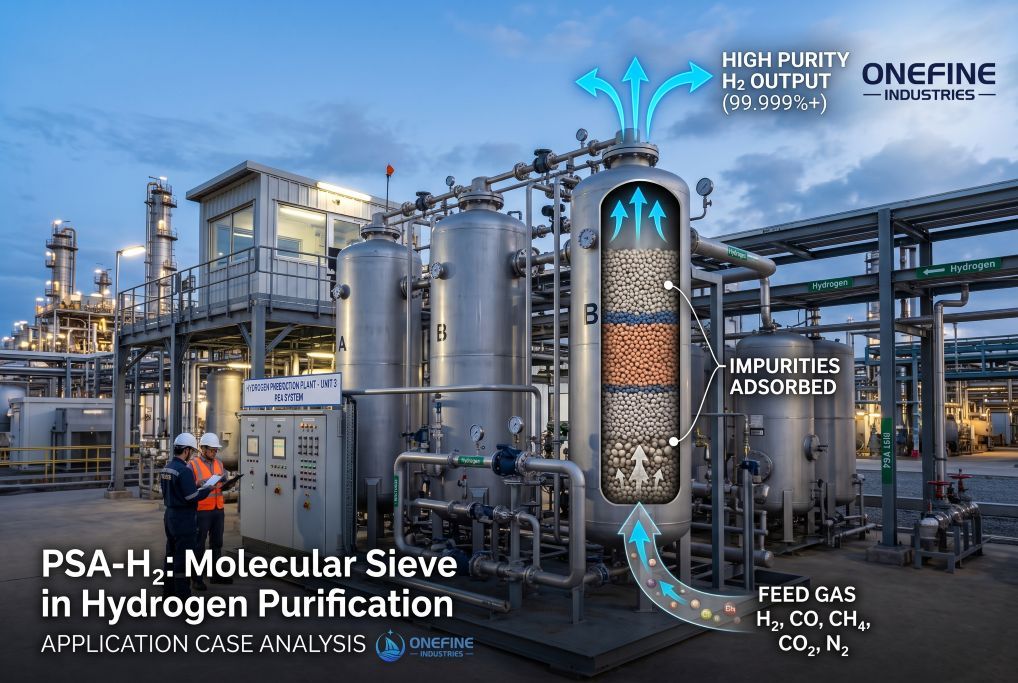
A PSA-H2 unit is typically installed downstream of a hydrogen-generating or hydrogen-recovery process — reforming, partial oxidation, or a refinery unit producing hydrogen-rich off-gas as a byproduct — and upstream of wherever that hydrogen is consumed, such as a hydrotreater, hydrocracker, or ammonia synthesis loop. Multiple parallel vessels cycle through pressurized adsorption and lower-pressure regeneration steps in sequence, so that at least one bed is always producing high-purity hydrogen while others regenerate. This staggered-bed design is what allows PSA-H2 to deliver a continuous, high-purity product stream from a feed gas that may contain a meaningful fraction of non-hydrogen components.
The Role of 5A Molecular Sieve in the Adsorption Bed
5A molecular sieve is the primary adsorbent responsible for the bulk of impurity removal in most PSA-H2 designs. Its pore geometry allows it to selectively adsorb molecules such as CO2, CO, N2, and light hydrocarbons that are close in size to hydrogen but interact more strongly with the zeolite's polar surface, while hydrogen — a much smaller, non-polar molecule — passes through largely unadsorbed. This selectivity is what enables PSA-H2 systems to reach very high hydrogen purity levels, in some system designs approaching 99.999%, without a cryogenic or membrane separation step.
Because feed gas composition varies significantly by source — reformer off-gas typically carries more CO2 and unconverted methane, while refinery purge gas may carry more light hydrocarbons and trace sulfur compounds — bed design and layering are usually tailored to the specific feed stream rather than following a single fixed formula.
Working Alongside Other Adsorbents
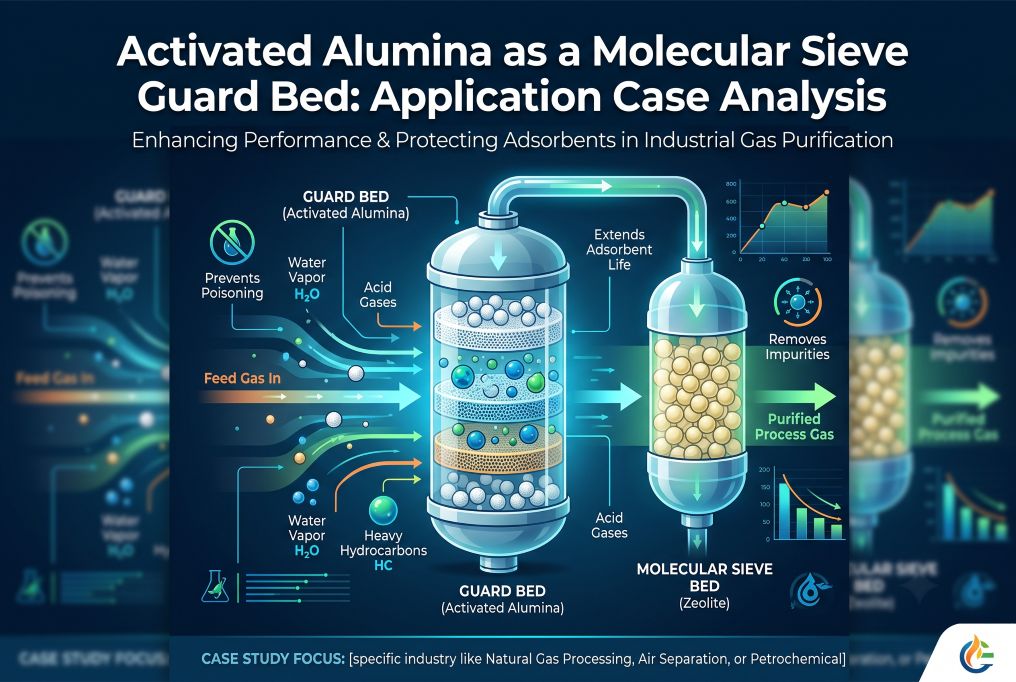
In many PSA-H2 vessel designs, 5A molecular sieve does not work alone. A layer of activated alumina or activated carbon ahead of the sieve is a common design choice, handling bulk moisture and heavier hydrocarbon components before the gas reaches the zeolite layer. This layered approach protects the 5A sieve's working capacity — moisture in particular has a strong affinity for the zeolite structure and, if allowed to reach the sieve unchecked, will occupy adsorption sites that would otherwise be available for CO2, CO, and N2 removal. The same guard-layer logic is used elsewhere in molecular sieve systems, such as in our guard-bed protection case, where activated alumina performs a similar protective role ahead of a molecular sieve bed in PSA nitrogen and oxygen systems.
Operational Considerations
A few factors particular to PSA-H2 service are worth noting for anyone specifying or operating one of these systems:
- Feed gas variability matters. Because PSA-H2 feed streams often come from upstream units with their own process swings, contaminant load and moisture content can vary more than in a steady-state industrial gas stream — bed design typically includes margin to accommodate this.
- Regeneration is pressure-driven, not thermal, in most PSA-H2 cycles. Unlike TSA-based drying systems, PSA regeneration relies on depressurization and purge gas rather than heat, which affects both cycle time and how contaminants that resist pressure-swing desorption (like heavy hydrocarbons or trace amines) can gradually accumulate on the sieve over time.
- Purity and recovery are a design trade-off. Higher target purity generally means accepting somewhat lower hydrogen recovery, since achieving very low impurity slip requires more conservative cycle design; the two are balanced based on downstream requirements.
Related Insight
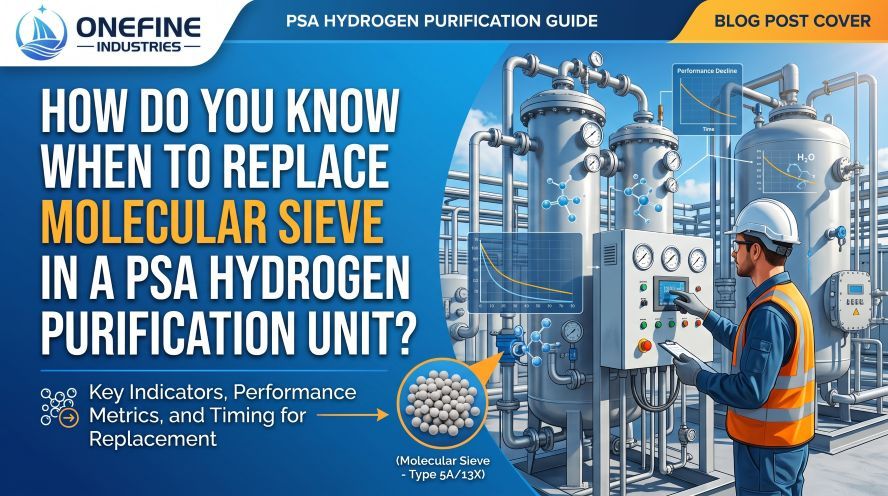
For the operational side of running one of these systems over time — the signs that indicate a 5A molecular sieve charge is nearing the end of its service life — see our companion guide, 5A molecular sieve replacement signs.
Looking for Bulk Supply of 5A Molecular Sieve?
Sorbsieve is a trusted bulk supplier of 5A Molecular Sieve and complete industrial adsorbents, serving industrial buyers across the Middle East.
We provide:
- ✅ Container-level supply (20'GP / 40'GP / 40'HQ)
- ✅ Full documentation (COA / TDS / SDS / COO)
- ✅ Multiple packaging options
- ✅ Technical support for PSA-H2 system design and adsorbent selection
- ✅ Fast quote response for industrial inquiries
Related Products
Ammonia refining desulfurization catalyst
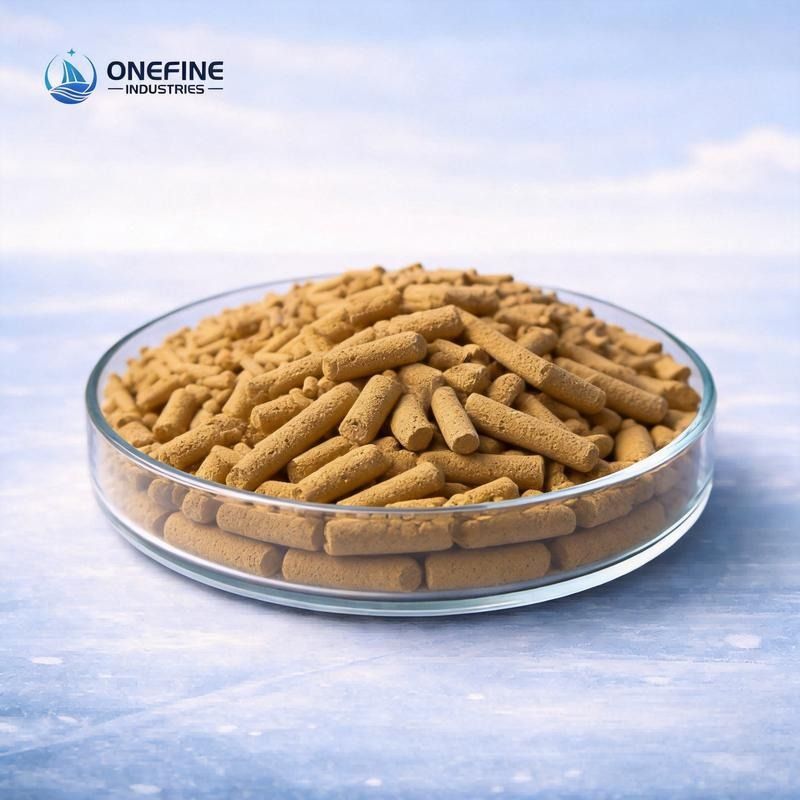
A composite metal oxide-based desulfurization catalyst with multiple promoters, designed for H₂S removal in ammonia refining units of sour water strippers at refineries. Reduces H₂S to below 0.5 mg/m³ under low-temperature conditions. Also removes HCl and organic sulfur impurities. Exceptional water resistance.

5A Molecular Sieve (Calcium Type)
Calcium-exchanged 5A molecular sieve for PSA oxygen enrichment, natural gas sweetening, n-isoparaffin separation, and simultaneous desulfurization & decarbonization. Bulk supply with MOQ from 1 ton, serving industrial buyers across the Middle East.