Catalyst Protection Train for Naphtha Reforming (Pt/Re Catalyst): Application Case Analysis
Industry Context
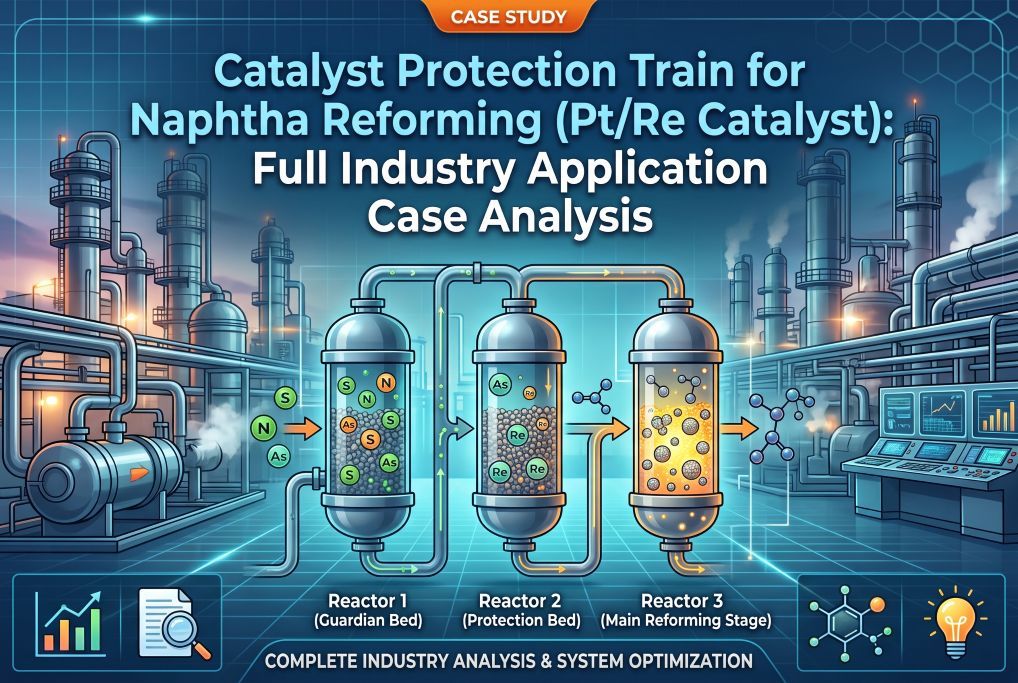
Catalytic reforming is one of the core processes in a modern refinery, converting low-octane naphtha into high-octane reformate for gasoline blending and aromatics production. The reaction relies on a bimetallic platinum-rhenium (Pt/Re) catalyst — a precious-metal system that is both highly effective and highly sensitive to feed contamination. Even trace levels of sulfur and chlorine in the naphtha feed can permanently damage this catalyst, which is why refiners invest heavily in guard bed systems positioned upstream of the reformer itself.
This case looks at how two Sorbsieve products — Dechlorination Catalyst and Copper-Nickel Desulfurization Catalyst — serve this protection role, and the real selection question refiners face when specifying a guard bed system.
Key Takeaways
- Platinum-rhenium reforming catalysts are highly sensitive to sulfur and chlorine, requiring dedicated upstream guard bed systems to prevent permanent poisoning.
- Dechlorination Catalyst provides specialized, single-function removal of excess feed-borne chlorine to maintain the intended acid and metal balance.
- Copper-Nickel Desulfurization Catalyst offers a combined-function guard stage that handles sulfur and a broader window of contaminants for operational simplicity.
Why Pt/Re Catalyst Needs Protection
Platinum and rhenium are both highly susceptible to poisoning:
- Sulfur compounds deactivate the metal sites responsible for the reforming reactions, reducing catalyst activity and shortening operating cycles.
- Chlorine compounds, ironically, are also deliberately added in controlled amounts to maintain the catalyst's acid function — but uncontrolled or excess chlorine from the feed can upset this balance and accelerate catalyst attrition.
- Trace arsenic and other heavy metals, where present in the feed, can cause irreversible poisoning even at very low concentrations.
Because reformer catalyst is expensive to replace and reformer downtime is costly, refiners treat feed pretreatment as a critical, non-negotiable step rather than an optional safeguard.
Where Each Product Fits in the Protection Train
Dechlorination Catalyst is positioned to capture chlorine-containing compounds before they reach the reformer, keeping the acid/metal function balance of the Pt/Re catalyst within its intended operating range. It is a specialized, single-function guard material — its job is chlorine removal, and it is optimized for that duty specifically.
Copper-Nickel Desulfurization Catalyst takes a broader approach. As a bimetallic guard material, it is designed to handle sulfur removal together with a wider window of feed contaminants in a single bed, which is useful when a refiner's feed slate is less consistent or when simplifying the guard bed count is a priority.
The Real Selection Question: Specialized vs. Combined
This is where the two products represent a genuine buyer decision rather than a simple "better/worse" comparison:
- Feed is consistent and well-characterized, with chlorine as the primary concern → a dedicated Dechlorination Catalyst bed, often paired with a separate sulfur guard stage, gives refiners precise control over each contaminant removal step independently.
- Feed composition varies, or a refiner wants to reduce the number of guard bed stages → Copper-Nickel Desulfurization Catalyst's combined-function design can simplify the protection train, trading some of the fine-tuned control of a single-function bed for operational simplicity.
Neither approach is universally correct — the decision depends on feed variability, available vessel space, and how tightly a refiner wants to control each contaminant removal step. This is a genuine engineering trade-off, not a marketing distinction.
System-Level Takeaway
In practice, many naphtha reforming protection trains use a layered or staged approach, positioning chlorine and sulfur guard materials according to the specific contaminant profile of the feed. The two products discussed here are not mutually exclusive — some configurations use both in sequence, with a broader-capacity guard stage handling the bulk of contaminant removal and a specialized polishing stage addressing whichever contaminant the feed profile makes the higher priority. For the full mechanism behind each guard material, see our companion guides: What Is a Dechlorination Catalyst? HCl Explained and What Is a Cu-Ni Desulfurization Catalyst? Dual-Metal Guard Bed Technology Explained
Supply Considerations for Refiners
Guard bed catalysts in a reforming unit are consumed on a replacement cycle tied to feed contaminant loading, not on a fixed calendar schedule — which means refiners typically need to plan procurement around actual bed performance monitoring rather than a rigid annual order. Because reformer downtime carries a high cost, having a reliable bulk supply channel for guard bed material — with consistent quality from batch to batch — matters as much as the catalyst's technical performance itself. This is particularly relevant for Middle East refiners managing feed slates from multiple crude sources, where contaminant variability can shift guard bed replacement timing from one cycle to the next.
FAQ
Can Dechlorination Catalyst and Copper-Nickel Desulfurization Catalyst be used in the same protection train?
Yes. Many refiners use a staged approach rather than relying on a single guard material, particularly when feed composition varies. The right configuration depends on your specific feed contaminant profile — our technical team can help evaluate this against your feed data.
Does chlorine guard duty ever conflict with the reformer's own chlorine injection?
No — guard bed dechlorination targets uncontrolled chlorine compounds present in the incoming feed, which is a separate function from the controlled chlorine injection refiners use to maintain catalyst acidity. The guard bed protects against feed-borne excess, not the intentional dosing.
How do I know which guard material fits my refinery's feed slate?
This depends on your naphtha source consistency, sulfur and chlorine levels, and how many guard bed stages your unit design allows. Send us your feed assay and we can recommend a suitable configuration.
Looking for Bulk Supply of Naphtha Reforming Guard Bed Catalysts?
Sorbsieve is a trusted bulk supplier of Dechlorination Catalyst, Copper-Nickel Desulfurization Catalyst, and complete industrial catalysts, serving industrial buyers across the Middle East.
We provide:
- ✅ Container-level supply (20'GP / 40'GP / 40'HQ)
- ✅ Full documentation (COA / TDS / SDS / COO)
- ✅ Multiple packaging options
- ✅ Technical support for guard bed configuration and system optimization
- ✅ Fast quote response for industrial inquiries
Contact our team for bulk pricing, product samples, and technical consultation.
Related Products
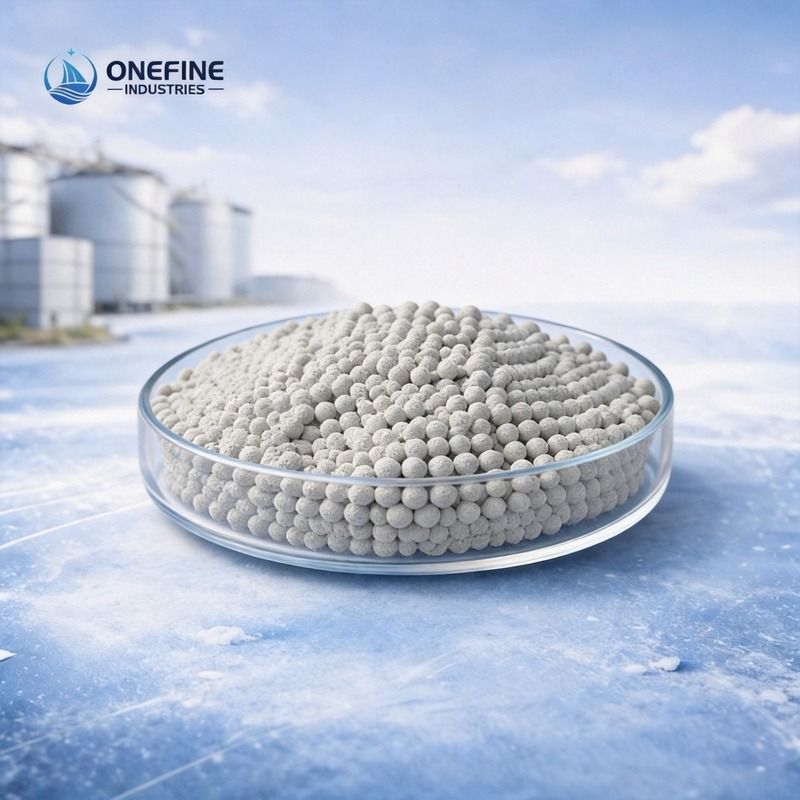
Dechlorination Catalyst
High-performance Na₂CO₃/Al₂O₃-based dechlorination catalyst designed for ultra-deep hydrogen chloride (HCl) removal from hydrocarbon streams with high chlorine capacity and minimal green oil formation.
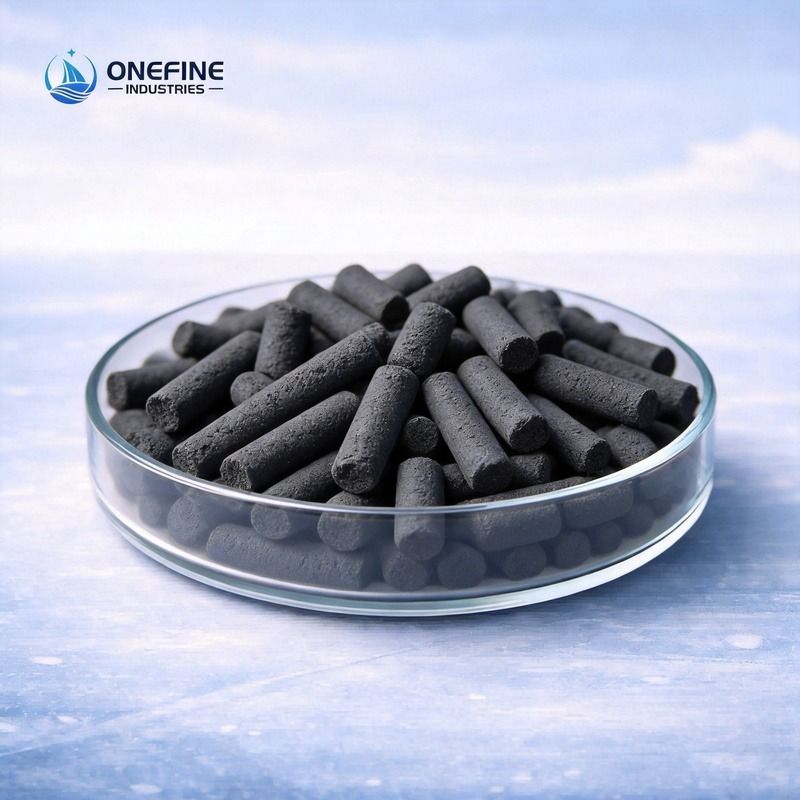
Copper-Nickel Desulfurization Catalyst
A Cu-Ni dual-system desulfurization catalyst for oil refining guard-bed applications. Removes inorganic and organic sulfur, trace chlorine, and arsenic impurities in a single step. Supplied in pre-reduced form for immediate use. Ideal as a protection agent for precious metal catalysts in reforming, hydrocracking, and isomerization units.
Related Reading
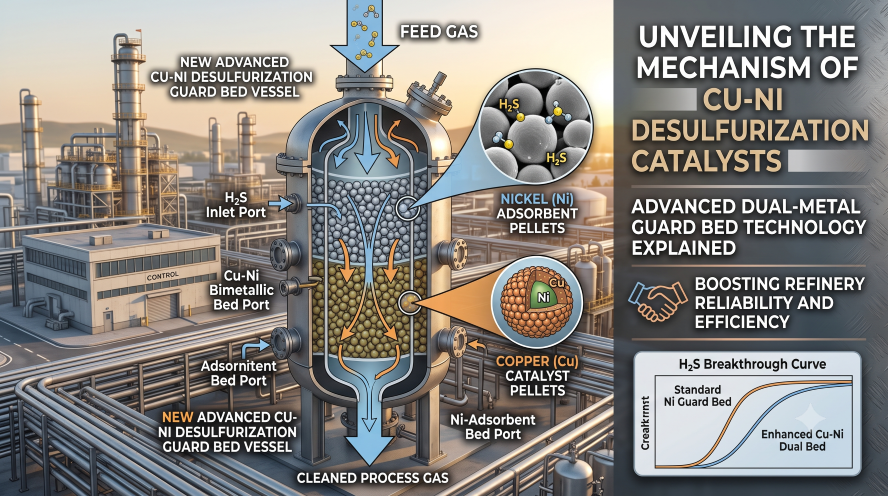
What Is a Cu-Ni Desulfurization Catalyst? Dual-Metal Guard Bed Technology Explained
A plain-language guide to copper-nickel (Cu-Ni) desulfurization catalysts: how the dual-metal mechanism works, why pre-reduced supply matters for commissioning time, and how to choose between a Cu-Ni system and a single-metal guard bed.
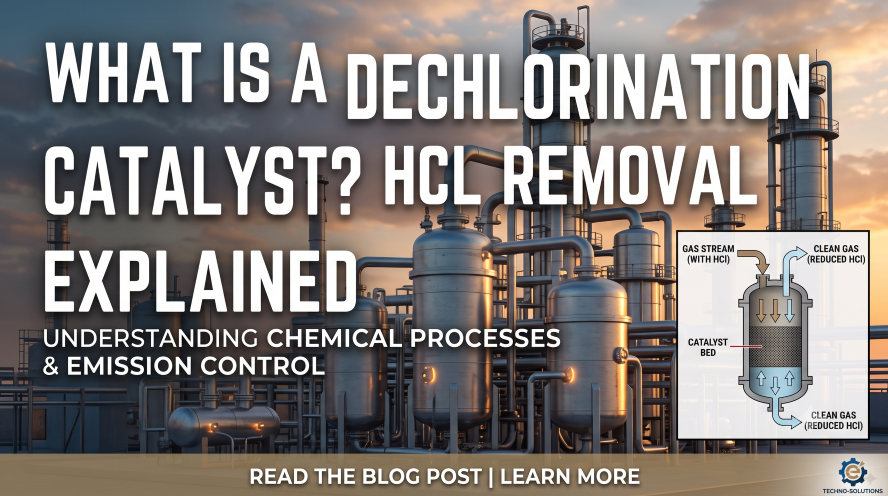
What Is a Dechlorination Catalyst? HCl Removal Explained
Trace hydrogen chloride (HCl) and organochlorides threaten Continuous Catalytic Reforming, Isomerization, PDH, and Syngas purification units. This guide explains dechlorination catalyst chemistry, green oil control, and guard bed operation practices.