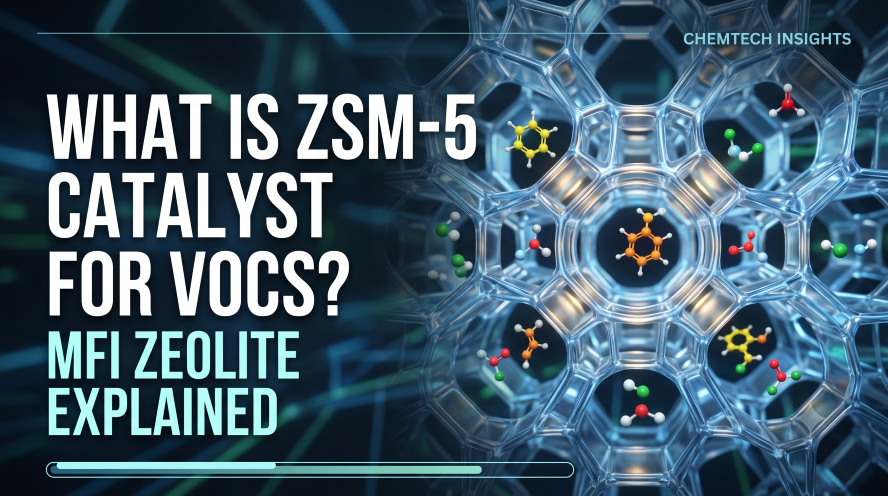
Volatile organic compounds (VOCs) are one of the most common air pollutants in industrial exhaust streams, from paint booths to petrochemical storage tanks. Among the materials used to capture and destroy these emissions, ZSM-5 zeolite catalyst stands out for its unique combination of shape-selective adsorption and catalytic activity. But what exactly is ZSM-5, and why has it become the go-to material for VOC abatement systems worldwide? This guide breaks down its structure, how it works, and where it's applied.
Key Takeaways:
- Dual-action mechanism: ZSM-5 acts as both a high-capacity adsorbent to concentrate VOC streams and a stable support for catalytic oxidation.
- Unique MFI topology: Its 3D intersecting channels (5.1-5.8 Å) enable shape-selective molecular sieving, efficiently capturing aromatic VOCs.
- Si/Al ratio impact: Higher ratios (100-300) increase strong hydrophobicity for humid conditions; medium ratios (50-100) balance catalytic acidity.
What Is ZSM-5?
ZSM-5 (Zeolite Socony Mobil-5) is a high-silica aluminosilicate zeolite built on the MFI framework topology. Unlike low-silica zeolites (such as 3A, 4A, 5A, or 13X molecular sieves used for drying and gas separation), ZSM-5 is defined by a much higher SiO₂/Al₂O₃ ratio—typically 25 to 300—giving it a distinct set of properties suited to catalysis rather than simple moisture adsorption.
Its defining structural feature is a 3D intersecting micropore channel system: straight channels running in one direction and sinusoidal channels running perpendicular to them, both formed by 10-membered oxygen rings roughly 5.1-5.8 Å across. This intersecting geometry is what allows ZSM-5 to selectively adsorb small organic molecules—like toluene, xylene, and other aromatic VOCs—while excluding bulkier compounds.
How Does ZSM-5 Work for VOC Treatment?
ZSM-5 handles VOCs through two complementary mechanisms:
1. Shape-selective adsorption. The micropore channels act like a molecular filter, capturing VOC molecules whose kinetic diameter fits within the 5-6 Å pore opening. This lets ZSM-5 concentrate dilute VOC streams—common in large-volume industrial exhaust—into a smaller, more treatable volume.
2. Catalytic oxidation. On its own, ZSM-5's framework aluminum creates Brønsted acid sites capable of some catalytic activity. But its real strength as a VOC catalyst comes when it's used as a support for noble metals like platinum, palladium, or copper. The metal particles disperse across ZSM-5's large surface area (typically ≥340-380 m²/g), and the combination oxidizes adsorbed VOCs into CO₂ and water at temperatures far lower than thermal-only oxidation would require.
This dual adsorption-plus-catalysis behavior is why ZSM-5 is the backbone material in many regenerative thermal oxidizer (RTO) and regenerative catalytic oxidizer (RCO) systems.
Why the Si/Al Ratio Matters
The tunability of ZSM-5's SiO₂/Al₂O₃ ratio is central to how it's applied:
- Lower ratios (25-50) produce more acid sites, useful where stronger catalytic activity is needed (cracking, isomerization).
- Medium ratios (50-100) balance acidity and hydrophobicity for general-purpose VOC oxidation.
- Higher ratios (100-300) push the framework toward strong hydrophobicity—meaning the zeolite keeps adsorbing VOCs effectively even in humid gas streams, where many hydrophilic adsorbents lose capacity.
For full specifications—including surface area, crystallinity, thermal stability, and available forms (powder vs. 3mm cylinder)—see the ZSM-5 Catalyst for VOCs Treatment product page.
Common Industrial Applications
- RTO/RCO systems for painting, coating, and printing exhaust
- Petrochemical facilities, treating storage tank vapors and process vents
- Plasma-catalytic oxidation systems for low-concentration VOC streams
- Pharmaceutical manufacturing exhaust purification
- Catalyst support for Pt, Pd, Cu, and Ag in bifunctional VOC oxidation systems
Recommended Products from Sorbsieve
- ZSM-5 Catalyst for VOCs Treatment — high-silica MFI zeolite, powder and 3mm cylinder forms, SiO₂/Al₂O₃ 25-300
Frequently Asked Questions
Is ZSM-5 the same as molecular sieve? Both are zeolites, but they serve different purposes. Molecular sieves like 3A/4A/5A/13X are low-silica zeolites optimized for moisture and gas adsorption in drying and PSA applications. ZSM-5 is a high-silica zeolite optimized for catalytic and shape-selective VOC applications—different framework chemistry, different job.
Can ZSM-5 be used without a noble metal loaded on it? Yes, unloaded ZSM-5 provides adsorption/concentration of VOCs and some baseline catalytic activity from its own acid sites. However, for full catalytic oxidation to CO₂ and H₂O at industrially useful temperatures, it's typically loaded with a noble or transition metal.
How often does ZSM-5 need to be regenerated? Regeneration frequency depends on VOC loading and gas concentration, but ZSM-5 is thermally stable up to 1100°C and can undergo thousands of thermal regeneration cycles (typically 300-500°C) with minimal performance loss.
Looking for Bulk Supply of ZSM-5 Catalyst?
Sorbsieve is a trusted bulk supplier of ZSM-5 catalyst and complete industrial catalyst and adsorbent solutions, serving industrial buyers across the Middle East.
We provide:
- ✅ Container-level supply (20'GP / 40'GP / 40'HQ)
- ✅ Full documentation (COA / TDS / SDS / COO)
- ✅ Multiple packaging options
- ✅ Technical support for catalyst selection and VOC system optimization
- ✅ Fast quote response for industrial inquiries
Contact our team for bulk pricing, product samples, and technical consultation.
Related Reading
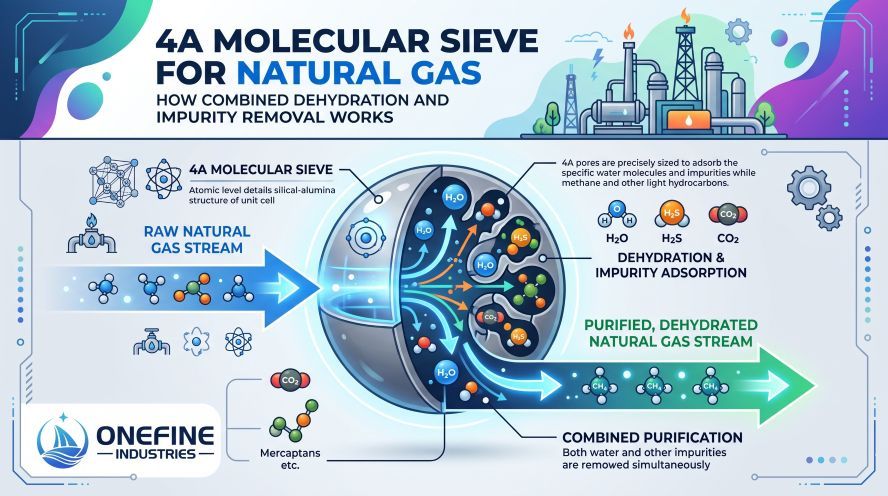
4A Molecular Sieve for Natural Gas: How Combined Dehydration and Impurity Removal Works
4A molecular sieve can dry natural gas and pull moderate CO₂/H₂S out of the same stream in one bed — how its larger pore enables that dual role, where it fits in the treatment train, and when 3A is the better call instead.
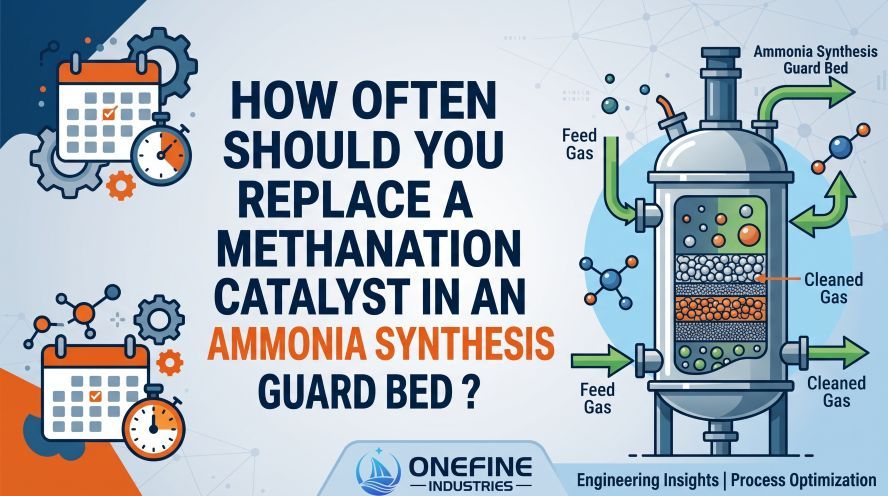
How Often Should You Replace a Methanation Catalyst in an Ammonia Synthesis Guard Bed?
There's no fixed replacement interval for a methanation catalyst — service life depends almost entirely on how well the upstream desulfurization train protects it. Here's how to read the real warning signs.
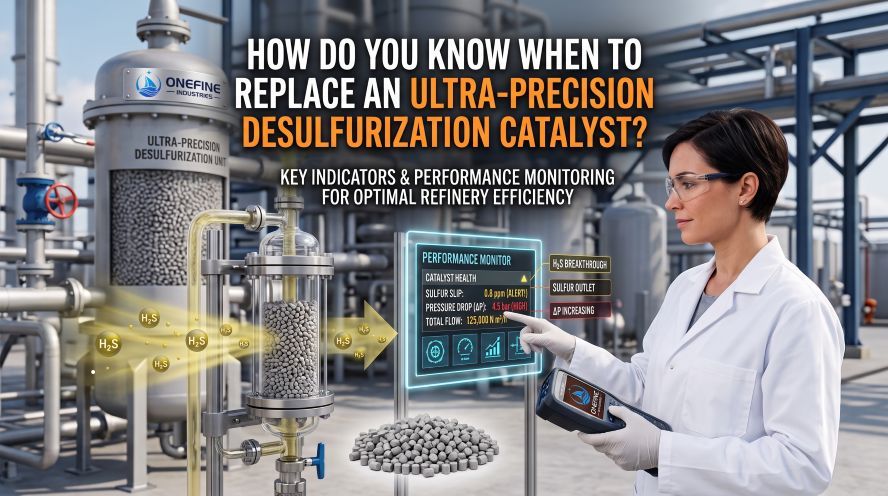
How Do You Know When to Replace an Ultra-Precision Desulfurization Catalyst?
Four real warning signs — total sulfur creep, falling COS conversion, rising pressure drop, and downstream poisoning — that tell you an Ultra-Precision Desulfurization Catalyst bed needs replacing.