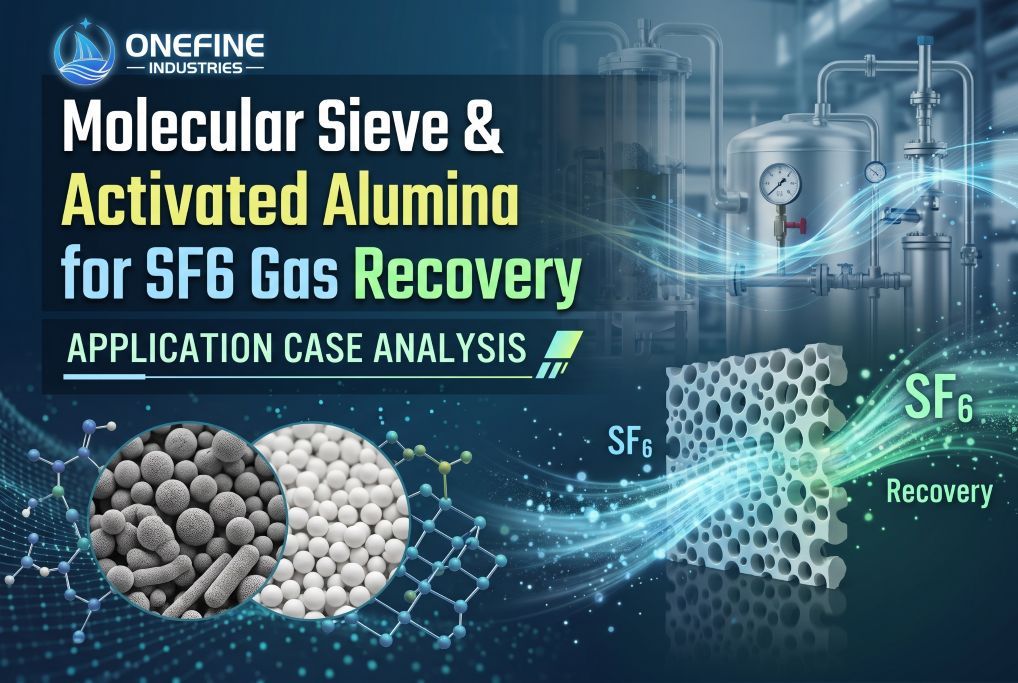
Molecular Sieve and Activated Alumina for SF6 Gas Recovery: Application Case Analysis
Industry Context
Key Takeaways
- Molecular sieve and activated alumina are used together in documented SF6 gas recovery filtration equipment.
- Adsorbent media and particle filters perform different functions within the treatment system.
- A lower moisture reading does not establish that gas purity and decomposition products are acceptable.
- Material selection must match the equipment and contamination profile; generic adsorbent names do not prove cartridge compatibility.
SF6 gas is used for insulation and arc quenching in electrical switchgear. During maintenance, gas recovery creates an opportunity to collect and assess the gas rather than release it. When moisture or other contamination is present, the treatment path must address more than simply transferring gas into a cylinder.
This application analysis considers a representative maintenance scenario: gas is recovered from electrical equipment, routed through suitable conditioning equipment, and tested before a reuse decision. It explains where molecular sieve and activated alumina fit, without presenting an invented customer installation or a guaranteed treatment result.
Application Scenario: Recovering Gas from Electrical Equipment
A service team is preparing to recover SF6 from a gas compartment. The relevant questions are the condition of the gas, the contamination expected from its service history, and the treatment capabilities of the recovery equipment.
The gas may require moisture removal, control of decomposition products, or particle filtration. These are separate treatment duties. Electrical discharges can generate decomposition products; some contamination may also arise during handling. A dry-looking system is not evidence that the recovered gas is ready for another filling operation.
The assessment begins with available gas-quality information and the equipment supplier's procedures. Where contamination is suspected, an appropriate pre-filter can protect downstream recovery equipment as well as support gas conditioning. Filter selection should follow that assessment rather than assume every recovered batch needs the same media arrangement.
Why the Adsorbent Combination Has a Real Application Basis
The combination is documented in commercial equipment. DILO lists an SF6 pre-filter configuration containing aluminium oxide, a 4 Å molecular sieve and a separate particle filter. This provides a concrete example of these material families being used together in SF6 recovery service.
That example establishes an application, not a universal design. It does not make the published filling ratio, pressure rating or water capacity transferable to another filter housing. Nor does it mean any material sold under the same generic name is a qualified replacement.
Our 4A molecular sieve guide explains the material's general drying role. In SF6 equipment, the selected grade must also suit the specified cartridge, gas condition and service requirements.
The same distinction applies to activated alumina fundamentals. A general understanding of adsorption helps explain the material family, but cannot establish its capacity for every decomposition product in a particular gas mixture.
Separate Drying, Contaminant Treatment and Particle Removal
The treatment train should be understood by function rather than as a single “purification bed.”
- Adsorbent treatment: The molecular sieve and alumina filling provides the dry-filter media in the documented equipment. The combined system is intended for moisture and decomposition-product treatment; individual contaminant performance must be confirmed for the selected materials.
- Particle filtration: A separate filter addresses solid material. Adsorbent granules should not be treated as a substitute for the specified particle-filter element.
- Additional treatment: Oil contamination or a different gas-quality problem may call for another configuration. DILO separately lists an oil-related separating filter with activated carbon and alumina, illustrating why configurations cannot be treated as interchangeable.
This is also why a generic layered-bed diagram can mislead. Without the equipment drawing, this analysis does not assign a mandatory inlet-to-outlet order or claim that alumina always removes one contaminant while molecular sieve removes another. Flow direction, media arrangement and operating limits belong to the qualified equipment design.
Assess the Recovered Gas Before Deciding on Reuse
Recovery, treatment and acceptance are distinct stages. Completing the transfer only establishes that gas has been collected. Passing it through a filter establishes that a treatment step occurred, not that every relevant quality requirement has been met.
An assessment should distinguish:
- Moisture: Record the measured value and reporting basis. Dew point at atmospheric pressure and dew point at operating pressure are different reporting conditions; ppm by volume and ppm by mass are also different units.
- Gas composition: Establish SF6 concentration and investigate foreign-gas contamination where relevant.
- Decomposition products: Use the appropriate analysis for the gas condition and intended reuse requirements, rather than interpreting a moisture reading as a complete quality test.
DILO's published analysis equipment lists separate measurements for SF6 volume percentage, moisture and SO2, depending on the device configuration. This supports treating these as separate quality dimensions. It does not imply one instrument configuration detects every possible contaminant.
The reuse decision should be based on the applicable acceptance requirements, the receiving equipment's specification and competent assessment. No universal moisture limit or gas-purity guarantee is assigned in this case analysis.
When Filtration Is Not the Complete Treatment Route
A moisture-removal stage cannot be assumed to correct foreign-gas dilution. Similarly, fitting fresh media does not demonstrate that a previously contaminated batch has become acceptable.
Where the gas does not meet the intended requirements, further specialist treatment or another disposition may be necessary. DILO's reclaiming service describes a multistage separation process, distinct from an ordinary adsorbent pre-filter. Its published reclaimed-gas performance is specific to that service and is not a promise made for the materials discussed here.
For the service team, the practical distinction is between a conditioning component and a complete recovery-and-quality-management process. Adsorbents have a defined role within that process. They do not replace gas analysis, equipment qualification or the final acceptance decision.
Selecting Materials and Maintaining Traceability
An inquiry for 4A Molecular Sieve should identify the intended SF6 treatment duty and the equipment requirements. The existing cartridge designation, media dimensions, gas condition and any qualification requirements are more useful than a request for “equivalent desiccant” alone.
For Activated Alumina for Purification , the same application review applies. A general purification grade should not be represented as compatible with an SF6 service unit without supporting confirmation.
Keep the gas batch, treatment record and test results traceable. EPA's SF6 management guidance emphasizes inventory tracking, trained personnel, recovery equipment and maintained handling procedures. Those practices support responsible recovery; this analysis does not quantify emissions savings for a hypothetical installation.
Used media should be managed under the equipment and site procedures appropriate to its contamination. This article provides no recipe for heating, regenerating or opening contaminated cartridges.
Application Outcome and Limits
The intended outcome is a controlled process: recover the gas, apply treatment suited to its condition, verify quality, and document the reuse or further-treatment decision. Molecular sieve, alumina and particle filtration can be relevant components, as demonstrated by existing equipment.
There are no reported before-and-after results for a Sorbsieve installation in this analysis. Material compatibility, treatment capacity, service interval and final gas acceptance remain application-specific. That boundary allows the case to explain a real industrial use without turning a third-party equipment example into an unsupported product claim.
Looking for Bulk Supply of Molecular Sieve and Activated Alumina?
Sorbsieve supplies industrial molecular sieve and activated alumina for buyers across the Middle East. For an SF6-related inquiry, share the equipment specification, gas condition and required media properties so the proposed grade and supporting documentation can be reviewed.
- ✅ Discuss material specifications and packaging requirements
- ✅ Identify the technical documentation needed for grade evaluation
- ✅ Review the intended duty before proposing a replacement material
Related Products
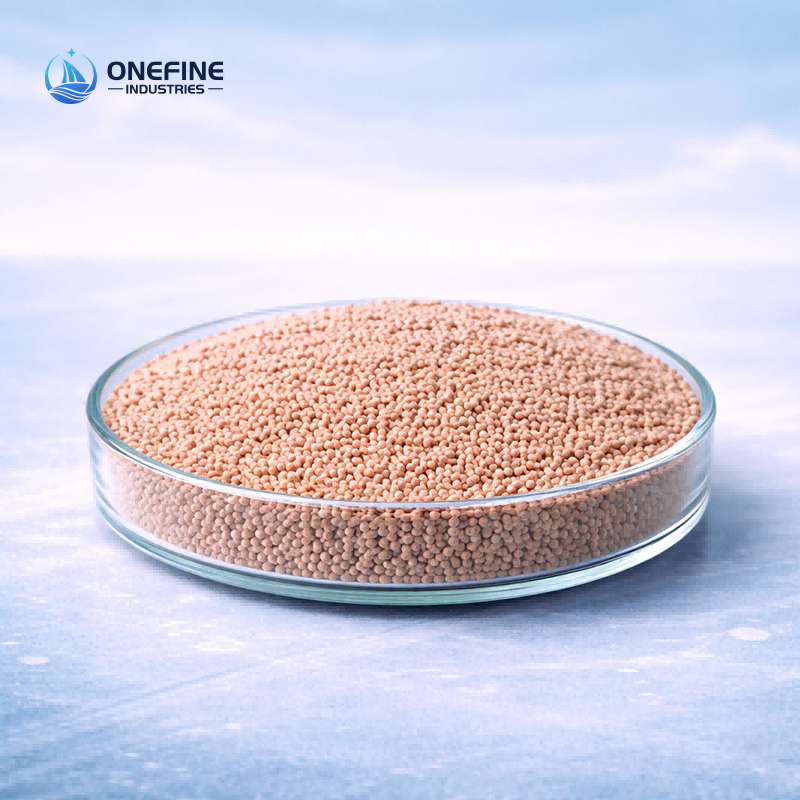
4A Molecular Sieve
General-purpose 4A molecular sieve desiccant for industrial air drying, solvent dehydration, CO2 removal, and static packaging applications. High capacity, long service life.
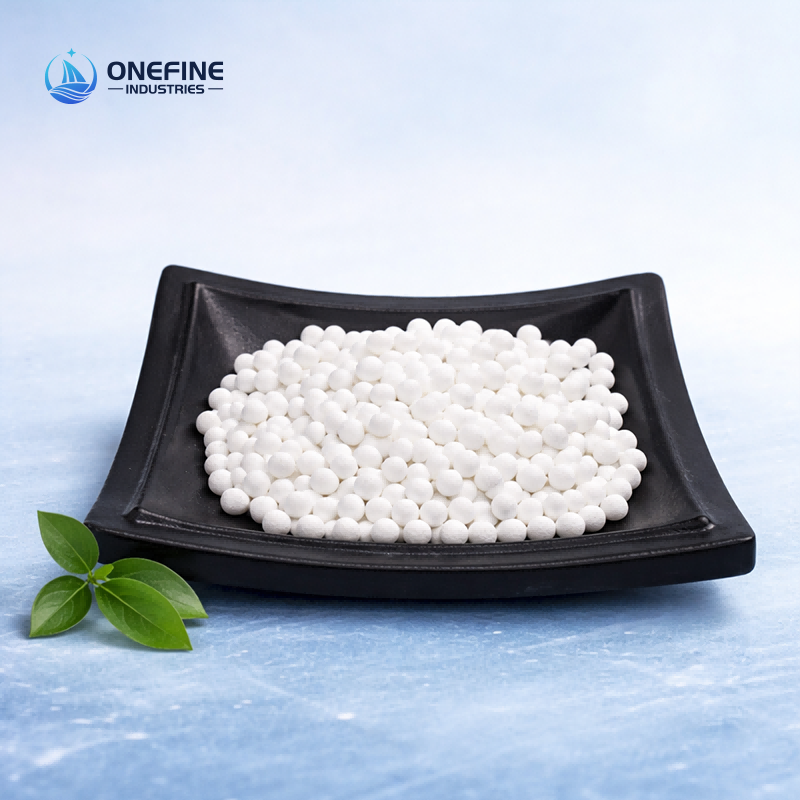
Activated Alumina for Purification
High-performance activated alumina (γ-Al₂O₃) adsorbent and desiccant for industrial gas/liquid drying, water defluoridation, and purification. White spherical beads with high surface area (≥300 m²/g), excellent crush strength, and full thermal regenerability. Available in multiple particle sizes for compressed air dryers, water treatment, and catalyst carrier applications.
Related Reading
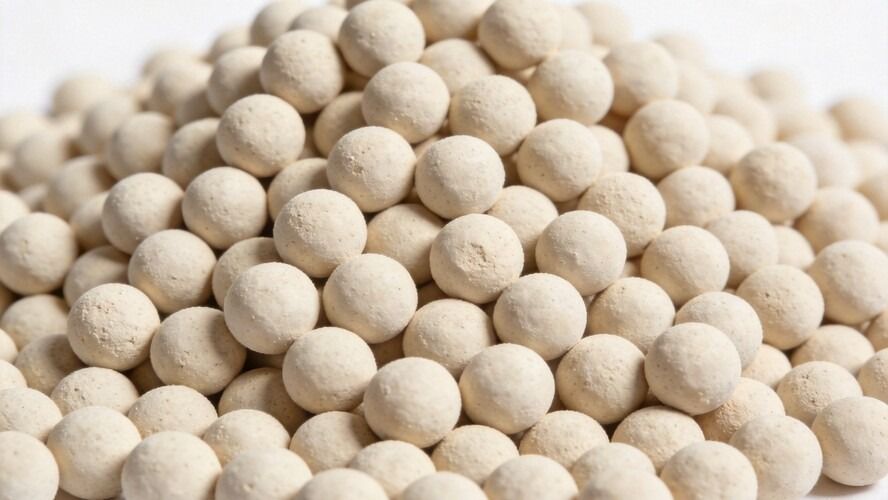
What is 4A Molecular Sieve? Uses, Specifications & How It Works
Everything you need to know about 4A molecular sieve: how it works, its 4Å pore size, physical adsorption process, and main industrial applications like air drying and CO2 removal.
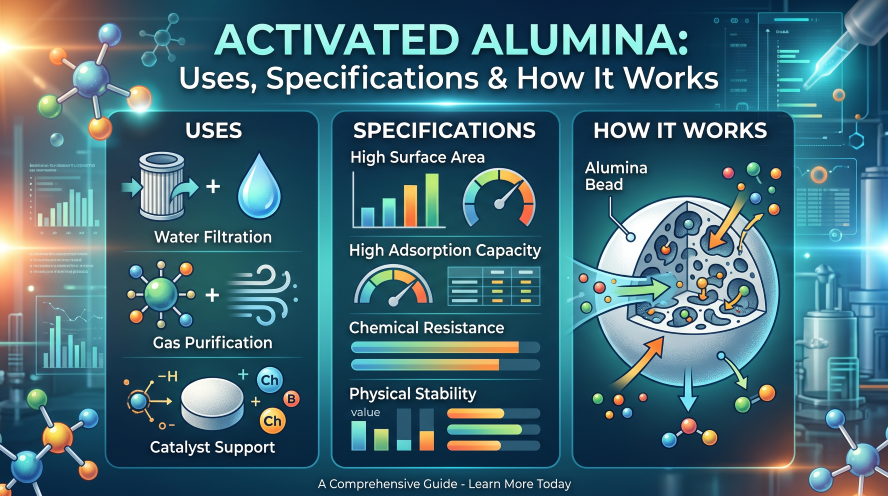
What is Activated Alumina? Uses, Specifications & How It Works
A practical guide to activated alumina (γ-Al₂O₃)—how it adsorbs moisture and fluoride, how it compares to silica gel and molecular sieve, and how to choose the right grade for your application.