Molecular Sieve and Activated Alumina in Transformer Desiccant Breathers: Application Case Analysis
Overview
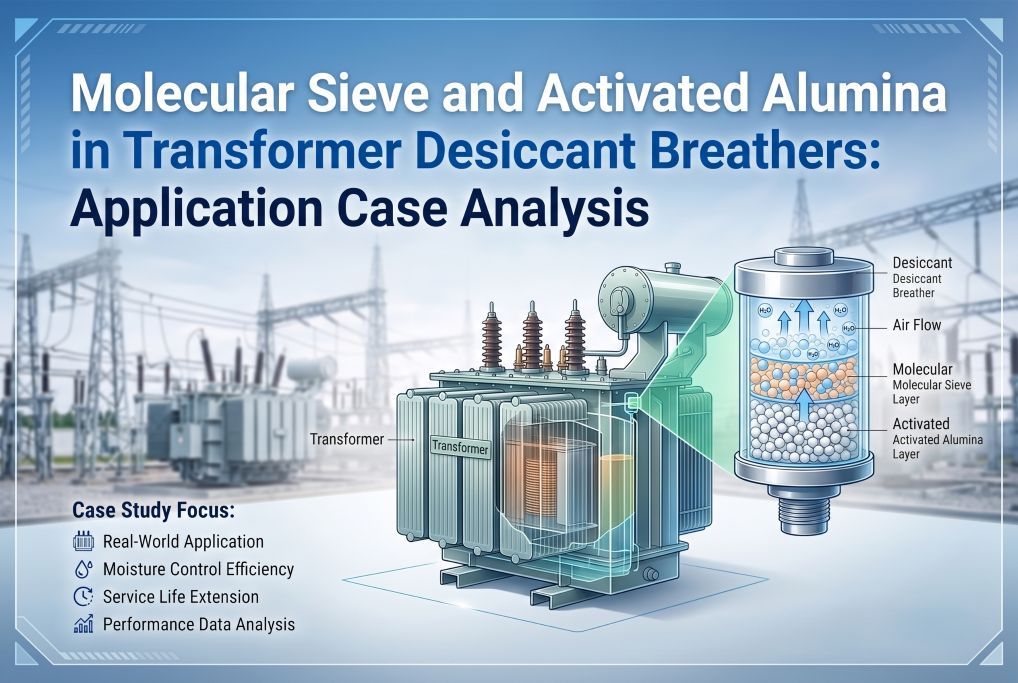
Power transformers aren't sealed systems — as the insulating oil inside heats and cools with load cycles, the transformer "breathes," drawing in and expelling air through a conservator tank vent. Every breath is an opportunity for atmospheric moisture to enter the oil, and moisture is one of the most damaging contaminants a transformer can be exposed to. This application case looks at how desiccant media, including molecular sieve and activated alumina, is used to intercept that moisture before it ever reaches the oil, and where each material type fits into transformer moisture protection.
Key Takeaways
- Extreme Moisture Control: 4A molecular sieve selectively adsorbs water at extremely low partial pressures, making it superior to silica gel for online continuous oil dehydration.
- High Physical Durability: Activated alumina provides superior crush strength, reducing bead breakdown and dust generation in demanding coastal or high-cycling environments.
- Dielectric Protection: Preventing moisture ingress via conservator tank vents preserves the dielectric strength of transformer insulating oil.
Why Transformers Need Desiccant Protection
Transformer insulating oil serves two functions: it cools the windings and it provides dielectric insulation. Moisture contamination compromises the second function directly. As oil moisture content rises, dielectric strength falls, accelerating insulation aging and increasing the risk of electrical failure. IEEE C57.106 sets in-service oil moisture limits by voltage class rather than a single figure: roughly 35 ppm for transformers rated 69 kV and below, 25 ppm for 69–230 kV, and 20 ppm for equipment above 230 kV — with higher-voltage, higher-value transformers held to the tighter thresholds.
Because the transformer breathes with every thermal cycle, the air entering the conservator tank has to be conditioned before it reaches the oil. That's the job of the desiccant breather — a vent-mounted device containing a bed of moisture-adsorbing media that the incoming air passes through. Without this protection, humid ambient air is drawn directly into contact with the oil on every cooling cycle, and moisture accumulates in the system over time.
Desiccant Options: Silica Gel, Molecular Sieve, and Activated Alumina
The transformer breather market is dominated by silica gel, and for good reason — it's inexpensive, self-indicating (changing color from blue to pink, or orange to green, as it saturates), and adequate for the majority of standard distribution transformers in moderate climates. It's worth being upfront about this: silica gel is the default choice for most routine breather applications, and Sorbsieve's product line is not positioned to compete in that segment.
Where molecular sieve and activated alumina become the more relevant choice is in higher-demand applications: transformers in consistently high-humidity or coastal environments, larger power transformers where moisture control tolerances are tighter, and dedicated online oil dehydration and regeneration systems rather than passive breathers. In these applications, the adsorption characteristics and mechanical durability of molecular sieve and activated alumina offer real advantages over standard silica gel.
Where 4A Molecular Sieve Fits: High-Performance Moisture Control
4A Molecular Sieve is engineered for selective water adsorption even at very low partial pressures — a meaningful advantage over silica gel, whose adsorption performance declines as ambient humidity or moisture concentration drops. This matters directly for transformer oil protection: once oil has already been dried down to a low moisture level, pulling residual moisture down further, or holding it there consistently, is exactly the condition where molecular sieve outperforms silica gel. For the fundamentals of this grade, see What Is 4A Molecular Sieve?
Molecular sieve also has a higher crush strength than silica gel, which translates to less bead breakdown and less dust generation in continuous-duty columns — a practical maintenance advantage in systems that see frequent thermal cycling. This is the profile that fits dedicated online transformer oil dehydration and regeneration systems, where the desiccant bed is doing continuous, higher-performance moisture removal work rather than simple passive air conditioning at a breather vent.
The trade-off is regeneration: molecular sieve requires higher regeneration temperatures than silica gel, which is a relevant consideration for equipment design but not a barrier for planned maintenance cycles on larger systems where the performance benefit justifies it.
Where Activated Alumina Fits: Breather Media for Demanding Environments
Activated alumina is also used as breather desiccant media, offering higher physical durability than silica gel and a different adsorption profile that some transformer maintenance programs prefer for demanding service conditions — coastal humidity, frequent thermal cycling, or sites where breather media needs to withstand rougher handling. It shares some of the mechanical durability advantages of molecular sieve while sitting at a different cost and performance point, giving transformer maintenance teams a middle option between standard silica gel and molecular sieve for applications that need more than the basic passive breather but don't require a dedicated oil regeneration system. For the fundamentals of this material, see What is Activated Alumina?
Why This Matters for the Middle East
Grid infrastructure buildout across the Gulf — new substations, expanded distribution networks, and large-scale power transformer installations — is a significant and ongoing procurement driver in the region. Coastal humidity in cities like Jeddah, Dammam, Doha, and Dubai puts real stress on standard breather desiccants, shortening replacement intervals and increasing maintenance frequency compared to drier inland climates. For utilities, EPC contractors, and equipment OEMs sourcing desiccant media at scale for regional installations, having a bulk supplier who can deliver consistent quality across container-level orders — rather than sourcing small retail quantities — is a real procurement need, not just a cost consideration.
Recommended Products from Sorbsieve
- 4A Molecular Sieve — for high-performance moisture control in online transformer oil dehydration and regeneration systems, and demanding breather applications where standard silica gel performance isn't sufficient.
- Activated Alumina for Purification — for breather media in coastal and high-cycling environments requiring greater physical durability than standard silica gel.
FAQ
Q: Is molecular sieve a direct replacement for silica gel in a standard transformer breather?
A: Not typically for routine, low-demand breathers — silica gel is the standard choice there and is cost-effective for that role. Molecular sieve is more relevant for higher-performance applications: larger transformers with tighter moisture tolerances, or dedicated online oil dehydration systems where its lower-humidity adsorption performance is a real advantage over silica gel.
Q: Why does coastal humidity matter so much for breather desiccant selection?
A: Higher ambient humidity means more moisture load hitting the desiccant bed on every thermal breathing cycle, which saturates standard silica gel faster and shortens replacement intervals. In consistently high-humidity coastal environments, the greater physical durability of molecular sieve or activated alumina can reduce maintenance frequency compared to standard silica gel.
Q: Can activated alumina and molecular sieve be used together in the same system?
A: Yes — some breather and dehydration system configurations use activated alumina as a more durable pre-stage ahead of a molecular sieve bed doing the final low-moisture polishing, similar in principle to how activated alumina is used as a guard bed ahead of molecular sieve in PSA gas separation systems.
Q: What oil moisture level should trigger concern for transformer insulation health?
A: Per IEEE C57.106, acceptable in-service oil moisture limits vary by voltage class — roughly 35 ppm for transformers rated 69 kV and below, 25 ppm for 69–230 kV, and 20 ppm for equipment above 230 kV. Higher-voltage transformers are held to tighter limits because moisture-driven dielectric degradation carries greater consequence at higher operating voltages; always confirm against your equipment OEM's specifications and the applicable local standard.
Looking for Bulk Supply of Molecular Sieve or Activated Alumina?
Sorbsieve is a trusted bulk supplier of molecular sieve, activated alumina, and complete industrial adsorbents, serving industrial buyers across the Middle East.
We provide:
- ✅ Container-level supply (20'GP / 40'GP / 40'HQ)
- ✅ Full documentation (COA / TDS / SDS / COO)
- ✅ Multiple packaging options
- ✅ Technical support for desiccant selection and system sizing
- ✅ Fast quote response for industrial and utility-scale inquiries
Contact our team for bulk pricing, product samples, and technical consultation.
Related Products
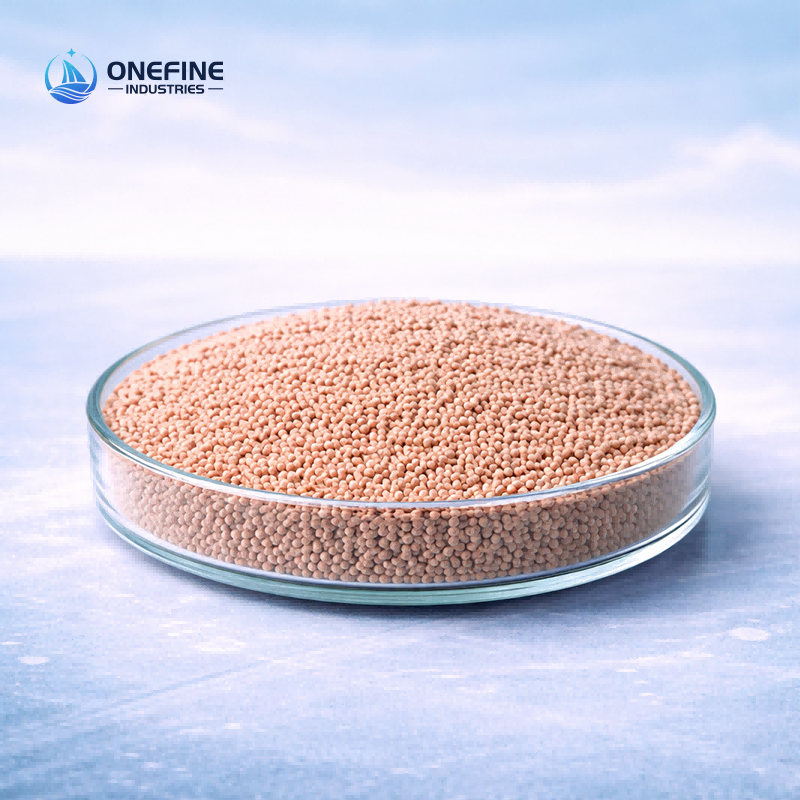
4A Molecular Sieve
General-purpose 4A molecular sieve desiccant for industrial air drying, solvent dehydration, CO2 removal, and static packaging applications. High capacity, long service life.
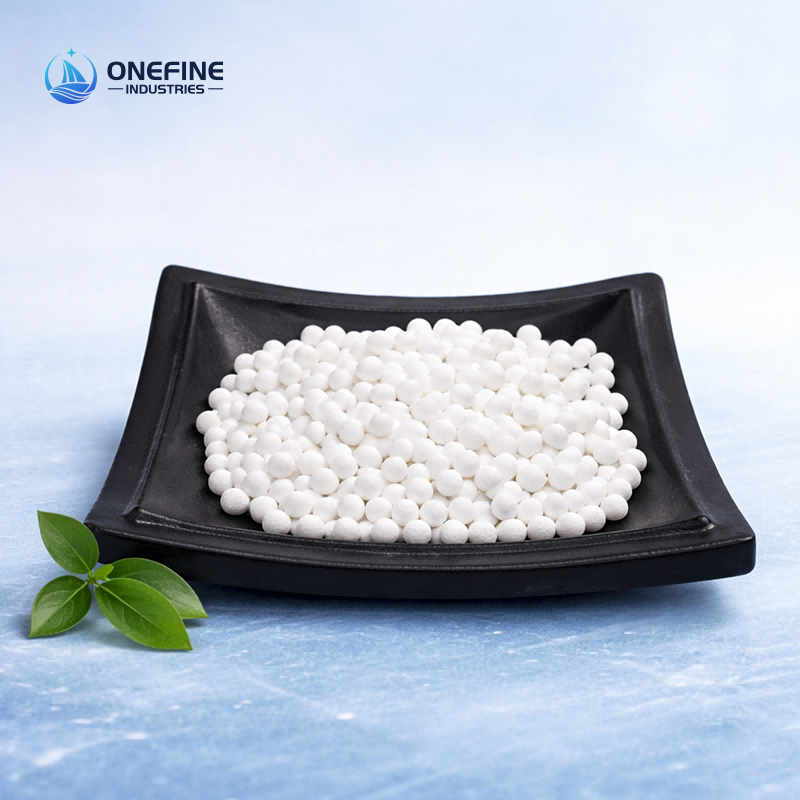
Activated Alumina for Purification
High-performance activated alumina (γ-Al₂O₃) adsorbent and desiccant for industrial gas/liquid drying, water defluoridation, and purification. White spherical beads with high surface area (≥300 m²/g), excellent crush strength, and full thermal regenerability. Available in multiple particle sizes for compressed air dryers, water treatment, and catalyst carrier applications.
Related Reading
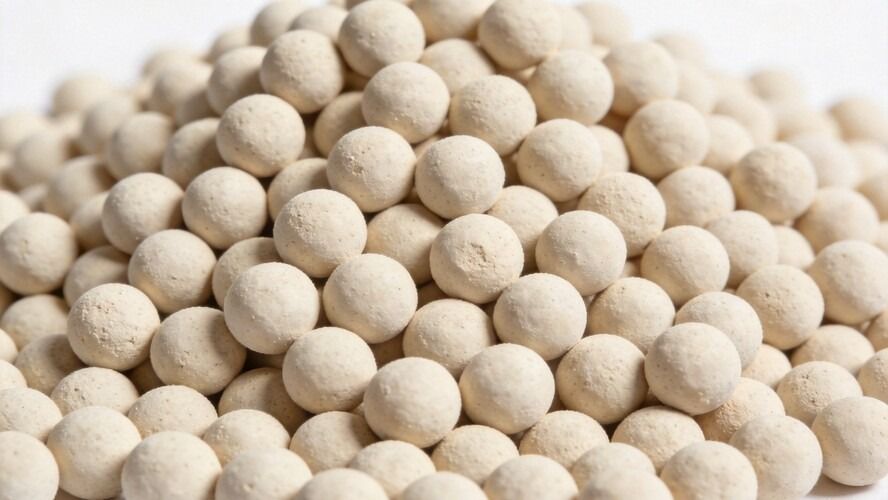
What is 4A Molecular Sieve? Uses, Specifications & How It Works
Everything you need to know about 4A molecular sieve: how it works, its 4Å pore size, physical adsorption process, and main industrial applications like air drying and CO2 removal.
What is Activated Alumina? Uses, Specifications & How It Works
A practical guide to activated alumina (γ-Al₂O₃)—how it adsorbs moisture and fluoride, how it compares to silica gel and molecular sieve, and how to choose the right grade for your application.