COS Adsorbent and CD Adsorbent in Polymer-Grade Olefin Purification: Application Case Analysis
Overview
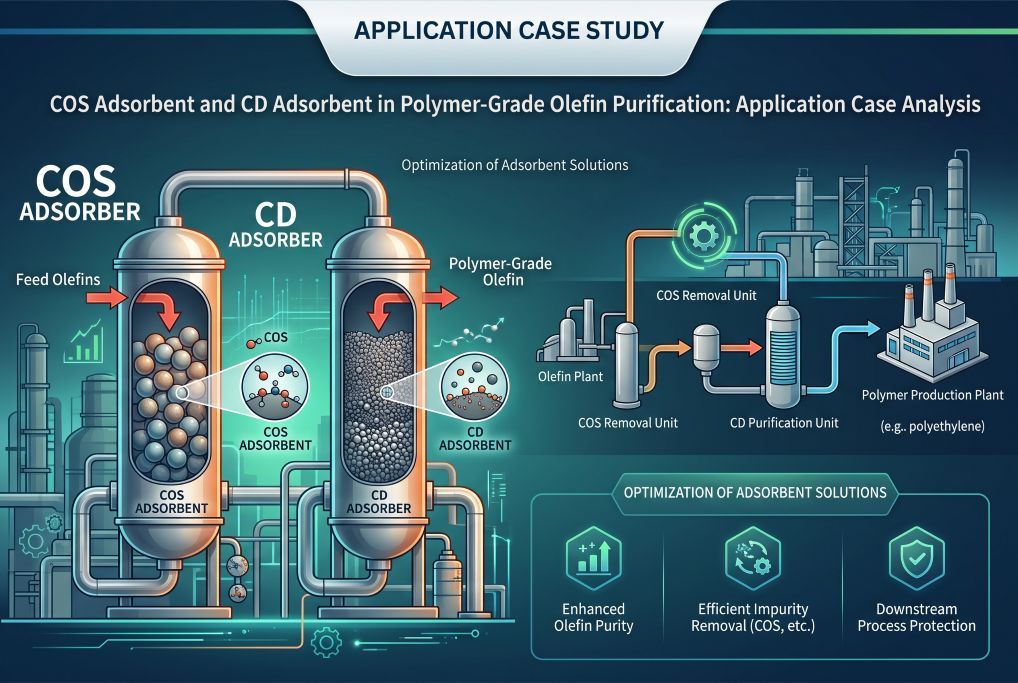
Polymer-grade propylene and ethylene look simple on a spec sheet — 99.5%+ purity is a common target — but the trace contaminants left behind after distillation are exactly the ones that matter most. Carbonyl sulfide (COS), oxygenates, moisture, and mercaptans don't show up as bulk impurities; they show up as poisoned polymerization catalysts, off-spec resin, and unplanned reactor downtime. This case looks at how a two-stage adsorbent train — COS Adsorbent followed by CD Adsorbent — is used to protect polymer-grade olefin feed before it ever reaches the polymerization reactor.
The Purification Challenge in Polymer-Grade Olefin Production
Key Takeaways
- COS Removal Limits: Distillation cannot effectively separate COS from propylene due to similar boiling points, mandating targeted adsorption removal.
- Stage One (Sulfur Capture): A COS Adsorbent guard bed strictly targets carbonyl sulfide, hydrogen sulfide, and carbon disulfide prior to downstream steps.
- Stage Two (Polishing): CD Adsorbent polishes residual oxygenates and moisture; skipping this stage allows Lewis bases to irreversibly poison polymerization catalysts.
Steam cracker and FCC-derived C2/C3 streams carry a mix of sulfur species (H₂S, mercaptans, COS) and polar oxygenates (methanol, carbonyls, dissolved water) that survive the distillation train. COS in particular is difficult to remove by distillation alone because its boiling point sits close to that of propylene, and it is also partly formed inside upstream treating steps through the reaction of CO₂ with sulfur compounds. Because polymerization catalysts can be deactivated by contamination at very low concentration, olefin producers commonly need to bring these impurities down well beyond what fractionation alone can deliver — which is where a dedicated adsorbent train comes in.
Stage One: COS Adsorbent Removes Sulfur-Bearing Compounds
The first stage of the train is a COS Adsorbent bed positioned to intercept carbonyl sulfide, hydrogen sulfide, and carbon disulfide before the stream moves further downstream. This stage targets the sulfur chemistry specifically — molecules that a general-purpose molecular sieve is not selective enough to remove to the depth polymer-grade specifications require, and that distillation cannot separate cleanly given how close COS's boiling point sits to the olefin itself.
Positioning this stage first reflects the actual chemistry of the feed: sulfur compounds are typically the higher-concentration, more corrosion-relevant contaminant class in a raw cracked-gas or FCC-derived stream, and removing them earlier avoids carrying sulfur load into the downstream polishing stage where it isn't the design target.
Stage Two: CD Adsorbent Polishes Oxygenates, Moisture, and Residual Mercaptans
Once sulfur compounds are removed, the stream still carries dissolved water, oxygenates (such as methanol and carbonyls), and trace mercaptans that a sulfur-selective bed isn't designed to capture efficiently. This is the role of the CD Adsorbent, positioned as the polishing stage that brings the feed the rest of the way to polymer-grade cleanliness before it reaches the reactor.
Running CD Adsorbent second, rather than first, matters for the same reason the sequence matters in Stage One: presenting it with a stream that's already had the bulk sulfur load removed lets it do the job it's actually designed for — oxygenate and moisture polishing — without being prematurely loaded down by contaminants a different chemistry is better suited to handle.
Why the Sequence Matters: Guard Bed Engineering for a Two-Stage Train
Treating COS Adsorbent and CD Adsorbent as interchangeable, or running them in a single mixed bed, undermines the purpose of splitting the train in the first place. Each adsorbent is chemically selective for a different contaminant class, and loading the wrong one first means it spends part of its capacity on compounds it wasn't designed to target — shortening its effective service life and letting the contaminant it was designed for break through earlier than expected.
This same logic is why we've written separately about what happens if you skip CD Adsorbent and go straight from COS removal to polymerization — the short version is that oxygenates and moisture left in the stream after COS removal alone are enough to cause catalyst efficiency problems downstream, even when the sulfur spec is fully met.
In broader olefin purification systems, this two-stage sulfur-then-polish approach commonly sits alongside a separate Ethylene Purification Adsorbent stage handling bulk drying and CO₂ removal earlier in the same purification system, depending on the specific feed source and system design.
Selecting the Right Configuration for Your Feed
The right split between COS Adsorbent and CD Adsorbent capacity depends on the upstream source of the olefin stream — steam cracker gas, FCC off-gas, and refinery-recovered streams all carry different baseline levels of sulfur species versus oxygenates. Buyers evaluating a new or retrofit purification train should confirm actual feed composition (sulfur species breakdown, oxygenate content, water dew point) before sizing either bed, since undersizing the sulfur-removal stage relative to feed sulfur loading is one of the more common causes of early COS breakthrough we see reported in the field.
Recommended Products from Sorbsieve
- COS Adsorbent — sulfur-selective adsorbent for COS, CS₂, and H₂S removal
- CD Adsorbent — polishing adsorbent for oxygenates, moisture, and residual mercaptans
- Ethylene Purification Adsorbent — complementary drying and CO₂ removal stage for broader olefin purification systems
FAQ
Q: Can COS Adsorbent alone protect a polymerization catalyst?
A: Not reliably on its own. COS Adsorbent is selective for sulfur compounds; it isn't designed to remove the oxygenates and moisture that also affect polymerization catalyst performance. A polymer-grade purification train typically needs both stages to reach the cleanliness level modern polymerization catalysts require.
Q: Why can't distillation remove COS from propylene or ethylene directly?
A: COS's boiling point is close enough to propylene's that fractional distillation cannot achieve a clean separation at the trace concentrations that matter for polymer-grade specifications. Adsorption-based removal is the practical alternative for getting COS down to the low levels polymerization processes require.
Q: Do COS Adsorbent and CD Adsorbent need to be regenerated on the same schedule?
A: Not necessarily — the two beds are exposed to different contaminant loads and can break through at different rates depending on feed composition, so each is typically monitored and regenerated on its own cycle rather than a fixed shared schedule.
Q: What happens if the two stages are run in the wrong order?
A: Running the CD stage before the COS stage exposes the polishing adsorbent to a sulfur load it isn't optimized for, which can shorten its service life and still leave the polymerization catalyst exposed to sulfur species the CD stage wasn't designed to capture.
Looking for Bulk Supply of COS Adsorbent and CD Adsorbent?
Sorbsieve is a trusted bulk supplier of COS Adsorbent, CD Adsorbent, and complete industrial adsorbents, serving industrial buyers across the Middle East.
We provide:
- ✅ Container-level supply (20'GP / 40'GP / 40'HQ)
- ✅ Full documentation (COA / TDS / SDS / COO)
- ✅ Multiple packaging options
- ✅ Technical support for two-stage adsorbent train sizing and system optimization
- ✅ Fast quote response for industrial inquiries
Contact our team for bulk pricing, product samples, and technical consultation.
Related Products
COS adsorbent
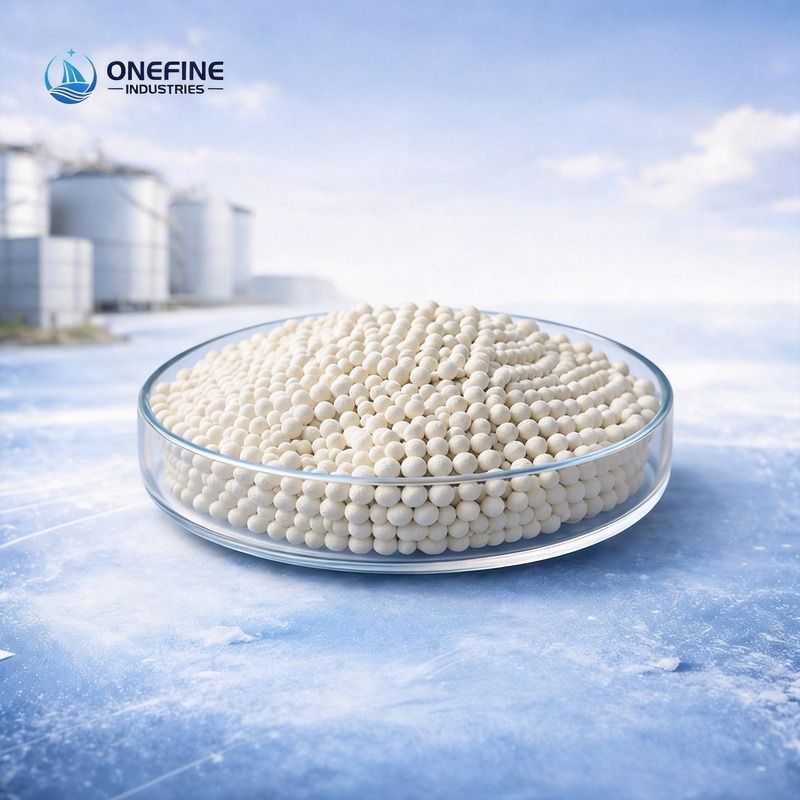
An advanced purification adsorbent catalyst based on specialty alumina with active components. Performance equivalent to imported Selexsorb COS adsorbent. Strong chemical adsorption capacity for selective removal of trace COS, CS₂, and H₂S from cracked C₂–C₄ unsaturated hydrocarbon streams. Also effectively removes CO₂, H₂O, chlorides, cyanides, and other common poisons. Operates at ambient to low temperatures for deep feedstock purification.
CD adsorbent
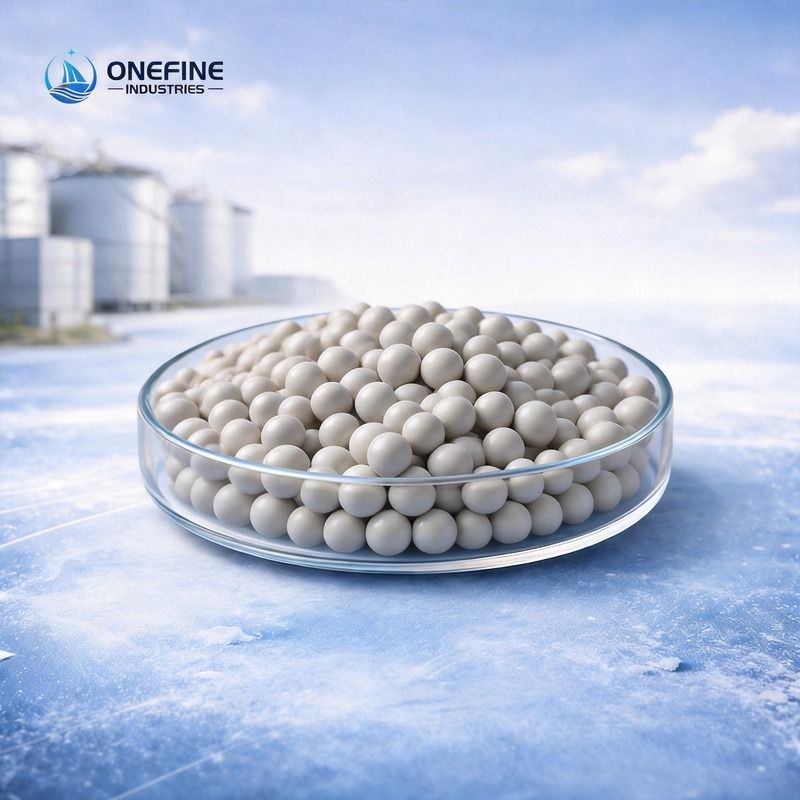
An advanced purification adsorbent catalyst based on specialty alumina with special modifiers. Performance equivalent to imported Selexsorb CD adsorbent. Strong chemical adsorption capacity for selective removal of trace oxygenated organic compounds (alcohols, ethers, aldehydes, ketones, peroxides) from C₂–C₄ unsaturated hydrocarbon streams in polyethylene and polypropylene units. Also effectively adsorbs water and mercaptans for deep feedstock purification. Operates at ambient to low temperatures.
Ethylene Purification Adsorbent
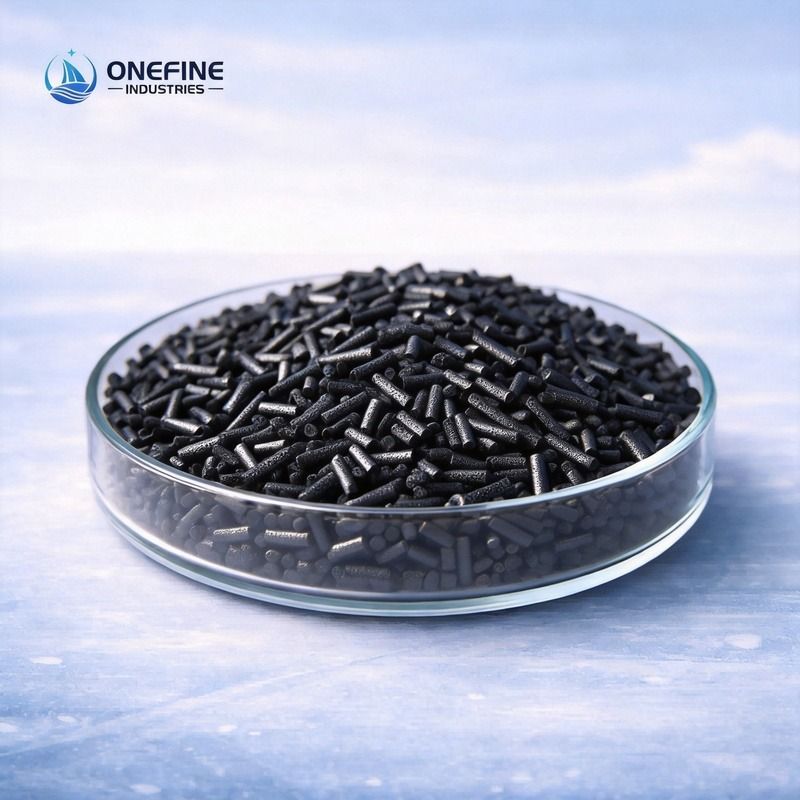
A CuO-ZnO adsorbent designed for the removal of CO from polymer-grade ethylene feedstock, while also removing trace amounts of O₂, H₂S, COS, AsH₃, and PH₃. Prepared by co-precipitation method with uniformly dispersed active components. Features high selectivity, high activity, excellent mechanical strength, large capacity, and easy operation. Protects polymerization catalysts from poisoning and ensures stable polyethylene production.
Related Reading
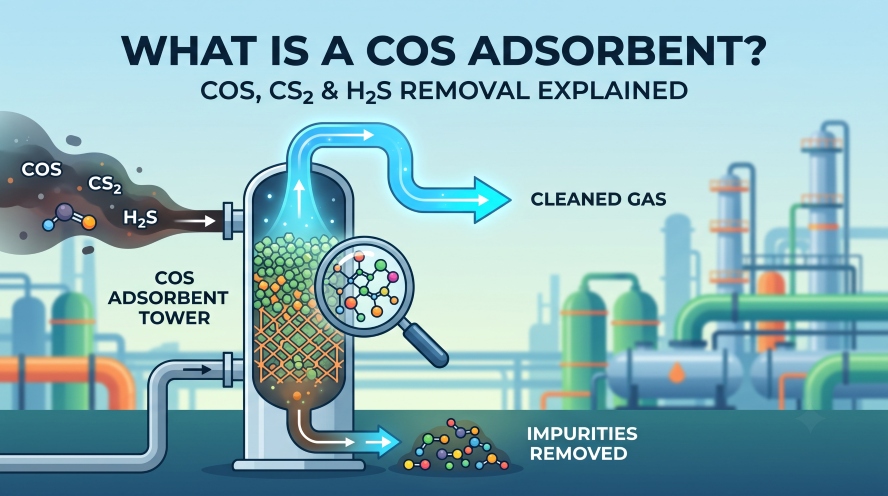
What Is a COS Adsorbent? COS, CS2 & H2S Removal Explained
A COS adsorbent removes COS, CS2, and H2S from cracked C2–C4 olefin streams, protecting polymerization catalysts. Learn how it works and where it fits in the purification train.
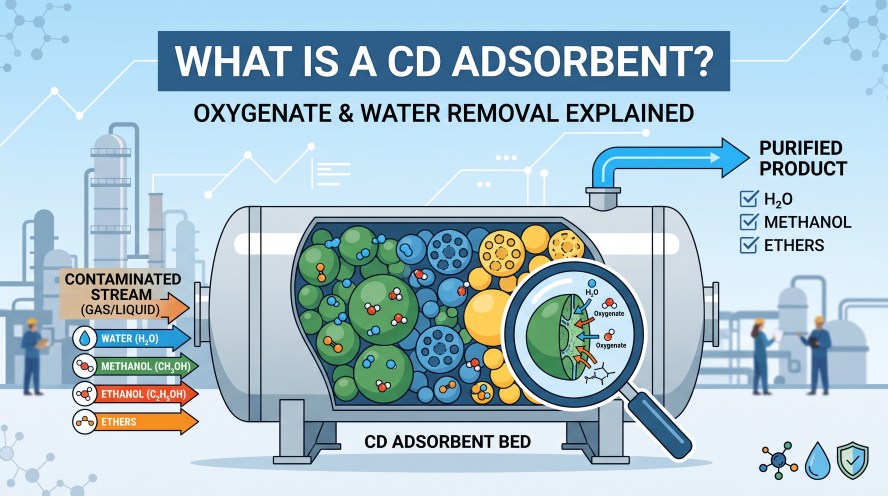
What Is a CD Adsorbent? Oxygenate & Water Removal Explained
How activated alumina protects the carbon molecular sieve bed in a PSA nitrogen generation train — bulk moisture removal upstream of precision gas separation.
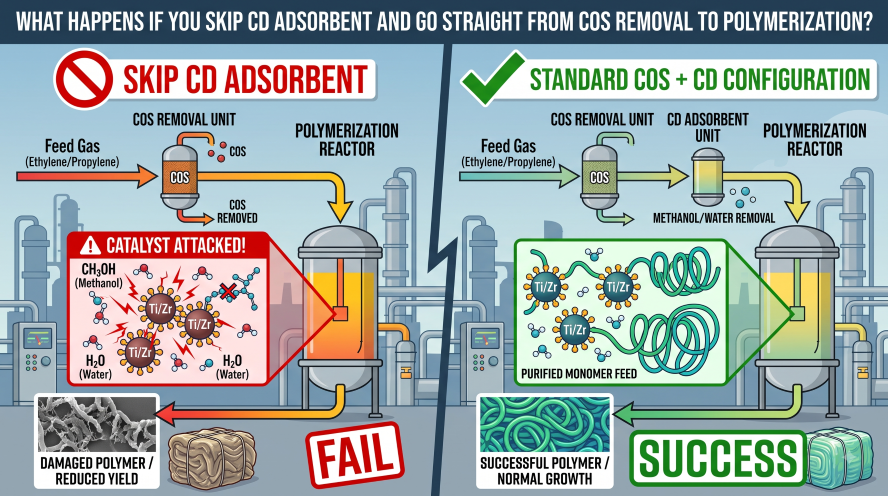
What Happens If You Skip CD Adsorbent and Go Straight from COS Removal to Polymerization?
Bypassing the CD adsorbent bed in an olefin purification train is a serious engineering misstep. This guide explains why oxygenates and moisture that slip past a COS adsorbent bed can permanently poison downstream polymerization catalysts — and why the two beds are not interchangeable.