Siloxane Pretreatment for Landfill Gas Engines
Detailed Description
Key Takeaways
- Use representative fuel analyses and the engine supplier’s acceptance criteria to decide whether siloxane control is required.
- Specify drying, sulfur control and siloxane control as separate duties.
- Use outlet testing to validate a selected configuration and set a changeout basis.
Application context
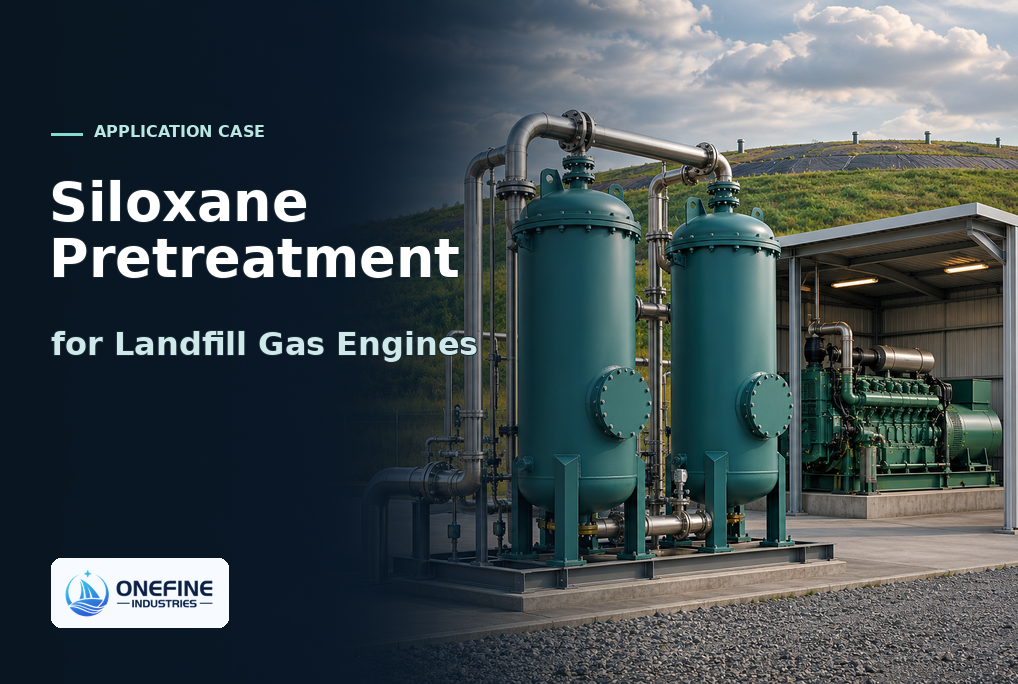
This application analysis draws on published landfill-gas guidance. A landfill-gas engine can experience silicon-containing deposits when volatile siloxanes in the fuel pass into the combustion chamber. A treatment decision starts with the actual gas and the engine's fuel requirements. Results vary with the gas source, operating conditions and media.
Compare measurements on the same basis
Confirm which compounds or total-silicon metric the engine manufacturer uses and match the analytical units and reference conditions. Obtain representative inlet samples, with the sampling location and operating period documented. Ask the lab and engine supplier how to interpret results near the acceptance limit and how to account for changes in gas composition over time. Inspect any available deposit analysis alongside fuel data.
Screen treatment options
EPA describes adsorbents such as activated carbon and silica gel among the options for siloxane control. Ask media suppliers for performance evidence under comparable fuel composition, temperature and moisture. Confirm how condensate and sulfur compounds will be managed and whether they affect the proposed media. Document the scope and limitations of each performance estimate before using it to compare operating costs.
For the upstream drying duty, 4A molecular sieve and activated alumina are candidates to discuss with the dryer supplier if the gas composition, moisture target and regeneration method support their use. The related products below apply to this separate drying step. Select and validate the siloxane removal medium on its own performance data and the engine fuel specification.
Verify performance in service
Define inlet and outlet sampling points before installation. Track fuel flow, inlet conditions and pressure drop alongside analytical results. Use outlet trends and the agreed acceptance criterion to plan service or changeout. A pressure reading can indicate a hydraulic change, while an outlet sample answers whether the target compounds are still being controlled.
Define the treatment boundary before asking for a quote
For this illustrative landfill gas engine application, begin by mapping what the fuel already passes through between the collection header and the engine. Record where condensate is separated, where cooling or drying occurs, where sulfur is controlled and where the engine fuel sample is taken. Note any points where gas from different sources blends. A result measured upstream of a blend is not necessarily representative of the fuel delivered to the engine.
Agree on the basis of comparison with the engine supplier and lab. Capture the compound list or silicon reporting basis, units, reference conditions and acceptance threshold from the relevant equipment documentation. Keep moisture and sulfur records beside the siloxane results. When the two parties use different reporting bases, ask them to agree on a conversion and its assumptions before comparing the values. Keep the original lab reports for traceability.
Interpret the initial findings before specifying media
Suppose an operator finds a deposit during normal engine service. Treat that observation as one piece of evidence. Review the engine service record, representative fuel analyses and available deposit analysis together. Check when the gas sample was taken, what equipment was operating and whether the source conditions were typical. A single sample from a quiet period provides limited evidence about what enters the engine across the normal range of operation.
If the observed gas quality stays within the applicable engine criteria, agree how it will continue to be monitored. If results exceed the criteria or repeatedly approach them, ask the process and engine teams to consider a dedicated removal stage. Track other contaminants as separate requirements. A sulfur removal medium should not be credited with siloxane performance without supporting evidence for that duty.
Compare proposals against one feed description
Provide candidate vendors with the same inlet composition, gas temperature, pressure, moisture conditions and operating flow range. Include the type and location of existing condensate and sulfur controls. Request the evidence behind the proposed media and the conditions under which that performance was measured. Ask how changes in the inlet moisture or competing contaminants affect the proposal and what upstream operating envelope the vendor assumes.
Use a comparison sheet that keeps the hydraulic allowance, assumed contaminant loading, proposed monitoring plan and estimate of service life in separate columns. Request the basis for the estimated replacement interval and the outlet condition used to define the end of service. Include the media changeout arrangements and procurement lead time. A media price on its own does not explain the cost of maintaining the required outlet quality over a service interval.
Set the verification and changeout decision
Agree where inlet and outlet samples will be taken, how the lab will report results and what condition will trigger a review or replacement. Establish an initial record for gas flow, moisture, sulfur and differential pressure after the equipment enters service under approved conditions. For comparison, record which fuel source was in use and whether any upstream conditioning stage had recently changed.
Review outlet trends alongside the inlet results. If the outlet begins to rise while the inlet remains similar, consider whether the media is approaching the agreed service endpoint. If both change after an upstream event, investigate the event and review the vendor's feed assumptions. A stable differential pressure does not establish contaminant removal. In the same way, a change in differential pressure warrants a hydraulic check even when outlet analyses remain acceptable.
Record the decision for the next service cycle
Keep the media identification, installation date, gas analyses, baseline operating conditions and approved changeout criterion together. Add maintenance findings when the engine is serviced. Compare those findings with the fuel record before changing the next order. This gives procurement and operations a common basis for selecting media and improving the monitoring plan without presenting a projected service life as field evidence.
If site data are not sufficient to distinguish seasonal variation from the effects of media loading, commission a further sampling round with the engine supplier and process team before drawing a conclusion.
For a pilot review, document the proposed scope, monitored variables and stop criteria in writing. Review the evidence with both the engine owner and treatment vendor before translating an indicative removal result into a routine operating or purchasing decision.
Request a bulk media review
Share the engine fuel specification, gas analysis, peak flow, installed pretreatment and delivery destination. These inputs support a review of available media and procurement options.
Related Products
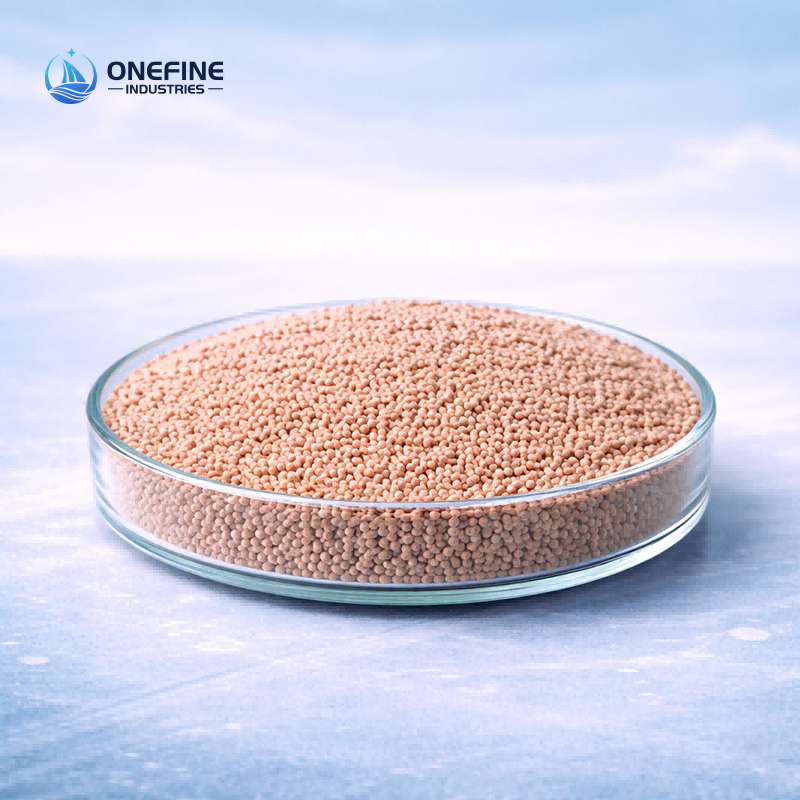
4A Molecular Sieve
General-purpose 4A molecular sieve desiccant for industrial air drying, solvent dehydration, CO2 removal, and static packaging applications. High capacity, long service life.
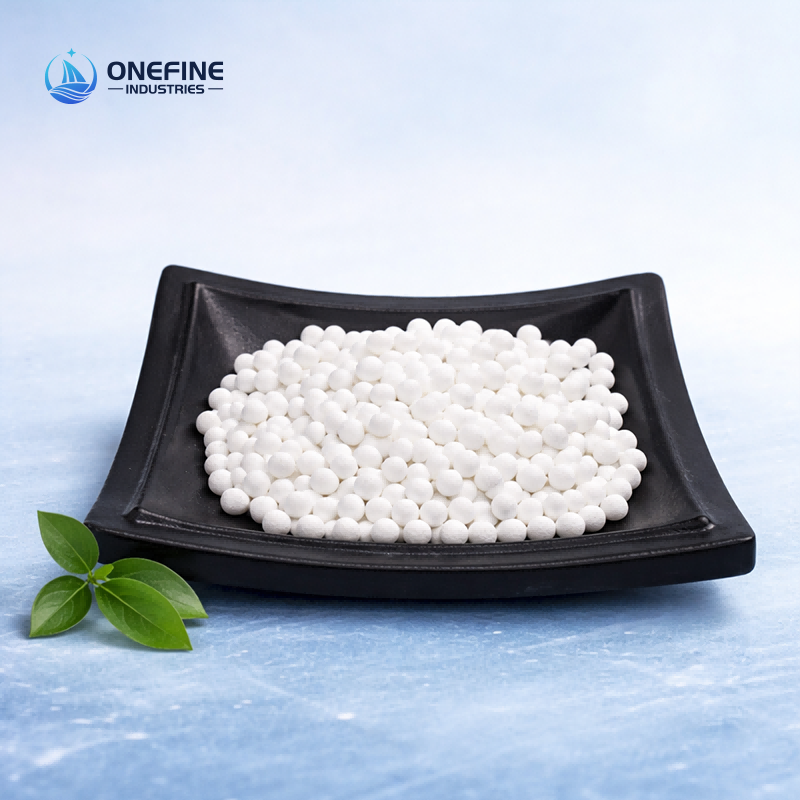
Activated Alumina for Purification
High-performance activated alumina (γ-Al₂O₃) adsorbent and desiccant for industrial gas/liquid drying, water defluoridation, and purification. White spherical beads with high surface area (≥300 m²/g), excellent crush strength, and full thermal regenerability. Available in multiple particle sizes for compressed air dryers, water treatment, and catalyst carrier applications.