What Regeneration Temperature Does a COS Adsorbent Bed Need to Avoid Early Breakthrough?
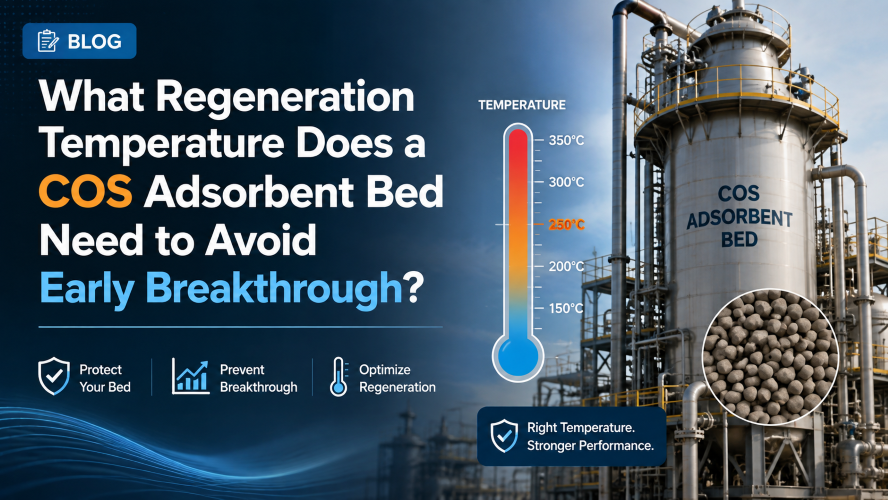
If your COS adsorbent bed is breaking through earlier than it used to, the cause often isn't the adsorbent itself — it's the regeneration cycle that came before it. Carbonyl sulfide (COS) removal in ethylene and propylene purification trains relies on a proper thermal swing adsorption (TSA) cycle, and getting the regeneration temperature wrong is one of the most common — and most overlooked — reasons a bed underperforms. This guide walks through why regeneration temperature matters, what happens when it drifts too low or too high, and how to spot the warning signs before COS starts slipping downstream. For the fundamentals of how this adsorbent works, see our companion guide, What Is a COS Adsorbent? COS, CS2 & H2S Removal Explained
Key Takeaways
- COS adsorbent beds are regenerated via thermal swing adsorption (TSA), where heated purge gas reverses the adsorption bond of carbonyl sulfide.
- Running purge gas temperatures too low leads to incomplete desorption, resulting in progressively shorter cycle times and downstream contamination.
- To verify reactivation, operators must monitor purge gas temperatures at both the inlet and outlet of the bed to ensure full heat penetration.
Why COS Adsorbent Regeneration Is a Thermal Swing Process
COS adsorbent beds used in olefin purification are regenerated through temperature swing adsorption: a heated, non-adsorbable purge gas is passed through the saturated bed to desorb the trapped carbonyl sulfide, restoring the adsorbent's capacity for the next cycle. This is standard practice across molecular sieve and zeolite-based sulfur adsorbents in industrial gas and hydrocarbon purification — the adsorption step runs at or near process temperature, while regeneration requires elevated heat to reverse the adsorption bond.
The key point for buyers running twin-bed or multi-bed systems: regeneration isn't a one-size-fits-all setting. Purge gas temperature has to reach a level sufficient to fully desorb the COS held on the adsorbent, and it has to be sustained long enough for that heat to actually penetrate the bed — not just the inlet zone.
What Happens When Regeneration Temperature Runs Too Low
If the purge gas doesn't reach a sufficient temperature — or doesn't hold that temperature long enough throughout the bed — desorption is incomplete. Some of the previously adsorbed COS stays put, occupying active sites that should have been freed up. The practical result shows up gradually, not all at once:
- Reduced effective capacity on the next adsorption cycle — because part of the bed is still "full" from the last round, it has less room to adsorb before breaking through
- Progressively shorter cycle times — each regeneration that under-performs compounds the problem on the next cycle, so operators often see cycle length shrink over several rounds rather than fail suddenly
- Downstream contamination risk — since COS adsorbent is typically the first stage ahead of CD Adsorbent in a polymer-grade purification train, any COS that breaks through early adds an unplanned load to the next stage
This is why a bed that "used to run fine" and now breaks through early doesn't necessarily mean the adsorbent has reached end of life — it's worth checking the regeneration temperature profile first.
What Happens When Regeneration Temperature Runs Too High
Overcorrecting isn't free either. Running purge gas hotter than the adsorbent's designed regeneration range doesn't improve desorption further once full reactivation is already achieved — it just adds unnecessary thermal stress. Repeated cycling at excessive temperatures, over many cycles, can accelerate structural aging of the adsorbent and shorten its useful service life. The safest approach is to regenerate within the range specified for your specific adsorbent grade rather than assuming "hotter is always more thorough."
Signs Your Regeneration Cycle Isn't Fully Reactivating the Bed
A handful of practical signals point to a regeneration temperature issue rather than a simple end-of-life adsorbent:
- Cycle length trending downward over several consecutive cycles, rather than a sudden single-cycle failure
- Breakthrough analyzer readings creeping up earlier in the cycle, even when feed composition hasn't changed
- Downstream CD Adsorbent stage showing signs of an unexpected COS or sulfur load it wasn't sized to handle
- Purge gas outlet temperature lagging significantly behind inlet temperature, which usually means the heat isn't fully penetrating the bed depth, not just the surface layer
How to Verify Your Regeneration Setup Is Correct
The most common blind spot in TSA regeneration troubleshooting is monitoring inlet temperature only. Inlet temperature tells you what's going into the bed — it doesn't confirm the heat actually reached the far end. A few practical checks:
- Monitor purge gas temperature at both the inlet and the outlet of the bed, not just the inlet
- Track cycle length as a trend over time, not just pass/fail on a single cycle
- Confirm purge gas flow rate and duration match your system's design basis — a hot purge that's too brief has the same effect as a purge that's not hot enough
- Cross-reference any early breakthrough with recent maintenance or process changes (e.g., a heater that was serviced, a control valve that was recalibrated) before assuming the adsorbent itself is at fault
None of these checks require replacing the bed. In most cases where regeneration temperature is the root cause, correcting the purge gas profile restores the original cycle length within a cycle or two — which is exactly why it's worth ruling out before treating early breakthrough as an end-of-life signal.
Recommended Products from Sorbsieve
- COS Adsorbent — engineered for carbonyl sulfide, CS2, and H2S removal in ethylene and propylene purification trains
- CD Adsorbent — the downstream stage handling oxygenate, water, and mercaptan removal after COS removal
- Ethylene Purification Adsorbent — the CO removal stage further downstream in a complete polymer-grade purification train
FAQ
Q: Is COS adsorbent regeneration different from a standard molecular sieve dehydration regeneration cycle?
A: The underlying mechanism is the same thermal swing principle — heated purge gas desorbs the trapped species — but the temperature range and cycle timing for COS removal are set specifically for the sulfur compound involved, not simply copied from a moisture-drying application. Always regenerate according to the range specified for your adsorbent grade rather than assuming settings transfer directly from a different service.
Q: Can a COS adsorbent bed be regenerated indefinitely, or does regeneration performance decline over time?
A: Like most industrial adsorbents, COS adsorbent beds can be regenerated many times, but very gradual capacity decline over a long service life is normal and expected, distinct from the sharper decline caused by a single incorrectly run regeneration cycle. Tracking cycle length as a long-term trend helps distinguish normal gradual aging from a correctable regeneration setup issue.
Q: Does regeneration temperature affect CS2 and H2S removal the same way it affects COS removal?
A: COS Adsorbent is typically specified to handle COS, CS2, and H2S together, and all three depend on the purge gas reaching and sustaining adequate temperature through the bed depth for full desorption. An incomplete regeneration cycle risks residual loading across all three species, not just COS specifically.
Q: Who should I talk to about the right regeneration temperature for my specific system?
A: Regeneration temperature and cycle duration depend on your specific feed composition, bed sizing, and system design, so it's worth confirming the exact parameters with our technical team rather than relying on a generic figure — every purification train is configured a little differently.
Looking for Bulk Supply of COS Adsorbent?
Sorbsieve is a trusted bulk supplier of COS Adsorbent and complete industrial adsorbents, serving industrial buyers across the Middle East.
We provide:
- ✅ Container-level supply (20'GP / 40'GP / 40'HQ)
- ✅ Full documentation (COA / TDS / SDS / COO)
- ✅ Multiple packaging options
- ✅ Technical support for COS Adsorbent selection and system optimization
- ✅ Fast quote response for industrial inquiries
Contact our team for bulk pricing, product samples, and technical consultation.
Related Products
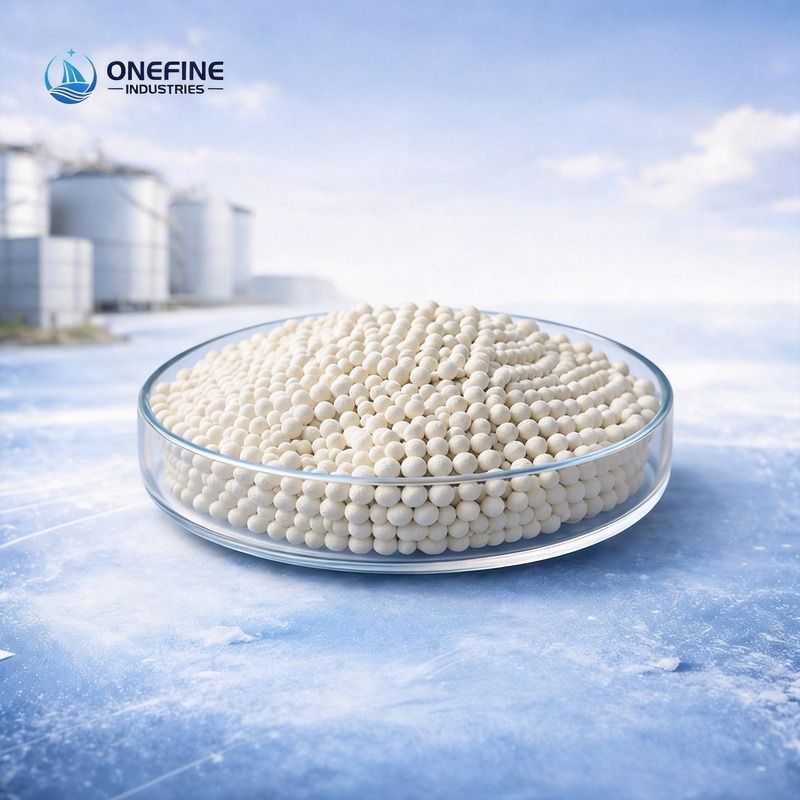
COS adsorbent
An advanced purification adsorbent catalyst based on specialty alumina with active components. Performance equivalent to imported Selexsorb COS adsorbent. Strong chemical adsorption capacity for selective removal of trace COS, CS₂, and H₂S from cracked C₂–C₄ unsaturated hydrocarbon streams. Also effectively removes CO₂, H₂O, chlorides, cyanides, and other common poisons. Operates at ambient to low temperatures for deep feedstock purification.
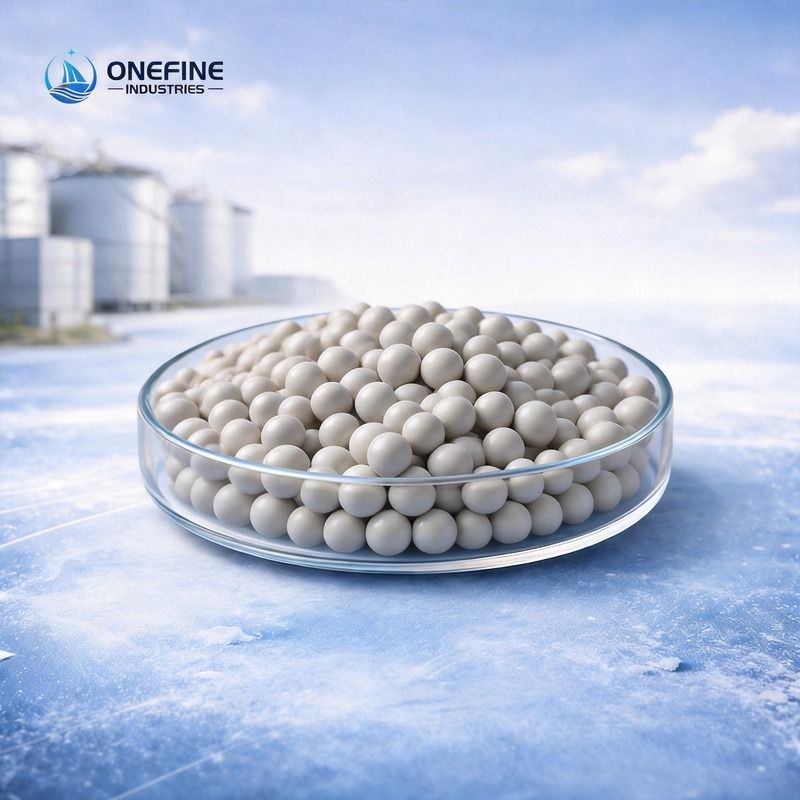
CD adsorbent
An advanced purification adsorbent catalyst based on specialty alumina with special modifiers. Performance equivalent to imported Selexsorb CD adsorbent. Strong chemical adsorption capacity for selective removal of trace oxygenated organic compounds (alcohols, ethers, aldehydes, ketones, peroxides) from C₂–C₄ unsaturated hydrocarbon streams in polyethylene and polypropylene units. Also effectively adsorbs water and mercaptans for deep feedstock purification. Operates at ambient to low temperatures.
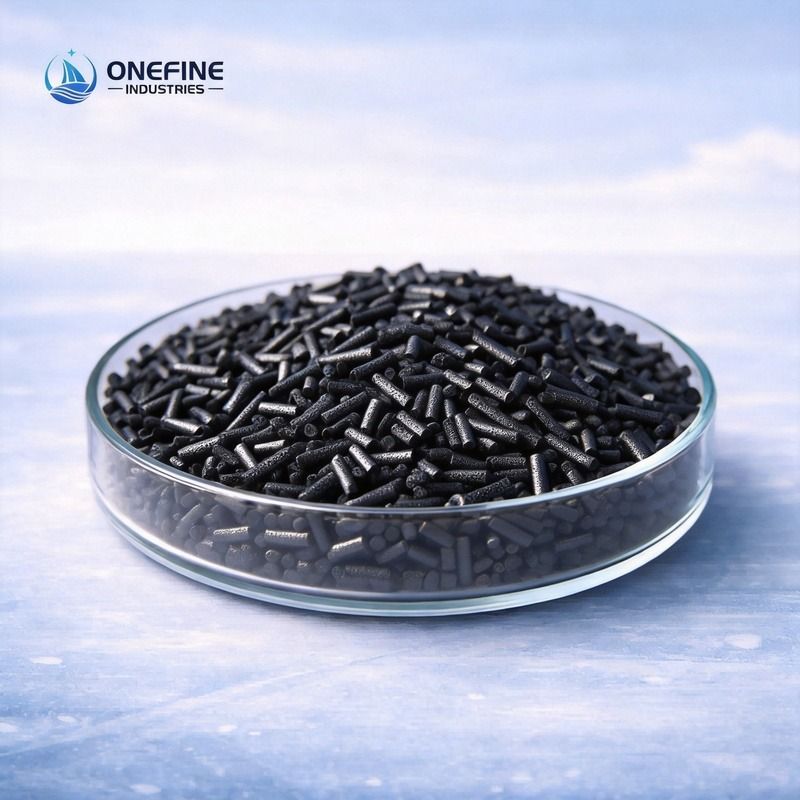
Ethylene Purification Adsorbent
A CuO-ZnO adsorbent designed for the removal of CO from polymer-grade ethylene feedstock, while also removing trace amounts of O₂, H₂S, COS, AsH₃, and PH₃. Prepared by co-precipitation method with uniformly dispersed active components. Features high selectivity, high activity, excellent mechanical strength, large capacity, and easy operation. Protects polymerization catalysts from poisoning and ensures stable polyethylene production.
Related Reading
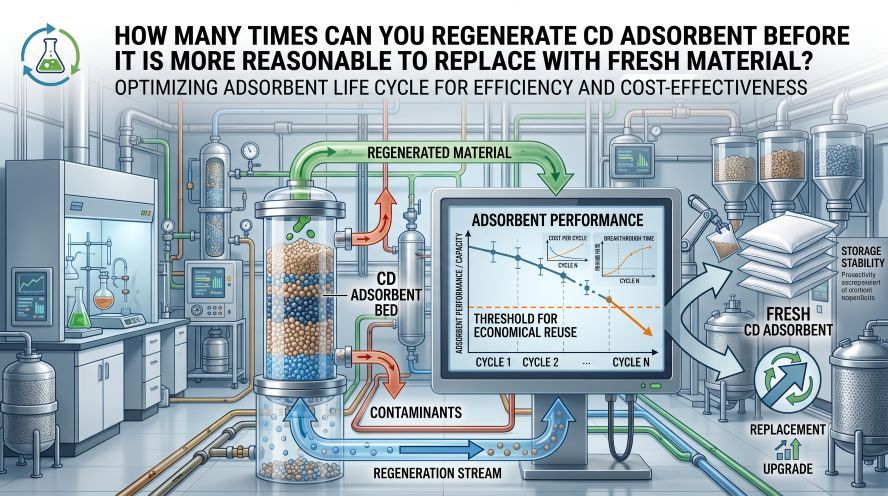
How Many Times Can You Regenerate CD Adsorbent Before Fresh Replacement Makes More Sense?
CD adsorbent is rated for N₂ purge regeneration up to 340°C — but regenerable doesn't mean unlimited. Here's how to read your own operating data to decide when another cycle still makes sense, and when a fresh charge is the safer call.
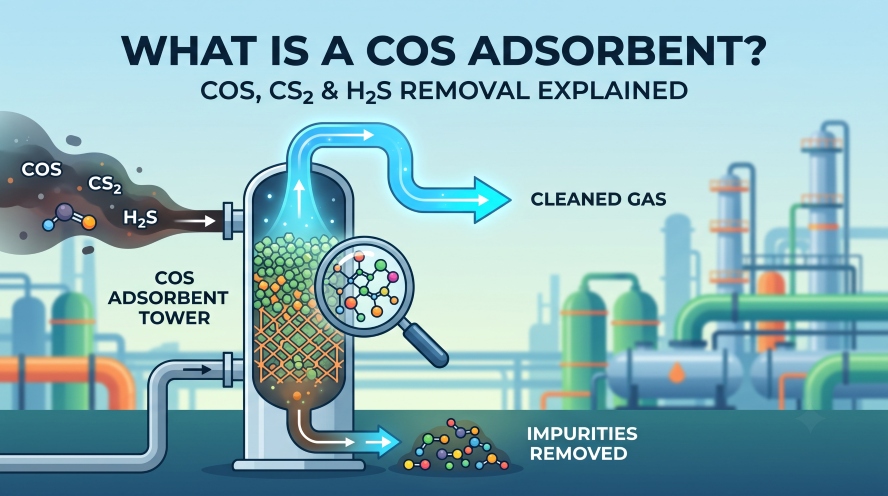
What Is a COS Adsorbent? COS, CS2 & H2S Removal Explained
A COS adsorbent removes COS, CS2, and H2S from cracked C2–C4 olefin streams, protecting polymerization catalysts. Learn how it works and where it fits in the purification train.