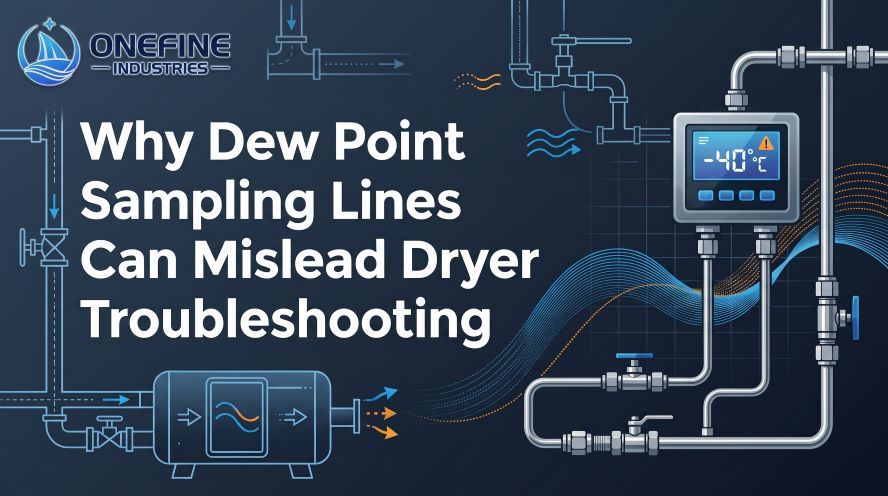
Why Dew Point Sampling Lines Can Mislead Dryer Troubleshooting
Key Takeaways
- A dew point reading describes the gas reaching the sensor; leaks, tubing and stagnant sections can make that gas unrepresentative of the dryer outlet.
- Short, clean metal sampling lines and adequate flow help reduce sampling effects, but the instrument's own installation requirements still apply.
- Verify the sampling arrangement and pressure basis before attributing a wet result to exhausted molecular sieve. A sampling problem and a real dryer problem can coexist.
Intro
A dryer outlet alarm often starts a discussion about regeneration or replacement media. Before ordering a new charge, establish whether the measurement represents the outlet gas. The process vessel, sample take-off, tubing, pressure reduction and sensor form a measurement chain. A change anywhere along that chain can change the interpretation of the displayed number.
This article focuses on dry compressed air and compatible industrial gas sampling. It does not specify a sampling assembly for toxic, flammable or corrosive service. Those systems require a design suited to the gas, pressure and site procedures. It also does not replace the dryer's operating limits or authorize continued operation with an unverified moisture alarm.
Where the Sample Can Gain Moisture
At low moisture levels, a small contribution from the surrounding environment can matter. Vaisala's DMT152 instructions emphasize leak-tight construction and suitable materials because ambient moisture leakage, diffusion through materials and moisture stored in materials can affect the measurement.
Treat the sampling system as a potential source of water, not just a passive pipe. Ask what changed before the alarm: was a connection opened, was temporary tubing fitted, or was a portable meter moved from a humid location? These observations do not prove a sampling error. They identify conditions that should be checked before a bed diagnosis is accepted.
A useful investigation keeps the process trend and the sampling history together. A wet reading after sample-line maintenance has a different evidential context from a repeatable deterioration seen on independent, validated measurements. Neither observation alone establishes remaining adsorbent capacity.
Why Tubing Material and Geometry Matter
Vaisala's DM70 guidance recommends short sampling lines, suitable metal surfaces and avoidance of hygroscopic materials, including PVC and nylon tubing. It also warns against dead ends that cannot be flushed easily. These are measurement-system recommendations, not specifications for a dryer vessel or a claim about a particular adsorbent grade.
The practical objective is to limit opportunities for moisture exchange and stagnant gas between the take-off and the sensor. A long temporary hose is therefore not interchangeable with a verified permanent sampling assembly simply because both connect to the same port. Fewer connections can also simplify leak investigation.
Record the actual arrangement before comparing tests. Include the take-off location, tubing material, approximate length, connection changes and the sensor model. A comparison without that context can make an installation difference look like a product difference.
Flow, Pressure and Response Need Separate Checks
Adequate flow refreshes the sample, but opening a valve further is not a universal fix. The DMT152 manual gives a typical 1–2 L/min example for its arrangement and says higher flow improves response. That figure is instrument-specific guidance, not a standard flow setting for every dew point transmitter.
Vaisala separately warns that excessive flow can create a local pressure drop at the sensor. Before comparing two readings, establish the pressure at each sensor and use a consistent pressure dew point basis. Our pressure dew point guide covers that interpretation separately; the present issue is whether the sample path itself is representative.
Do not prescribe a universal stabilization time. The sampling arrangement, previous exposure and instrument response all matter. Record the trend after a permitted change and use the instrument supplier's criteria for accepting a stable reading. A fast display update does not by itself show that the sample line has equilibrated.
Temperature also belongs in the review. The DM70 instructions require sample-path temperatures to remain above the gas dew point to avoid condensation and false results. A cold section can change the sample before it reaches the instrument; the direction and size of the error should not be guessed from one observation.
A Practical Evidence Sequence Before Replacing Media
Start by retaining the alarm record, operating conditions and instrument status. Follow the plant's response procedure while checking the measurement; an investigation is not permission to disregard the alarm.
Next, have qualified personnel review the take-off and sample assembly against the instrument instructions. Check integrity, material compatibility, stagnant branches and flow. Avoid making several changes at once, because that makes it harder to identify which change affected the result.
Then compare like with like: sampling point, pressure basis, instrument condition and accepted stabilization criteria. If a second measurement is used, validate its installation too. Agreement between two instruments sharing the same flawed sample path is weaker evidence than it first appears.
Finally, connect the verified result to dryer performance. Review cycle conditions and regeneration history before deciding whether 4A molecular sieve needs replacement. The 4A molecular sieve basics guide provides product context; sampling checks cannot establish a new media specification or a guaranteed extension of bed life.
Recommended Products from Sorbsieve
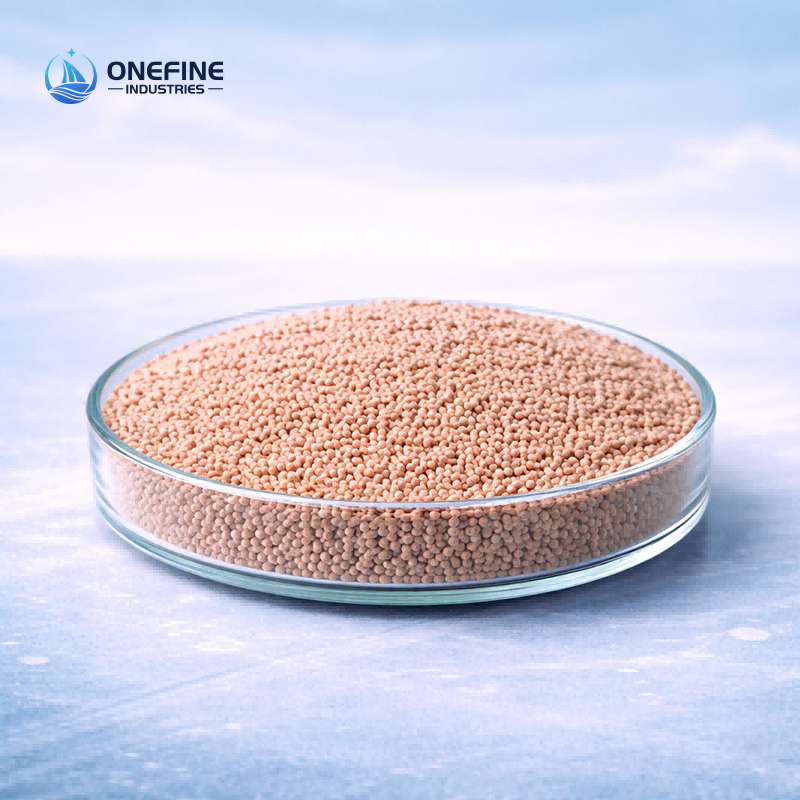
4A Molecular Sieve — an industrial drying adsorbent to assess against the actual feed, operating conditions and outlet requirement after the moisture measurement has been validated.
FAQ
Does a wet reading prove the sieve is exhausted?
No. It warrants action and investigation, but sampling effects, operating conditions and media condition must be distinguished.
Can a new sensor fix a wet sample line?
A replacement sensor does not remove leaks, stagnant branches or unsuitable tubing upstream of it. Check the complete measurement arrangement.
Should every system use 1–2 L/min?
No. That is a typical example in the DMT152 guidance. Use the requirements for the actual sensor, cell and pressure arrangement.
Can sampling checks replace dryer maintenance?
No. Valid measurements support maintenance decisions; they do not regenerate adsorbent or correct process faults.
Looking for Bulk Supply of 4A Molecular Sieve?
Sorbsieve is a trusted bulk supplier of 4A Molecular Sieve and complete industrial adsorbents, serving industrial buyers across the Middle East.
We provide:
- ✅ Container-level supply (20'GP / 40'GP / 40'HQ)
- ✅ Full documentation (COA / TDS / SDS / COO)
- ✅ Multiple packaging options
- ✅ Technical support for molecular sieve selection and system optimization
- ✅ Fast quote response for industrial inquiries
MOQ starts at 1 ton; confirm the selected grade and packaging with our team.
Contact our team for bulk pricing, product samples, and technical consultation.
Related Reading
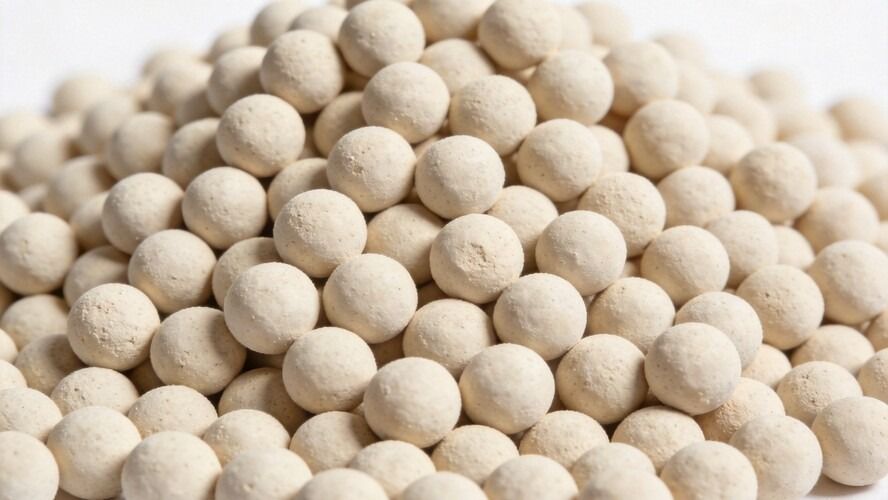
What is 4A Molecular Sieve? Uses, Specifications & How It Works
Everything you need to know about 4A molecular sieve: how it works, its 4Å pore size, physical adsorption process, and main industrial applications like air drying and CO2 removal.

Pressure Dew Point vs Atmospheric Dew Point: Before You Replace the Desiccant
A lower dew-point reading after pressure reduction does not prove better drying. Learn how pressure basis and sampling affect compressed-air dryer diagnosis.