Pressure Dew Point vs Atmospheric Dew Point: Before You Replace the Desiccant

Key Takeaways
- Pressure dew point and atmospheric dew point describe condensation at different pressures; their numbers cannot be compared directly.
- Expanding a sample can lower its dew point without removing water from the gas.
- Check the measurement basis and sampling system before attributing a changed reading to exhausted desiccant.
A dryer display and a portable meter can disagree even when both instruments are functioning. One may measure compressed air at line pressure while the other measures a sample released toward atmospheric pressure. Reading the lower number as evidence of better drying confuses a change in measurement conditions with a change in moisture removal.
For systems using activated alumina, this distinction belongs at the beginning of troubleshooting. Our existing material guide explains the adsorbent; this article explains the measurement question that should be settled before choosing a replacement charge.
What Changes When the Sample Pressure Changes?
Dew point identifies the temperature at which water vapor reaches saturation at the stated pressure. Pressure dew point refers to compressed gas at its operating pressure. Atmospheric dew point refers to gas at approximately ambient pressure.
At unchanged gas composition, reducing total pressure reduces the water-vapor partial pressure. The saturation temperature consequently falls. That physical change does not, by itself, mean a dryer has captured additional water.
For a simple illustration, consider an ideal gas mixture expanded from 8 bar absolute to 1 bar absolute without condensation, leakage or added moisture. Water-vapor partial pressure becomes one eighth of its original value because the pressure ratio is 1:8. This is an illustrative pressure calculation, not a field test or a universal conversion in degrees Celsius.
A dew-point conversion needs the original moisture condition and both absolute pressures. There is no fixed number of degrees that can be subtracted from every pressure-dew-point reading. Record whether a pressure value is absolute or gauge before using a conversion tool.
Why a Lower Reading May Be Misleading
Imagine comparing an installed sensor with a portable instrument connected through a pressure regulator. If the installed probe sees line pressure but the portable instrument sees a depressurized sample, the results answer different questions.
The correct response is to establish a common reporting basis. Measure at the required process pressure with appropriately rated equipment, or use the instrument supplier's validated pressure conversion. Do not change a pressurized sampling arrangement without following the equipment procedure.
Atlas Copco describes approximately -40°C pressure dew point as a requirement encountered in desiccant-dryer service. That example explains why the pressure basis matters; it is not a guaranteed outlet specification for every dryer or every grade of adsorbent.
The compressed air drying guide covers the operating role of activated alumina separately. An adsorbent description cannot substitute for a measurement specification stating where, when and at what pressure performance is assessed.
Sampling Can Change More Than Pressure
Vaisala's sampling guidance identifies additional routes to an unrepresentative result. A sample can be affected before it reaches a perfectly serviceable sensor.
- Condensation: If the sample line cools below the sample's dew point, liquid can form and change the vapor reaching the instrument.
- Moisture exchange: Unsuitable tubing can absorb, release or transmit moisture. Ambient moisture entering through connections can also affect a very dry sample.
- Stagnant sections: Long or poorly flushed connections can delay the response and leave the measurement unrepresentative of the process.
These are reasons to verify the sampling arrangement, not proof that any particular result is wrong. Follow the instrument's installation guidance and allow the signal to stabilize. A universal waiting time would be misleading because the sample path and its moisture history differ between installations.
Key Differences at a Glance
- Pressure dew point: Use when assessing condensation risk in gas at the specified operating pressure.
- Atmospheric dew point: Use when the reporting requirement explicitly concerns a sample at ambient pressure.
- A converted result: Label it as converted and retain the pressure inputs. Do not present it as a direct measurement at line pressure.
Neither reporting basis is inherently dishonest. The mistake is omitting the basis or using one to judge a requirement written for the other.
How to Investigate Before Ordering Replacement Media
Start with a measurement record rather than a replacement quotation. Record the sensor location, process pressure, pressure at the sensing element, reported dew or frost-point convention, and whether compensation is enabled.
Next, compare results taken under equivalent conditions. Retain the operating context: dryer flow, inlet condition, regeneration stage and any recent sampling changes. An apparent improvement that coincides with a new regulator setting deserves investigation before being credited to the bed.
Once the measurement is trustworthy, investigate persistent deterioration. Regeneration performance, operating load, contamination and bed condition may all need assessment. Our replacement warning signs article addresses the broader maintenance decision; this measurement check complements it rather than replacing it.
When discussing purification activated alumina, provide the required pressure dew point and the conditions under which it must be maintained. A temperature number alone is an incomplete purchasing requirement.
Recommended Products from Sorbsieve
- Activated Alumina for Purification: Discuss suitability against the dryer design, operating conditions and required outlet moisture performance.
No universal dew-point guarantee or replacement interval is assigned to this product here.
FAQ
Does expanding the sample make the dryer perform better?
No. Expansion can change the dew point associated with the gas without constituting additional moisture removal by the dryer.
Can two different readings both be correct?
Yes, if they refer to different pressures or reporting conventions. Establish comparable conditions before interpreting the difference.
Should I replace the adsorbent after one high reading?
First verify the measurement and assess the operating history. A single reading does not identify whether the cause is measurement, operation or media condition.
Looking for Bulk Supply of Activated Alumina?
Sorbsieve supplies industrial adsorbents to buyers across the Middle East. Share your dryer configuration and required measurement basis when requesting a material review.
We provide:
- ✅ Container-level supply options
- ✅ COA / TDS / SDS / COO documentation
- ✅ Packaging options for industrial orders
- ✅ Support for adsorbent selection discussions
- ✅ Quotations based on the stated application
Related Reading
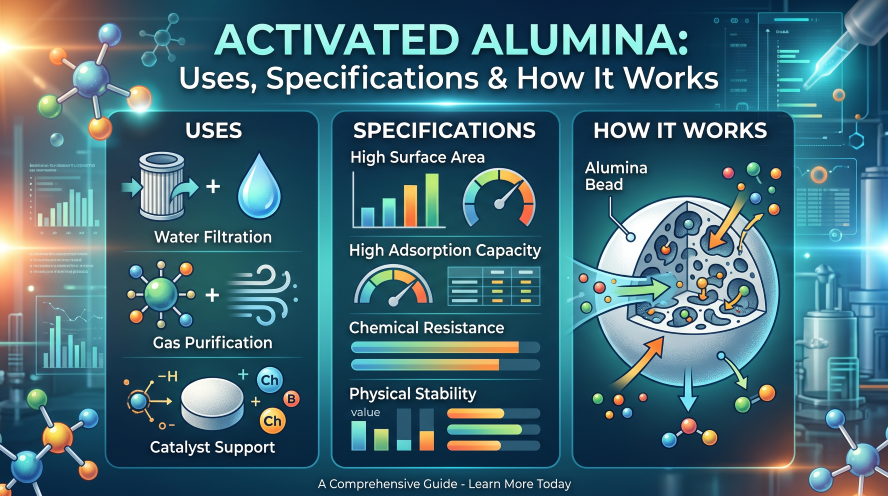
What is Activated Alumina? Uses, Specifications & How It Works
A practical guide to activated alumina (γ-Al₂O₃)—how it adsorbs moisture and fluoride, how it compares to silica gel and molecular sieve, and how to choose the right grade for your application.
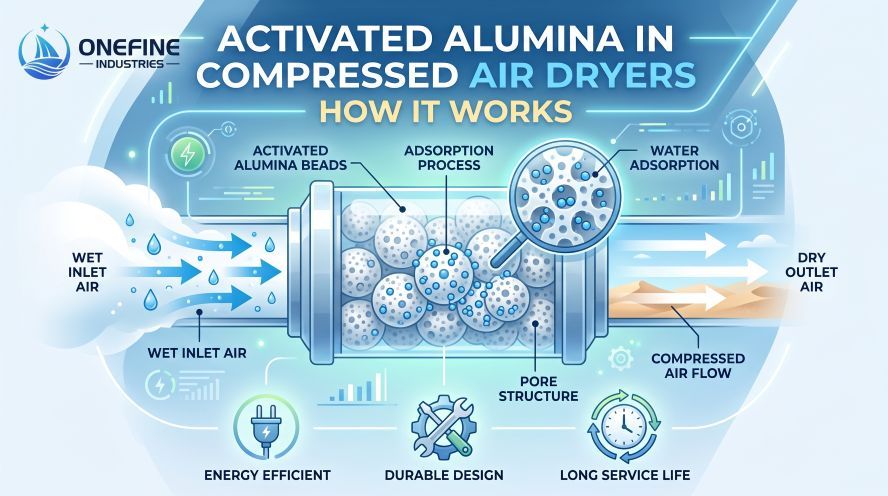
Activated Alumina in Compressed Air Dryers: How It Works
How activated alumina serves as the primary desiccant in heat-reactivated and heatless compressed air dryers, and when it's layered with molecular sieve for deeper dehydration.

How Do You Know When to Replace Activated Alumina in a Compressed Air Dryer?
Rising dew point, dusting in the bed, and shorter drying cycles are the three clearest signals that activated alumina in a compressed air dryer needs replacing — here's how to read them before they cause downstream damage.