Why Does Dew Point Spike After Molecular Sieve Bed Switching?

Key Takeaways
- A dew point spike immediately after bed switching is a timing clue, not proof that the molecular sieve needs replacement.
- Review cooling completion, regeneration history, switching valves and analyzer conditions together.
- Separate a short switching transient from moisture breakthrough that develops later in the adsorption cycle.
A regenerated molecular sieve bed can return to service and still produce an unexpected moisture reading. The useful question is not simply whether the heater reached its setpoint, but what changed when the bed came online. This guide focuses on thermal swing adsorption drying systems, including units using 4A molecular sieve. It does not prescribe a regeneration recipe for PSA oxygen systems or sealed refrigerant filter driers.
Before ordering replacement media, align the dew point trend with the bed sequence. A brief event at every changeover suggests a different investigation from a steady deterioration near the end of each drying cycle. Neither pattern alone identifies the cause, but the distinction makes the next checks more useful.
Read the Timing Before Blaming the Adsorbent
Mark the actual valve changeover on the historian, then compare several cycles under similar feed conditions. Does the excursion follow both beds or only one? Does the reading recover, remain high, or rise gradually later? Record outlet temperature, sample pressure and feed flow beside the moisture trace. Allow for the analyzer's response time and the transport delay through the sample tubing.
If only one vessel shows the event, investigate that vessel's sequence, cooling profile and valves first. If both show it, shared regeneration gas, feed changes or the sampling arrangement become useful checks. These are diagnostic priorities, not definitive fault assignments. Keep off-spec gas management under the plant's existing operating procedure.
A Heated Bed Is Not Yet Ready to Dry
Heating and purging remove adsorbed moisture; cooling prepares the regenerated bed for adsorption. Merck's molecular sieve technical guidance treats cooling as a distinct part of the regeneration process. A heater outlet reading cannot establish that the entire vessel has completed either step.
Check the recorded bed and regeneration outlet temperatures against the approved cycle. Zeochem notes that a freshly regenerated bed can remain warmer than the feed and cause a product temperature bump when returned online. A warmer bed generally has less favorable adsorption capacity. However, a temperature bump does not prove that water has broken through: use the moisture measurement to establish whether the product actually exceeded its limit.
Do not extend heating by taking time away from cooling without an engineering review. Equally, do not adopt a generic cooling temperature from another installation. The acceptable endpoint depends on the adsorbent, process conditions, instrumentation and unit design.
Check What Happened During Regeneration
Review the whole previous cycle rather than a single maximum temperature. Was the intended purge flow maintained? Did the temperature profile progress as expected? Were there trips, interrupted heating or unusual feed moisture loads before regeneration? A completed timer can conceal an incomplete physical process.
Also confirm the source and condition of the cooling gas. If it carries moisture, the freshly regenerated sieve can begin adsorbing water during cooling. That is an engineering reason to review the gas specification and flow path, not a claim that every unit needs the same cooling arrangement. Use the equipment supplier's validated sequence.
For the underlying adsorption mechanism and material scope, see our 4A molecular sieve guide. The present article addresses changeover behavior rather than repeating a product specification or a replacement interval.
Separate a Process Excursion from a Sampling Change
A switching event can also change the conditions presented to the analyzer. Compare readings at the same measurement pressure and with a stable sample flow. Our pressure dew point guide explains why pressure dew point and atmospheric dew point cannot be compared directly. A pressure change can change the reported dew point without establishing a corresponding change in water concentration.
Inspect the sample arrangement for a changed source, a wet section or insufficient stabilization after switching. Record the sample location and pressure; otherwise, an apparently consistent graph may combine unlike measurements. Instrument checks should follow the analyzer supplier's instructions rather than a guessed universal settling time.
Next, compare commanded valve positions with available position feedback and the approved sequence. An isolation or switching fault can create a path that bypasses effective drying. Suspected leakage needs the site's approved verification method. Do not treat a timing correlation as permission to alter interlocks or valve overlap.
Decide Whether Replacement Evidence Exists
Replacement becomes a stronger possibility when usable drying time progressively shortens, outlet moisture remains unacceptable after verified regeneration, or other evidence indicates contamination or physical damage. A single changeover spike is weaker evidence. Compare the current behavior with the unit's own stable baseline and the conditions used to establish it.
Prepare a compact review package: bed identity, exact switching times, dew point and temperature trends, sample pressure, feed conditions, and the preceding heating and cooling profiles. This lets the plant team distinguish a sequence problem from lost working capacity without assuming either one in advance.
Recommended Products from Sorbsieve
Our industrial 4A molecular sieve is an option to evaluate for compatible gas drying duties. Select the grade and particle size against the actual stream and equipment design. A change in media cannot by itself correct wet cooling gas, an unsuitable sequence or a leaking valve.
FAQ
Does every dew point spike mean permanent damage?
No. Timing, recovery and repeatability help identify what to investigate, but the spike alone cannot establish permanent adsorbent damage.
Should I increase regeneration temperature?
Not automatically. First verify the complete temperature and flow history. Any change must remain within the approved limits for the media and unit.
Can I keep operating if the reading recovers?
Recovery does not override the downstream moisture specification. Follow the plant's existing off-spec handling and operating limits.
Looking for Bulk Supply of Molecular Sieve?
Sorbsieve is a trusted bulk supplier of molecular sieve and complete industrial adsorbents, serving industrial buyers across the Middle East.
We provide:
- ✅ Container-level supply (20'GP / 40'GP / 40'HQ)
- ✅ Full documentation (COA / TDS / SDS / COO)
- ✅ Multiple packaging options
- ✅ Technical support for molecular sieve selection and system optimization
- ✅ Fast quote response for industrial inquiries
MOQ from 1 ton. Send your gas composition, flow, operating pressure, moisture target and required quantity.
Contact our team for bulk pricing, product samples, and technical consultation.

Related Reading

Pressure Dew Point vs Atmospheric Dew Point: Before You Replace the Desiccant
A lower dew-point reading after pressure reduction does not prove better drying. Learn how pressure basis and sampling affect compressed-air dryer diagnosis.
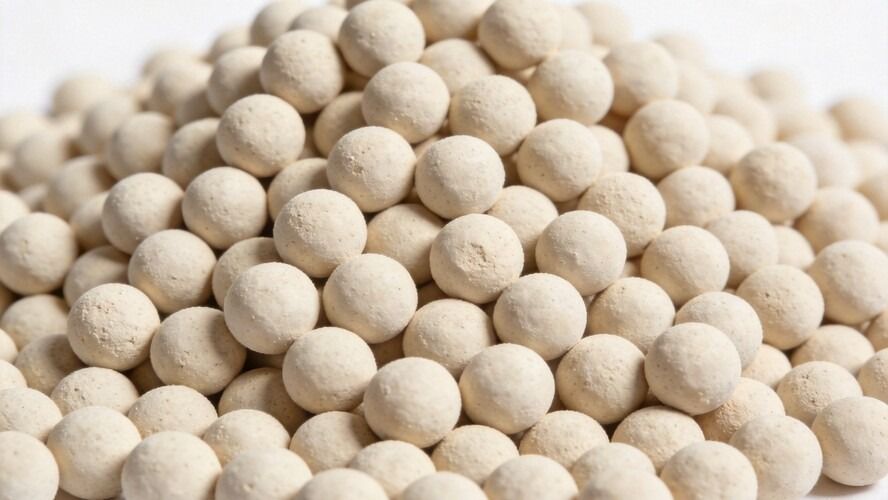
What is 4A Molecular Sieve? Uses, Specifications & How It Works
Everything you need to know about 4A molecular sieve: how it works, its 4Å pore size, physical adsorption process, and main industrial applications like air drying and CO2 removal.