How Often Should You Replace Activated Alumina in a Molecular Sieve Guard Bed?
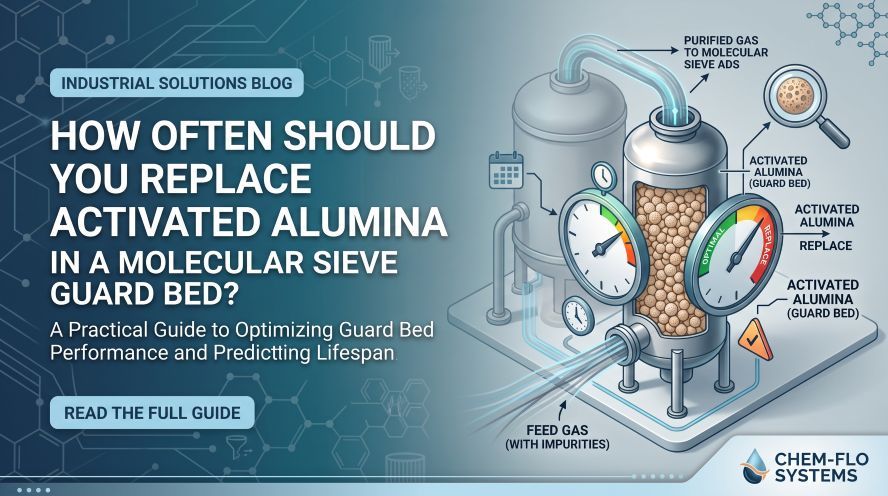
f your plant runs an activated alumina guard bed ahead of a CMS nitrogen generator or a PSA oxygen system, you already know why it's there: to catch free liquids, oil carryover, and the bulk of incoming moisture before any of it reaches the more expensive molecular sieve bed downstream. What's less obvious is when that guard bed itself stops doing its job. Activated alumina doesn't fail suddenly — it degrades gradually, and by the time the symptoms show up downstream (shorter cycle times, dropping purity, an oxygen or nitrogen system that just isn't hitting spec anymore), the guard bed has often been underperforming for weeks. This guide walks through realistic service life, the difference between "needs regeneration" and "needs replacement," and the specific signs to check for before your guard bed becomes the weak link in the system.
Key Takeaways
- Activated alumina acts as a sacrificial guard bed, capturing free liquids and oil carryover to protect downstream molecular sieves from permanent fouling.
- Typical industrial service life ranges from 1 to 3 years, heavily dictated by upstream filtration quality and compressor oil carryover rates.
- A rising downstream dew point, increasing pressure drop, or visible bead discoloration indicates the need for full replacement rather than thermal regeneration.
What the Guard Bed Is Actually Protecting
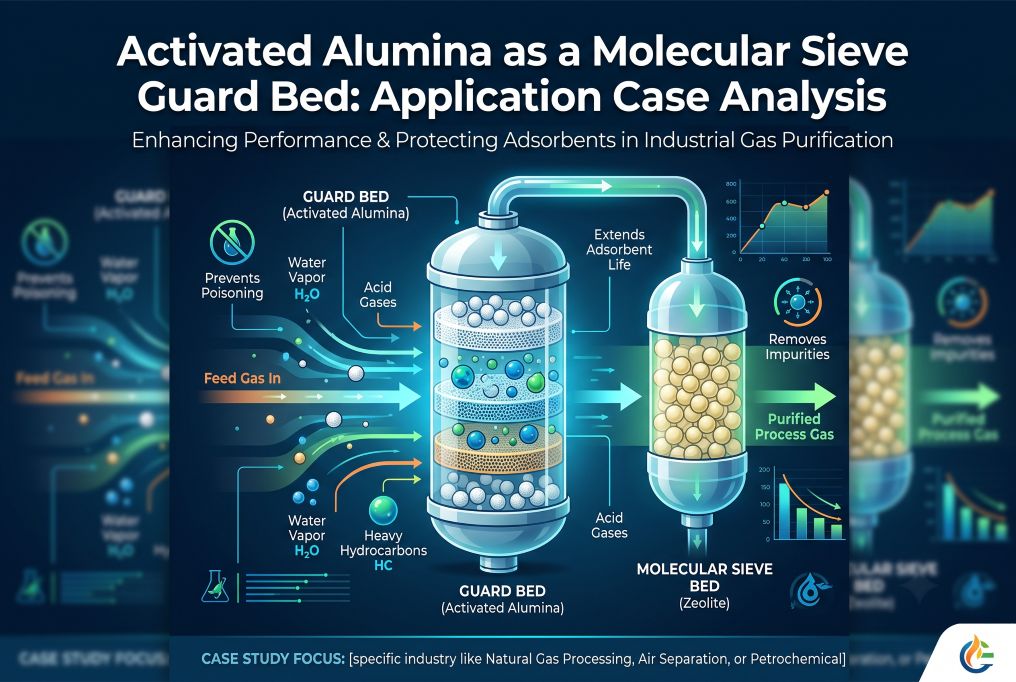
Activated alumina in a guard bed configuration sits upstream of a downstream adsorbent — most commonly a carbon molecular sieve bed in a PSA nitrogen system, or a 13X/Li-LSX bed in a PSA oxygen system. Its job isn't final-spec drying or gas separation; it's a sacrificial first line of defense. Activated alumina picks up free water droplets, compressor lubricant carryover, and particulate contamination that would otherwise coat or plug the pore structure of the downstream molecular sieve. Molecular sieve media is significantly more expensive per kilogram than activated alumina and far less tolerant of liquid or oil fouling — once oil coats a molecular sieve bead, that adsorption capacity is essentially gone for good. A properly maintained guard bed is what keeps that expensive downstream media running for years instead of months. For the fundamentals of how this material works, see our guide, What is Activated Alumina?
This only works, though, if the guard bed itself is replaced or regenerated before it becomes saturated. A guard bed operating past its effective capacity doesn't just stop protecting the system — it starts passing contamination straight through to the molecular sieve bed it was supposed to shield.
How Long Does Activated Alumina Actually Last?
Under normal industrial operating conditions, activated alumina in a guard bed application typically has a service life in the range of 1 to 3 years before replacement becomes necessary, though this varies considerably based on operating conditions. Beds exposed to consistently high humidity loads, frequent compressor oil carryover, or high-temperature process gas will saturate and degrade faster than beds in cleaner, drier service.
It's worth being clear that this is a general industry range based on typical operating conditions, not a fixed number — actual service life on your system depends on your gas flow rate, moisture loading, upstream filtration quality, and how consistently the bed is regenerated. Two identical guard beds on two different compressor systems can have meaningfully different replacement intervals if one system has better upstream oil coalescing filtration than the other.
Three Signs It's Time to Replace, Not Just Regenerate
Regeneration restores adsorption capacity by driving off adsorbed moisture with heat, but it doesn't reverse physical or chemical degradation. These three signs point toward replacement rather than another regeneration cycle:
- Outlet dew point creeping upward despite correct regeneration. If your downstream dew point or moisture readings are trending worse over time even though the guard bed is being regenerated on schedule and system settings haven't changed, the alumina's actual adsorption capacity has permanently declined — regeneration is no longer restoring it to where it needs to be.
- Rising pressure drop across the guard bed vessel. An increasing pressure drop usually points to bead attrition, fines migration, or channeling within the bed — physical breakdown of the alumina structure that regeneration cannot fix. This also increases compressor energy consumption, which adds an operating-cost angle on top of the protection issue.
- Visible bead degradation. Discoloration, crumbling, clumping, or oil staining on the alumina beads during a physical inspection are direct evidence that the material's structure or chemistry has been compromised — typically from oil contamination blocking the pore structure or from cumulative thermal stress across many regeneration cycles.
Any one of these on its own is worth investigating. Two or more together is a strong signal that replacement, not another regeneration cycle, is the right call.
Regeneration vs. Replacement: Where's the Line
Thermal regeneration — heating the saturated alumina to drive off adsorbed moisture — is standard practice and can be repeated many times over a guard bed's service life. It's the reason activated alumina is cost-effective compared to single-use desiccants. But regeneration has limits:
- Each thermal cycle causes some incremental loss of adsorption capacity from physical and chemical degradation of the bead structure. This is gradual, not catastrophic, but it accumulates.
- Oil-fouled beads are the main exception where regeneration often can't fully restore performance — once hydrocarbon contamination has coated the pore structure, standard thermal regeneration frequently isn't enough to fully recover capacity, and replacement becomes the more reliable option.
- A guard bed that requires increasingly frequent regeneration cycles to maintain the same output quality is, in practical terms, already signaling that its remaining useful life is short.
The practical decision point is usually economic as much as technical: once regeneration frequency climbs and downstream performance still isn't stable, the labor and downtime cost of chasing regeneration cycles often exceeds the cost of a scheduled replacement.
Protecting Your Downstream Molecular Sieve System
The entire point of budgeting for guard bed replacement is protecting the more expensive system behind it. Whether your setup runs a Carbon Molecular Sieve for Nitrogen Generation bed for PSA nitrogen production or an Oxygen Generator Molecular Sieve bed for PSA oxygen, a compromised guard bed shortens the service life of that downstream media and increases the frequency of costly bed changeouts. Planning activated alumina replacement on a proactive schedule — rather than waiting for downstream symptoms to appear — is consistently the lower-cost approach across the life of the system. For a broader look at how activated alumina guard beds are sized and configured across different PSA system types, see our application case, Activated Alumina as a Molecular Sieve Guard Bed .
Recommended Products from Sorbsieve
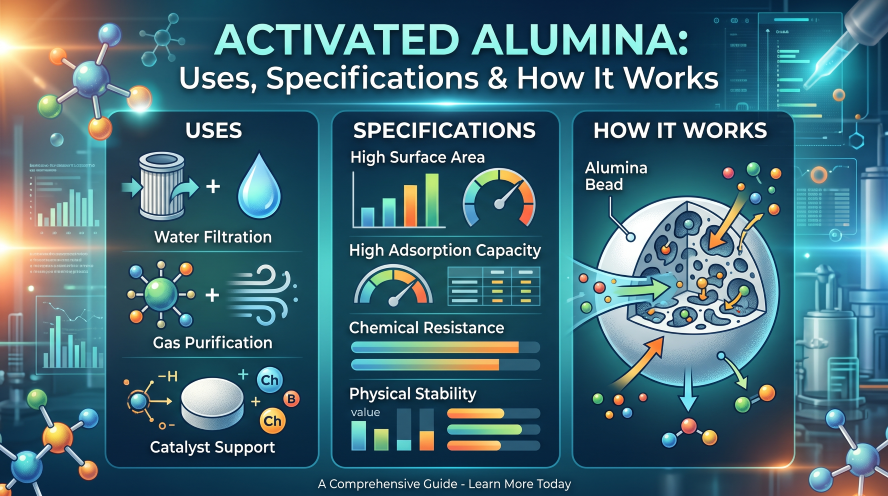
- Activated Alumina for Purification — the guard bed material this guide covers, sized and packaged for industrial guard bed and PSA pre-treatment applications.
- Carbon Molecular Sieve for Nitrogen Generation (CMS) — the downstream PSA nitrogen media that a well-maintained guard bed is protecting.
- Oxygen Generator Molecular Sieve — the downstream PSA oxygen media in systems using a 13X/Li-LSX configuration behind the guard bed.
FAQ
Q: Can activated alumina be regenerated indefinitely instead of replaced?
A: No. While thermal regeneration can be repeated many times, each cycle causes some incremental loss of adsorption capacity, and oil-fouled or physically degraded beads eventually stop responding to regeneration. Most guard beds in continuous industrial service still need replacement within one to a few years even with regular regeneration — the exact interval depends heavily on your specific operating conditions.
Q: Does a guard bed failure damage the downstream molecular sieve immediately?
A: Not usually immediately, but the effect is cumulative. Liquid water or oil passing through a saturated guard bed will progressively foul or reduce the capacity of the downstream molecular sieve bed, shortening its service life and degrading system performance over time.
Q: What's the biggest factor that shortens activated alumina service life?
A: Compressor oil carryover is typically the most damaging contaminant, since it coats the pore structure in a way that thermal regeneration often can't fully reverse. Good upstream oil coalescing filtration is one of the most effective ways to extend guard bed life.
Q: Is there a fixed replacement schedule we should follow regardless of these signs?
A: A calendar-based schedule is a reasonable starting point for planning budgets and inventory, but the signs in this guide — dew point trend, pressure drop, and bead condition — should always take priority over a fixed calendar interval, since actual degradation rate depends heavily on your specific operating conditions.
Looking for Bulk Supply of Activated Alumina?
Sorbsieve is a trusted bulk supplier of activated alumina and complete industrial adsorbents, serving industrial buyers across the Middle East.
We provide:
- ✅ Container-level supply (20'GP / 40'GP / 40'HQ)
- ✅ Full documentation (COA / TDS / SDS / COO)
- ✅ Multiple packaging options
- ✅ Technical support for activated alumina guard bed sizing and system optimization
- ✅ Fast quote response for industrial inquiries
Contact our team for bulk pricing, product samples, and technical consultation.
Related Products
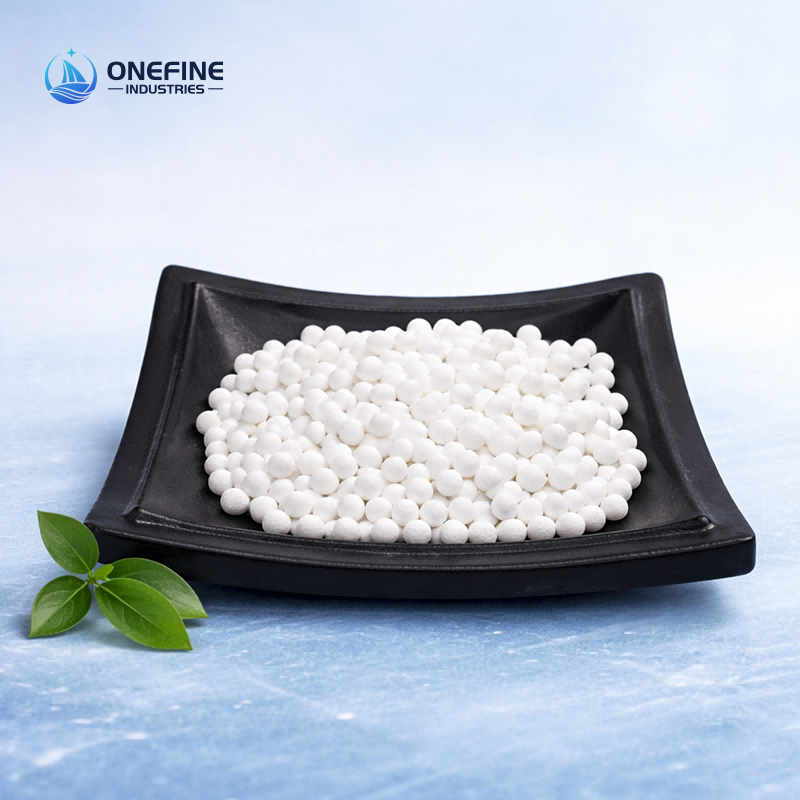
Activated Alumina for Purification
High-performance activated alumina (γ-Al₂O₃) adsorbent and desiccant for industrial gas/liquid drying, water defluoridation, and purification. White spherical beads with high surface area (≥300 m²/g), excellent crush strength, and full thermal regenerability. Available in multiple particle sizes for compressed air dryers, water treatment, and catalyst carrier applications.
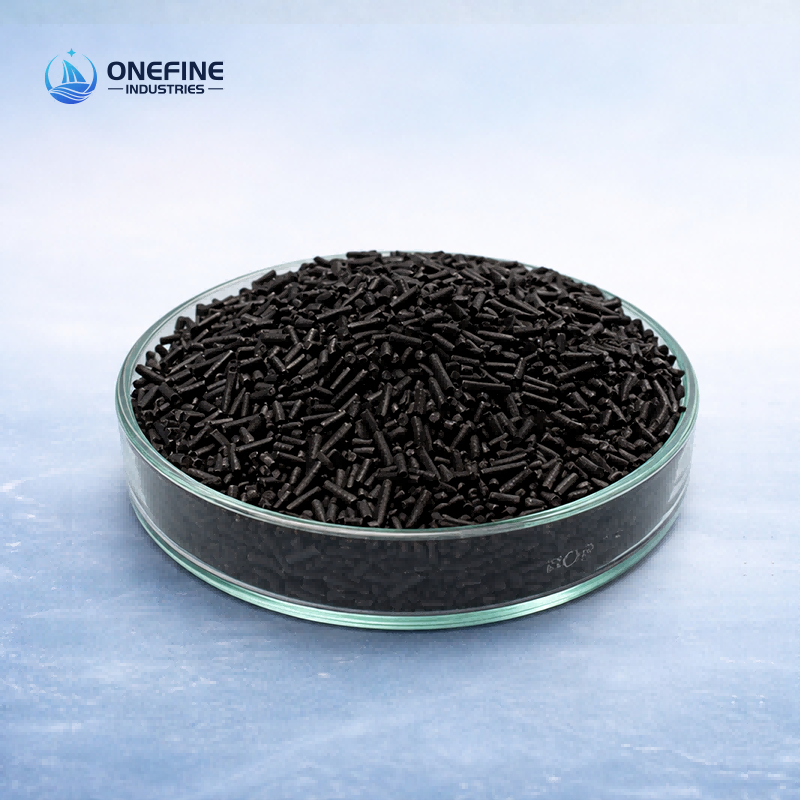
Carbon Molecular Sieve for Nitrogen Generation (CMS)
High-performance carbon molecular sieve (CMS) for PSA nitrogen generators. Uniform micropore distribution (0.3-0.5nm) ensures efficient oxygen-nitrogen separation. Delivers 95-99.999% nitrogen purity with 3-5 year service life. Bulk supply for industrial buyers worldwide.
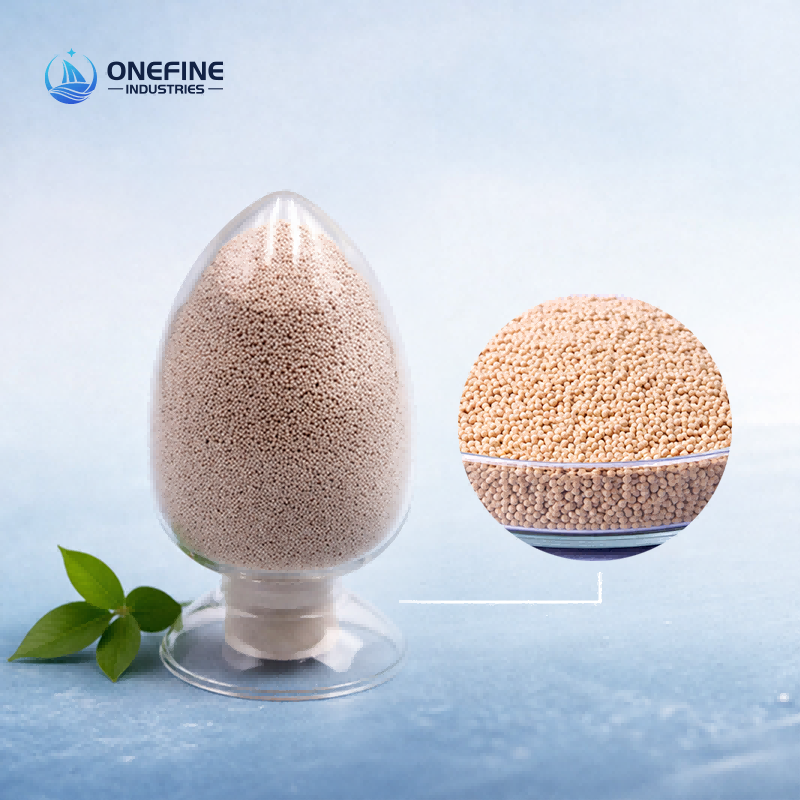
Oxygen Generator Molecular Sieve (13X & Li-LSX)
Premium oxygen generator molecular sieve for PSA/VPSA oxygen generators and medical oxygen concentrators. Available in 13X sodium type and Li-LSX lithium type — high N₂ adsorption capacity, excellent N₂/O₂ selectivity, and 3-5 year service life. Bulk supply with MOQ from 1 ton, serving industrial buyers across the Middle East.