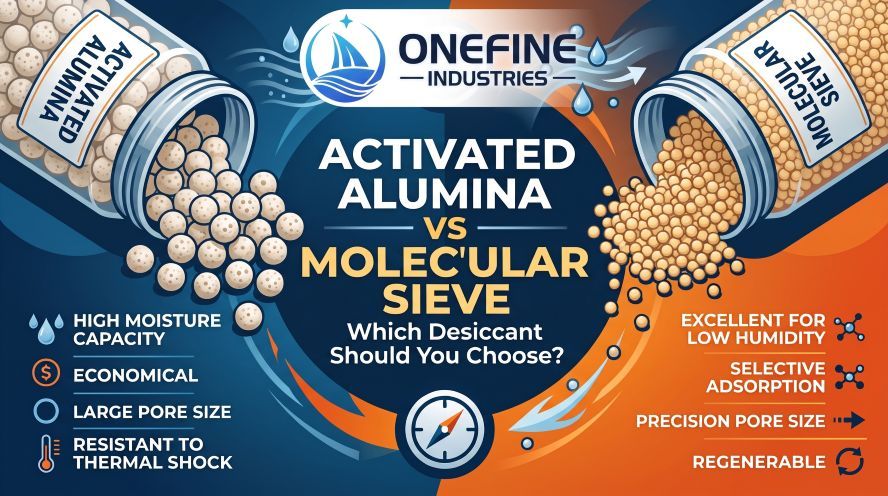
Activated Alumina vs Molecular Sieve: Which Desiccant Should You Choose?
Key Takeaways
- Activated alumina features a broad pore structure that holds up well against liquid water slugs, making it highly durable as a first-line desiccant.
- Molecular sieve utilizes a highly uniform pore size for selective adsorption, which allows it to strip water to extremely low residual levels.
- In demanding applications, the two desiccants are often used together; activated alumina acts as a guard layer to protect the downstream molecular sieve.
- Both materials require thermal regeneration, but operators must follow product-specific temperature ranges due to their distinctly different pore chemistry.
Choosing the wrong desiccant can mean early bed breakthrough, wasted regeneration cycles, or a dew point that never quite hits spec. Activated alumina and molecular sieve are the two most widely used industrial desiccants, but they work on different principles and fit different jobs. This guide breaks down how each one actually dries a gas or liquid stream, where each performs best, and how to decide which one belongs in your system — or whether you need both.
What Is Activated Alumina?
Activated alumina is a porous form of aluminum oxide (Al₂O₃) with a network of interconnected pores that give it a large internal surface area. It removes moisture through physical adsorption: water molecules are drawn onto the pore surfaces without any chemical reaction taking place. Because its pore structure is relatively broad and non-uniform compared to molecular sieve, it adsorbs a wide range of molecule sizes rather than selecting for one — which is exactly why it holds up well in tougher, less controlled process conditions. For a deeper look at how it works, see What Is Activated Alumina?
What Is Molecular Sieve?
Molecular sieve is a synthetic zeolite manufactured with a highly uniform, precisely sized pore structure. Instead of adsorbing broadly, it adsorbs selectively — only molecules smaller than its pore opening (measured in angstroms) can enter the crystal lattice. This selectivity is what allows molecular sieve to strip water down to extremely low residual levels, and in some grades, to separate specific molecules from a gas stream based on size alone rather than just capturing moisture. Molecular sieve itself comes in several pore-size grades (3A, 4A, 5A, 13X) — if you already know you need molecular sieve and just aren't sure which grade, see our Molecular Sieve Selection Guide.
Key Differences: Pore Structure & Adsorption Mechanism
The core distinction comes down to how selective the pore structure is:
- Activated alumina has a broader, less uniform pore distribution. It adsorbs moisture and a range of other polar compounds without discriminating strongly by molecule size.
- Molecular sieve has a fixed, uniform pore size engineered at the molecular level. This lets it achieve much lower dew points and, in some grades, separate specific gas components — something activated alumina cannot do.
This difference in mechanism is also why the two desiccants respond differently to real-world operating stress:
- Tolerance to liquid water slugs and thermal/mechanical stress: Activated alumina generally holds up better against occasional liquid carryover and rough handling, which is part of why it's often placed as the first line of defense in a drying train.
- Depth of drying: Molecular sieve is the standard choice when the spec calls for very low dew points, since its selective pore structure keeps working effectively even as relative humidity drops toward zero — a range where broader-pore adsorbents like activated alumina lose efficiency.
- Regeneration behavior: Both require thermal regeneration, but their optimal regeneration temperature ranges differ because of their different pore chemistry — always check the product-specific regeneration guidance rather than assuming one figure applies to both.
Application Scenarios: When to Choose Which
Choose Activated Alumina when:
- The gas or liquid stream may contain liquid water slugs or particulate carryover
- You need a durable first-stage desiccant ahead of a more sensitive downstream bed
- The application doesn't require an extremely low dew point
- You want a desiccant with strong mechanical resistance for demanding field conditions
Choose Molecular Sieve when:
- The spec requires very low dew points (deep drying)
- You're dealing with a cryogenic or air separation process where trace moisture must be nearly eliminated
- You need size-selective adsorption — for example, separating specific gas components rather than just removing water
- You're working with natural gas dehydration, PSA gas generation, or similar high-purity requirements
Use both when:
- Your process combines a harsh upstream environment with a strict downstream dew point requirement — in this case, activated alumina and molecular sieve are often layered in the same vessel or arranged in sequential beds, each handling the part of the job it's suited for.
Can Activated Alumina and Molecular Sieve Work Together?
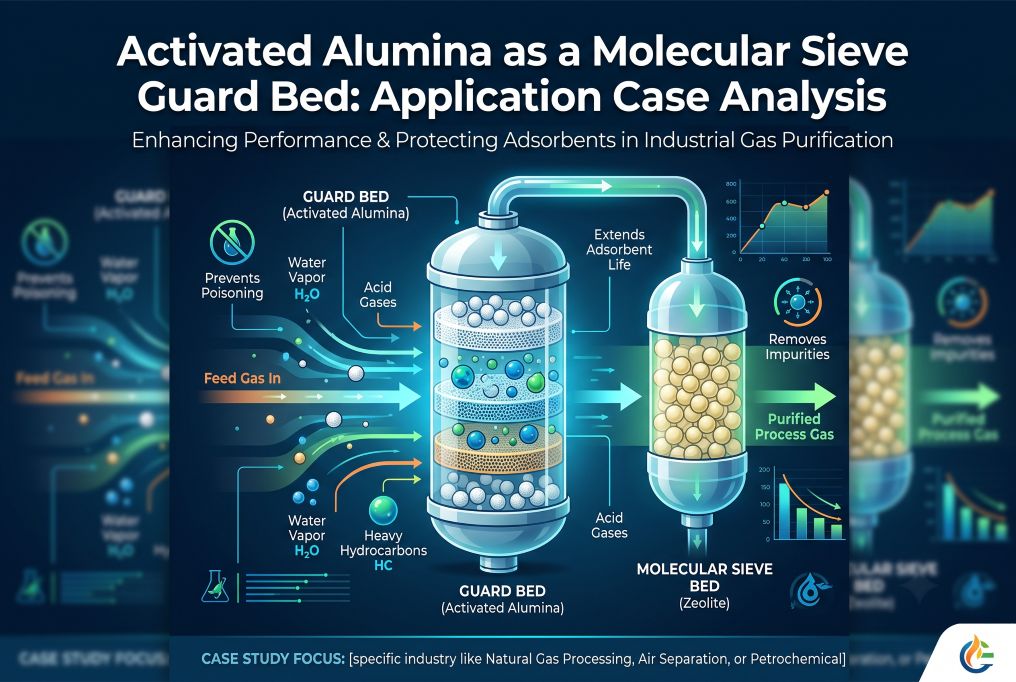
Yes — and in many real systems, they do. A common configuration uses Activated Alumina as a guard layer ahead of 4A Molecular Sieve, protecting the more sensitive molecular sieve bed from liquid carryover, heavy contaminants, or fouling while the molecular sieve handles the final, deep-drying stage. This is a genuine, documented process relationship — see our molecular sieve guard bed application case for a real-world example — rather than a simple either/or choice, and it's worth evaluating whenever your process has both a harsh upstream condition and a strict downstream purity spec.
Recommended Products from Sorbsieve
- Activated Alumina — durable first-stage desiccant for harsh upstream conditions (already linked above)
- 4A Molecular Sieve — deep-drying solution for strict dew point specs (already linked above)
FAQ
Is molecular sieve always better than activated alumina? No. Molecular sieve achieves lower dew points and offers selective adsorption, but activated alumina is often the more practical and durable choice for the front end of a system exposed to liquid water or mechanical stress. "Better" depends entirely on where in the process the desiccant sits and what spec it needs to meet.
Can I replace activated alumina with molecular sieve in an existing system? Not without reviewing the full system design. The two materials have different pore structures, different regeneration requirements, and different tolerance to upstream conditions. A direct swap can lead to premature saturation or bed damage if the upstream conditions weren't designed for molecular sieve's narrower operating tolerances.
Which one costs less? Activated alumina is generally the lower-cost material per unit volume, but cost-per-application depends on bed life, regeneration frequency, and whether the application actually requires molecular sieve's deeper drying capability. Contact our team for a cost comparison based on your specific flow rate and target dew point.
Do both require the same regeneration process? Both are regenerated using heat, but their required temperature ranges and cycle considerations differ because of their different pore chemistry. Always follow the product-specific regeneration guidance rather than assuming the same parameters apply to both.
Looking for Bulk Supply of Activated Alumina or Molecular Sieve?
Sorbsieve is a trusted bulk supplier of activated alumina, molecular sieve, and complete industrial adsorbent solutions, serving industrial buyers across the Middle East.
We provide:
- ✅ Container-level supply (20'GP / 40'GP / 40'HQ)
- ✅ Full documentation (COA / TDS / SDS / COO)
- ✅ Multiple packaging options
- ✅ Technical support for desiccant selection and system optimization
- ✅ Fast quote response for industrial inquiries
Contact our team for bulk pricing, product samples, and technical consultation.
Related Products
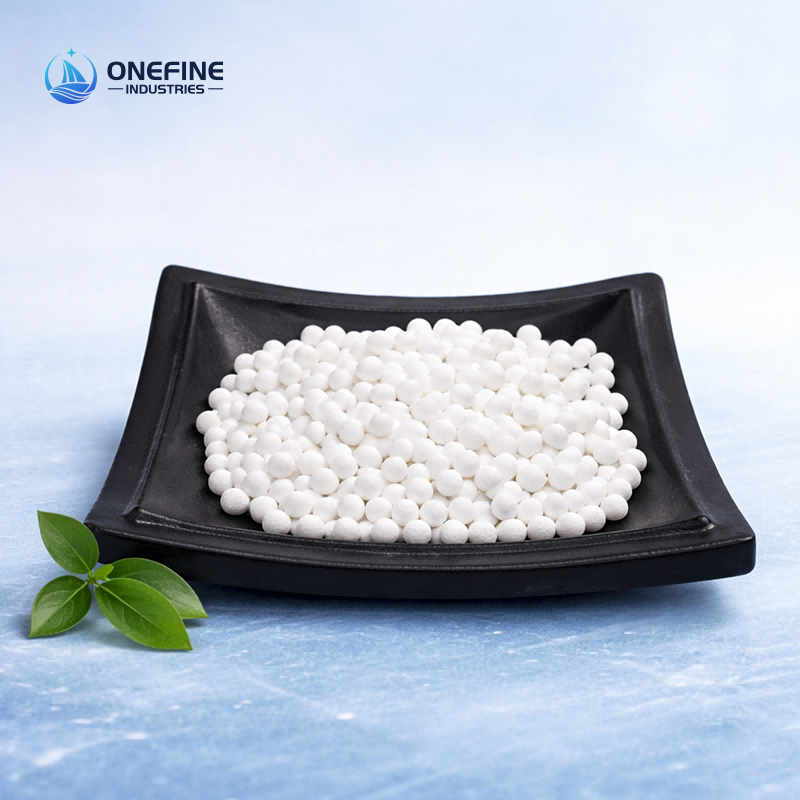
Activated Alumina for Purification
High-performance activated alumina (γ-Al₂O₃) adsorbent and desiccant for industrial gas/liquid drying, water defluoridation, and purification. White spherical beads with high surface area (≥300 m²/g), excellent crush strength, and full thermal regenerability. Available in multiple particle sizes for compressed air dryers, water treatment, and catalyst carrier applications.
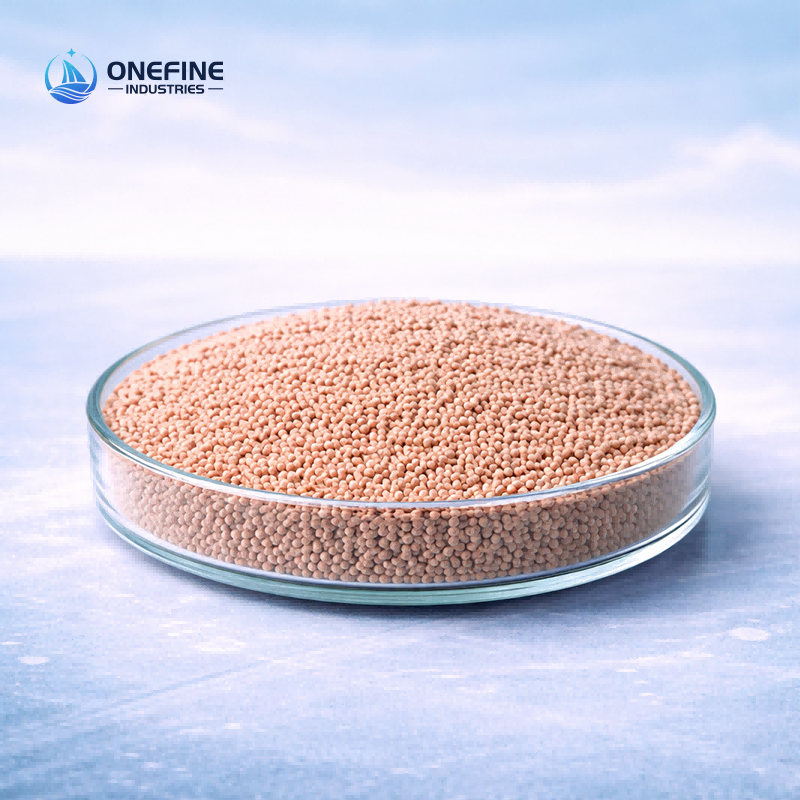
4A Molecular Sieve
General-purpose 4A molecular sieve desiccant for industrial air drying, solvent dehydration, CO2 removal, and static packaging applications. High capacity, long service life.
Related Reading
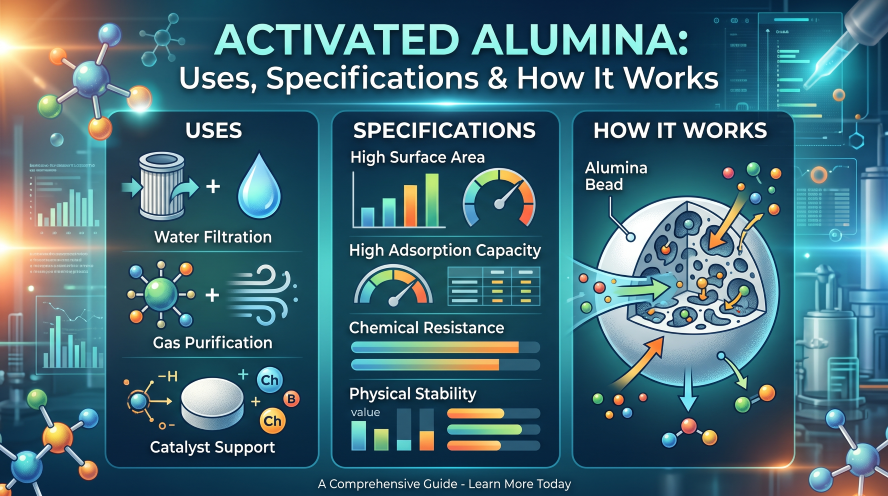
What is Activated Alumina? Uses, Specifications & How It Works
A practical guide to activated alumina (γ-Al₂O₃)—how it adsorbs moisture and fluoride, how it compares to silica gel and molecular sieve, and how to choose the right grade for your application.
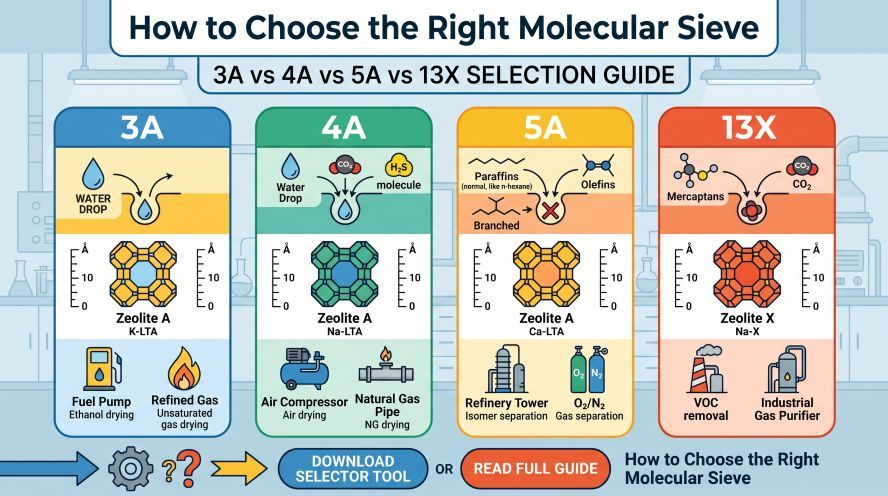
How to Choose the Right Molecular Sieve: 3A vs 4A vs 5A vs 13X Selection Guide
Choosing between 3A, 4A, 5A, and 13X molecular sieve comes down to pore size and what needs to stay in your stream versus what needs to come out. This guide walks through the selection logic by application and target contaminant, plus the most common costly mistakes buyers make when picking the wrong grade.