What Does a Molecular Sieve Regeneration Outlet Temperature Plateau Mean?

Key Takeaways
- A plateau during the heating ramp can occur when desorbed water condenses in a colder part of the bed and later evaporates. The curve alone cannot establish the cause.
- A stable outlet temperature at the end of heating can support a completion decision when it meets the dryer’s approved cycle criteria and the other operating signals agree.
- Compare inlet and outlet temperatures with regeneration flow, pressure, cycle steps, and water removal before drawing conclusions about the adsorbent.
In a natural gas dryer, the regeneration gas outlet temperature tells you how the bed is responding to heat. A flat section on the trend can be confusing because it can appear at different points in the same cycle. During heat-up, a plateau can signal that water is still moving through the bed. Late in the heating step, a stable outlet may be part of the expected cycle. Operators and reliability teams can distinguish the two by lining up the temperature traces with the sequence of events, then checking whether the same bed dries gas as expected on its next adsorption run. This guide applies to thermal swing adsorption dryers. Use the approved plant procedure and adsorbent supplier’s limits for any operating decision.
Identify Where the Plateau Occurs
During heating, a temperature sensor at the vessel outlet sees the net result of the heat delivered to the bed. It does not show the temperature or water content at every layer. If the inlet is already hot and the outlet levels off before rising again, one plausible mechanism is internal condensation and re-evaporation. Water desorbed in the hot section moves with the regeneration gas into a colder section. If local conditions permit condensation, some of that water can remain there temporarily. As the colder section warms, evaporation consumes heat and can slow the rise in outlet temperature.
A late-cycle hold has a different interpretation. After the main temperature rise reaches the outlet, the trace may become stable under steady inlet conditions. Some industrial cycle designs use that stable outlet condition as part of their end-of-heating criteria. Confirm where the flat section falls relative to heater staging and the heat-to-cool transition. A flat trace caused by reduced heater duty, an instrument issue, or a sequence transition can look similar at a glance. The natural gas drying overview provides the application context for this part of the cycle.
Compare Traces Before Assigning a Cause
Start with a healthy baseline from the same bed. Align both cycles to the start of heating and compare them under similar feed conditions and cycle lengths. Include inlet and outlet regeneration temperatures, actual regeneration gas flow, pressure, and step timestamps. If there are other bed temperature points, compare how the temperature rise progresses through the vessel. Where water removal is measured reliably, compare its timing with the outlet trace. Account for delays between the vessel outlet and any downstream separator or measurement point.
A later outlet rise with a changed inlet temperature profile or lower measured flow points toward a change in heat delivery worth investigating. When the heating conditions are comparable, look for changes in water loading, upstream liquid handling, or indications that gas is moving unevenly through the bed. A single flat temperature signal with inconsistent readings elsewhere warrants an instrument check. The natural gas application analysis places dehydration within the broader gas treatment train.
Check the Next Adsorption Run
Plot product moisture after the bed returns to service and compare the time to breakthrough with a representative baseline. An early transient and an earlier sustained breakthrough are different observations. Consider the switching sequence, sampling response, and feed moisture before treating either as evidence of lost adsorbent capacity. One unusual cycle is a reason to examine the records. A repeatable change under comparable conditions gives the operating team a stronger basis for deciding where to investigate.
Repeated internal wetting during heating can contribute to physical deterioration. If shortened runs coincide with a persistent rise in comparable bed differential pressure or evidence of fines, document both trends and involve the plant team and adsorbent supplier. Changes to heat-up rate, flow, or sequence timing belong within the plant's approved review process. For background on grade and material properties, see the 4A molecular sieve guide.
Recommended Products from Sorbsieve
- 4A molecular sieve is an option for industrial gas dehydration. For replacement selection, share the feed composition, expected water loading, outlet moisture requirement, and regeneration conditions so the grade and form can be reviewed against the dryer design.
FAQ
Does a plateau mean regeneration is complete?
Only a plateau in the expected phase, under the approved inlet and outlet conditions and hold time, can support that conclusion. A plateau during the main heating ramp can have a different cause.
Does a longer plateau mean the sieve needs replacement?
A longer plateau can reflect changing water load, heat delivery, distribution, or measurement. Compare several cycles and next-run moisture performance before attributing it to material deterioration.
Can one outlet sensor show whether every part of the bed is dry?
The outlet signal describes the gas at the measurement point. Other temperature measurements, water removal evidence, and the following adsorption run help assess how the wider bed performed.
Looking for Bulk Supply of 4A Molecular Sieve?
Sorbsieve is a trusted bulk supplier of 4A molecular sieve and complete industrial adsorbents, serving industrial buyers across the Middle East.
We provide:
- ✅ Container-level supply (20'GP / 40'GP / 40'HQ)
- ✅ Full documentation (COA / TDS / SDS / COO)
- ✅ Multiple packaging options
- ✅ Technical support for 4A molecular sieve selection and system optimization
- ✅ Fast quote response for industrial inquiries
Contact our team for bulk pricing, product samples, and technical consultation.

Related Reading
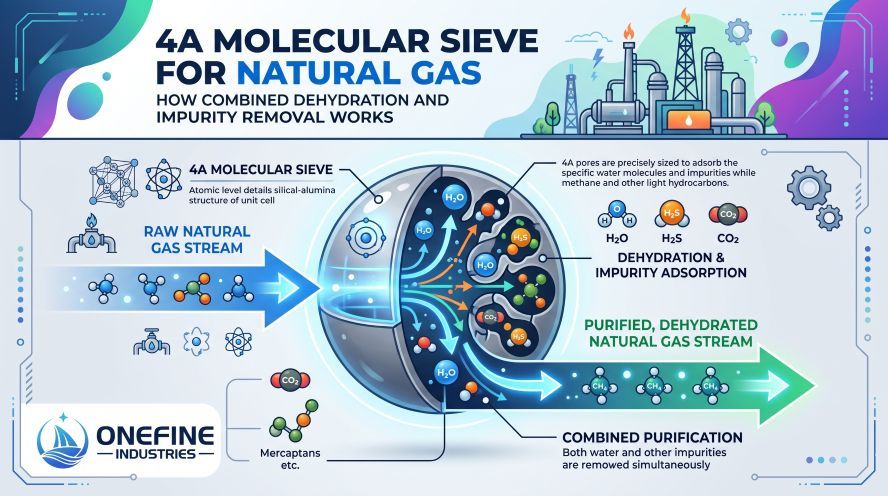
4A Molecular Sieve for Natural Gas: How Combined Dehydration and Impurity Removal Works
4A molecular sieve can dry natural gas and pull moderate CO₂/H₂S out of the same stream in one bed — how its larger pore enables that dual role, where it fits in the treatment train, and when 3A is the better call instead.

What is 4A Molecular Sieve? Uses, Specifications & How It Works
Everything you need to know about 4A molecular sieve: how it works, its 4Å pore size, physical adsorption process, and main industrial applications like air drying and CO2 removal.