What Is an Iron Oxide Desulfurization Catalyst? H₂S Removal Chemistry Explained
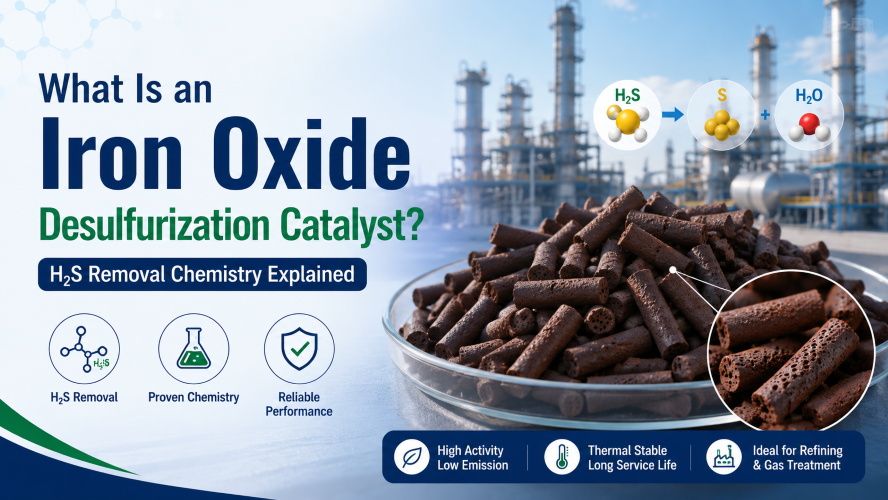
If you're dealing with hydrogen sulfide (H₂S) in natural gas, biogas, or syngas, an iron oxide desulfurization catalyst is one of the oldest and most reliable ways to remove it. It works at room temperature, needs no special equipment beyond a fixed bed, and has been used in gas purification for well over a century — yet it's still the go-to choice for many bulk H₂S removal applications today.
This guide walks through how iron oxide desulfurization actually works, where it fits in a gas treatment train, and how to decide whether it's the right technology for your application.
Key Takeaways:
- Dry Chemisorption: Converts H₂S directly to stable iron sulfide (Fe₂S₃) without solvent circulation.
- No Heating Required: Operates spontaneously at ambient temperatures, unlike high-temp ZnO alternatives.
- Moisture Resilience: Performs effectively in wet natural gas and biogas streams.
- Strategic Pairing: Frequently used as a bulk-removal stage ahead of ZnO precision polishing beds.
How Iron Oxide Desulfurization Works
Iron oxide desulfurization is a dry chemisorption process. As the sour gas passes through a fixed bed of iron oxide extrudates, H₂S reacts directly with the iron oxide (Fe₂O₃) to form iron sulfide (Fe₂S₃) — no catalyst regeneration cycle or solvent circulation is required for the reaction itself. The process happens spontaneously at ambient temperature, which is one of the main reasons it remains popular: there's no feed pre-heating cost, no complex control system, and no moving parts.
Under aerobic conditions (when trace oxygen is present in the feed), the spent material can be regenerated by controlled oxidation — the iron sulfide converts back to iron oxide while depositing elemental sulfur in the catalyst's pore structure. This allows several regeneration cycles before the bed eventually needs replacement due to sulfur accumulation.
Where It's Used
Iron oxide desulfurization shows up across a wide range of gas purification applications, largely because it tolerates conditions that some other technologies struggle with — particularly wet or humid gas streams.
Typical applications include natural gas sweetening at wellheads and gathering stations, biogas and landfill gas treatment ahead of combustion or renewable natural gas (RNG) upgrading, coke oven gas purification, and precision polishing of amine unit off-gas down to sub-ppm levels. It's also used as a guard bed ahead of ammonia, methanol, and hydrogen production units, where even trace sulfur can permanently poison downstream catalysts.
One practical advantage worth highlighting: unlike some desiccant-based purification media that lose effectiveness in humid conditions, iron oxide actually performs well with high moisture content — as long as liquid water carryover is controlled upstream.
Iron Oxide vs. Other Desulfurization Methods
Iron oxide is one of several dry desulfurization technologies, and the right choice depends heavily on temperature, required outlet purity, and gas composition:
- Vs. amine treating: Amine units are better suited to high-volume bulk H₂S removal with acid gas recovery, but require significant capital investment and ongoing solvent management. Iron oxide is simpler and better suited to smaller flows or polishing duty.
- Vs. activated carbon (impregnated): Impregnated activated carbon works well for low-concentration H₂S polishing but generally has lower sulfur capacity than iron oxide for bulk removal duty.
- Vs. zinc oxide desulfurizers: This is the comparison our customers ask about most often, since the two technologies are frequently paired together in a single treatment train.
Iron Oxide + Zinc Oxide: A Common Two-Stage Setup
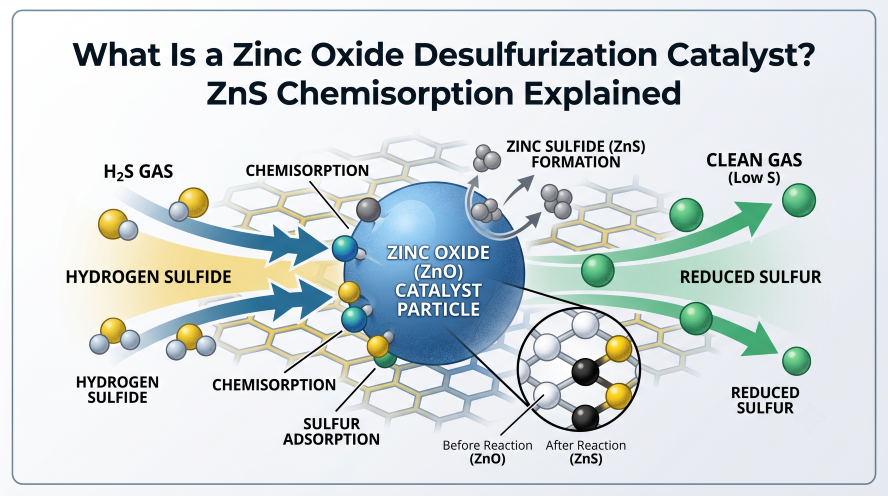
Iron oxide and zinc oxide desulfurizers aren't really competitors — in many gas treatment designs, they work together. Iron oxide handles bulk H₂S removal at ambient temperature and low cost, then a downstream Zinc Oxide Desulfurization Catalyst bed polishes the gas to sub-ppb levels for applications with strict downstream catalyst protection requirements.
The two technologies suit different windows: iron oxide runs at ambient temperature and tolerates wet gas, while zinc oxide requires higher temperatures (200–400°C) but achieves deeper desulfurization. Pairing the two lets you get low-cost bulk removal and ultra-deep polishing in the same system, without over-sizing either bed.
For full specifications, working sulfur capacity, and operating parameters, see our Iron Oxide Desulfurization Catalyst product page.
How to Choose the Right Approach
A few questions typically settle the decision:
- Is the gas wet or dry? Wet gas favors iron oxide; if the gas is already dry and high-temperature operation is acceptable, zinc oxide may offer deeper purity.
- How deep does outlet H₂S need to go? Iron oxide comfortably achieves sub-ppm; if your specification requires sub-ppb (common ahead of precious-metal catalysts), pair it with a zinc oxide polishing stage.
- What's the feed H₂S load? Very high loads (>5,000 ppm) usually justify a two-stage bulk-plus-polishing design rather than a single oversized bed.
- Is regeneration important? Iron oxide can be regenerated under aerobic conditions; if your process is strictly anaerobic, budget for single-use replacement.
Recommended Products from Sorbsieve
- Iron Oxide Desulfurization Catalyst — high-capacity, room-temperature H₂S removal for bulk and precision applications
- Zinc Oxide Desulfurization Catalyst — high-temperature, ultra-deep desulfurization for sub-ppb outlet specifications
- Desulfurization and Arsenic Removal Catalyst — guard bed protection for downstream precious-metal catalysts
Frequently Asked Questions
Does iron oxide desulfurization work on biogas with high moisture content? Yes — iron oxide actually performs well under high humidity, unlike some desiccant-based media. The key is preventing liquid water carryover into the bed, which is typically handled with a knockout drum and mist eliminator upstream.
How do I size an iron oxide desulfurization bed? Bed sizing depends on feed flow rate, H₂S concentration, and required service life before changeout. As a general guide, higher H₂S loads and shorter desired changeout intervals both call for larger beds; our technical team can help size a bed for your specific feed conditions.
Can iron oxide remove mercaptans as well as H₂S? Iron oxide desulfurizers primarily target H₂S, though they also have some capability against organic sulfur species like COS and CS₂ through hydrolysis and direct reaction pathways. For feeds with significant mercaptan content, a dedicated treatment step may be needed alongside iron oxide.
Why would outlet H₂S suddenly rise during operation? A sudden rise usually signals approaching bed exhaustion (breakthrough) rather than a gradual decline — this is a normal end-of-life indicator for iron oxide beds and is the trigger to switch to a fresh or regenerated bed in dual-bed systems.
Looking for Bulk Supply of Iron Oxide Desulfurization Catalyst?
Sorbsieve is a trusted bulk supplier of iron oxide desulfurization catalyst and complete industrial adsorbents, serving industrial buyers across the Middle East.
We provide:
- ✅ Container-level supply (20'GP / 40'GP / 40'HQ)
- ✅ Full documentation (COA / TDS / SDS / COO)
- ✅ Multiple packaging options
- ✅ Technical support for desulfurization system selection and sizing
- ✅ Fast quote response for industrial inquiries
Contact our team for bulk pricing, product samples, and technical consultation.
Related Products
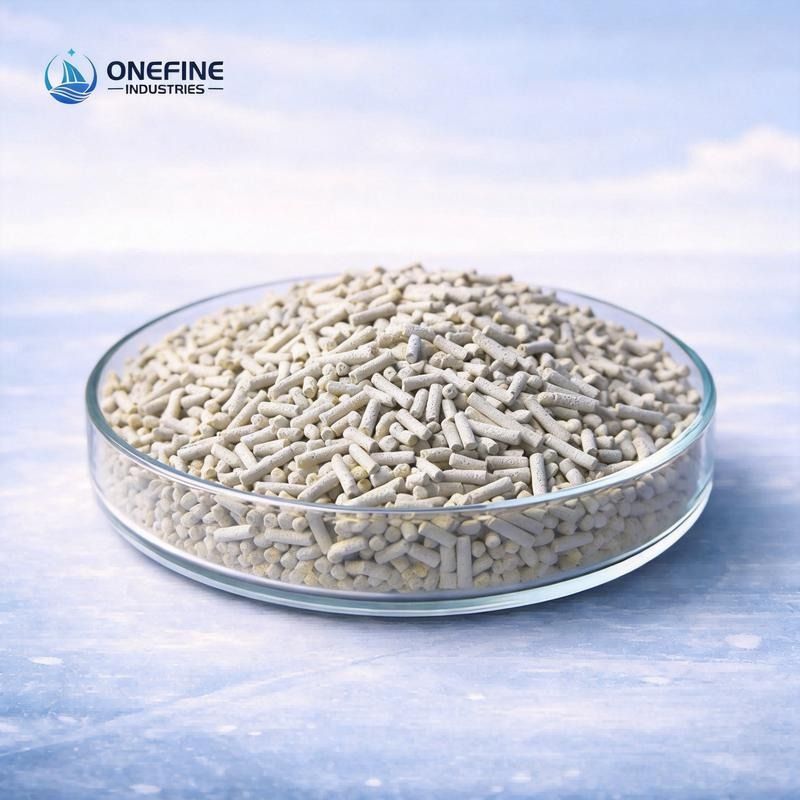
Zinc oxide desulfurization catalyst
High-purity zinc oxide (ZnO) desulfurization catalyst for fine removal of H₂S from natural gas, synthesis gas, hydrogen, and hydrocarbon feeds. Achieves outlet sulfur levels below 0.1 ppm through irreversible chemisorption. High sulfur capacity, long service life, and strong resistance to steam.
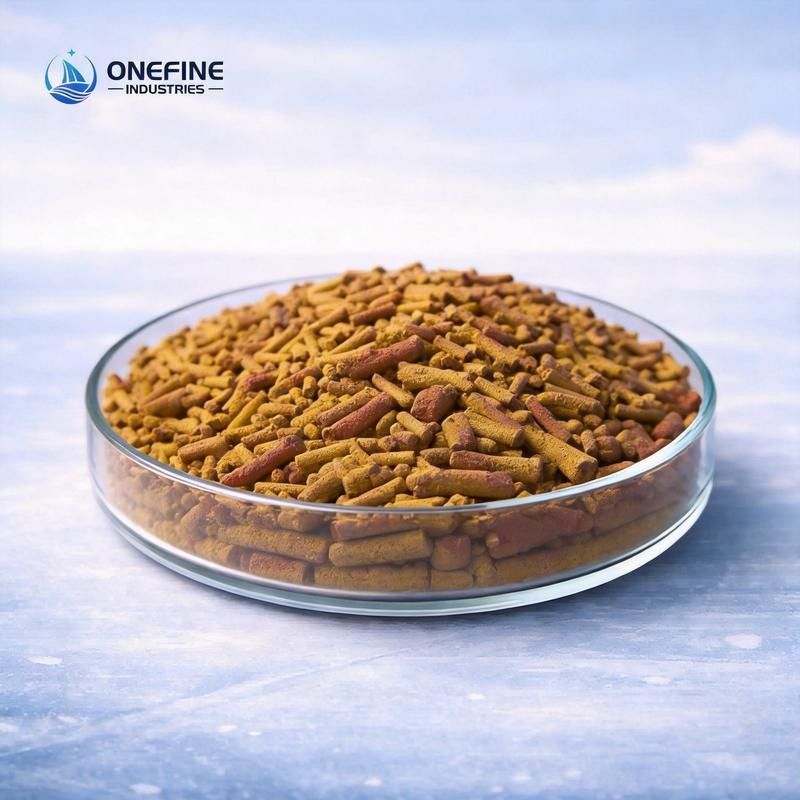
Iron Oxide Desulfurization Catalyst
High-efficiency iron oxide-based desulfurization catalyst for deep removal of H₂S from natural gas, biogas, syngas, coke oven gas, and various industrial gas streams. Features high sulfur capacity, excellent water resistance, and room-temperature operation — a cost-effective solution for both bulk and precision desulfurization applications.