What Is PSA Oxygen Generation?
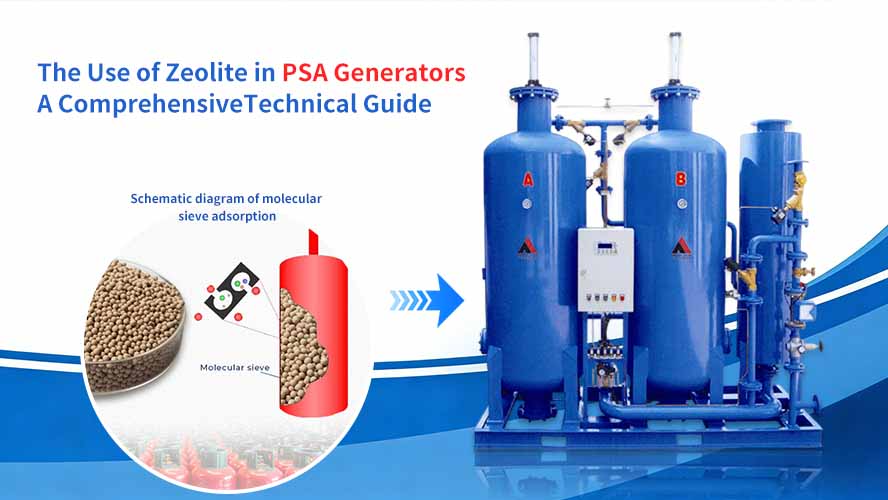
PSA (Pressure Swing Adsorption) oxygen generation is a gas separation process that uses compressed air as the raw material and molecular sieve adsorbent as the separation medium.
Compressed air mainly contains:
- Nitrogen (N2) ~78%
- Oxygen (O2) ~21%
- Argon (Ar) ~0.9%
- Trace CO2, water vapor, and impurities
In a PSA oxygen generator:
- Molecular sieve preferentially adsorbs nitrogen
- Oxygen passes through the adsorption bed
- The system alternates between adsorption and desorption/regeneration
- Continuous oxygen production is achieved through dual-bed or multi-bed cycling
The efficiency of this process depends heavily on the adsorption selectivity and performance of the oxygen molecular sieve.
Why Molecular Sieve Is Critical in PSA Oxygen Plants
In PSA oxygen systems, the adsorbent is not just a filter—it is the core separation material.
A high-performance molecular sieve for oxygen generation must provide:
- Strong nitrogen adsorption capacity
- High nitrogen/oxygen selectivity
- Fast adsorption and desorption kinetics
- Stable cycle performance
- Good crush strength and abrasion resistance
- Low dust generation
- Long service life under frequent pressure cycling
If the molecular sieve quality is poor, the PSA oxygen generator may experience:
- Lower oxygen purity
- Reduced oxygen recovery rate
- Higher air consumption
- Increased compressor energy cost
- Unstable output flow
- Shorter adsorbent life
- More maintenance downtime
That is why oxygen generation molecular sieve is one of the most important components in any PSA oxygen production system.
Common Molecular Sieve Used in PSA Oxygen Generation
The most commonly used adsorbents for PSA oxygen production include:
1. Lithium-Based Molecular Sieve (LiX / Li-LSX)
Lithium molecular sieve is widely recognized as the premium adsorbent for high-efficiency PSA oxygen plants.
Advantages:
- Higher nitrogen adsorption capacity
- Better N2/O2 selectivity
- Lower energy consumption
- Higher oxygen recovery
- Suitable for compact and efficient oxygen generators
This type is often used in:
- Medical oxygen concentrators
- Industrial PSA oxygen plants
- High-performance modular oxygen systems
2. Sodium-Based Molecular Sieve (NaX / 13X-type for oxygen systems)
Sodium-based zeolite molecular sieve is also used in PSA oxygen generation, especially in cost-sensitive applications.
Advantages:
- Good separation performance
- Lower initial cost
- Stable operation in standard systems
- Suitable for medium-purity oxygen generation
This is commonly used where:
- Budget is a key factor
- Oxygen purity targets are moderate
- System design allows larger adsorbent beds
Application Case Analysis: PSA Oxygen Plant for Industrial Metal Cutting
Project Background
A medium-sized metal fabrication factory required a stable on-site oxygen source for:
- Oxy-fuel cutting
- Combustion enhancement
- Localized heating processes
Previously, the factory relied on:
- Cylinder oxygen supply
- High logistics cost
- Frequent replacement delays
- Inconsistent supply during peak production periods
To reduce operating cost and improve supply stability, the customer installed a PSA oxygen generation system.
Customer Requirements
The customer requested:
- Oxygen purity: 90%–93%
- Continuous oxygen supply
- Stable flow for workshop use
- Low operating cost
- Easy maintenance
- Reliable long-term performance
- Fast return on investment compared with cylinder oxygen
Because the oxygen demand was continuous and cost-sensitive, the adsorbent selection became a key design factor.
Molecular Sieve Solution Selected
After evaluating the operating conditions, the system used:
- High-performance oxygen generation molecular sieve
- Zeolite-based adsorbent with strong nitrogen selectivity
- Optimized for rapid PSA cycle switching
- High mechanical strength for long-term pressure cycling
In this case, the selected molecular sieve provided:
- Efficient nitrogen adsorption from compressed air
- Stable oxygen purity within the target range
- Consistent cycle performance under daily industrial operation
- Reduced compressor load compared with lower-grade adsorbents
System Operation Principle
The PSA oxygen plant operated with:
- Air compressor
- Air pretreatment system
- Twin adsorption towers
- Molecular sieve adsorbent beds
- Oxygen buffer tank
- Control valve switching system
Step-by-step process:
- Ambient air is compressed
- Pretreatment removes:
- Dust
- Oil traces
- Excess moisture
- Clean compressed air enters Adsorption Tower A
- Molecular sieve selectively adsorbs:
- Nitrogen
- Residual moisture
- CO2
- Oxygen-enriched gas exits the bed
- Tower B undergoes depressurization and regeneration
- Towers alternate cyclically for continuous oxygen output
This cyclic PSA process ensures stable oxygen generation without cryogenic separation or liquid oxygen storage.
Performance Results of the PSA Oxygen Molecular Sieve
After system commissioning, the plant achieved:
- Stable oxygen purity at 90%–93%
- Consistent oxygen flow during multi-shift production
- Reduced dependence on delivered oxygen cylinders
- Lower operating cost per cubic meter of oxygen
- Improved process continuity in cutting operations
Operational benefits observed:
- Faster response to production demand
- No interruptions from cylinder replacement
- Safer and more convenient oxygen supply management
- Lower logistics and transportation cost
- Better overall energy efficiency compared with the previous supply model
The customer reported that the molecular sieve adsorbent performance directly influenced oxygen purity stability and system economics.
Why Molecular Sieve Quality Matters in This PSA Oxygen Case
In this application, the difference between standard adsorbent and high-quality oxygen molecular sieve was significant.
Key performance impacts of better molecular sieve:
1. Higher Oxygen Purity Stability
A better molecular sieve maintained consistent nitrogen adsorption even during:
- Ambient temperature changes
- Variable compressed air load
- Continuous daily cycling
- Peak demand periods
This resulted in fewer oxygen purity fluctuations.
2. Lower Energy Consumption
Because the adsorbent had:
- Better nitrogen selectivity
- Faster mass transfer
- More efficient regeneration
…the system required less compressed air to achieve the same oxygen output.
Since the air compressor is usually the largest energy consumer in a PSA oxygen plant, improved adsorbent efficiency helped reduce total operating cost.
3. Longer Service Life
The selected molecular sieve showed:
- Good crush resistance
- Low attrition
- Low dust generation
- Stable cycle durability
This reduced the risk of:
- Pressure drop increase
- Valve contamination
- Flow instability
- Early bed replacement
4. More Reliable Continuous Operation
For industrial users, oxygen interruption can stop production.
The molecular sieve helped maintain:
- Stable adsorption cycle timing
- Predictable oxygen purity
- Reliable bed switching behavior
- Reduced maintenance frequency
This was especially important for multi-shift manufacturing operations.
Industries That Use Molecular Sieve in PSA Oxygen Generation
Besides metal cutting, PSA oxygen molecular sieve is widely used in:
- Medical oxygen generation systems
- Hospital oxygen plants
- Wastewater treatment aeration
- Aquaculture oxygen enrichment
- Glass furnace combustion support
- Pulp and paper bleaching support
- Ozone generation feed gas
- Chemical oxidation processes
- Mining and smelting support
- Industrial combustion optimization
In all these industries, the molecular sieve determines the core balance between:
- Oxygen purity
- Oxygen recovery
- Power consumption
- Equipment size
- Maintenance frequency
- Long-term operating cost
Key Factors in Selecting Molecular Sieve for PSA Oxygen Plants
When choosing molecular sieve for oxygen generation, buyers should evaluate:
- Required oxygen purity (e.g. 90%, 93%, 95%)
- Oxygen flow rate
- PSA cycle speed
- Air compressor quality
- Air pretreatment effectiveness
- Bed design and dimensions
- Working pressure range
- Ambient temperature and humidity
- Desired service life
- Energy cost targets
Important adsorbent properties:
- Nitrogen adsorption capacity
- N2/O2 selectivity
- Bulk density
- Particle size distribution
- Compressive strength
- Attrition resistance
- Regeneration performance
- Moisture tolerance (with proper pretreatment)
A poor adsorbent choice can increase total system cost even if the initial purchase price is lower.
Why Air Pretreatment Is Essential for PSA Oxygen Molecular Sieve
Even the best oxygen molecular sieve can fail early if the compressed air pretreatment system is inadequate.
Harmful contaminants include:
- Oil aerosol
- Liquid water
- Excess humidity
- Dust particles
- Compressor carryover
These contaminants can cause:
- Pore blockage
- Reduced nitrogen adsorption capacity
- Bed contamination
- Increased pressure drop
- Faster adsorbent aging
- Reduced oxygen purity
Recommended upstream protection:
- Air filters
- Refrigerated or desiccant air dryer (depending on system design)
- Oil removal filters
- Automatic condensate drainage
- Stable pressure control
Proper pretreatment greatly extends molecular sieve life and improves PSA oxygen generator reliability.
Advantages of Molecular Sieve in PSA Oxygen Generation
Using high-quality molecular sieve in PSA oxygen plants offers major benefits:
- Stable oxygen purity
- High nitrogen adsorption efficiency
- Continuous on-site oxygen production
- Lower oxygen generation cost
- Reduced cylinder dependence
- Lower logistics and storage risk
- Fast system cycling capability
- Long adsorbent service life
- Improved energy efficiency
- Reliable industrial and medical oxygen supply
Why PSA Oxygen Systems Are Replacing Cylinder Oxygen in Many Industries
This case reflects a broader market trend.
More factories are switching from cylinder or liquid oxygen supply to PSA oxygen generation systems because they offer:
- On-demand oxygen
- Lower long-term operating cost
- Reduced transportation dependency
- Better safety in many applications
- Flexible installation
- Easier scaling
- Stable local supply
And the success of these systems depends largely on one core material:
The molecular sieve adsorbent for oxygen generation.
Conclusion
In PSA oxygen generation, molecular sieve is the key adsorbent that enables efficient separation of oxygen from compressed air by selectively adsorbing nitrogen and trace impurities. Whether the application is medical oxygen, metal cutting, wastewater treatment, aquaculture, or industrial combustion, the performance of the molecular sieve directly affects:
- Oxygen purity
- Oxygen recovery
- Energy consumption
- System stability
- Maintenance cost
- Adsorbent life cycle
This application case shows that selecting the right oxygen generation molecular sieve can significantly improve PSA oxygen plant performance, reduce operating cost, and deliver a more reliable oxygen supply for industrial users.
For companies investing in on-site oxygen generation, choosing a high-quality molecular sieve is not just an adsorbent decision—it is a system performance decision.
Contact Us for PSA Oxygen Molecular Sieve Solutions
Looking for a reliable molecular sieve for PSA oxygen generation?
We supply high-performance oxygen generation molecular sieve for:
- PSA oxygen plants
- Medical oxygen concentrators
- Industrial oxygen generators
- 90%–95% oxygen systems
- Twin-tower PSA oxygen units
- Customized oxygen adsorption solutions
Related Articles
Silica Gel vs Molecular Sieve: Key Differences, Uses & Which to Choose
Molecular Sieve in Petrochemical Industry: Case Analysis for Hydrocarbon Separation, Dehydration, and Catalyst Protection