
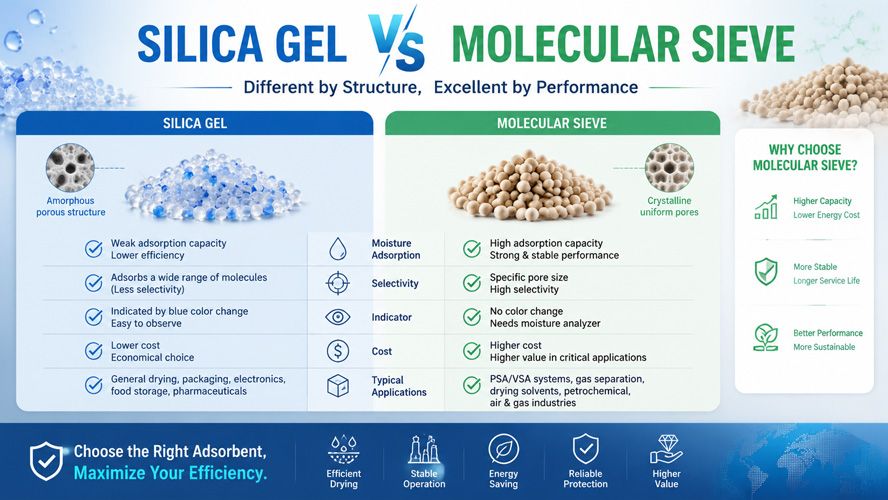
Silica Gel vs Molecular Sieve: Key Differences, Uses & Which to Choose
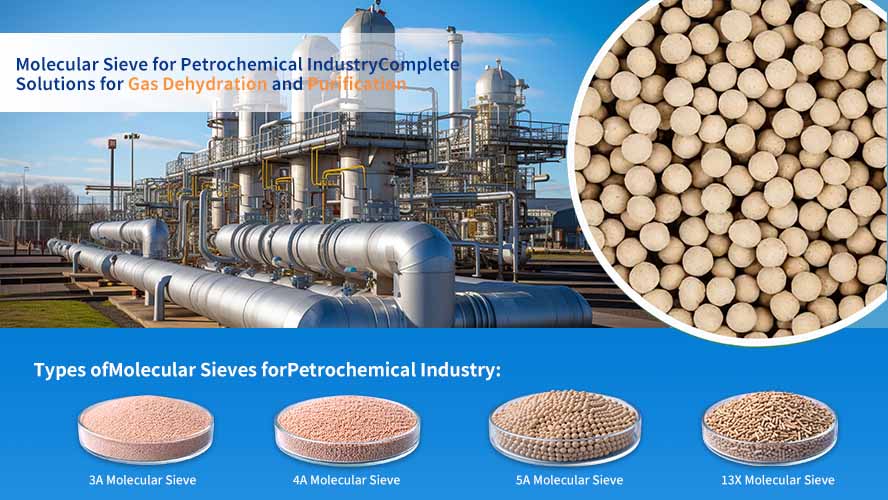
Molecular Sieve in Petrochemical Industry: Case Analysis for Hydrocarbon Separation, Dehydration, and Catalyst Protection
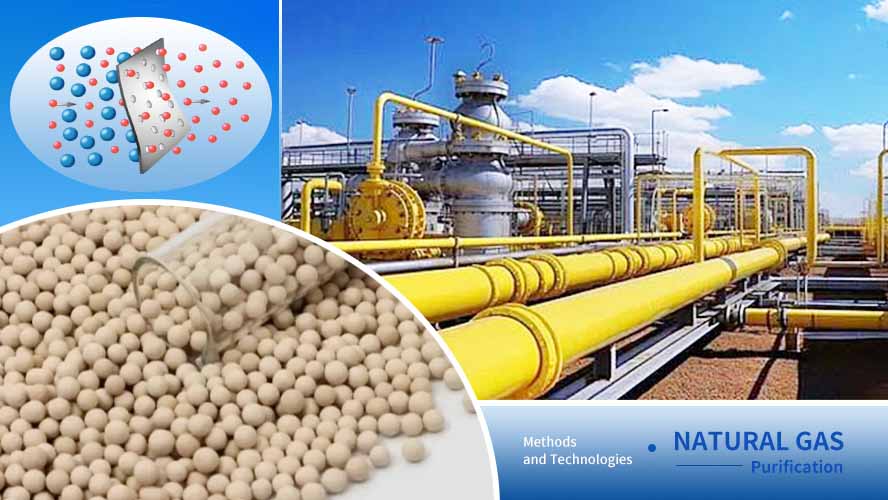
Molecular Sieve in Natural Gas Applications: Case Analysis for Dehydration, CO2 Removal, and LNG Pre-Treatment
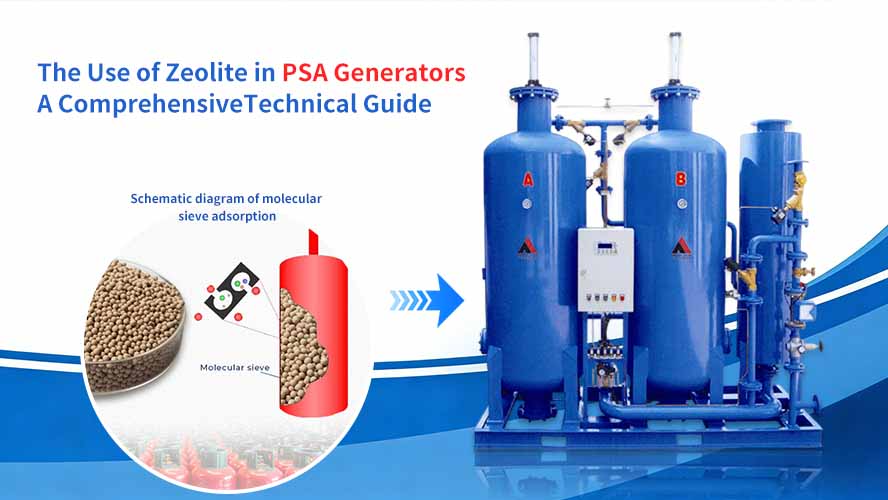
Molecular Sieve in PSA Oxygen Generation: Application Case Analysis
How Molecular Sieve Improves PSA Oxygen Production Efficiency and Purity Molecular sieve for PSA oxygen generation plays a critical role in modern on-site oxygen production systems. In Pressure Swing Adsorption (PSA) oxygen plants, specially designed molecular sieve adsorbents are used to selectively adsorb nitrogen, moisture, carbon dioxide, and trace impurities from compressed air, allowing oxygen-enriched gas to pass through as the product stream. As industries increasingly demand reliable, cost-effective, and on-demand oxygen supply, PSA oxygen generation systems have become a preferred solution in sectors such as medical oxygen supply, wastewater treatment, glass manufacturing, aquaculture, metal cutting, ozone generation, and industrial combustion support. At the core of these systems is oxygen generation molecular sieve, often based on lithium-exchanged or sodium-based zeolite molecular sieve, which determines oxygen purity, energy efficiency, cycle stability, and long-term operating cost. This article provides a practical application case analysis of molecular sieve in PSA oxygen generation, explaining how it works, where it is used, and why choosing the right molecular sieve is essential for PSA oxygen plant performance.