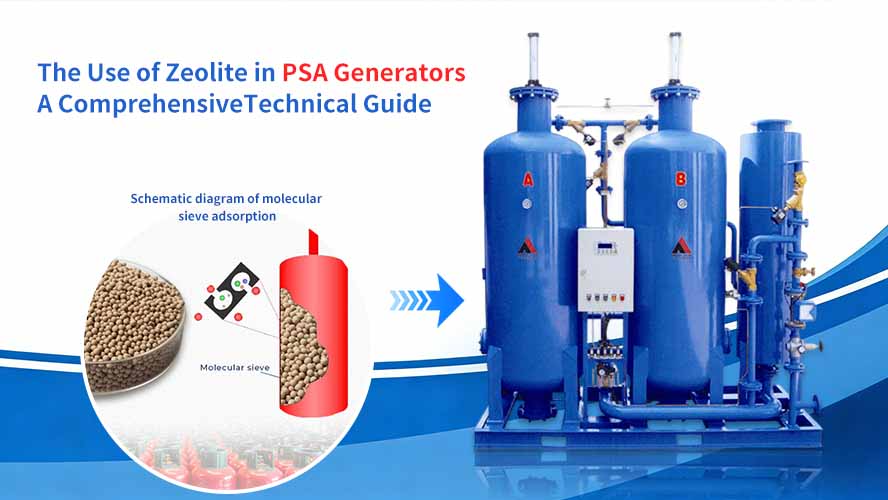
When it comes to moisture control, adsorption, and industrial drying, two materials stand out: silica gel and molecular sieve. Both are widely used as desiccants and adsorbents across industries, but they differ significantly in performance, structure, and ideal applications. This guide breaks down their key differences, pros and cons, and helps you choose the right material for your needs — whether for packaging, industrial processes, or precision drying.
What Are Silica Gel and Molecular Sieve?
Before diving into comparisons, let’s clarify what each material is—critical for understanding their unique benefits.
Silica Gel: Affordable, Versatile Moisture Control
Silica gel is an amorphous porous silicon dioxide (SiO₂) produced via the sol-gel process. It appears as translucent, hard beads or granules, with an irregular porous structure (pore size: 20–300 angstroms) and a high internal surface area (300–800 m²/g). Think of it as a "universal sponge" for moisture, capable of adsorbing a range of polar molecules. Silica gel is cost-effective, easy to use, and widely available—making it the go-to for basic moisture protection.
Molecular Sieve: Precision Drying & Selective Adsorption
Molecular sieves are crystalline aluminosilicates (zeolites) with a highly ordered 3D framework. Their defining feature is uniform, precise micropores (3–10 angstroms, e.g., 3Å, 4Å, 5Å, 13X) that act as a "molecular filter"—only allowing molecules smaller than the pore size to be adsorbed. They have an even higher surface area (500–1,000 m²/g) and strong polarity for targeted adsorption. Molecular sieves deliver deep drying, high selectivity, and long-term reusability—ideal for industrial and precision applications.
Silica Gel vs Molecular Sieve: Key Differences
Below is a detailed comparison of their core properties, to help you quickly identify which material fits your use case.
1. Structure & Composition
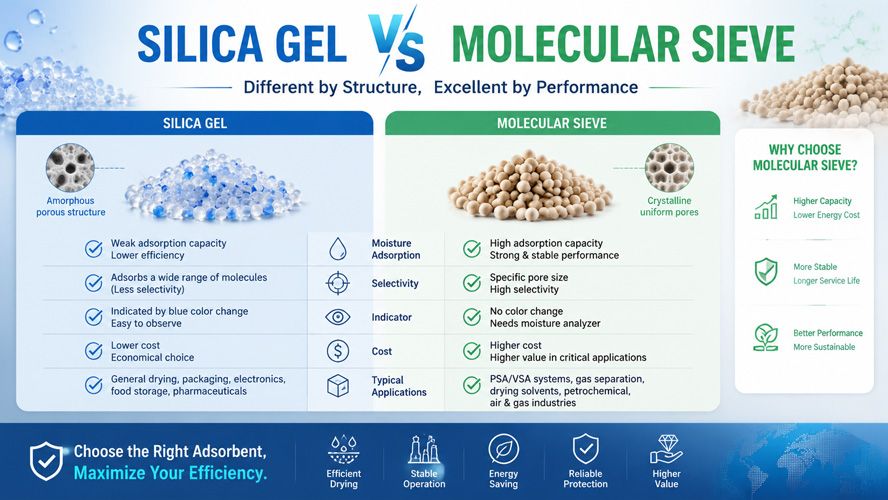
- Silica Gel: Amorphous SiO₂, irregular pores (20–300Å), surface area 300–800 m²/g. Non-crystalline, random network structure.
- Molecular Sieve: Crystalline aluminosilicates, uniform micropores (3–10Å), surface area 500–1,000 m²/g. Ordered 3D framework for selective adsorption.
2. Adsorption Performance
The most important difference lies in how they adsorb moisture and other molecules—directly impacting their use cases.
- Moisture Capacity:
- Silica Gel: Works best at relative humidity (RH > 40%), max capacity 30–40% of its weight (high RH). Poor at low RH (10–15% capacity at ≤20% RH).
- Molecular Sieve: Excels at low RH (≤30%), 20–25% weight capacity at 20% RH. Maintains performance even at near-zero humidity for deep dehydration.
- Dew Point Reduction:
- Silica Gel: Reduces dew point to ~-20°C (good for basic moisture proofing).
- Molecular Sieve: Lowers dew point to -40°C to -70°C (essential for sensitive industrial processes).
- Selectivity:
- Silica Gel: Non-selective—adsorbs all polar molecules (water, alcohols, ketones) at once.
- Molecular Sieve: Highly selective—separates molecules by size/polarity (e.g., O₂/N₂ separation, CO₂ capture).
3. Thermal & Chemical Stability
- Silica Gel: Operating temp: -5°C to 65°C. Softens, cakes, and loses capacity above 65°C. Dissolves in strong alkalis.
- Molecular Sieve: Operating temp: -40°C to 650°C. Maintains structure at extreme temperatures—suitable for high-heat processes (e.g., petroleum cracking).
4. Regeneration & Reusability
Reusability impacts long-term cost— a key consideration for businesses
- Silica Gel: Regenerates at 100–150°C (4–6 hours), restores 60–70% capacity. Reusable 3–5 times before degradation.
- Molecular Sieve: Regenerates at 200–300°C (2–3 hours), restores 90%+ capacity. Reusable 10+ times, service life 1–2 years.
5. Cost Comparison
- Silica Gel: Low upfront cost (1/3–1/2 of molecular sieves). Cost-effective for high-volume, low-performance uses (e.g., packaging desiccant).
- Molecular Sieve: Higher initial cost, but lower long-term cost per unit adsorption due to reusability. Ideal for industrial-scale processes.
Silica Gel vs Molecular Sieve: Ideal Applications
Matching the material to your application ensures efficiency and cost savings— "which desiccant to use."
Best Uses for Silica Gel
- Packaging: Moisture control for food, pharmaceuticals, electronics, textiles (prevents mold, corrosion).
- General dehumidification: Workshop air drying, museum artifact preservation, household moisture absorption.
- Laboratory use: Drying organic solvents in non-critical environments.
Best Uses for Molecular Sieve
- Deep drying: Natural gas dehydration (prevents pipeline freezing), refrigerant drying, aviation kerosene purification.
- Gas separation: Oxygen/nitrogen separation, CO₂ capture, industrial gas purification.
- Petrochemicals: Catalytic cracking, hydrocarbon separation, process stream drying.
- Pharmaceuticals: Drying hygroscopic APIs and ultra-low humidity packaging.
Which Should You Choose?
The choice between silica gel and molecular sieve depends on your moisture requirements, operating conditions, and budget:
- Choose silica gel if you need affordable, basic moisture control (high RH, low temperature, non-critical applications like packaging).
- Choose molecular sieve if you need deep drying (low RH, low dew point), high selectivity, thermal stability, or long-term reusability (industrial processes, precision applications).
Both materials are essential for moisture control, but understanding their differences ensures you select the most efficient, cost-effective option for your needs. For more tailored advice, contact our team to discuss your specific application.
Related Articles
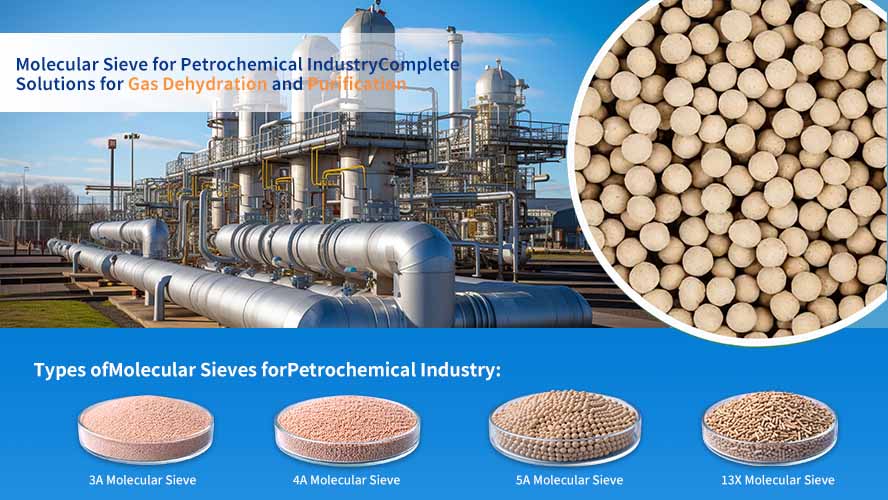
Molecular Sieve in Petrochemical Industry: Case Analysis for Hydrocarbon Separation, Dehydration, and Catalyst Protection
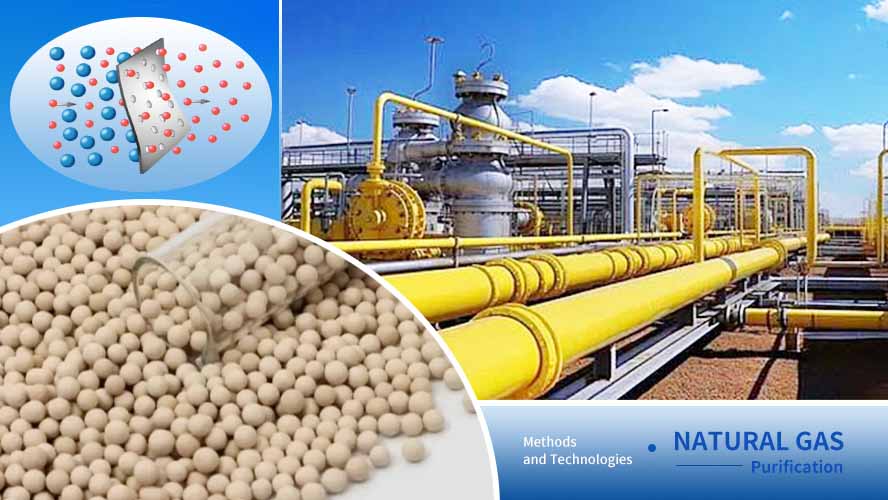
Molecular Sieve in Natural Gas Applications: Case Analysis for Dehydration, CO2 Removal, and LNG Pre-Treatment