Deeply Refined Catalyst as the Final Guard Bed Before Copper-Based Synthesis Catalysts: Application Case Analysis
Industry Context
Key Takeaways
- Copper-based synthesis catalysts are damaged irreversibly by trace sulfur, chlorine, arsenic, and oxygen.
- A Deeply Refined Catalyst in the final position combines four removal functions in a single guard bed.
- The final bed works best when upstream stages are maintained properly, absorbing unexpected slips and upsets to protect the synthesis converter.
- Where the feed is well characterized and only carries sulfur and arsenic, a narrower guard bed can be a reasonable alternative.
A copper-based synthesis catalyst is one of the most valuable charges in a syngas plant, and one of the least forgiving. It operates in a reduced state, it is expected to run for years between change-outs, and it can be permanently damaged by contaminants present at trace levels that most upstream equipment is not designed to see.
Upstream purification stages are built to remove the bulk of these contaminants. But every upstream bed has a slip, a gradual end-of-life period, or a vulnerability to process upsets. The last bed in front of the synthesis converter is therefore not just another purification step. It is the final line of defense.
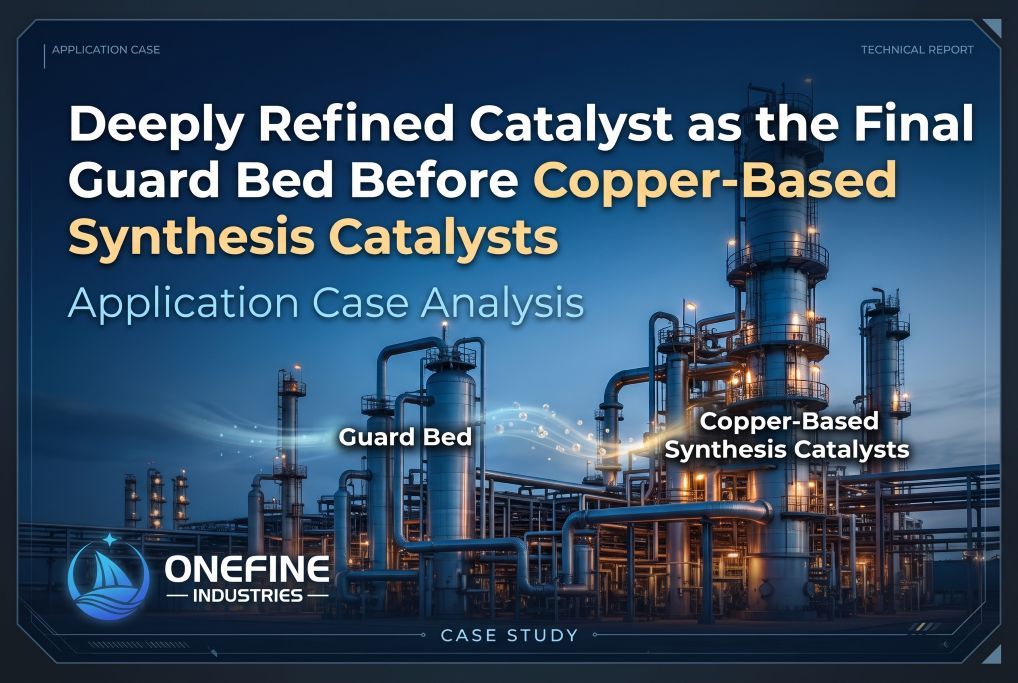
This case analysis looks at how a Deeply Refined Catalyst is used in that final position: a single multi-contaminant guard bed that removes trace sulfur, chlorine, arsenic and oxygen immediately before the copper-based synthesis catalyst.
The Challenge: A Catalyst That Cannot Recover From Poisoning
Copper-based synthesis catalysts (typically copper-zinc-alumina systems) are sensitive to several different contaminants, and each one damages the catalyst in its own way:
- Sulfur: Reacts with the active copper surface and permanently reduces the area available for synthesis. Even very small amounts accumulate over a long run.
- Chlorine: Promotes sintering of the copper crystallites, so the catalyst loses activity faster than its normal aging curve.
- Arsenic: Acts as a permanent poison on the active sites and cannot be removed once deposited.
- Oxygen: The synthesis catalyst must stay in its reduced state. Trace oxygen reacts with the reduced copper surface, which works against the stable operation the catalyst depends on.
The common thread is that this damage is largely irreversible. A synthesis catalyst that has been poisoned does not recover when the feed is cleaned up again. Its lost activity shows up as lower output and a shorter run until the next costly change-out.
The second part of the challenge is that these contaminants do not arrive in a predictable way. Their levels depend on the feed source, on the condition of upstream beds, and on process upsets. A purification train that performs well on average can still let through a short contaminant slug that the synthesis catalyst absorbs permanently.
Why the Final Position Needs a Multi-Contaminant Bed
A typical syngas purification train handles contaminants in stages. Bulk and deep desulfurization take place upstream, often across more than one bed. For a closer look at how that upstream sulfur removal is arranged, see our application case on upstream deep desulfurization.
Those upstream stages are designed around sulfur. The final guard bed has a different job. It does not need to remove large quantities of anything. It needs to catch whatever is left, across every contaminant the synthesis catalyst cannot tolerate.
This is where a single-function bed falls short. A bed designed only for sulfur offers no protection against a chloride or oxygen slip. Installing a separate final bed for each contaminant adds vessels, pressure drop and change-out work at the point in the plant where space and simplicity matter most.
A Deeply Refined Catalyst addresses this by combining four removal functions in one bed:
- Desulfurization: Captures trace sulfur that has slipped past the upstream stages.
- Dechlorination: Retains trace chlorides before they reach the copper crystallites.
- Arsenic removal: Holds arsenic so it cannot deposit on the synthesis catalyst.
- Deoxygenation: Removes trace oxygen so the downstream catalyst stays in its reduced state.
The CuO-ZnO chemistry behind this four-in-one function is explained in our deeply refined catalyst basics.
How It Fits Into the Purification Train
In a copper-based synthesis loop, the Deeply Refined Catalyst sits at the very end of the gas purification sequence, immediately upstream of the synthesis converter. The arrangement can be summarized in three layers:
- Upstream stages: Remove the bulk of sulfur and convert organic sulfur species, carrying most of the contaminant load.
- Final guard bed: The Deeply Refined Catalyst polishes the remaining traces of sulfur, chlorine, arsenic and oxygen in one pass.
- Protected catalyst: The copper-based synthesis catalyst receives gas that has been cleaned of all four contaminant types.
Because the final guard bed only handles residual traces, its capacity is consumed slowly under normal operation. That is the intended design. Its value lies in absorbing slips and upsets that would otherwise land directly on the synthesis catalyst.
Choosing Between a Broad and a Narrow Final Guard Bed
Not every plant needs four-in-one protection in the final position. Where the feed is known to carry only sulfur and arsenic, and chlorine and oxygen are reliably absent, a narrower bed can do the job. A desulfurization and arsenic removal catalyst covers that narrower scope.
The decision depends on how well the feed is characterized and how much risk the plant is willing to accept:
- Broad four-in-one protection fits when the feed source varies, when chloride or oxygen slips cannot be ruled out, or when the synthesis catalyst is too valuable to leave any contaminant path uncovered.
- Narrower protection fits when the feed is stable and well characterized, and the only realistic threats are sulfur and arsenic.
Our purification stage comparison explains this choice in more detail.
Operating Considerations
Keep the upstream stages doing their job. The final guard bed is sized for traces, not for bulk removal. If an upstream bed is allowed to run past its end of life, the final bed starts carrying a load it was not designed for, and its capacity is consumed far faster than planned. Monitoring upstream outlet quality is part of protecting the guard bed itself.
Watch the guard bed outlet, not just the synthesis catalyst. By the time synthesis catalyst activity drops, the damage has already happened. Regular checks on the guard bed outlet give early warning while there is still time to act.
Treat upsets as capacity events. A feed upset or an upstream bed failure can use up a meaningful share of the final bed's capacity in a short time. After any such event, reassess the remaining life of the guard bed rather than assuming the normal schedule still applies.
Plan the change-out around the synthesis catalyst. Because the guard bed is consumed slowly, its replacement can usually be aligned with a planned shutdown. Confirm operating conditions and replacement criteria for your specific feed with your technical team.
Handle spent material correctly. A spent guard bed contains the contaminants it has captured. Unload and handle it according to the Safety Data Sheet (SDS) and your site procedures.
Key Takeaways
- Copper-based synthesis catalysts are damaged irreversibly by trace sulfur, chlorine, arsenic and oxygen.
- Upstream stages remove the bulk of these contaminants, but slips and upsets still happen.
- A Deeply Refined Catalyst in the final position combines four removal functions in a single bed, covering every contaminant path just ahead of the synthesis converter.
- Where the feed only carries sulfur and arsenic, a narrower guard bed can be a reasonable alternative.
- The final bed works best when upstream stages are maintained properly, so it handles traces rather than bulk load.
Looking for Bulk Supply of Deeply Refined Catalyst?
Sorbsieve is a trusted bulk supplier of Deeply Refined Catalyst and complete industrial adsorbents, serving industrial buyers across the Middle East.
We provide:
- ✅ Container-level supply (20'GP / 40'GP / 40'HQ)
- ✅ Full documentation (COA / TDS / SDS / COO)
- ✅ Multiple packaging options
- ✅ Technical support for guard bed selection and system optimization
- ✅ Fast quote response for industrial inquiries
Contact our team for bulk pricing, product samples, and technical consultation.
Related Products
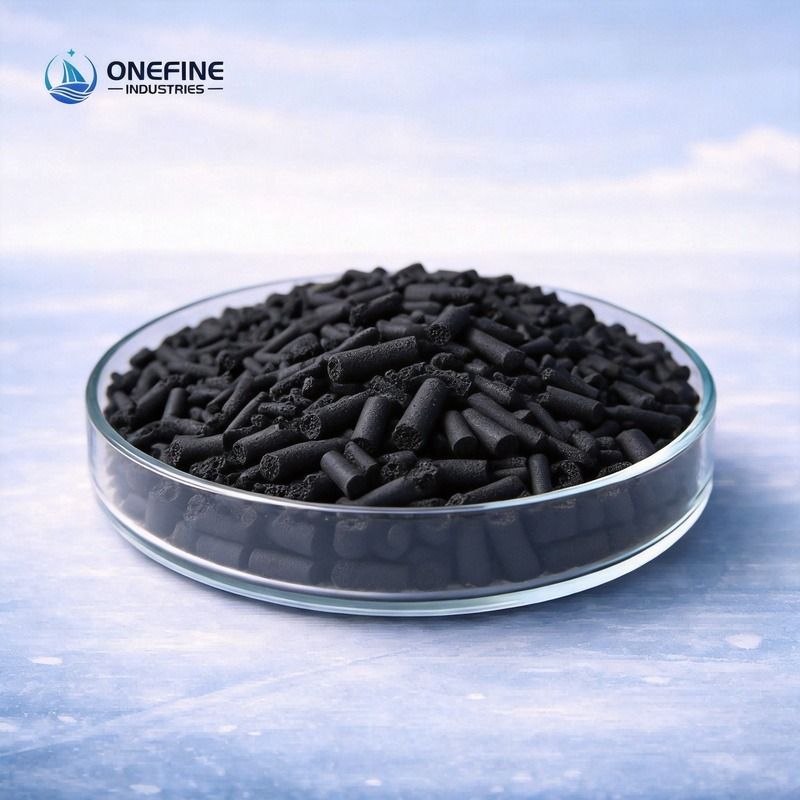
Deeply Refined Catalyst
A high-performance deeply refined catalyst based on copper oxide and zinc oxide active components, designed for deep purification of liquid hydrocarbons and synthesis gas. Achieves total sulfur removal down to ≤ 20 ppb through efficient desulfurization, dearsenication, dephosphorization, and deoxygenation. Features high mechanical strength, stable operation, and excellent low-temperature activity.
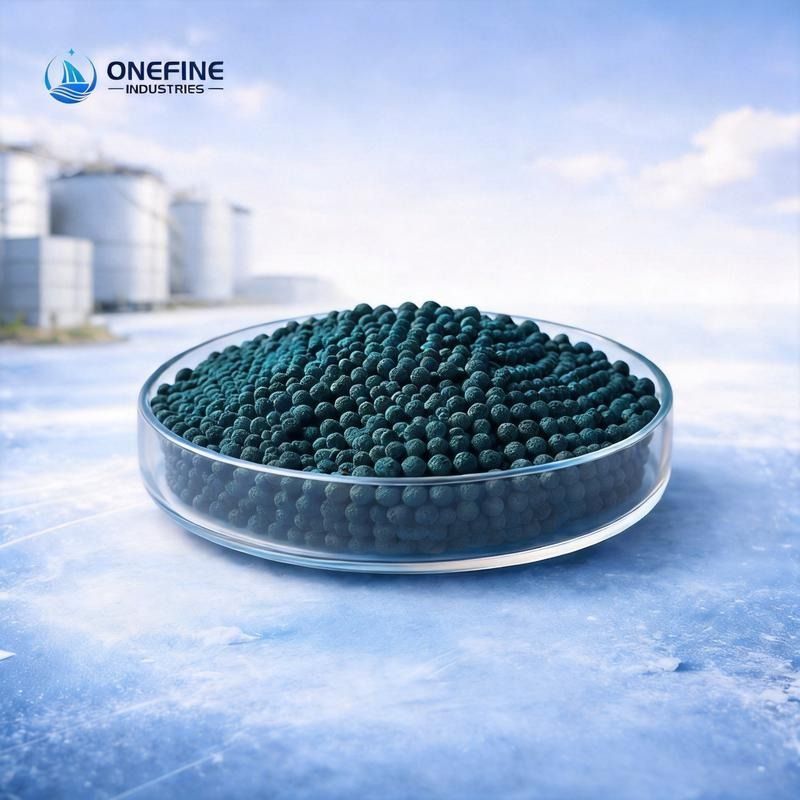
Desulfurization and arsenic removal catalyst
High-performance CuO/Al₂O₃-based desulfurization and arsenic removal catalyst, engineered for the ultra-deep removal of sulfur compounds and volatile arsenides to protect downstream noble metal catalysts. Available in bulk from 1 ton MOQ for Middle East industrial buyers.
Related Reading
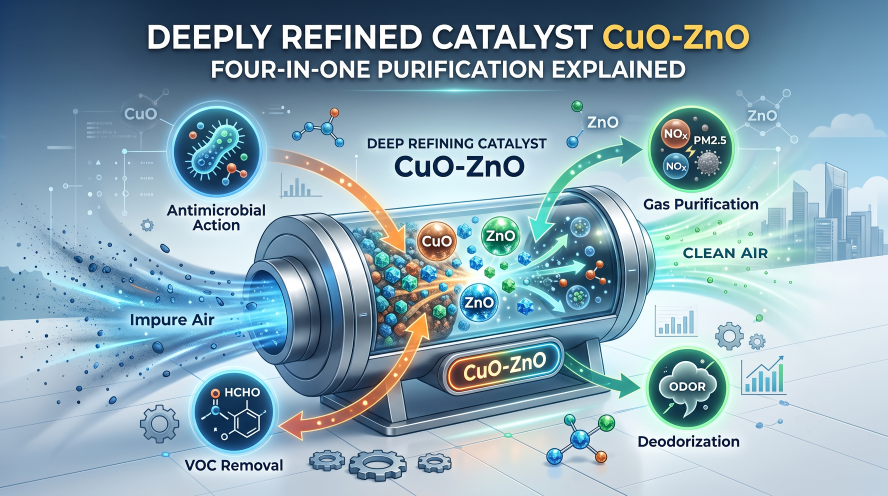
What Is a Deeply Refined Catalyst? CuO-ZnO Four-in-One Purification Explained
Not sure whether you need a dedicated desulfurization catalyst or a broader four-in-one guard bed? This guide explains how a CuO-ZnO deeply refined catalyst works and when it's the right choice for liquid hydrocarbon and synthesis gas purification.
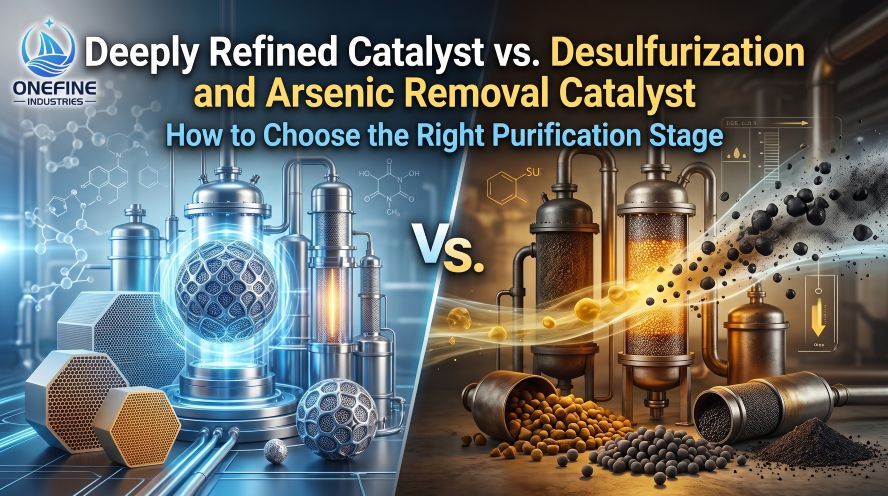
Deeply Refined Catalyst vs Desulfurization and Arsenic Removal Catalyst: How to Choose the Right Purification Stage
Deeply Refined Catalyst and Desulfurization and Arsenic Removal Catalyst both use copper oxide against sulfur and arsenic — but they serve different stages of the purification train. Here's how to choose.