Molecular Sieve for Ethanol Dehydration: Applications in Fuel Grade Ethanol Production, Solvent Drying, and Beverage Industry
Overview
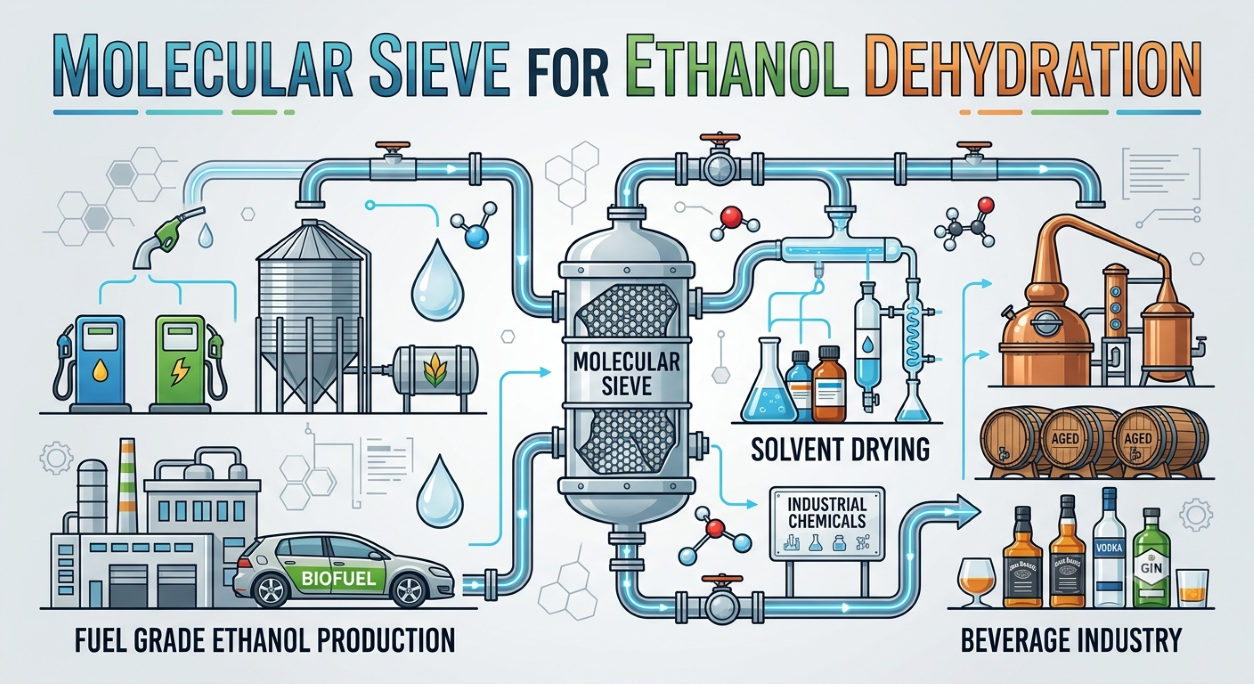
Ethanol dehydration is one of the most established and technically demanding applications for molecular sieve technology. Whether the goal is fuel-grade ethanol at 99.5%+ purity, anhydrous solvent for pharmaceutical manufacturing, or controlled moisture management in spirit aging, the challenge is the same: water and ethanol form an azeotrope at approximately 95.6% ethanol by weight, making conventional distillation insufficient for reaching anhydrous purity.
3A molecular sieve is the industry-standard solution. With a pore size of 3 Ångströms — large enough to adsorb water molecules (2.8 Å) but too small to admit ethanol molecules (4.4 Å) — 3A achieves selective, deep dehydration that distillation alone cannot reach.
This case analysis covers the four primary industrial applications of molecular sieve in ethanol-related processes: fuel-grade ethanol production, pharmaceutical solvent drying, beverage industry moisture management, and bioethanol upgrading.
Key Takeaways
- Azeotrope Breaking: 3A molecular sieve bypasses the 95.6% distillation limit, reliably upgrading ethanol to 99.5%+ anhydrous fuel or pharmaceutical grade.
- Strict Size Selectivity: The 3 Ångström pore size effortlessly captures water (2.8 Å) while completely excluding the larger ethanol molecules (4.4 Å).
- TSA Cycle Efficiency: Operates in continuous dual-bed Temperature Swing Adsorption systems, delivering thousands of cycles before replacement is needed.
Application 1: Fuel Grade Ethanol Production (TSA Dual-Bed Systems)
Process Context
Fuel-grade ethanol requires a minimum purity of 99.5% (anhydrous) for blending with gasoline. Conventional distillation produces ethanol at approximately 95-96% purity — the azeotropic limit. Closing the gap from 96% to 99.5%+ requires a dedicated dehydration step.
Temperature Swing Adsorption (TSA) using 3A molecular sieve is the dominant technology for large-scale fuel ethanol dehydration. A typical TSA system operates with two parallel adsorber vessels: one in active adsorption while the other undergoes thermal regeneration. This alternating cycle ensures continuous production output.
How 3A Molecular Sieve Works in This Application
Ethanol vapor at approximately 95-96% concentration enters the molecular sieve bed under controlled temperature and pressure conditions. Water molecules are selectively captured within the 3A pore structure. The dried ethanol vapor — now at 99.5% or higher — exits the bed and is condensed for blending or storage.
During regeneration, hot gas (typically superheated steam or hot nitrogen) is passed through the saturated bed, driving off the adsorbed water and restoring the adsorbent's capacity. A well-designed TSA system achieves thousands of adsorption-regeneration cycles before adsorbent replacement is required.
Molecular Sieve Specification for This Application
- Type: 3A molecular sieve, bead form
- Bead size: 3-5 mm (standard industrial)
- Key requirement: High water adsorption capacity, mechanical strength to withstand repeated thermal cycling
- Operating temperature: Adsorption at near-ambient to 80°C; regeneration at 200-300°C
- Service life: Typically 3-5 years under normal operating conditions
Scale and Supply Considerations
Fuel ethanol plants operate at significant scale. A mid-size facility producing 100,000 liters of anhydrous ethanol per day typically requires several metric tons of 3A molecular sieve per adsorber vessel. Container-load supply is standard for this application.
Application 2: Pharmaceutical Solvent Drying
Process Context
Pharmaceutical manufacturing requires anhydrous solvents for reaction media, extraction, and formulation processes. Ethanol used in pharmaceutical applications must meet strict purity standards — typically 99.5-99.9% — with water content often specified in parts per million (ppm) rather than percentage points.
Even trace moisture can affect reaction yields, product stability, and regulatory compliance. In this context, molecular sieve dehydration is not just a performance optimization — it is a process requirement.
Application Specifics
Pharmaceutical solvent drying typically operates at smaller scale than fuel ethanol production but with tighter specification tolerances. 3A molecular sieve is used in both continuous TSA systems (for high-volume solvent supply) and static drying applications (where molecular sieve is added directly to solvent storage vessels or drums to maintain dryness during storage and handling).
The 3A pore selectivity is critical here: the molecular sieve must adsorb water without affecting the ethanol or other solvent molecules present in the stream.
Documentation Requirements
Pharmaceutical applications require full traceability. For this use case, suppliers are expected to provide:
- Certificate of Analysis (COA) per production batch
- Technical Data Sheet (TDS) confirming pore size, water adsorption capacity, and crush strength
- Safety Data Sheet (SDS) for handling and transport compliance
Sorbsieve provides complete documentation packages for all molecular sieve orders, including COA per batch and TDS confirmed prior to shipment.
Application 3: Beverage Industry — Spirit Aging and Moisture Control
Process Context
The application of molecular sieve in the beverage industry is less widely discussed but technically relevant in specific contexts. In premium spirit production — including whisky, brandy, and baijiu — moisture management during aging and blending affects final product character and regulatory compliance.
More directly, molecular sieve is used in beverage-grade ethanol purification for spirits that require anhydrous ethanol as a blending component or for fortification processes. The requirement for high-purity, low-moisture ethanol in these applications parallels the pharmaceutical context: conventional distillation is insufficient, and molecular sieve dehydration provides the required final polish.
Application Specifics
- Target ethanol purity: 96-99.5% depending on application
- Molecular sieve type: 3A (same as fuel and pharmaceutical applications)
- System scale: Typically smaller batch systems compared to fuel ethanol
- Key consideration: Food-contact compliance — molecular sieve used in beverage applications must be sourced from suppliers who can confirm food-safe production standards
For buyers in this segment, supply documentation and batch traceability are as important as technical performance.
Application 4: Bioethanol Upgrading
Process Context
Bioethanol — ethanol produced from fermentation of agricultural feedstocks including corn, sugarcane, cassava, and cellulosic biomass — typically exits the fermentation and initial distillation process at 90-95% purity. Upgrading to fuel-grade or chemical-grade anhydrous ethanol requires the same azeotrope-breaking dehydration step as conventional ethanol production.
The molecular sieve dehydration step in bioethanol upgrading is technically identical to fuel ethanol production, but the upstream feedstock variability introduces additional considerations: fermentation byproducts and trace contaminants in the ethanol stream can accelerate adsorbent fouling if not adequately removed in pre-treatment.
Pre-Treatment Considerations
A well-designed bioethanol upgrading system includes pre-treatment steps before the molecular sieve bed:
- Condensate removal to reduce liquid carryover
- Activated alumina or silica gel pre-drying layer to remove bulk moisture
- Temperature control to ensure vapor-phase feed to the molecular sieve bed
Proper pre-treatment significantly extends 3A molecular sieve service life in bioethanol applications and reduces regeneration frequency.
Supply Scale
Bioethanol upgrading facilities range from small agricultural cooperatives (producing thousands of liters per day) to large industrial plants. Molecular sieve requirements scale accordingly — from single-drum orders for pilot systems to multi-container annual supply agreements for industrial-scale facilities.
Why 3A Molecular Sieve for Ethanol Dehydration?
The selection of 3A molecular sieve for ethanol dehydration is based on a straightforward pore-size matching principle:
- Water molecule diameter: approximately 2.8 Å — adsorbed by 3A molecular sieve
- Ethanol molecule diameter: approximately 4.4 Å — excluded by 3A molecular sieve
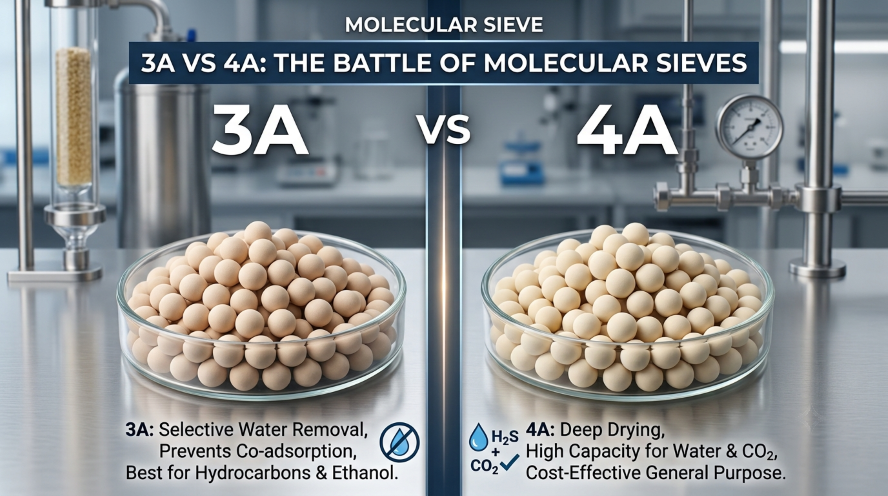
This selectivity makes 3A the only standard molecular sieve type suitable for ethanol dehydration. Using 4A (pore size 4 Å) or larger would risk co-adsorption of ethanol molecules, reducing selectivity and contaminating the regeneration stream.
For a detailed comparison of pore size and application suitability, see our 3A vs 4A comparison guide.
For buyers new to 3A molecular sieve specifications, our complete 3A molecular sieve guide covers water adsorption capacity, crush strength, and regeneration conditions in full.
Recommended Product from Sorbsieve
The standard adsorbent for all ethanol dehydration applications. Available in 3-5 mm bead form and 1.5-2.5 mm bead form depending on system design requirements. Supplied with full documentation including COA per batch and TDS.
Contact our team for bulk pricing, grade confirmation, and availability based on your system specifications.
Supply Information
Sorbsieve supplies 3A molecular sieve for ethanol dehydration applications to industrial buyers across the Middle East and internationally.
Standard packaging options:
- 25 kg drums (suitable for trial orders and small batch systems)
- 150 kg steel drums
- 500 kg super sacks
- 1,000 kg jumbo bags (standard for plant-scale orders)
Minimum order quantity: 1 ton (trial orders accepted)
Container loading:
- 20'GP: 18-20 tons
- 40'GP: 22-24 tons
- 40'HQ: 24-26 tons
Loading ports: Shanghai, Qingdao, Tianjin, Ningbo, Shenzhen
Documents provided: COA (per batch) / TDS (pre-sale) / SDS (pre-shipment) / COO / Packing List
Looking for Bulk Supply of 3A Molecular Sieve for Ethanol Dehydration?
Sorbsieve is a trusted bulk supplier of 3A molecular sieve and industrial adsorbents, serving industrial buyers across the Middle East.
We provide:
- ✅ Container-level supply (20'GP / 40'GP / 40'HQ)
- ✅ Full documentation (COA / TDS / SDS / COO)
- ✅ Multiple packaging options
- ✅ Technical support for molecular sieve selection and system sizing
- ✅ Fast quote response for industrial inquiries
Contact our team for bulk pricing, grade confirmation, and technical consultation.
Related Applications
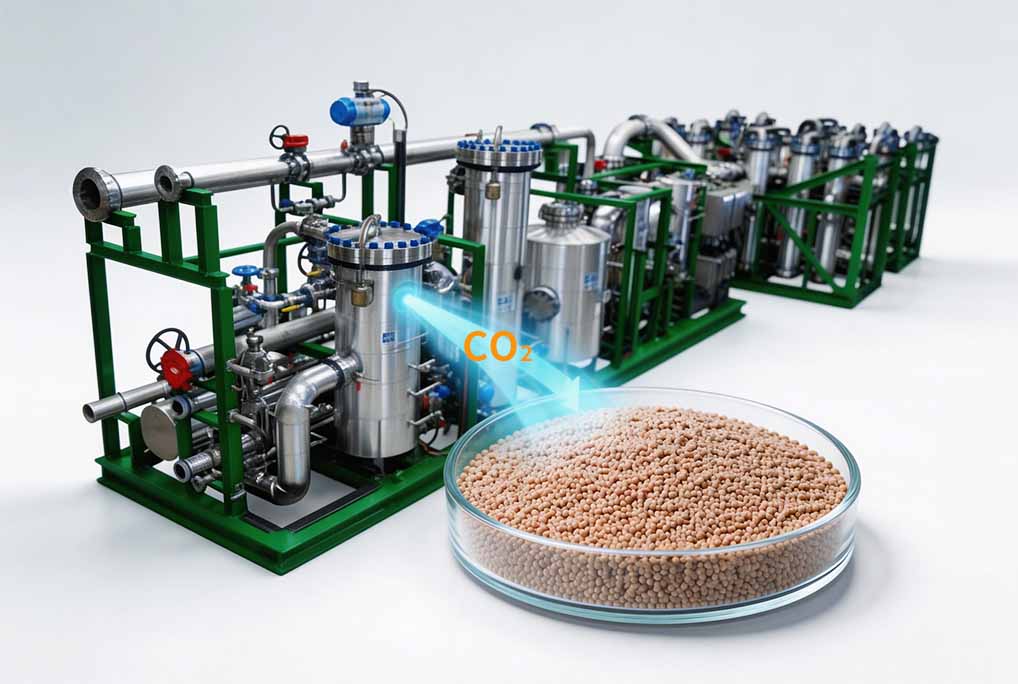
Molecular Sieve for CO2 Removal: Applications in Air Separation, Natural Gas Processing, and Biogas Upgrading
Molecular sieve enables CO2 removal across air separation, natural gas, and biogas systems, plus CO2 gas drying for liquefaction and food-grade use. This case focuses on biogas upgrading and CO2 drying — two applications not covered in our other case analyses.
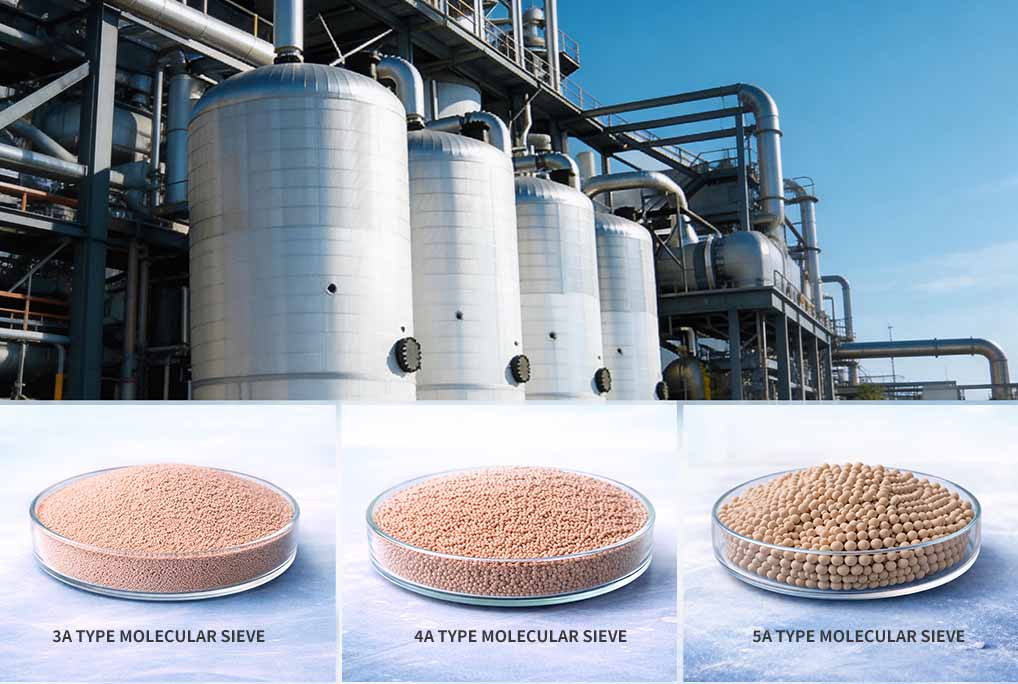
Molecular Sieve for Natural Gas: Applications in Dehydration, CO2 Removal, LNG Pre-Treatment, and Gas Purification
Natural gas requires molecular sieve at nearly every purification stage — from bulk dehydration to the ppm-level purity needed for LNG production. This case covers four core applications (dehydration, CO2/H2S removal, LNG pre-treatment, and gas purification) with the sieve type, specifications, and supply details for each.
Related Reading
3A vs 4A Molecular Sieve: Key Differences & How to Choose
In-depth guide comparing 3A and 4A molecular sieves. Covers pore size differences, adsorption selectivity, capacity comparison, application scenarios for each type, and practical guidance on selecting the right molecular sieve for your industrial drying or gas separation needs.
What is 3A Molecular Sieve? Uses, Specifications & How It Works
Everything you need to know about 3A molecular sieves: how they work, key properties, common applications in ethanol dehydration, natural gas processing & refrigeration, plus regeneration and selection tips.