Carbon Molecular Sieve vs Zeolite Molecular Sieve: Key Differences & How to Choose
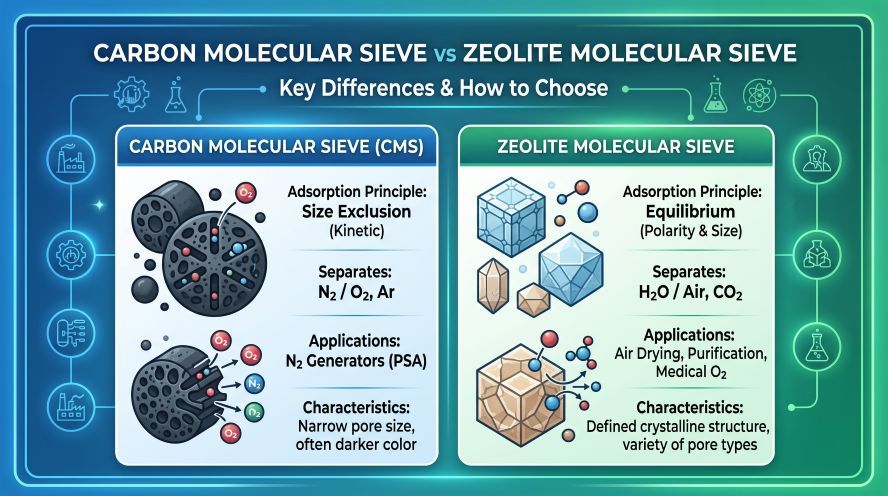
Both carbon molecular sieve (CMS) and zeolite molecular sieve are widely used in industrial gas separation and purification, and buyers often assume they're interchangeable simply because both share the term "molecular sieve." They're not. The two materials separate gases through fundamentally different mechanisms, which is why one is the standard choice for PSA nitrogen generation while the other dominates PSA oxygen generation, gas drying, and CO2 removal. Choosing the wrong one for your system doesn't just reduce efficiency — it can mean the process doesn't work at all. This guide breaks down the structural, mechanistic, and application differences so you can match the right adsorbent to your process.
Key Takeaways
- Opposite Mechanisms: Carbon molecular sieve (CMS) separates gases via kinetic diffusion (diffusion rate), while zeolite relies on equilibrium adsorption (adsorption strength).
- Different Applications: CMS is the absolute standard for PSA nitrogen generation, whereas zeolites dominate PSA oxygen generation, gas drying, and CO₂ removal.
- Structural Contrast: CMS features an amorphous carbon structure with narrow, slit-shaped pores, unlike zeolites which are engineered, crystalline aluminosilicates with a uniform 3D cage structure.
- Not Interchangeable: Despite both being used in pressure swing adsorption (PSA) systems, choosing the wrong material will result in complete process failure.
What's the Difference? Kinetic Separation vs Equilibrium Adsorption
The core distinction between carbon molecular sieve and zeolite-type molecular sieves like 13X molecular sieve comes down to how each material separates gas molecules.
Carbon molecular sieve separates gases based on diffusion rate — a kinetic mechanism. Its carbon structure contains extremely narrow, slit-shaped micropores sized so that oxygen molecules, which are slightly smaller and diffuse faster, enter the pore structure ahead of nitrogen molecules. Within a short adsorption cycle, oxygen is preferentially taken up while nitrogen is left behind in the gas stream — this is the basis of PSA nitrogen generation. The separation depends on speed of diffusion, not on which molecule is held more strongly.
Zeolite molecular sieve works the opposite way — through equilibrium adsorption. Zeolites are crystalline aluminosilicates with a rigid, uniform pore and cage structure. Their internal surface carries polar sites (from aluminum substitution in the crystal lattice) that interact more strongly with certain molecules — water, CO2, and nitrogen's quadrupole moment, for example — than with others. In PSA oxygen generation, zeolite (typically 13X or Li-LSX type) preferentially holds onto nitrogen at equilibrium, allowing oxygen to pass through and be collected as product gas. The separation depends on adsorption strength, not diffusion speed.
This is why the two materials aren't substitutes for each other, even though both are called "molecular sieves" and both are used in pressure swing adsorption systems. For a deeper look at how CMS drives PSA nitrogen generation specifically, see our carbon molecular sieve guide .
Structural and Material Differences
Beyond the separation mechanism, the physical materials themselves are built differently:
- Carbon molecular sieve is derived from carbon precursors (typically coal or coconut-shell based) that are carbonized and then pore-tailored to a narrow, controlled pore size distribution. The resulting structure is largely amorphous carbon with a slit-pore geometry.
- Zeolite molecular sieve is a crystalline aluminosilicate — a manufactured version of naturally occurring zeolite minerals, engineered into a uniform 3D cage structure with fixed pore openings (commonly cited in nominal pore-size classes such as 3A, 4A, 5A, and 13X).
This structural difference also affects appearance and handling. CMS is typically a black or dark grey granular or pelletized material, while zeolite molecular sieve is usually supplied as light grey or off-white spherical beads or extruded pellets.
Application Fit: PSA Nitrogen vs PSA Oxygen — and Beyond
The mechanism difference translates directly into which systems each material belongs in:
Carbon molecular sieve is the standard choice for PSA nitrogen generators. Because CMS separates by diffusion rate rather than adsorption strength, it can deliver high-purity nitrogen (with oxygen and other trace gases removed) using a straightforward pressure swing cycle, without the need for heat. This makes it the material of choice across food packaging (modified atmosphere), electronics manufacturing, metal heat treatment, and general industrial inerting applications that rely on on-site nitrogen generation.
Zeolite molecular sieve covers a much broader range of applications, because its equilibrium-based, polar-selective mechanism is useful well beyond oxygen PSA:
- Oxygen Generator Molecular Sieve(13X and Li-LSX types) for PSA oxygen concentrators and industrial oxygen plants
- Gas and liquid drying (3A, 4A types) — removing water from natural gas, refrigerant systems, and industrial gas streams
- CO2 removal and air prepurification (13X, 5A types) ahead of cryogenic air separation
- Hydrocarbon separation and general industrial gas purification
If your process needs to strip water, CO2, or other polar contaminants from a gas stream, zeolite is almost always the correct family. If your process needs to separate nitrogen from air on-site for gas supply, CMS is almost always the correct choice.
Regeneration and Operating Cost Comparison
Both materials are regenerated using pressure swing cycles rather than heat in their core PSA applications, which keeps operating costs relatively low compared to thermal regeneration systems. That said, there are practical differences worth noting:
- CMS cycles are typically very short (on the order of seconds), matched to its fast kinetic separation — this keeps footprint and cycle energy demand modest for nitrogen PSA skids.
- Zeolite PSA oxygen systems generally run on cycle times suited to equilibrium adsorption/desorption, and zeolite used in drying applications (3A/4A) is more commonly regenerated thermally (TSA) rather than by pressure swing alone, since removing adsorbed water typically needs heat rather than just a pressure drop.
Neither material is inherently "cheaper" in isolation — the real cost comparison only makes sense in the context of the specific system (PSA nitrogen skid vs. PSA oxygen skid vs. TSA dryer), since they aren't competing for the same job.
How to Choose the Right Adsorbent for Your System
In practice, this isn't usually a "which is better" decision — it's a "which mechanism does my process actually need" decision:
- Need on-site nitrogen for inerting, packaging, or general industrial use? → Carbon molecular sieve, sized to your required purity (typically ranging from lower-purity industrial grades up to high-purity grades depending on application).
- Need on-site oxygen for medical, industrial, or ozone-generation use? → Zeolite molecular sieve (13X or Li-LSX type).
- Need to dry a gas or liquid stream, or remove CO2/water ahead of another process? → Zeolite molecular sieve (3A, 4A, 5A, or 13X depending on the specific contaminant and pore-size requirement).
If your plant runs both PSA nitrogen and PSA oxygen systems, or a nitrogen generator alongside a separate drying step, you'll typically need both materials — they serve different stages of the process rather than competing for the same one. If you're weighing 13X against other zeolite grades for your specific system, our 13X molecular sieve guide covers the specifications in more detail.
Recommended Products from Sorbsieve
For PSA nitrogen generation, our Carbon Molecular Sieve is engineered for consistent cycle performance across a range of purity requirements. For PSA oxygen systems and general gas drying/CO2 removal, our zeolite-type molecular sieves — including 13X, 4A, 5A, and 3A grades — cover the full range of equilibrium-based separation needs. Our technical team can help confirm the right grade and bead size for your specific system.
FAQ
Is carbon molecular sieve a type of zeolite?
No. Carbon molecular sieve is a carbon-based material, while zeolite molecular sieve is a crystalline aluminosilicate. They belong to entirely different material families and separate gases by different mechanisms.
Can I use zeolite molecular sieve for nitrogen PSA instead of CMS?
Not effectively for standard nitrogen generation. Zeolite's equilibrium-based mechanism isn't suited to the fast kinetic separation that nitrogen PSA relies on — this is why CMS became the industry standard for that application.
Which one requires more frequent replacement?
Both are long-lasting adsorbents under normal operating conditions, and typical service life depends heavily on system design, feed gas quality, and maintenance practices rather than the base material alone. We recommend confirming expected service life with your system supplier or our technical team based on your specific operating conditions.
Do CMS and zeolite molecular sieve ever get used in the same plant?
Yes — plants that need both on-site nitrogen and on-site oxygen, or that combine a nitrogen generator with a separate gas drying step, commonly use both materials, each handling a different stage of the process.
Looking for Bulk Supply of Molecular Sieve?
Sorbsieve is a trusted bulk supplier of carbon molecular sieve, zeolite molecular sieve, and complete industrial adsorbents, serving industrial buyers across the Middle East.
We provide:
- ✅ Container-level supply (20'GP / 40'GP / 40'HQ)
- ✅ Full documentation (COA / TDS / SDS / COO)
- ✅ Multiple packaging options
- ✅ Technical support for molecular sieve selection and system optimization
- ✅ Fast quote response for industrial inquiries
Contact our team for bulk pricing, product samples, and technical consultation.
Related Products
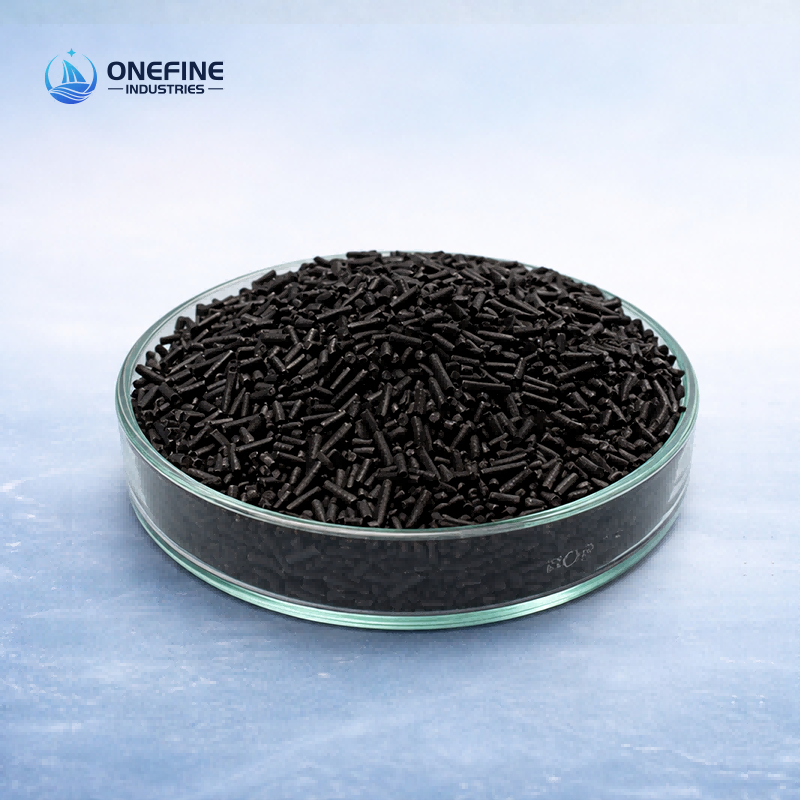
Carbon Molecular Sieve for Nitrogen Generation (CMS)
High-performance carbon molecular sieve (CMS) for PSA nitrogen generators. Uniform micropore distribution (0.3-0.5nm) ensures efficient oxygen-nitrogen separation. Delivers 95-99.999% nitrogen purity with 3-5 year service life. Bulk supply for industrial buyers worldwide.
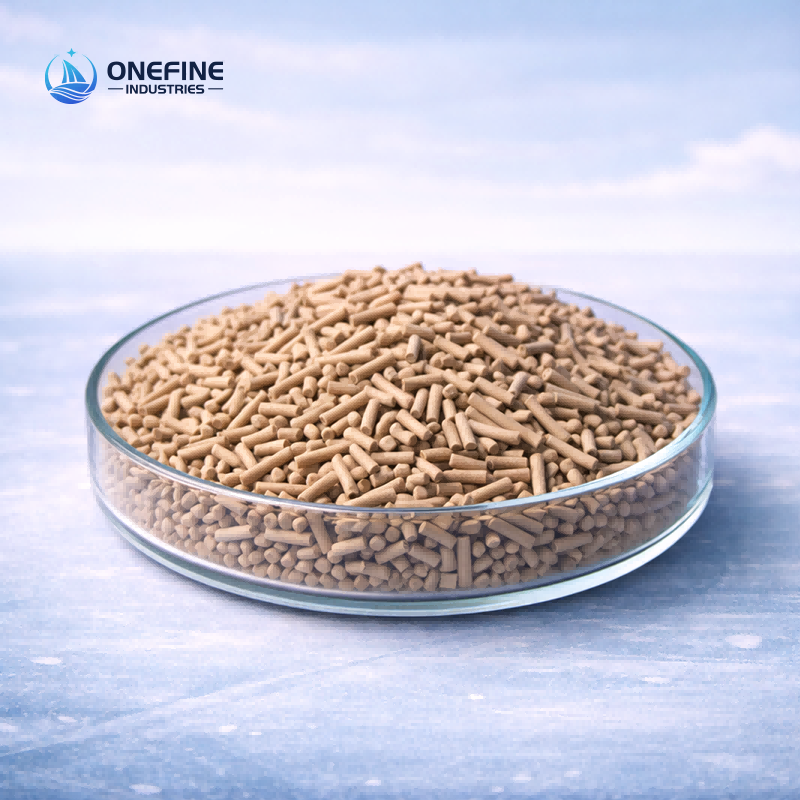
13X Molecular Sieve (Sodium X Type)
Sodium-type 13X molecular sieve with 10Å pore size for air separation pre-purification, natural gas sweetening, solvent recovery, and industrial gas drying. High adsorption capacity, industrial-grade performance.
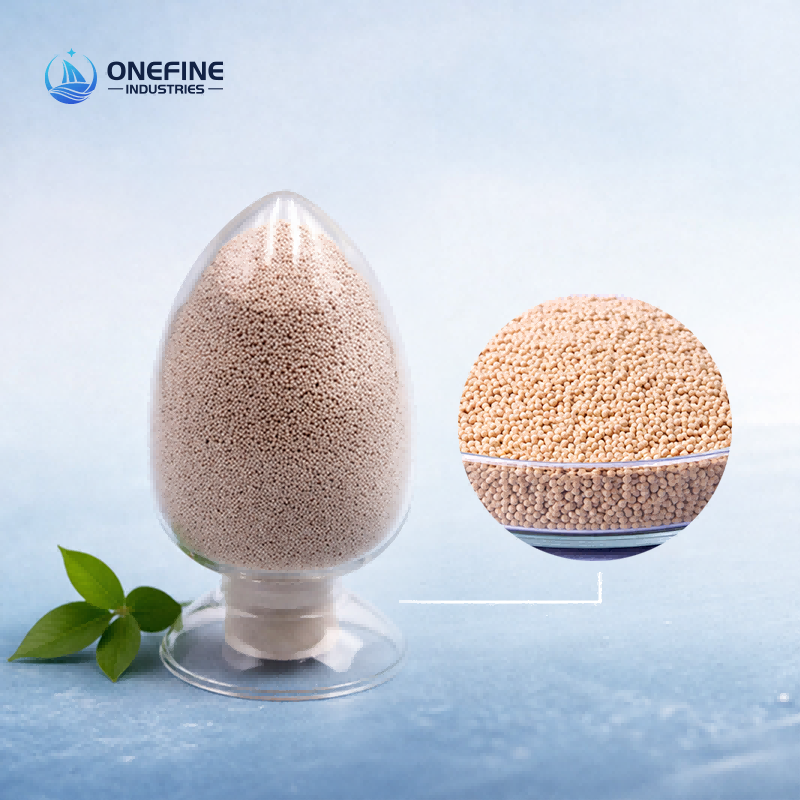
Oxygen Generator Molecular Sieve (13X & Li-LSX)
Premium oxygen generator molecular sieve for PSA/VPSA oxygen generators and medical oxygen concentrators. Available in 13X sodium type and Li-LSX lithium type — high N₂ adsorption capacity, excellent N₂/O₂ selectivity, and 3-5 year service life. Bulk supply with MOQ from 1 ton, serving industrial buyers across the Middle East.
Related Applications
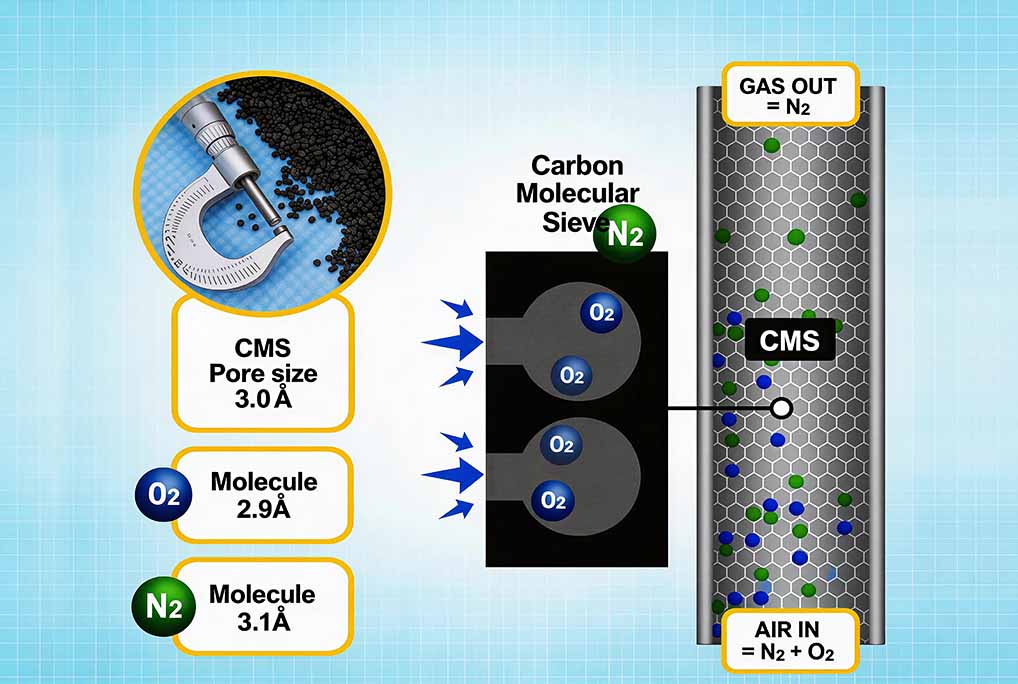
Carbon Molecular Sieve for Nitrogen Generation: Applications in PSA Nitrogen Generators, Food Packaging, and Industrial Gas Systems
Carbon molecular sieve is the core adsorbent behind on-site PSA nitrogen generation. This case covers three applications — nitrogen generators, food packaging, and industrial gas systems — with sieve specifications and supply details for each.
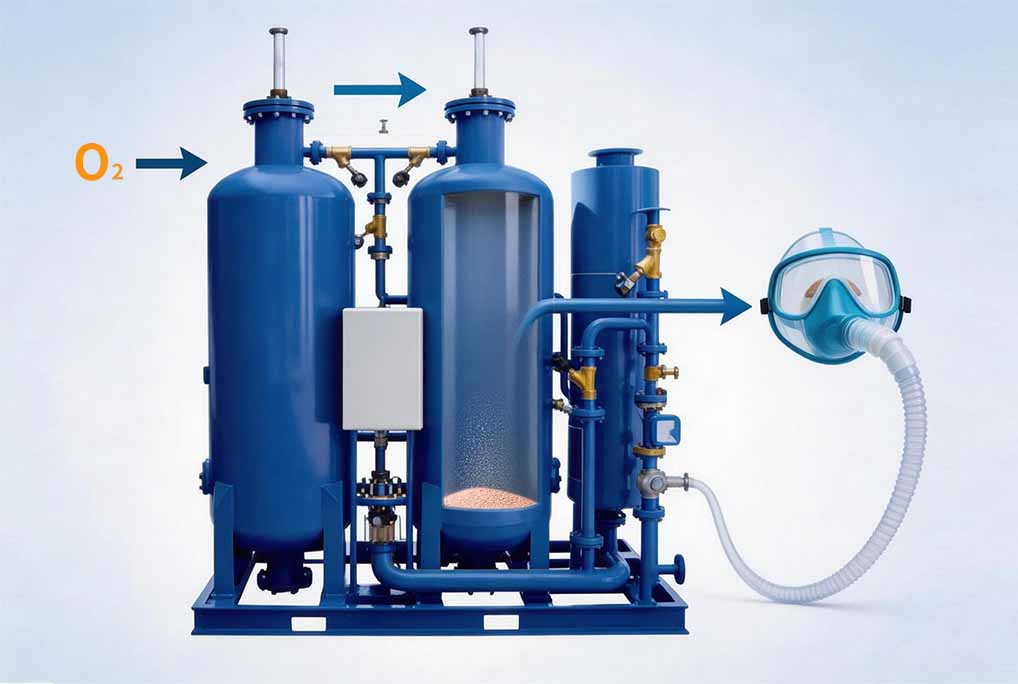
Molecular Sieve for Oxygen Generation: Applications in PSA Oxygen Plants, Oxygen Concentrators, and Industrial Air Separation
Molecular sieve enables oxygen production across industrial PSA plants, compact concentrators, and cryogenic air separation pre-purification. This case covers three distinct application roles and the sieve types suited to each.
Related Reading
Carbon Molecular Sieve: The Ultimate Guide to PSA Nitrogen Generation
A complete guide to carbon molecular sieve technology for on-site PSA nitrogen generation. Learn how CMS works based on kinetic diffusion separation, its key benefits including 50-90% cost savings vs cylinder/liquid nitrogen, industrial applications across food & beverage, chemical, electronics, pharmaceutical and mining industries, how to select the right CMS grade, maintenance tips, and comparisons with membrane and cryogenic nitrogen generation methods.
What is 13X Molecular Sieve? Uses, Specifications & How It Works
Everything you need to know about 13X molecular sieves: how they work, key properties, common applications in air separation pre-purification, natural gas sweetening, solvent recovery and industrial gas drying, plus regeneration methods and comparison with other sieve types.