Molecular Sieve Bead Size and Clean-Bed Pressure Drop
Key Takeaways
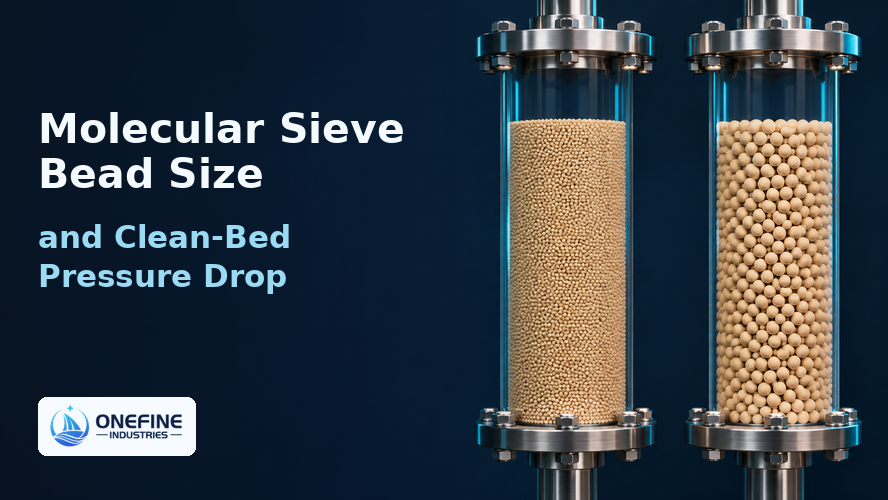
- Bead diameter affects gas flow through the bed. Zeolite pore size describes the openings available to molecules inside the zeolite.
- Compare candidates at matched gas conditions, bed geometry and packing assumptions.
- Check outlet moisture performance and pressure drop separately before changing the grade.
Why two 4A grades can give different pressure drops
A product labeled 4A may be offered in multiple bead size ranges. The nominal pore opening remains the same, but the gas travels through the spaces between beads. Under otherwise identical conditions, smaller beads increase the resistance predicted by the Ergun equation. Real beds can also differ in packing void fraction, bead shape and size distribution.
Compare at the same duty
Ask each supplier to calculate clean-bed pressure drop at the same minimum, normal and maximum throughput. Supply the vessel inside diameter, packed height, layer arrangement, gas composition, inlet pressure and temperature. State the standard conditions for any standard volumetric flow and ask for the actual velocity through the empty vessel cross-section used in the calculation. Ask whether the reported loss includes supports, screens and distributors. A clean-bed figure across the packing cannot be compared directly with a reading across the entire dryer skid.
Separate hydraulic and drying performance
A lower pressure drop is useful only if the loaded bed still meets the required outlet moisture and cycle duration. Request the assumptions behind both checks, including inlet water load and regeneration conditions. A datasheet bead-size range or equilibrium capacity alone cannot confirm either the field pressure drop or the dryer run length.
Establish the baseline after changeout
Record stabilized differential pressure for each vessel at a documented flow, pressure and temperature. Record the instrument tap locations and valve alignment. Compare later readings at matched conditions. If one vessel diverges, confirm the instrument and process conditions before attributing the change to fines, packing or support hardware. Use the equipment-approved operating limits for any investigation.
Set the boundaries of the comparison
Ask each supplier to mark the two locations used for its pressure drop estimate. A figure limited to the adsorbent can be useful for comparing media, but operations may see a loss measured across the vessel, nozzles or other equipment. Put both figures on the same drawing before comparing them. If the pressure taps include hardware outside the bed, have the supplier identify which losses are included and which will be measured separately at startup.
List each media layer and its installed depth. A vessel can contain more than one grade, and the change under review may affect only part of it. Ask for the contribution from each layer and for a combined estimate. Treat support balls, distributors and screens as distinct elements. This makes it easier to compare proposals that use the same vessel with different layer arrangements.
Use a comparison table for the quotation
Give suppliers one common set of gas cases. Request the actual operating pressure and temperature at each duty, the flow at stated reference conditions and the conversion used to obtain actual velocity. Ask them to state their assumed packed void fraction, bed height and effective particle size. A nominal diameter range is helpful, but it is not the same as the effective diameter used in the estimate.
Use separate columns for the clean-bed loss at minimum, normal and maximum flow, the total loss across the agreed boundary and the margin against the project allowance. Keep the reported assumptions beside the results. If one proposal looks materially better, ask which input accounts for the difference. A different throughput basis or vessel diameter can explain an apparent improvement without any difference in the adsorbent itself.
Read the trend alongside the outlet moisture result
A deviation in pressure drop and a deviation in dew point tell you different things. A pressure drop that increases only when production rises can reflect the change in gas velocity. A rising loss at comparable flow, pressure and temperature calls for a check of the instrument and the flow path. If outlet moisture deteriorates while the hydraulic trend is stable, investigate moisture load, the sampling system and the regeneration history as separate evidence.
One operating scenario is liquid carryover upstream of the dryer. Review upstream separation and drain records if a stable baseline changes after a liquid event. Keep the time of the event, the affected vessel and the outlet moisture record together. Use the site’s own procedures and equipment limits to decide whether an inspection is warranted.
Agree on what the commissioning record must show
For each vessel, capture the adsorbent lot and loading arrangement, the instrument taps used, valve status, stabilized flow, gas temperature and pressure, and the measured differential pressure. Record the corresponding outlet moisture and where it was measured. Where the site collects data at multiple approved operating points, retain those points separately so later shifts can compare readings at an equivalent duty.
Set the acceptance criteria with the equipment owner before placing the order. They should identify the pressure drop limit, the outlet moisture requirement, the expected adsorption period and the conditions under which those results will be compared. A quotation can then answer the same question the commissioning team will ask: can this replacement grade meet the drying duty within the available pressure drop allowance?
Questions buyers should ask before changing bead size
Ask whether a different size changes loading instructions, layer design or the suitability of existing retaining screens. Request ranges and assumptions for the proposed grade and ask which values are supported by testing. Keep the agreed packing method and the first stable operating readings with the purchase documentation. That gives the next maintenance team a reference it can use when deciding whether an apparent pressure drop change comes from operation, instrumentation or the bed.
Looking for Bulk Supply of 4A Molecular Sieve?
Sorbsieve supplies industrial molecular sieve for buyers evaluating replacement grades and bulk orders. Share the installed grade and process conditions so the request can be reviewed against your dryer duty.
We provide:
- Container-level supply options (20'GP, 40'GP and 40'HQ)
- Documentation support (COA, TDS, SDS and COO)
- Multiple packaging options
- Technical support for grade comparison
- Fast quote response
Include your quantity, delivery destination and required documentation with your inquiry.

Related Reading

Molecular Sieve Static vs Working Capacity: What Buyers Should Compare
A laboratory water-capacity figure does not specify a dryer's usable capacity per cycle. Learn which test conditions and operating evidence buyers should compare.

How Do You Know When to Replace 4A Molecular Sieve in a Compressed Air or Industrial Gas Drying System?
Rising dew point, dusting, pressure drop, and other warning signs that tell you it's time to replace the 4A molecular sieve in your compressed air or industrial gas drying system.