How Silicon Contamination Deactivates Hydrotreating Catalysts
Key Takeaways
- Silicon-bearing feed contaminants can deactivate alumina-supported hydrotreating catalysts.
- Pore restriction and support interaction differ from bed-scale loading problems.
- A single sample or operating symptom cannot establish the full diagnosis.
- Routine regeneration must not be assumed to reverse silicon damage.
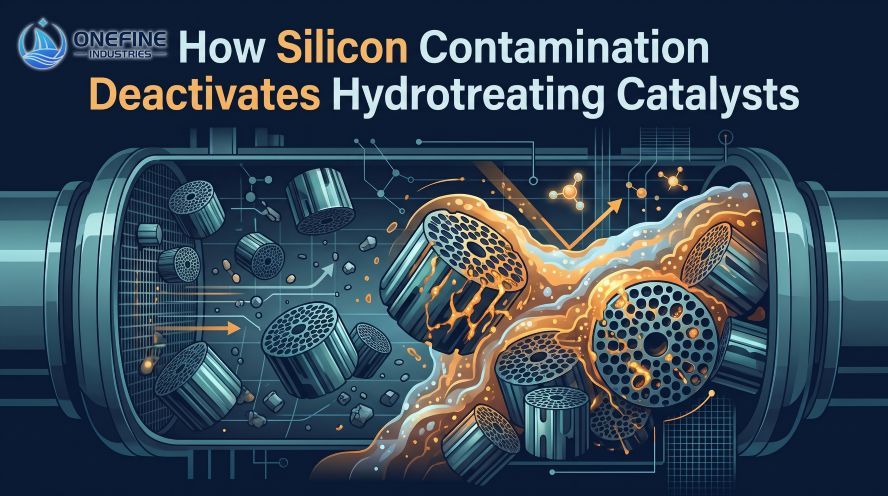
A hydrotreater can lose performance even when its catalyst was loaded correctly and its operating history shows no obvious upset. When the feed contains silicon-bearing contaminants, the problem may involve changes inside the catalyst pellets rather than a simple loss of bed uniformity.
This matters particularly when processing coker-derived streams. Upstream additives can introduce silicon compounds that travel with the feed and accumulate on alumina-supported catalysts. Selecting replacement material without investigating that contamination can leave the underlying cause unresolved.
For context on the catalyst itself, our guide to Co-Mo catalyst fundamentals explains its active phase and applications. Here, the focus is specifically silicon contamination: its source, its effect on the support, and the evidence needed before taking corrective action.
Where Does Silicon in Hydrotreater Feed Come From?
A documented source is silicone-based antifoam used in delayed coking. Under thermal processing conditions, these materials can break down into smaller silicon-containing compounds that enter coker product streams. Coker naphtha is a well-established example.
Silicon is the chemical element; silicones are a family of compounds that can introduce it. The terms are related, but they are not interchangeable with ordinary sand or suspended silica particles. The contaminant's chemical form matters when assessing its behavior.
AFPM technical discussions also identify other routes, including upstream additives and some crude-derived contaminants. Therefore, a refinery should examine the actual feed blend and additive history rather than assume every silicon problem originates in its own coker.
The useful question is not simply whether silicon was detected. It is which stream introduced it, whether exposure changed with the blend, and whether the sampling plan represents that variation.
How Does Silicon Reduce Catalyst Activity?
The alumina support is more than a holder for catalytic metals. Its accessible surface and pore network help reactants reach the catalytic system. Silicon-containing species can interact with that surface and progressively restrict access.
Research on sulfided NiMo/alumina catalysts processing coker naphtha documented silicon deposition alongside reduced surface area and pore volume. Deposits were more concentrated toward pellet exteriors, illustrating why the location of contamination matters as well as its total amount.
For readers unfamiliar with this catalyst family, Ni-Mo catalyst fundamentals provides the broader application context. Silicon contamination is a feed-related limitation, not a reason to assume all Ni-Mo grades have identical resistance.
Avoid reducing the mechanism to “silicon coats the active metal.” Support interaction and restricted access are central parts of the documented explanation. Published observations also differ between hydrodesulfurization and hydrodenitrogenation, so loss of one function should not be used as an exact measure of the other.
How Is This Different from Coking or Poor Loading?
Several failure paths can coexist. Distinguishing them helps prevent a replacement decision based on the wrong cause.
- Silicon contamination: Feed-derived species accumulate on or interact with the catalyst, affecting its accessible structure and activity.
- Coke-related deactivation: Carbonaceous deposits contribute to activity loss. Removing coke does not establish that silicon-related damage has also been reversed.
- Poor loading or bed fouling: Flow distribution and bed resistance become concerns. These require assessment of loading quality, solids and bed condition.
Our article on catalyst loading problems covers the bed-scale mechanism separately.
A pressure-drop trend, temperature adjustment or product-quality change is not a standalone silicon test. Treat it as one piece of the investigation, alongside feed analysis and operating history. Raising temperature is not a method for removing deposited silicon and should not substitute for diagnosing the cause.
What Evidence Should Be Checked Before Replacement?
Build the assessment around representative information rather than one isolated result:
- Feed history: Identify blend changes, coker-derived components and additive practices relevant to the exposure period.
- Sampling quality: Confirm suitable collection materials and analytical handling. AFPM contributors warn that sampling contamination can produce misleading silicon results.
- Exposure over time: Combine representative concentration data with throughput history when estimating cumulative silicon input.
- Performance and catalyst condition: Compare operating trends with the catalyst supplier's assessment and, where available, spent-catalyst analysis.
AFPM guidance discusses composite sampling over a coker cycle and tracking cumulative silicon against the installed system's capacity. It does not justify calculating remaining life from a single spot sample.
An inquiry about Co-Mo hydrogenation catalyst should therefore include feed and contamination information, not just the existing catalyst name. No universal silicon allowance is assigned here: the acceptable exposure depends on the specific material, loading scheme and service.
Can Regeneration or a Guard Layer Solve the Problem?
Routine regeneration and specialized recovery are different questions. A process intended to remove coke cannot automatically be credited with restoring a silicon-contaminated catalyst.
However, “silicon poisoning is always completely irreversible” is also too broad. Published research has demonstrated activity recovery using additional treatments on particular CoMo and NiMo systems. Those results concern defined samples and procedures; they do not establish a recovery guarantee for every spent catalyst or an operating recipe for a refinery.
Prevention may involve source control and a purpose-designed guard or grading system. Its design must balance contaminant retention with the unit's treating requirements. An ordinary main-bed catalyst is not automatically a qualified silicon trap.
Likewise, the Ni-Mo hydrogenation catalyst listed in our catalog should be evaluated for the intended duty. Its listing alone does not establish a silicon capacity or suitability as a dedicated guard material.
Recommended Products from Sorbsieve
- Co-Mo Hydrogenation Catalyst: Discuss grade selection against the intended feed and treating duty.
- Nickel-Molybdenum Hydrogenation Catalyst: Review application requirements together with the expected contaminant profile.
These are related hydrotreating products, not claims of dedicated silicon-trapping performance.
FAQ
Does detecting silicon prove it caused the performance loss?
No. Confirm sampling quality and evaluate exposure, performance history and other possible causes. Detection supports investigation; it does not establish the whole diagnosis.
Can I estimate remaining catalyst life from one feed sample?
Not reliably. Feed variability and cumulative throughput matter, as does the confirmed capacity and condition of the installed catalyst system.
Can a conventional catalyst replace a dedicated silicon guard?
Not on the basis of its metal family alone. Guard duty requires a specific assessment of contaminant retention and the overall loading design.
Looking for Bulk Supply of Hydrotreating Catalysts?
Sorbsieve is a trusted bulk supplier of hydrotreating catalysts and complete industrial adsorbents, serving industrial buyers across the Middle East.
We provide:
- ✅ Container-level supply (20'GP / 40'GP / 40'HQ)
- ✅ Full documentation (COA / TDS / SDS / COO)
- ✅ Multiple packaging options
- ✅ Technical support for catalyst selection and system optimization
- ✅ Fast quote response for industrial inquiries
Contact our team for bulk pricing, product samples, and technical consultation.
Related Products
Co-Mo Hydrogenation Catalyst
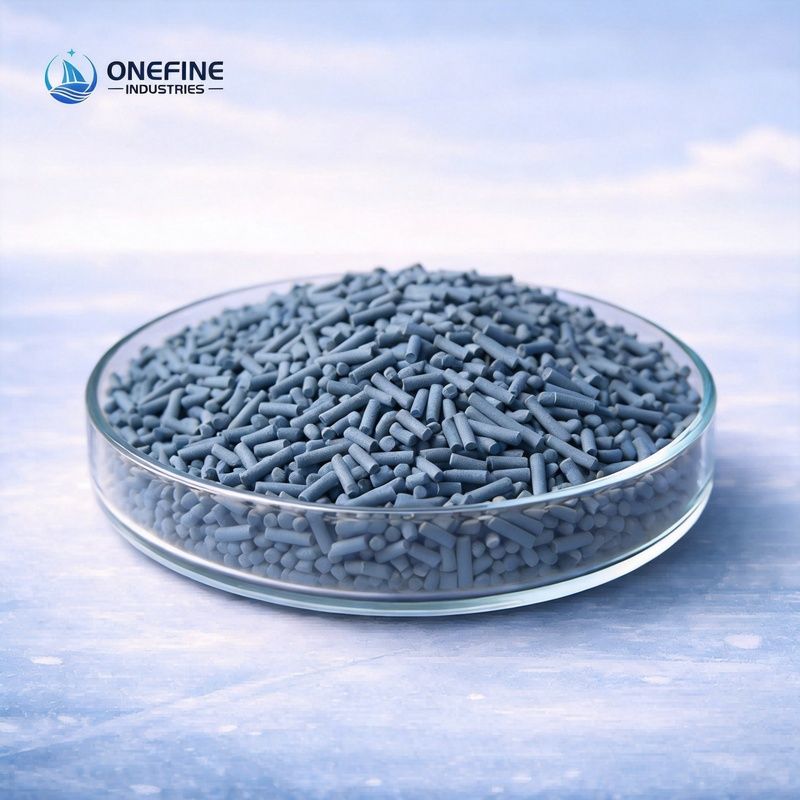
A high-performance cobalt-molybdenum (Co-Mo) hydrogenation catalyst designed for hydrodesulfurization (HDS) and hydrotreating of petroleum fractions and synthesis gas. Features low light-off temperature, high mechanical strength, and excellent stability. Widely used in ammonia plant feed purification, naphtha pretreatment, refinery reforming feed desulfurization, and natural gas sweetening. Available with MOQ from 1 ton, customizable appearance, particle size, and active component loading.
Ni-Mo Hydrogenation Catalyst
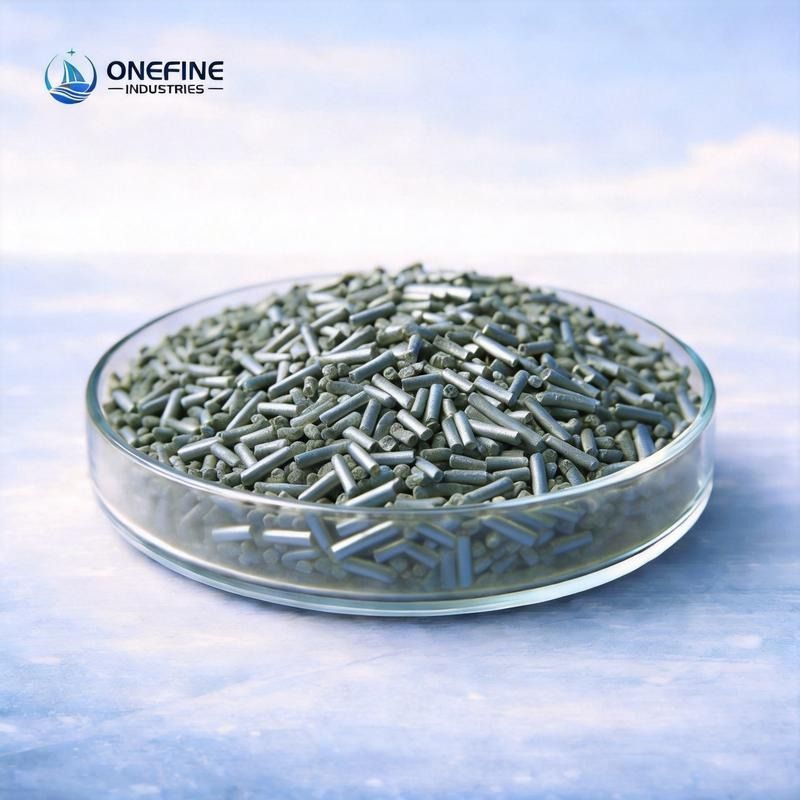
A high-performance nickel-molybdenum (Ni-Mo) hydrogenation catalyst designed for hydrodesulfurization (HDS) and hydrodenitrogenation (HDN) of medium to heavy petroleum fractions. Features superior hydrogenation activity, excellent stability, and long service life. Widely used in diesel hydrotreating, gas oil upgrading, and refractory sulfur removal. MOQ from 1 ton. Customizable appearance, particle size, and active component loading.
Related Reading
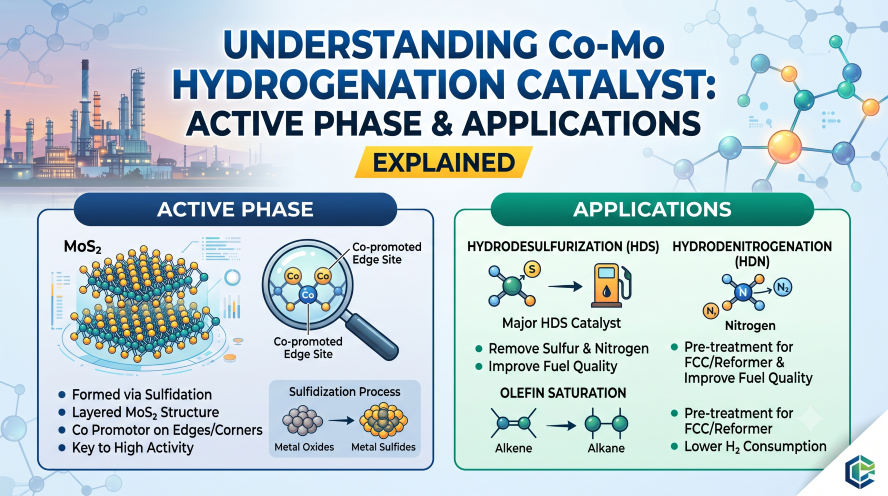
What is a Co-Mo Hydrogenation Catalyst? Active Phase & Applications Explained
A plain-language guide to how cobalt-molybdenum (Co-Mo) hydrogenation catalysts work, why the Co-Mo-S active phase matters, and where this catalyst is used across refining and gas processing.
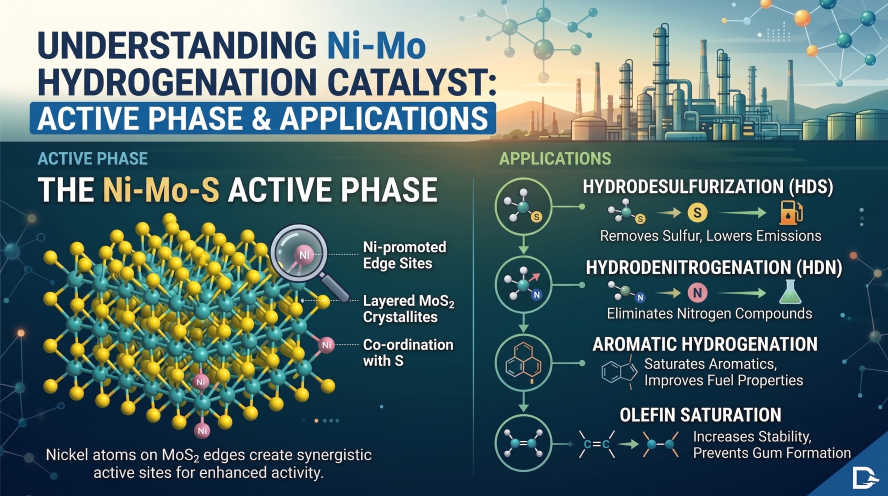
What is a Ni-Mo Hydrogenation Catalyst? Active Phase & Applications Explained
A plain-language guide to Ni-Mo hydrogenation catalysts — how the Ni-Mo-S active phase works, when to choose Ni-Mo over Co-Mo, and where it's used in refinery hydrotreating.
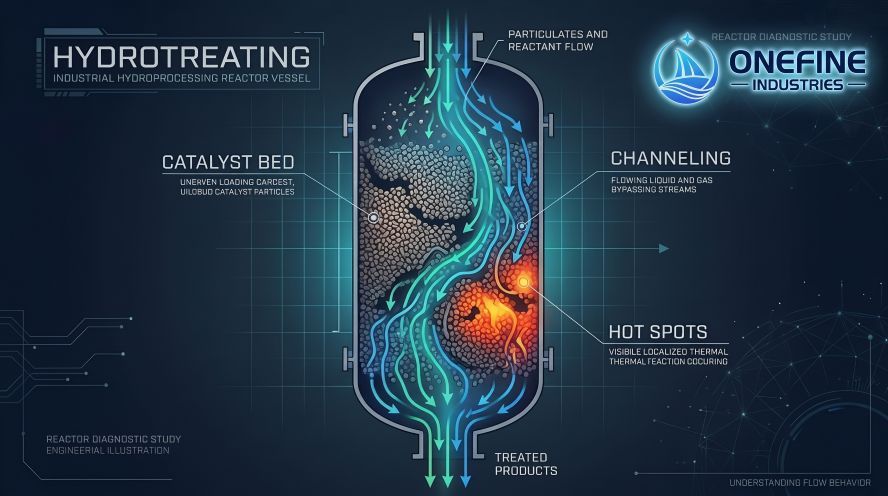
Why Improper Catalyst Loading Causes Premature Channeling and Hot Spots in Hydrotreating Catalyst Beds
Improper catalyst loading in hydrotreating beds creates uneven flow and localized heat. Here's why it happens and how proper loading prevents it.