What is a Hydroconversion Catalyst? Organic Sulfur & Olefin Conversion Explained
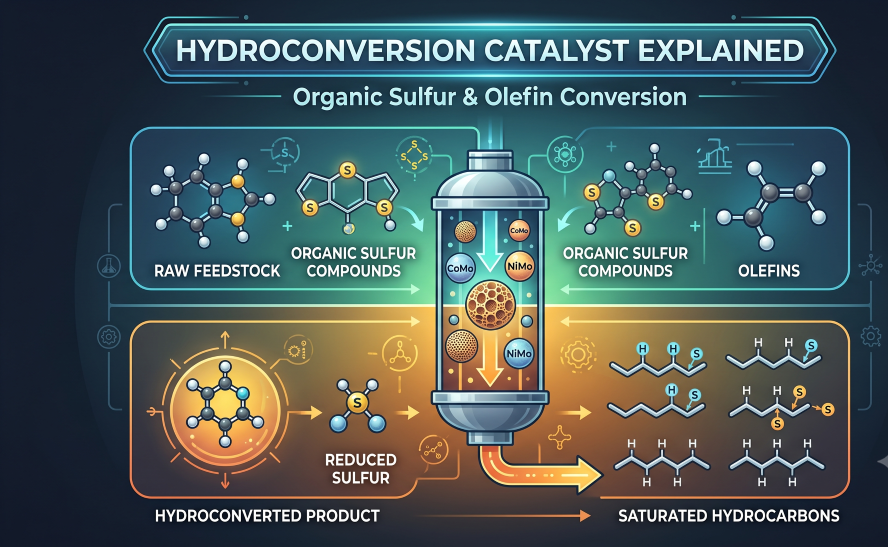
If your plant runs on natural gas, refinery dry gas, or oilfield gas, chances are you've run into a stubborn problem: simple adsorption alone can't remove every form of sulfur in the feed. Organic sulfur species like thiophenes and COS pass right through a zinc oxide bed untouched, and unsaturated olefins can foul downstream catalysts long before sulfur ever becomes an issue. This is exactly the gap a hydroconversion catalyst is built to close.
In this guide, we'll explain what a hydroconversion catalyst does, how it works alongside a ZnO guard bed, where it's typically used, and how to think about selecting and maintaining one for your process.
Key Takeaways:
- Beyond Simple Adsorption: Breaks complex carbon-sulfur bonds (thiophenes, COS) that standard ZnO guard beds cannot capture directly.
- Two-Stage Desulfurization: Converts organic sulfur to H₂S via catalytic hydrogenolysis, which is then effectively mopped up by downstream ZnO.
- Olefin Saturation: Hydrogenates olefins into saturated paraffins to prevent downstream reforming catalyst fouling.
- Activation Requirement: Shipped in oxide form; must be fully presulfided before operation to form the active metal disulfide phase.
What Does a Hydroconversion Catalyst Actually Do?
A hydroconversion catalyst uses catalytic hydrogenolysis to break the carbon-sulfur bonds in organic sulfur compounds — mercaptans, sulfides, disulfides, thiophenes, and carbonyl sulfide (COS) — converting them into hydrogen sulfide (H₂S). At the same time, it hydrogenates olefins into saturated paraffins in the same catalytic bed.
The key distinction from plain adsorption: ZnO alone can capture H₂S directly, but it has no way to break down the more complex, ring-structured sulfur species. A hydroconversion catalyst does the chemical heavy lifting first, and a downstream ZnO guard bed then mops up the H₂S that's generated. Used together, this two-stage approach is what gets feed gas down to sub-ppm sulfur levels ahead of sensitive downstream catalysts.
Where It's Typically Used
Hydroconversion catalysts show up anywhere a gas-phase feed needs protecting before it reaches a catalyst that's sensitive to sulfur or olefins:
- Ammonia and methanol plants, where feed gas must be desulfurized before the reforming or synthesis stage
- Hydrogen production units (SMR/ATR), protecting nickel-based reforming catalysts from sulfur poisoning
- LNG and natural gas sweetening, removing trace organic sulfur ahead of liquefaction or pipeline delivery
- Fertilizer plants and Fischer-Tropsch units, where shift, methanation, or FT synthesis catalysts need sulfur-free syngas
How to Think About Selection
Not every hydroconversion catalyst is formulated the same way. A few practical questions worth asking before you specify one:
- What's your feed olefin content? Higher olefin feeds (refinery dry gas in particular) need a formulation tolerant of the extra exotherm from olefin saturation.
- What temperature range does your process run at? Lower light-off temperatures mean lower energy input, but the catalyst still needs to be matched to your actual operating window.
- Do you already have a ZnO guard bed downstream? Hydroconversion catalyst and ZnO guard beds are typically sized and specified as a pair, not independently.
Presulfiding and Service Life, Briefly
Like other sulfide hydrotreating catalysts, a hydroconversion catalyst ships in oxide form and needs to be presulfided before it reaches full activity — incomplete sulfiding is one of the most common causes of underperformance right after startup. Over time, activity typically declines due to coke deposition, which can usually be addressed through controlled oxidative regeneration rather than full catalyst replacement. Our Hydroconversion Catalyst product page covers presulfiding methods, deactivation mechanisms, and regeneration procedures in more detail.
Recommended Products from Sorbsieve
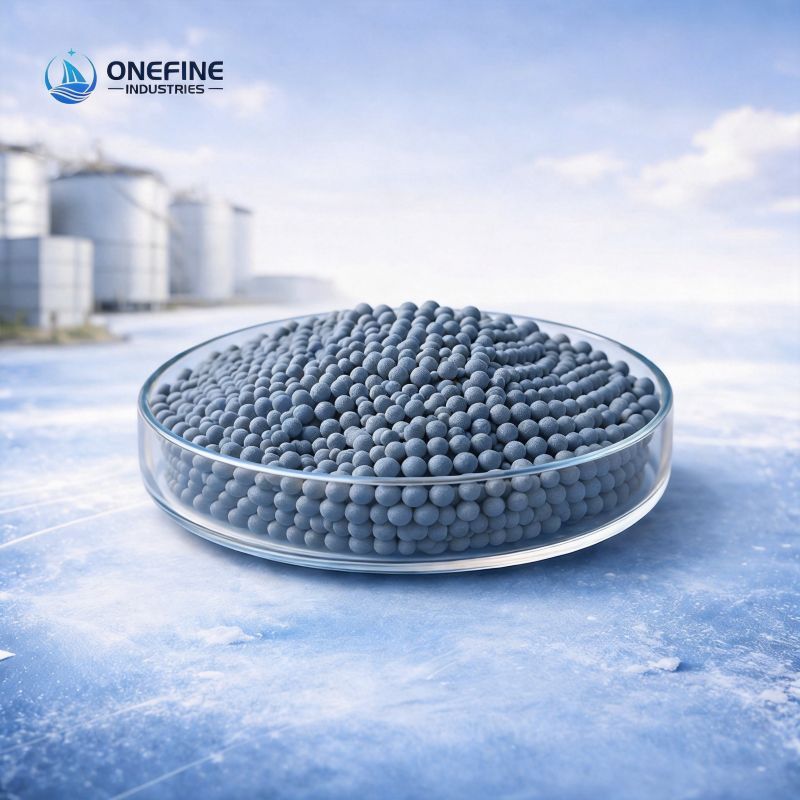
- Hydroconversion Catalyst – Grey-blue spherical catalyst (Φ2-4mm) for organic sulfur and olefin conversion in gas-phase feeds. See full specifications, operating conditions, and packaging options on the Hydroconversion Catalyst product page.
FAQ
- Q: Can a hydroconversion catalyst replace a ZnO guard bed? A: No — they serve different functions. The hydroconversion catalyst converts complex organic sulfur species into H₂S; the ZnO bed then captures that H₂S. Most systems need both, in sequence.
- Q: Does feed olefin content affect catalyst life? A: Yes. Higher olefin content increases the exotherm from hydrogenation, which can accelerate coke formation if not properly managed — formulation and operating temperature both need to account for this.
- Q: How do I know if my catalyst needs regeneration? A: A gradual rise in outlet sulfur or a slow increase in pressure drop across the bed are both common early indicators. Contact us with your process data and we can help assess likely causes.
Looking for Bulk Supply of Hydroconversion Catalyst?
Sorbsieve is a trusted bulk supplier of Hydroconversion Catalyst and complete industrial catalysts and adsorbents, serving industrial buyers across the Middle East.
We provide:
- ✅ Container-level supply (20'GP / 40'GP / 40'HQ)
- ✅ Full documentation (COA / TDS / SDS / COO)
- ✅ Multiple packaging options
- ✅ Technical support for catalyst selection and system optimization
- ✅ Fast quote response for industrial inquiries
Contact our team for bulk pricing, product samples, and technical consultation.
Related Reading
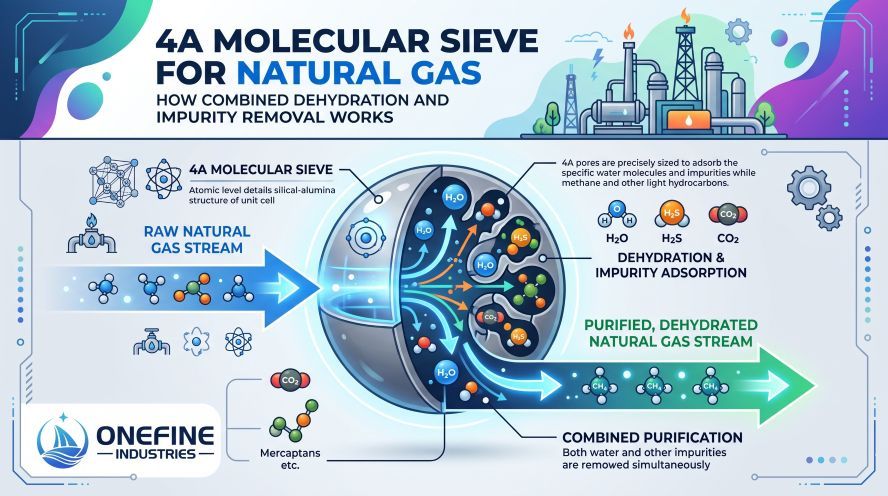
4A Molecular Sieve for Natural Gas: How Combined Dehydration and Impurity Removal Works
4A molecular sieve can dry natural gas and pull moderate CO₂/H₂S out of the same stream in one bed — how its larger pore enables that dual role, where it fits in the treatment train, and when 3A is the better call instead.
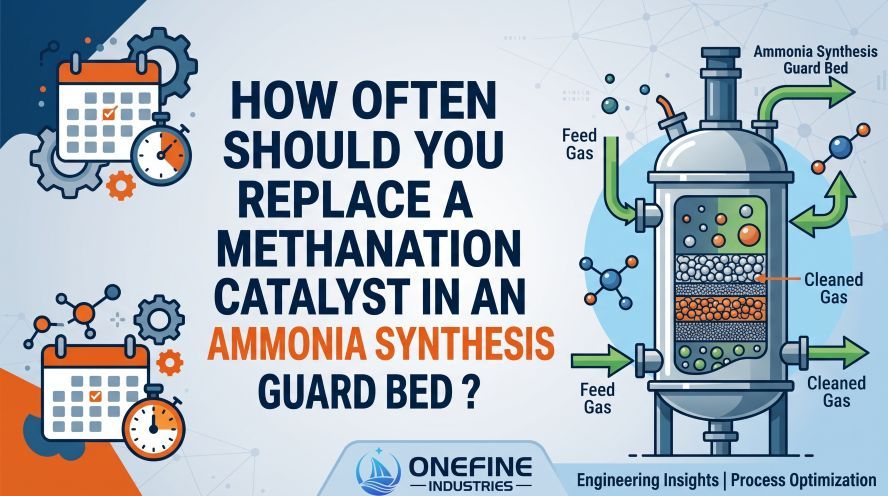
How Often Should You Replace a Methanation Catalyst in an Ammonia Synthesis Guard Bed?
There's no fixed replacement interval for a methanation catalyst — service life depends almost entirely on how well the upstream desulfurization train protects it. Here's how to read the real warning signs.
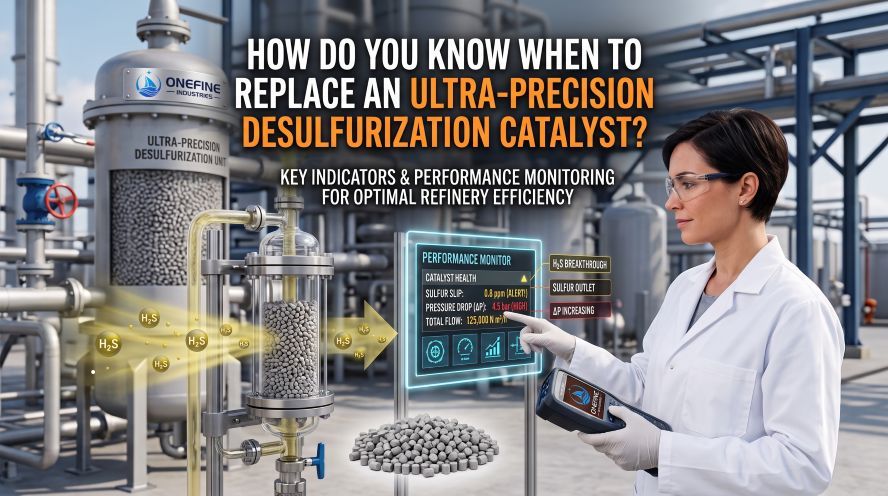
How Do You Know When to Replace an Ultra-Precision Desulfurization Catalyst?
Four real warning signs — total sulfur creep, falling COS conversion, rising pressure drop, and downstream poisoning — that tell you an Ultra-Precision Desulfurization Catalyst bed needs replacing.