What Is a Dry Adsorbent? The Dual-Function Solution for H₂S and Moisture Removal
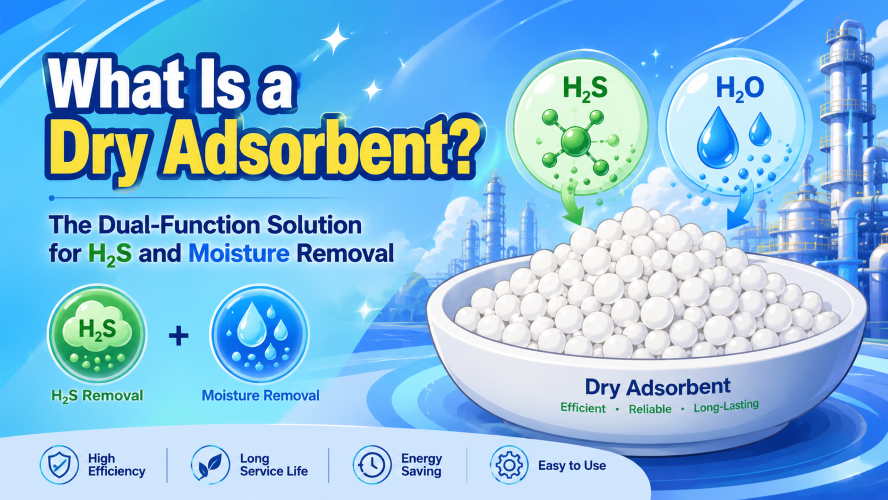
In hydrocarbon processing, gas and liquid streams often carry both hydrogen sulfide (H₂S) and moisture — impurities that poison catalysts, corrode equipment, and hurt product quality. Traditional designs use two separate beds: one for desulfurization, one for drying.
A dry adsorbent does both in a single bed. It's a modified activated alumina-based material, manufactured by ball-rolling (pan granulation), that simultaneously removes H₂S and water — simplifying process design and lowering both capital and operating costs.
Key Takeaways
- Two Mechanisms, One Particle: Physical hydrogen bonding captures water; chemical sites trap H₂S
- Process Simplification: Replaces the need for separate desiccant (silica gel/sieve) and scavenger (ZnO) beds
- Yield Protection: Prevents valuable olefin product loss thanks to highly selective adsorption sites
- Sustainable Operation: Thermally regenerable via hot dry gas or steam stripping, avoiding single-use media disposal
How Does It Work?
The trick behind a dry adsorbent is that it does two chemically different jobs on one particle.
Moisture removal is physical. The activated alumina base is riddled with polar hydroxyl (–OH) sites across a huge internal surface area. Water molecules are drawn to these sites by hydrogen bonding — the same basic mechanism that makes any activated alumina a good desiccant. Because the pore network is large and well-connected, water vapor diffuses in quickly rather than getting stuck at the particle surface.
H₂S removal is chemical. This is where the "modified" part of "modified activated alumina" matters. The base is impregnated with active components that have a specific chemical affinity for hydrogen sulfide. Rather than just trapping H₂S physically, these sites react with it — chemisorption — and hold it as a stable surface compound. That's why the adsorbent doesn't lose its H₂S capacity the way a purely physical trap would once pores start filling up with water.
Because both mechanisms are surface reactions rather than deep bulk chemistry, they run at ambient to moderate temperatures — no feed pre-heating needed, which is one reason this adsorbent slots into existing process lines without much rework.
For the full spec sheet, see our Dry Adsorbent product page.
Why Choose It Over Separate Beds?
Fewer stages, lower cost. A conventional design runs a ZnO or iron sponge bed for H₂S ahead of (or behind) a separate molecular sieve or silica gel bed for drying. That means two vessels, two sets of piping and valves, two pressure drops to manage, and two inventories to track. Combining both functions into one bed cuts all of that in half — fewer things that can leak, foul, or need separate change-out schedules.
Olefin selectivity matters more than it looks. In an olefin plant, the feed itself — ethylene, propylene, butenes — is the valuable product, not a waste stream to be scrubbed clean at any cost. Some general-purpose adsorbents will co-adsorb olefins along with the impurities, or worse, catalyze unwanted side reactions on their surface. This adsorbent's active sites are selective enough that the olefins pass through largely untouched while H₂S and water are captured — the difference between a purification step and a yield loss.
Regenerability changes the cost math over time. Sacrificial scavengers like iron sponge or zinc oxide form a stable spent compound that has to be disposed of once exhausted — you're buying fresh media on every cycle. This adsorbent is thermally regenerated instead: hot dry gas or steam stripping drives the captured H₂S and water back off, and the bed goes back into service. Over a multi-year operating life, that difference in consumption and disposal cost adds up.
Where It's Used
- Olefin plant feed purification — H₂S and moisture in ethylene, propylene, or butene feed will poison Ziegler-Natta and metallocene polymerization catalysts; this adsorbent removes both without touching the olefins themselves.
- Natural gas and refinery gas sweetening & drying — pipeline specs typically cap both H₂S and water dew point; one bed handles both limits instead of two.
- Liquid hydrocarbon pretreatment — naphtha and light gasoline are polished of trace H₂S and dissolved water before reforming, isomerization, or hydroprocessing, protecting the catalysts downstream.
- Syngas purification — methanol, ammonia, and Fischer-Tropsch catalysts are all sensitive to sulfur; combining desulfurization with drying in one step simplifies the front end of these units.
- Compressed air and instrument gas treatment — moisture alone can freeze in lines and foul instruments; trace H₂S adds corrosion risk, so dual removal protects both the air system and downstream equipment.
- LPG/NGL and biogas pretreatment — biogas in particular tends to carry both H₂S and water vapor together, making a dual-function bed a natural fit ahead of upgrading equipment.
How to Decide If You Need One
A dry adsorbent is worth considering when your feed has both H₂S and moisture to deal with, and your process would otherwise need two separate beds to handle them. A few questions worth asking before specifying:
- Does the feed contain olefins? If so, selectivity over ethylene/propylene/butenes becomes a real economic factor, not just a nice-to-have.
- How often can you take the bed offline for regeneration? Continuous operations usually call for a dual-bed (lead-lag or swing) configuration rather than single-bed.
- What are your impurity loads? For very high H₂S or moisture concentrations, upstream bulk removal (amine treating, glycol dehydration) ahead of this adsorbent extends bed life significantly — this adsorbent is best suited as a polishing step, not a primary bulk scrubber.
If your feed only carries one of the two impurities, a single-function desiccant or scavenger may be simpler and cheaper — the dual-function value only shows up when both problems exist together.
Basic Bed Design Notes
Dry adsorbents run in fixed-bed adsorbers — single-bed for planned shutdown regeneration, or dual-bed (lead-lag/swing) for continuous online operation. Feed is filtered ahead of the bed, and effluent is sampled regularly for H₂S and moisture to plan regeneration before breakthrough. Full design parameters (GHSV/LHSV ranges, bed depth ratios) are on the Dry Adsorbent product page.
Dry Adsorbent vs. Other Options
vs. ZnO Desulfurization Catalyst: ZnO works at high temperature (200–400°C) and targets H₂S only. This adsorbent works cooler, handles both H₂S and water, and is regenerable.
vs. Molecular Sieves: Molecular sieves dry well but don't touch H₂S — this adsorbent covers both in one bed.
vs. Iron Sponge: Iron sponge is a single-use scavenger; this adsorbent regenerates and reuses.
Recommended Products from Sorbsieve
- Activated Alumina — High-surface-area desiccant for moisture removal
- 4A Molecular Sieve — Versatile water and CO₂ removal — see how it compares to this dual-function adsorbent above
Frequently Asked Questions
How does a dry adsorbent differ from a regular desiccant? Regular desiccants only remove water. This one removes H₂S and water together, in one bed.
Is it compatible with olefin streams? Yes — that's one of its main advantages. It won't co-adsorb or react with ethylene, propylene, or butenes.
How often does it need regeneration? Depends on feed severity — regeneration is triggered by breakthrough monitoring, not a fixed schedule. See the product page for typical cycle parameters.
Can it replace both my desiccant and my H₂S scavenger? In many cases, yes — that's the core value proposition. Whether it fits your specific feed depends on impurity loads and outlet spec requirements; talk to our technical team for a recommendation.
Conclusion: Is a Dry Adsorbent Right for Your Process?
If your process needs simultaneous H₂S and moisture removal — especially in olefin-containing feeds — a dry adsorbent lets you do it in one bed instead of two, with the added benefit of thermal regeneration. For full specs and bed design guidance, see the Dry Adsorbent product page below, or contact our technical team.
Looking for Bulk Supply of Dry Adsorbent?
Sorbsieve is a trusted bulk supplier of Dry Adsorbent and complete industrial adsorbents, serving industrial buyers across the Middle East.
We provide:
- ✅ Container-level supply (20'GP / 40'GP / 40'HQ)
- ✅ Full documentation (COA / TDS / SDS / COO)
- ✅ Multiple packaging options
- ✅ Technical support for dry adsorbent selection and system optimization
- ✅ Fast quote response for industrial inquiries
Contact our team for bulk pricing, product samples, and technical consultation.
Related Products
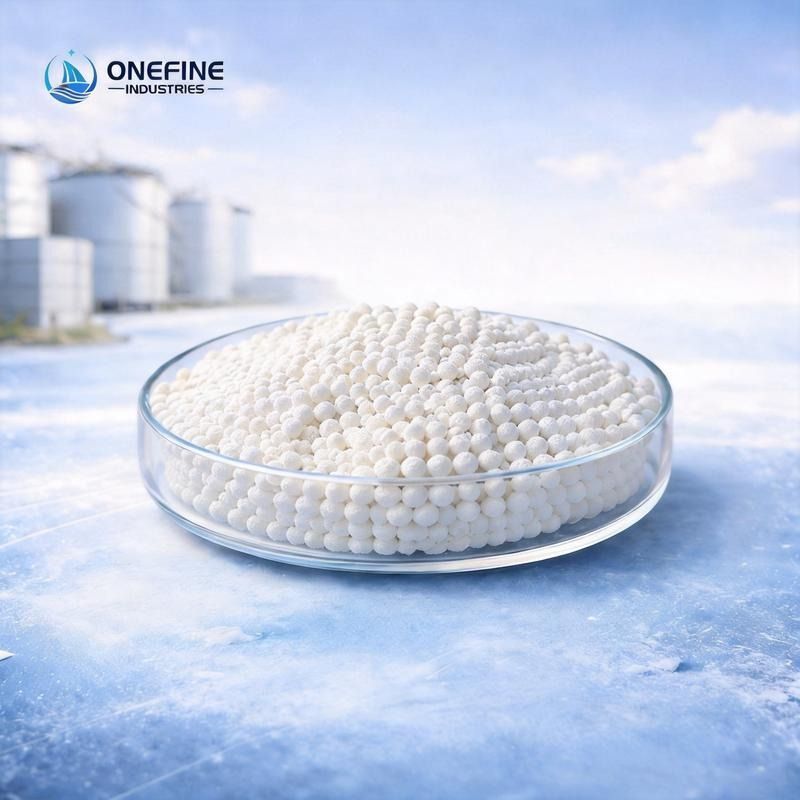
Dry adsorbent
Modified activated alumina-based adsorbent manufactured by ball-rolling process, loaded with high-content active components for simultaneous removal of H₂S and water from gas-phase and liquid-phase hydrocarbon streams. Features large pore diameter, high surface area, fast reaction kinetics, and excellent regenerability — the ideal adsorbent for impurity removal in olefin-containing feeds.
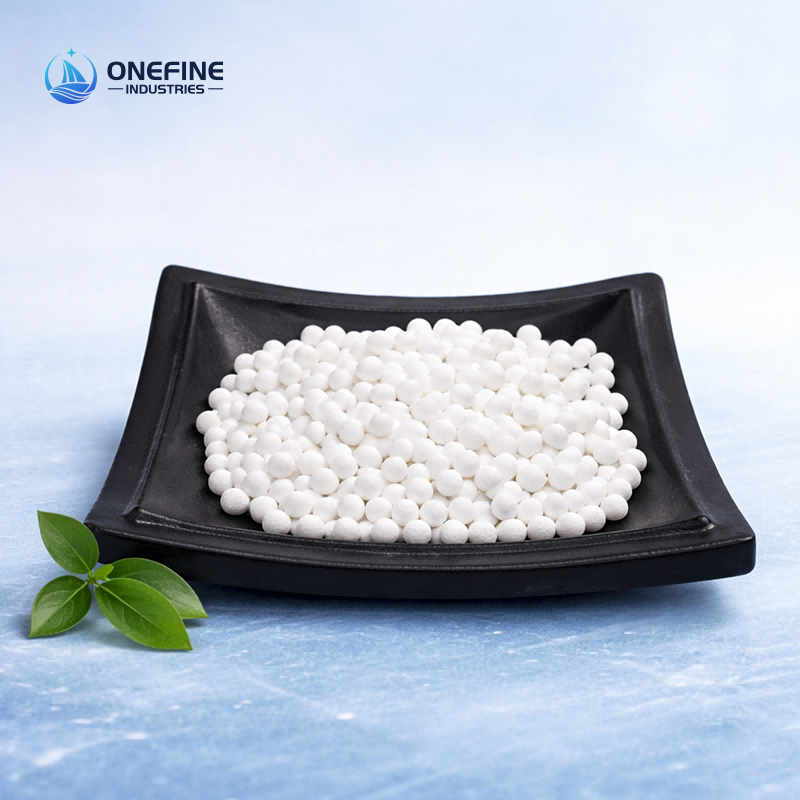
Activated Alumina for Purification
High-performance activated alumina (γ-Al₂O₃) adsorbent and desiccant for industrial gas/liquid drying, water defluoridation, and purification. White spherical beads with high surface area (≥300 m²/g), excellent crush strength, and full thermal regenerability. Available in multiple particle sizes for compressed air dryers, water treatment, and catalyst carrier applications.
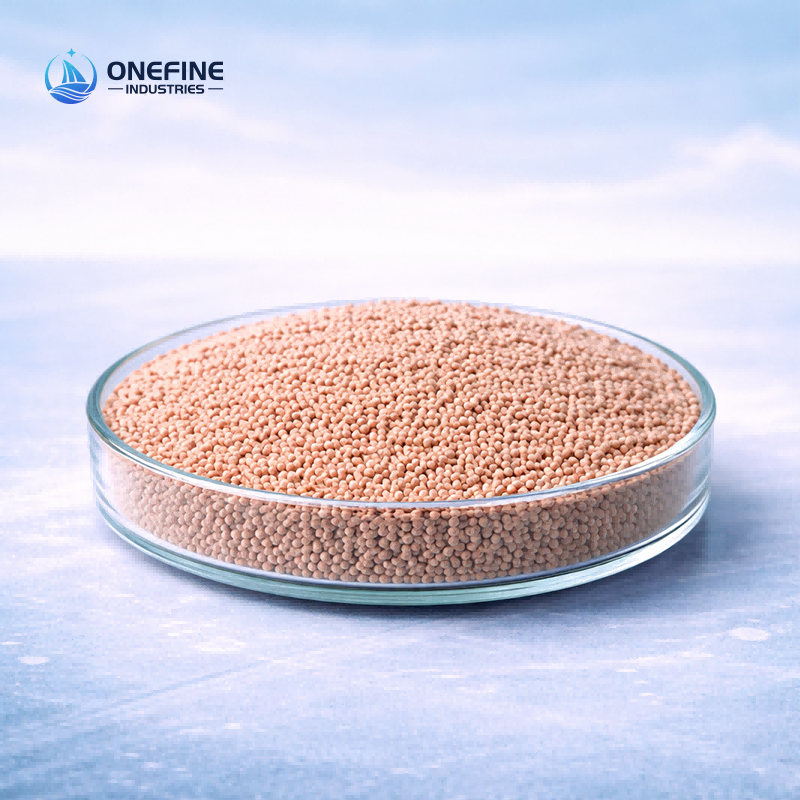
4A Molecular Sieve
General-purpose 4A molecular sieve desiccant for industrial air drying, solvent dehydration, CO2 removal, and static packaging applications. High capacity, long service life.
Related Reading
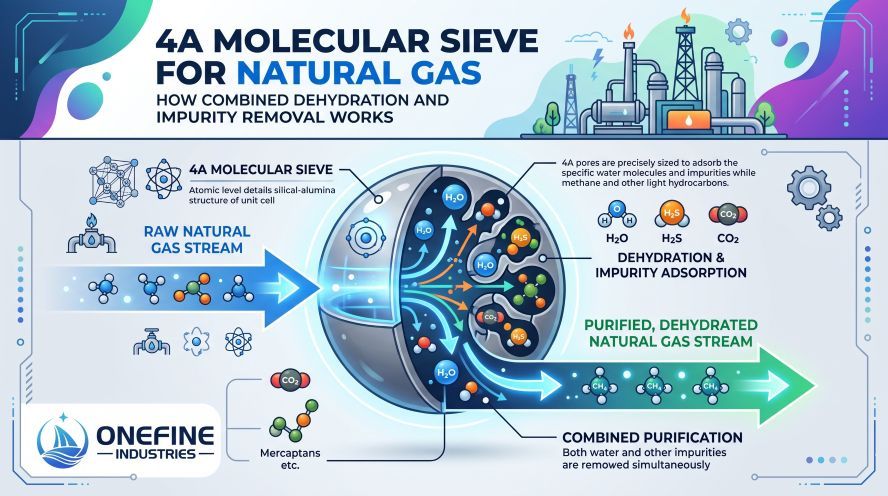
4A Molecular Sieve for Natural Gas: How Combined Dehydration and Impurity Removal Works
4A molecular sieve can dry natural gas and pull moderate CO₂/H₂S out of the same stream in one bed — how its larger pore enables that dual role, where it fits in the treatment train, and when 3A is the better call instead.
How Often Should You Replace a Methanation Catalyst in an Ammonia Synthesis Guard Bed?
There's no fixed replacement interval for a methanation catalyst — service life depends almost entirely on how well the upstream desulfurization train protects it. Here's how to read the real warning signs.

How Do You Know When to Replace an Ultra-Precision Desulfurization Catalyst?
Four real warning signs — total sulfur creep, falling COS conversion, rising pressure drop, and downstream poisoning — that tell you an Ultra-Precision Desulfurization Catalyst bed needs replacing.