How Do You Know When to Replace an Ammonia Refining Desulfurization Catalyst?
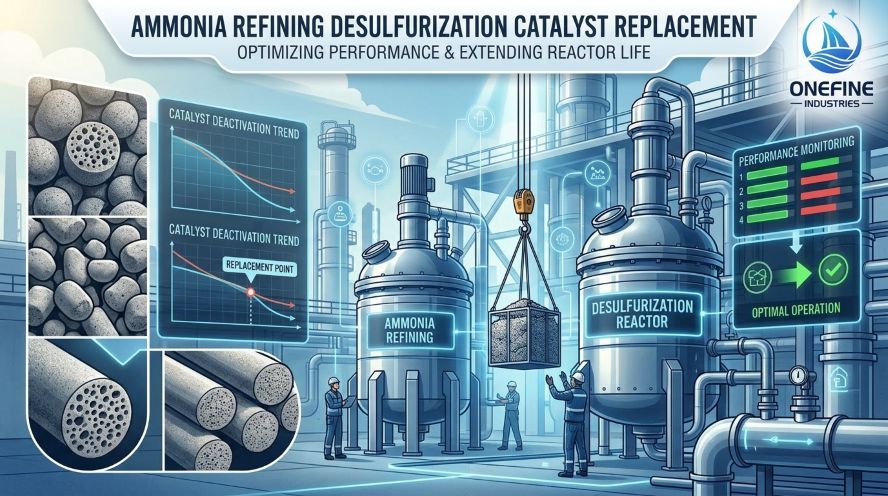
How Do You Know When to Replace an Ammonia Refining Desulfurization Catalyst?
Ammonia plants that process high-humidity, saturated feed gas streams rely on composite metal oxide desulfurization catalysts precisely because standard Zinc Oxide beds lose efficiency under those moisture conditions. But like any sulfur-removal media, an Ammonia Refining Desulfurization Catalyst has a finite service life — and running it past that point doesn't just waste the bed, it risks pushing sulfur compounds downstream into synthesis loops where poisoning is far more expensive to fix. This guide walks through the practical signals that tell you it's time to plan a changeout, not guess at one.
Key Takeaways
- Downstream sulfur breakthrough is the clearest early warning sign, indicating the desulfurization bed has operated past its effective capacity.
- A gradual increase in pressure drop across the bed often reflects physical catalyst degradation from prolonged sulfur loading and moisture exposure.
- A shortening cycle length trend over successive runs indicates declining usable sulfur capacity, even before a single-cycle breakthrough occurs.
- In high-humidity, saturated streams, water competes with sulfur species for active sites, changing the standard depletion curve of composite metal oxide beds.
Why Feed Gas Humidity Changes the Replacement Conversation
Most desulfurization guidance assumes a dry or low-moisture gas stream, where Zinc Oxide-based beds are the default choice (see What Is an Ammonia Refining Desulfurization Catalyst? for the humidity-based selection logic). In high-humidity, saturated streams, water competes with sulfur species for active sites and can accelerate the loss of usable capacity in beds not designed for that environment. That's the specific gap composite metal oxide chemistry is built to address — but it also means the depletion curve for these catalysts doesn't always look like a textbook Zinc Oxide breakthrough curve, and operators sometimes miss the early signals because they're watching for the wrong pattern.
Signal 1: Downstream Sulfur Breakthrough
The clearest sign is sulfur compounds showing up where they shouldn't — detected downstream of the desulfurization stage, closer to sensitive synthesis or shift catalysts than your process design intends. Any measurable rise in sulfur levels at the bed outlet, even before it reaches a level your plant considers a hard limit, is worth treating as an early warning rather than something to monitor passively. By the time breakthrough is obvious without instrumentation, the bed has likely been operating past its effective capacity for some time.
Signal 2: Rising Pressure Drop Across the Bed
A gradual increase in pressure drop across the catalyst bed — beyond what's explained by normal flow rate changes — often reflects physical changes in the catalyst structure from prolonged sulfur loading and moisture exposure. This is a mechanical signal as much as a chemical one, and it's worth tracking alongside sulfur breakthrough rather than in isolation, since the two don't always move together.
Signal 3: Reduced Sulfur Capacity Relative to Fresh Bed Performance
If you're tracking cycle length — how long the bed runs between changeouts or regenerations under comparable feed conditions — a shortening trend over successive cycles indicates the catalyst's usable sulfur capacity is declining, even if breakthrough hasn't occurred yet on any single cycle. This is the kind of gradual signal that's easy to rationalize away one cycle at a time, which is exactly why comparing cycle length over a longer window matters more than any single data point.
Signal 4: Physical and Visual Degradation
Attrition, fines generation, and visible discoloration beyond the expected sulfided-catalyst color change can all indicate the bed is deteriorating mechanically, not just chemically. Fines carried downstream can also contribute to the pressure drop pattern described above, so physical inspection during any planned shutdown is worth doing even if the instrumentation hasn't flagged anything yet.
What to Check Before Committing to a Changeout
Before scheduling a full bed replacement, it's worth confirming a few things so the decision is based on the actual trend rather than a single data point:
- ✅ Review outlet sulfur readings across several recent cycles, not just the most recent one — a single elevated reading can be a measurement anomaly rather than genuine breakthrough
- ✅ Compare current pressure drop against the bed's original clean baseline, not just against last month's reading
- ✅ Confirm feed gas humidity hasn't shifted meaningfully since the catalyst was originally specified — a changed feed profile can explain performance drift that looks like end-of-life but is actually a selection mismatch
- ✅ Check for any recent upstream process changes (new feed source, upset conditions) that might explain a temporary dip in performance rather than genuine capacity exhaustion
If the trend holds up after ruling out these operational variables, planning the changeout — rather than continuing to monitor — is usually the safer call given how costly downstream sulfur poisoning can be.
Choosing a Replacement: Don't Assume the Same Catalyst Is Still Right
A changeout is also a natural checkpoint to revisit catalyst selection — particularly if your feed gas conditions have shifted since the original bed was specified. If your feed has trended toward lower humidity over time, a Zinc Oxide-based option may now be worth comparing against a composite metal oxide catalyst; see How to Choose a Desulfurization Catalyst for the selection framework across our full desulfurization range.
Recommended Products from Sorbsieve
- Ammonia Refining Desulfurization Catalyst (already linked above) — composite metal oxide chemistry built for high-humidity, saturated feed gas streams ahead of ammonia synthesis
- Zinc Oxide Desulfurization Catalyst — the standard choice for drier feed gas conditions; see the selection logic above before assuming a like-for-like replacement
FAQ
Q: Can an Ammonia Refining Desulfurization Catalyst be regenerated instead of replaced?
A: This depends on the deactivation mechanism and your plant's specific operating history. Talk to our technical team with your cycle data before assuming regeneration is or isn't viable for your case.
Q: Does high humidity always mean this catalyst is the right choice over Zinc Oxide?
A: Not automatically — it depends on where your feed gas sits on the humidity range, not just whether moisture is present at all. See the selection framework linked above for the full comparison.
Q: How is this catalyst used alongside other desulfurization stages in an ammonia plant?
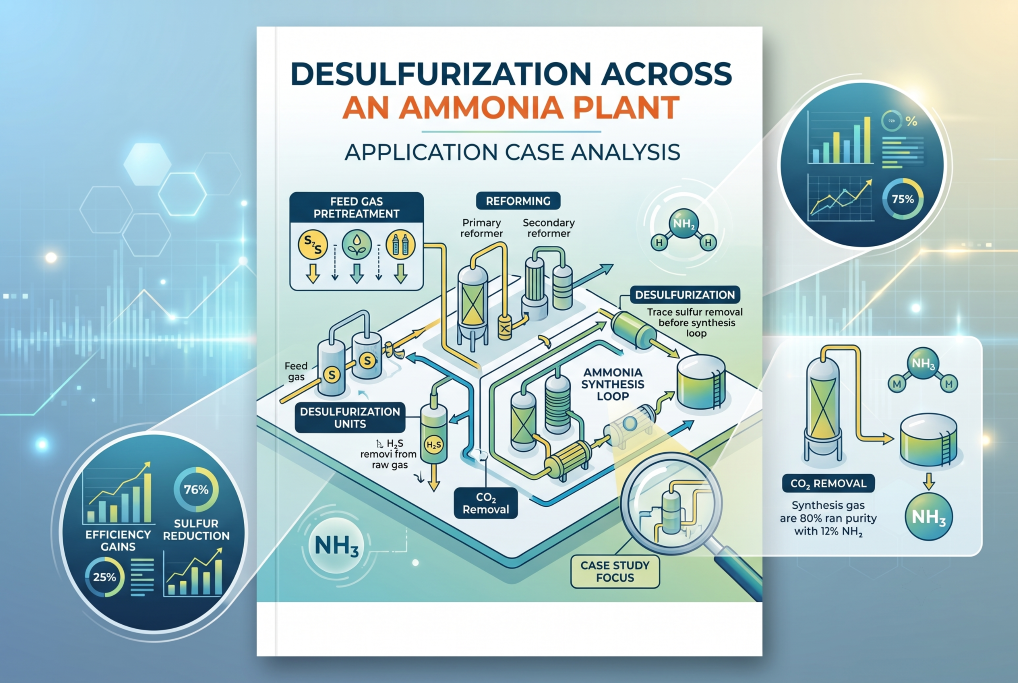
A: It typically sits at the front-end feed gas stage, working alongside other purification steps across the plant. Our Desulfurization Across an Ammonia Plant application case walks through how this fits into a real multi-stage system.
Q: What happens if sulfur breaks through into the ammonia synthesis loop?
A: Sulfur compounds are known poisons for many downstream synthesis and shift catalysts, and the cost of that damage is typically far higher than a timely desulfurization catalyst changeout — which is the core reason to treat early signals seriously rather than running to hard failure.
Looking for Bulk Supply of Ammonia Refining Desulfurization Catalyst?
Sorbsieve is a trusted bulk supplier of Ammonia Refining Desulfurization Catalyst and complete industrial adsorbents, serving industrial buyers across the Middle East.
We provide:
- ✅ Container-level supply (20'GP / 40'GP / 40'HQ)
- ✅ Full documentation (COA / TDS / SDS / COO)
- ✅ Multiple packaging options
- ✅ Technical support for Ammonia Refining Desulfurization Catalyst selection and system optimization
- ✅ Fast quote response for industrial inquiries
Contact our team for bulk pricing, product samples, and technical consultation.
Related Products
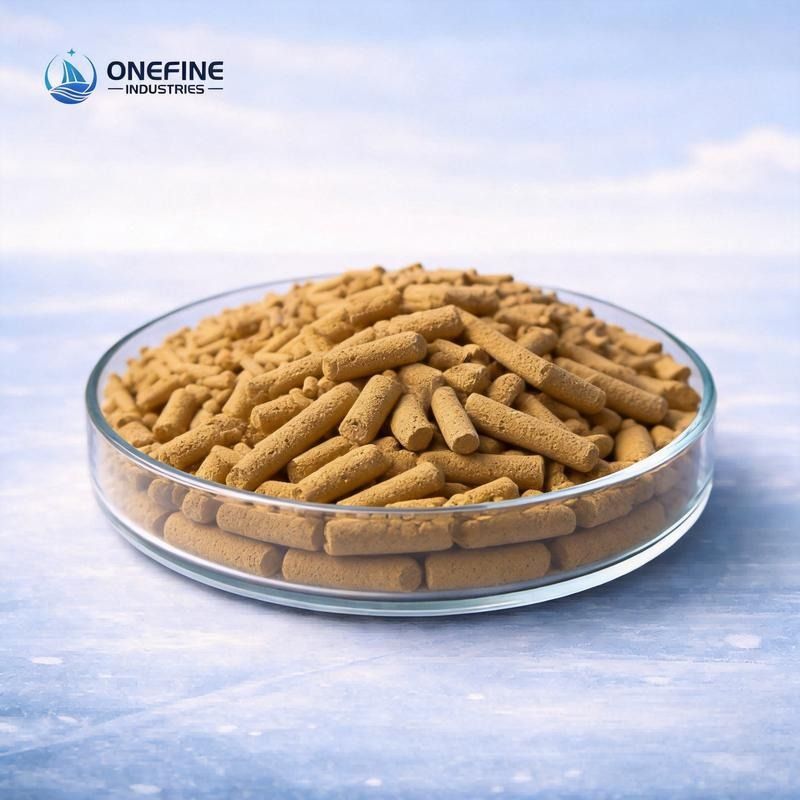
Ammonia refining desulfurization catalyst
A composite metal oxide-based desulfurization catalyst with multiple promoters, designed for H₂S removal in ammonia refining units of sour water strippers at refineries. Reduces H₂S to below 0.5 mg/m³ under low-temperature conditions. Also removes HCl and organic sulfur impurities. Exceptional water resistance.
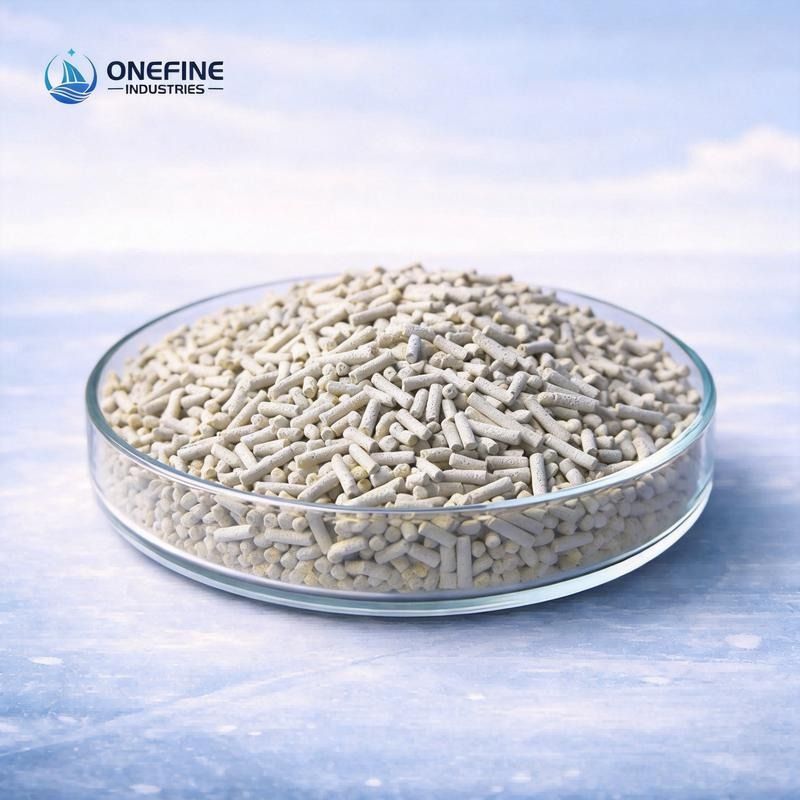
Zinc oxide desulfurization catalyst
High-purity zinc oxide (ZnO) desulfurization catalyst for fine removal of H₂S from natural gas, synthesis gas, hydrogen, and hydrocarbon feeds. Achieves outlet sulfur levels below 0.1 ppm through irreversible chemisorption. High sulfur capacity, long service life, and strong resistance to steam.
Related Reading
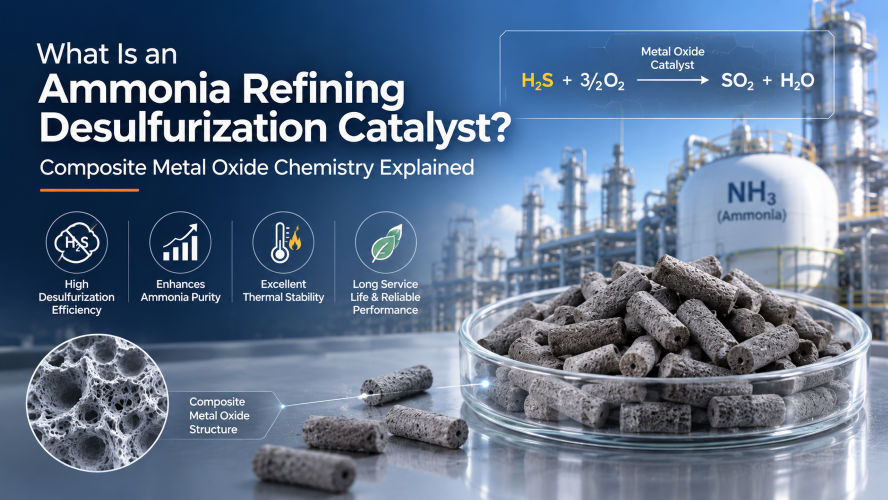
What Is an Ammonia Refining Desulfurization Catalyst? Composite Metal Oxide Chemistry Explained
Ammonia refining desulfurization catalysts use composite metal oxides to remove H₂S from wet, sour gas streams where conventional ZnO desulfurizers struggle. Learn how the chemistry works and when to choose this catalyst over standard alternatives.
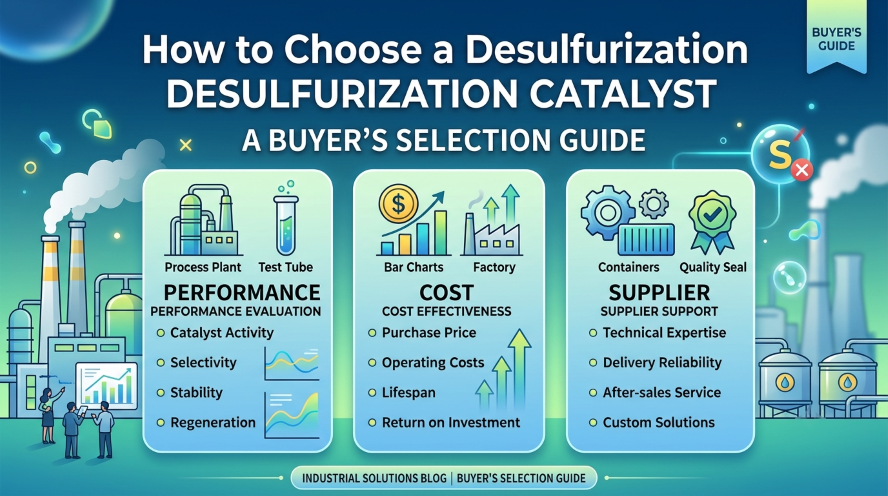
How to Choose a Desulfurization Catalyst: A Buyer's Selection Guide
With seven different desulfurization catalysts in play — each suited to a different feed condition or protection target — picking the right one comes down to a handful of questions about your process. This guide walks through the decision framework.