How Do You Know When to Replace an Iron Oxide Desulfurization Catalyst?
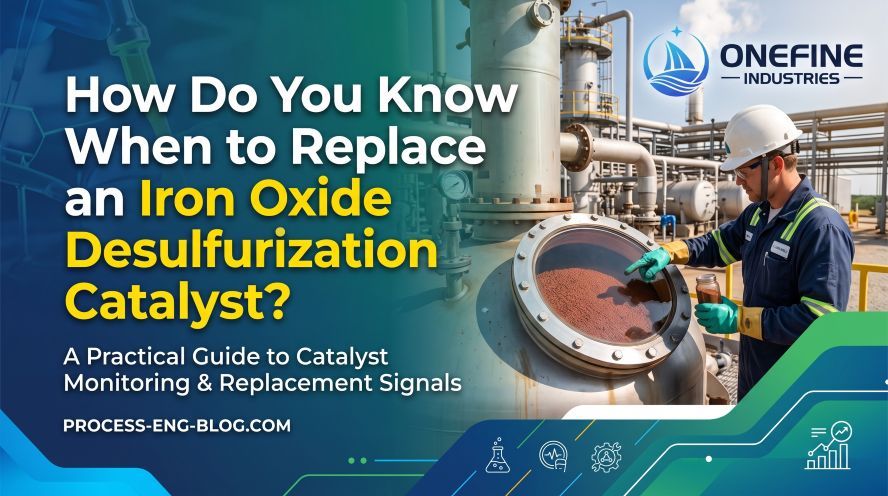
If your Iron Oxide desulfurization catalyst is nearing the end of its service life, the signs usually show up downstream before anyone notices a problem at the bed itself. For plants running coarse H₂S removal ahead of a zinc oxide polishing stage, a late catalyst change means one thing: sulfur breaking through into equipment it was never supposed to reach. This guide walks through how the catalyst works, the operating signals that tell you replacement is approaching, and the factors that shift that timeline earlier or later.
Key Takeaways
- Rising H₂S concentration at the bed outlet is the most direct indicator that the iron oxide's active sites are consumed.
- A flattening temperature profile or a shifting exotherm signals that the bed's reactive chemisorption capacity is running low.
- Increased sulfur load on downstream zinc oxide polishing beds often indicates that the upstream iron oxide coarse stage is exhausted.
- Catalyst service life heavily depends on total inlet H₂S loading, gas hourly space velocity (GHSV), and operating temperature.
How Iron Oxide Desulfurization Works
Iron oxide desulfurization catalyst removes hydrogen sulfide (H₂S) from process gas streams through chemisorption rather than a simple physical filter action. The iron oxide reacts with H₂S to form iron sulfide, converting the gas-phase contaminant into a solid compound retained within the catalyst bed. This reaction is exothermic, which is one reason temperature monitoring across the bed is a practical way to track how the reaction front is progressing.
Because this stage is typically positioned as the coarse or bulk desulfurization step, it's designed to handle the bulk of the H₂S loading before a finer polishing catalyst — most commonly a Zinc Oxide Desulfurization Catalyst — brings residual sulfur down to trace levels.
Key Signs Your Iron Oxide Catalyst Needs Replacement
A handful of operating signals typically appear as the bed approaches exhaustion:
- Rising H₂S concentration at the bed outlet — the most direct indicator. Once the iron oxide's active sites are consumed, unreacted H₂S starts passing through instead of being captured.
- Downstream sulfur load increasing on the polishing catalyst — if your zinc oxide bed further downstream is consuming capacity faster than expected, it's often because the iron oxide stage upstream is no longer doing its share of the work.
- A shifting or flattening temperature profile — since the chemisorption reaction is exothermic, a healthy bed shows a distinct temperature rise at the active reaction zone. As the front moves toward the outlet or the exotherm flattens out, it signals the reactive capacity is running low.
- Increased pressure drop across the bed — less common as a standalone signal, but worth tracking alongside the others, particularly if fines have accumulated over multiple cycles.
- Reduced turndown tolerance — operators sometimes notice the bed can no longer absorb short spikes in feed H₂S without breakthrough, even though average loading hasn't changed.
None of these signs in isolation is conclusive — it's the combination, especially outlet H₂S trending upward alongside a flattening temperature profile, that gives the clearest picture.
Factors That Affect Service Life
Service life varies significantly from one installation to another, and general industry experience points to a handful of variables that matter most:
- Inlet H₂S concentration and total sulfur loading — higher loading consumes the catalyst's capacity faster
- Gas hourly space velocity — higher flow rates through a given bed volume shorten the time to breakthrough
- Operating temperature — chemisorption kinetics and capacity utilization both shift with temperature, so operating outside the intended range affects real-world life
- Moisture content in the feed gas — excess moisture can affect the reaction and, over time, catalyst structural integrity
- Presence of other sulfur species (COS, mercaptans) — iron oxide is primarily effective against H₂S; other sulfur compounds may pass through largely unreacted, which affects how you should interpret downstream readings
Because these variables interact, we don't publish a single fixed replacement interval — the honest answer is that it depends on your specific feed composition and operating conditions, and your TDS/technical consultation will reflect that.
Monitoring & Testing Methods
Most plants rely on a combination of the following to track bed condition rather than a single test:
- Continuous or periodic H₂S analyzers at the bed outlet, giving the earliest warning of breakthrough
- Portable detector tubes (e.g., Dräger-style) for spot checks when continuous analyzers aren't installed at every point
- Temperature profile monitoring along the bed length, using thermocouples at multiple depths to track how the reaction zone is moving
- Scheduled sampling at multiple bed depths during turnarounds, to physically assess how much of the bed's capacity has been utilized
Combining a real-time outlet reading with periodic temperature profile checks gives the most reliable picture — relying on outlet concentration alone can miss a reaction front that's moving faster than expected.
Why Two-Stage Desulfurization Matters
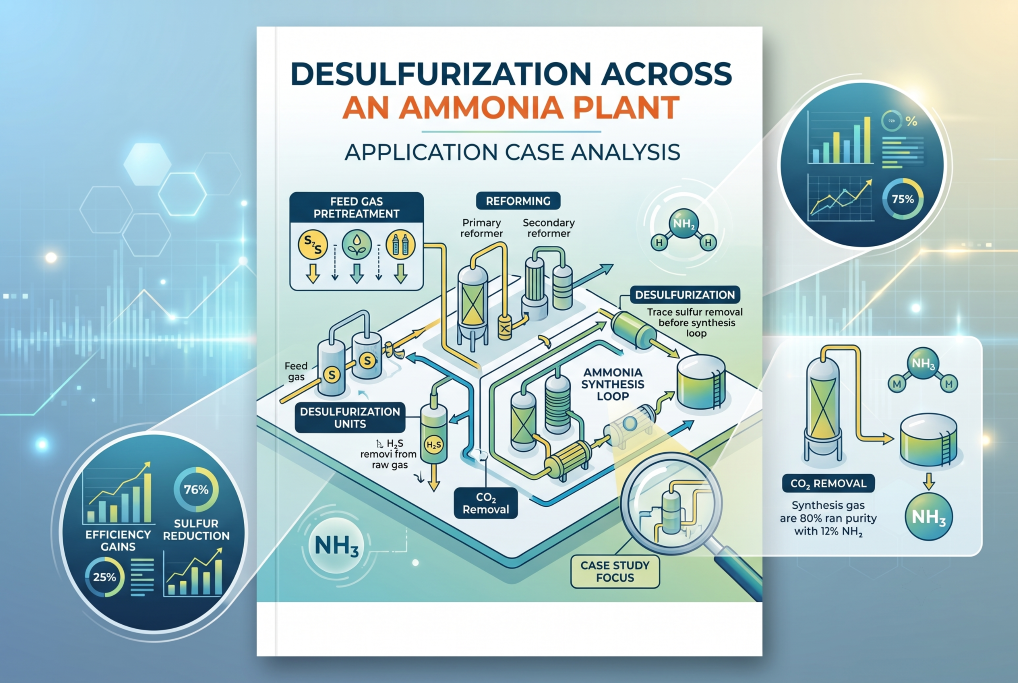
Pairing an Iron Oxide catalyst for coarse removal with a Zinc Oxide Desulfurization Catalyst for fine polishing is a common configuration precisely because it changes how you interpret these replacement signals. When the coarse stage is doing its job, the polishing stage sees a light, steady load and lasts far longer. When the coarse stage is exhausted and not yet replaced, the polishing catalyst absorbs the extra burden — which is often the first place a capacity problem becomes visible on paper, even though the root cause is upstream. If you're also tracking how long a Zinc Oxide bed typically lasts before breakthrough, watching both stages together gives a much clearer maintenance picture than monitoring either one in isolation. This two-stage approach is also the same configuration used in ammonia plant desulfurization trains, where both catalysts work together across the sulfur removal system.
Recommended Products from Sorbsieve
- Iron Oxide Desulfurization Catalyst — coarse H₂S removal via chemisorption
- Zinc Oxide Desulfurization Catalyst — fine polishing to sub-ppm/sub-ppb sulfur levels (already linked above)
FAQ
Q: Can I extend the life of an Iron Oxide desulfurization catalyst by adjusting operating conditions?
A: Within limits, yes. Keeping the feed within the intended temperature range and controlling moisture content both help the catalyst perform closer to its design capacity. But once the active sites are consumed by reaction with H₂S, no operating adjustment restores capacity — replacement is the only option at that point.
Q: Is a sudden pressure drop increase a sign I need to replace the catalyst?
A: Not necessarily on its own. Pressure drop can rise due to fines accumulation, channeling, or physical degradation, which are separate issues from chemical exhaustion. It's worth investigating alongside outlet H₂S and temperature profile data rather than treating it as a standalone replacement trigger.
Q: How do I know if it's the Iron Oxide stage or the Zinc Oxide stage that needs attention?
A: Outlet H₂S readings taken between the two stages (not just at the very end of the train) are the most direct way to isolate which bed is underperforming. If sulfur is already breaking through before the zinc oxide stage, the iron oxide bed is the one approaching exhaustion.
Q: Does higher inlet H₂S concentration always mean shorter catalyst life?
A: Generally yes, since total sulfur loading is a major driver of how quickly the catalyst's capacity is consumed — but space velocity and operating temperature also matter, so two plants with similar inlet concentrations can still see different service lives depending on these other conditions.
Looking for Bulk Supply of Iron Oxide Desulfurization Catalyst?
Sorbsieve is a trusted bulk supplier of Iron Oxide Desulfurization Catalyst and complete industrial adsorbents, serving industrial buyers across the Middle East.
We provide:
- ✅ Container-level supply (20'GP / 40'GP / 40'HQ)
- ✅ Full documentation (COA / TDS / SDS / COO)
- ✅ Multiple packaging options
- ✅ Technical support for desulfurization system selection and optimization
- ✅ Fast quote response for industrial inquiries
Contact our team for bulk pricing, product samples, and technical consultation.
Related Products
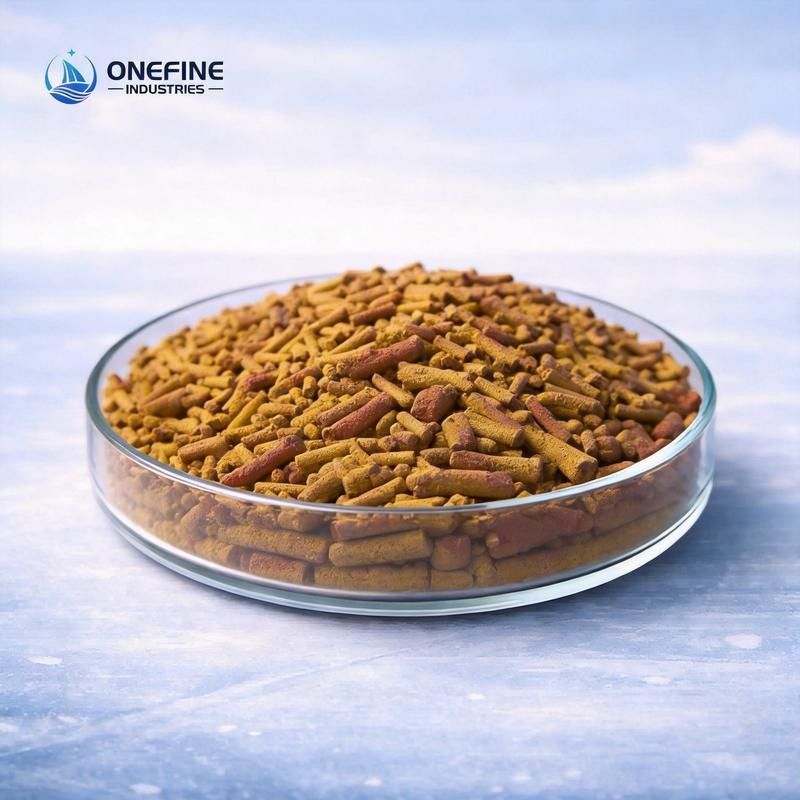
Iron Oxide Desulfurization Catalyst
High-efficiency iron oxide-based desulfurization catalyst for deep removal of H₂S from natural gas, biogas, syngas, coke oven gas, and various industrial gas streams. Features high sulfur capacity, excellent water resistance, and room-temperature operation — a cost-effective solution for both bulk and precision desulfurization applications.
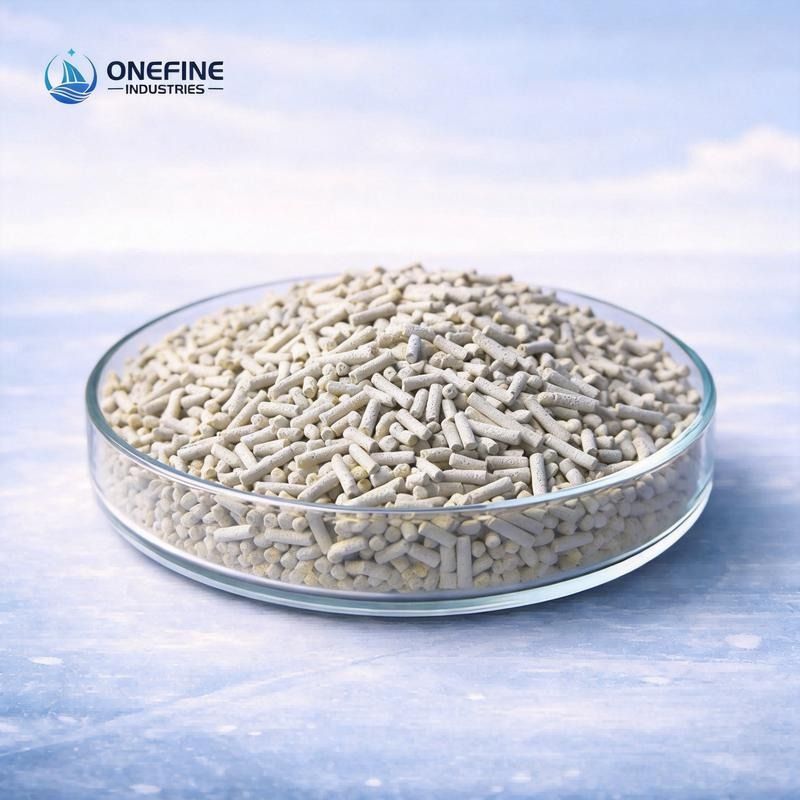
Zinc oxide desulfurization catalyst
High-purity zinc oxide (ZnO) desulfurization catalyst for fine removal of H₂S from natural gas, synthesis gas, hydrogen, and hydrocarbon feeds. Achieves outlet sulfur levels below 0.1 ppm through irreversible chemisorption. High sulfur capacity, long service life, and strong resistance to steam.
Related Reading
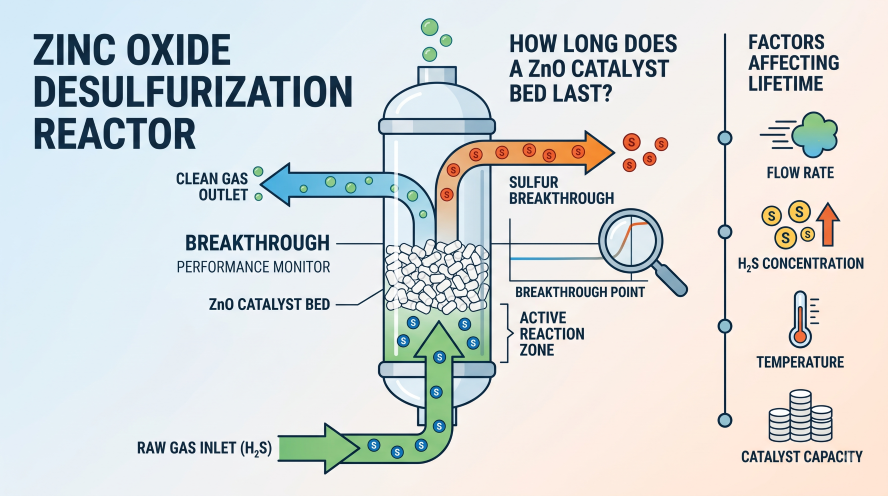
How Long Does a Zinc Oxide Desulfurization Catalyst Bed Last Before Breakthrough?
Discover the thermodynamic and kinetic principles dictating the lifespan of Zinc Oxide (ZnO) desulfurization guard beds. Learn how to calculate theoretical sulfur capacity, understand the Mass Transfer Zone (MTZ), and identify the variables that trigger premature hydrogen sulfide (H₂S) breakthrough.
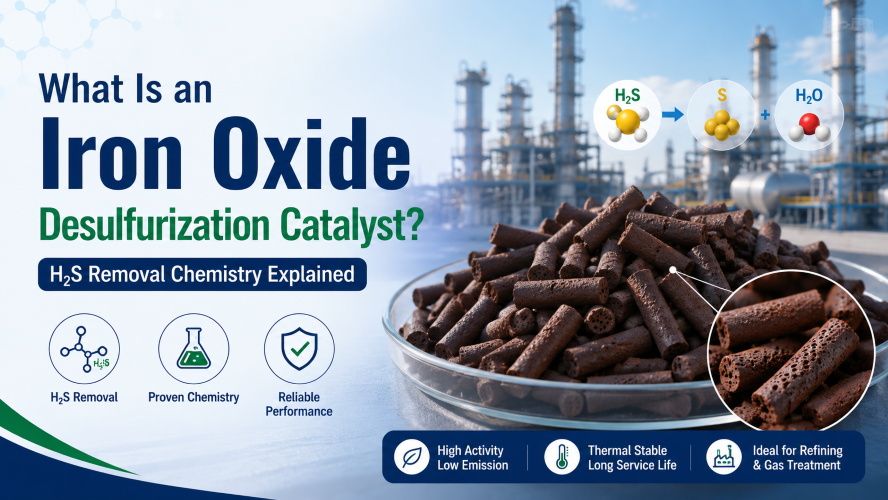
What Is an Iron Oxide Desulfurization Catalyst? H₂S Removal Chemistry Explained
Iron oxide desulfurization catalysts remove H₂S from natural gas, biogas, and syngas through a simple room-temperature chemisorption reaction. Here's how the chemistry works, where it's used, and how it compares to other desulfurization technologies.