Iron Oxide vs Zinc Oxide Desulfurization Catalyst: Do You Need Both Stages or Just One?
Key Takeaways
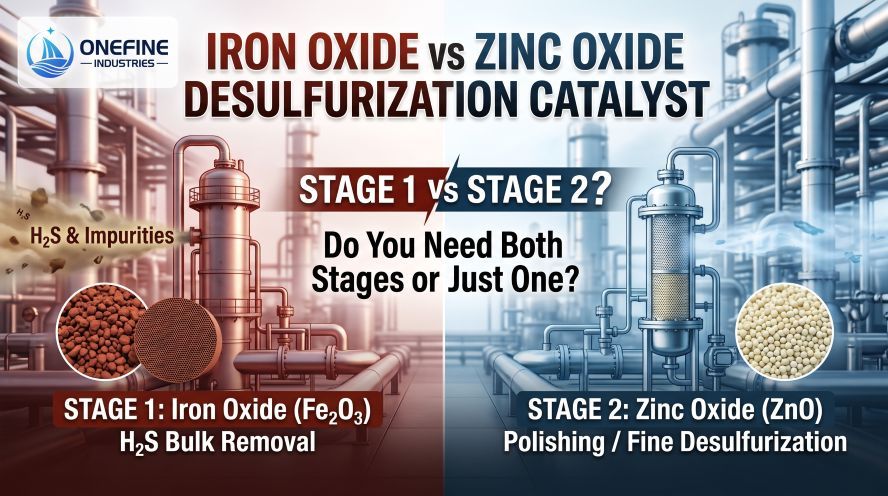
- Iron oxide acts as an economical lead guard material to absorb the bulk of the sulfur load, and many formulations can be regenerated.
- Zinc oxide functions as a non-regenerable polishing bed, exceptionally capable of pulling residual sulfur down to the low parts-per-billion range.
- A zinc-oxide-only bed is typically sufficient for low-sulfur feeds, but high inlet H₂S streams require a two-stage system to prevent rapid bed exhaustion.
- Adding an iron oxide stage buffers feed fluctuations and meaningfully extends the service interval of the downstream zinc oxide catalyst.
Introduction
If your feed gas carries more than a trace of H₂S, you've probably run into this question: does the system need a dedicated iron oxide desulfurization catalyst ahead of the zinc oxide desulfurization catalyst, or can zinc oxide handle the whole job on its own? The two are often paired in the same purification train, but they aren't interchangeable — one is built for bulk sulfur loading, the other for polishing the stream down to a near-zero sulfur target. Getting this choice right affects bed life, replacement frequency, and total operating cost.
Why These Two Catalysts Get Paired in the First Place
A two-stage desulfurization system puts iron oxide in the lead position and zinc oxide in the lag position. The logic is division of labor: iron oxide absorbs the bulk of the sulfur load cheaply, so the more expensive, non-regenerable zinc oxide bed isn't burning through its capacity on sulfur it didn't need to handle. This is the same lead/lag logic used elsewhere in gas purification — a cheaper, higher-capacity guard material takes the brunt of the load, and a finer, more selective material finishes the job. Whether your system actually needs this two-stage arrangement comes down to how much H₂S is in the feed and how clean the outlet gas has to be.
Iron Oxide Desulfurization Catalyst: Bulk Removal, Higher Capacity
For the underlying chemistry, see our guide on iron oxide sulfur removal chemistry. Iron oxide (often used as iron oxide hydroxide or supported on a porous carrier) reacts with H₂S to form iron sulfide, and in many formulations this reaction can be reversed — the spent material is regenerated with air or oxygen, converting the sulfide back to iron oxide and releasing elemental sulfur. That regenerability, combined with a relatively high sulfur-loading capacity per unit volume, makes iron oxide the economical choice for coarse, high-volume desulfurization. It's typically positioned upstream, where the sulfur concentration is highest, and it's not expected to bring the gas down to a very low sulfur specification on its own — that's not what it's optimized for.
Zinc Oxide Desulfurization Catalyst: Deep Polishing, One-Time Use
For the reaction mechanism, see our guide on zinc oxide chemisorption. Zinc oxide works differently. It reacts with H₂S to form zinc sulfide and is not practically regenerated in most industrial applications — once the bed is spent, it's replaced, not refreshed. What zinc oxide is exceptionally good at is pulling residual sulfur down to very low levels, often cited in the low parts-per-billion range at the start of bed life, which is why it's the standard guard-bed material ahead of sulfur-sensitive downstream catalysts (hydrotreating, reforming, methanation, and similar processes where even trace sulfur causes permanent catalyst poisoning). Zinc oxide performs this polishing role across a fairly wide operating temperature window, but its efficiency — and therefore its real-world capacity — drops as temperatures fall outside its optimal range, which is part of why it's usually positioned as the last line of defense rather than the first.
When One Stage Is Enough vs When You Need Both
Zinc oxide alone is usually enough when:
- Inlet H₂S is already low (the stream has been desulfurized upstream by another process, or sulfur was never high to begin with)
- The feed is relatively clean and consistent, without sulfur spikes that would prematurely exhaust the bed
- Replacement frequency and catalyst cost at that lower loading are acceptable to your operation
A two-stage iron oxide + zinc oxide system makes sense when:
- Inlet H₂S is high enough that a zinc-oxide-only bed would need frequent, costly replacement
- You want to protect the zinc oxide bed's capacity specifically for the final polishing step, not bulk removal
- The economics favor letting a regenerable, lower-cost material absorb the bulk load before the gas reaches the non-regenerable stage
There's no universal threshold that applies to every plant — the right answer depends on your actual feed composition, flow rate, and the sulfur specification your downstream process requires. If you're not sure which side of that line your system falls on, our technical team can help review your feed data and recommend a configuration. For a broader view of how this decision fits alongside the other six desulfurization catalysts in our lineup, see our desulfurization catalyst selection guide.
Cost and Operational Trade-offs
The trade-off isn't just about catalyst price per kilogram. A single zinc-oxide-only bed sized for high H₂S loading means more frequent bed changeouts, more disposal of spent (non-regenerable) material, and more downtime for catalyst replacement. A two-stage system adds upfront capital cost (a second vessel and catalyst charge) but can meaningfully extend the service interval of the zinc oxide stage and reduce total sulfur-removal cost over the life of the plant. For operations running at high throughput or with variable sulfur content, the two-stage approach is also more forgiving of feed fluctuations, since the iron oxide stage buffers the swings before they reach the polishing bed.
Recommended Products from Sorbsieve
Iron Oxide Desulfurization Catalyst and Zinc Oxide Desulfurization Catalyst are both part of Sorbsieve's catalyst lineup, supplied in bulk for industrial gas purification trains across the Middle East.
FAQ
Can zinc oxide alone handle a high-H₂S feed stream? It can, but at high inlet sulfur loading, a zinc-oxide-only bed will exhaust its capacity faster, driving up replacement frequency and cost. In high-sulfur applications, pairing it with an upstream iron oxide stage is the more cost-effective long-term approach.
Is the iron oxide desulfurization catalyst regenerable? Many iron oxide formulations are designed to be regenerated with air or oxygen, which is a key part of why they're economical for bulk sulfur removal. Confirm the regeneration specifics for your exact grade with our technical team, since formulations vary.
Do iron oxide and zinc oxide operate in the same temperature range? Not necessarily — the two materials are optimized for different roles in the purification train, and their effective operating windows depend on the specific process design. We recommend confirming operating temperature against your system conditions with our technical team rather than assuming a one-size-fits-all range.
If I already have a zinc oxide bed, does adding iron oxide require a full system redesign? Not always. In many cases an iron oxide guard bed can be added as a lead vessel ahead of the existing zinc oxide bed without redesigning the downstream process. The addition mainly affects vessel sizing and sulfur loading calculations — our team can help assess whether a retrofit fits your existing layout.
Looking for Bulk Supply of Desulfurization Catalysts?
Sorbsieve is a trusted bulk supplier of Iron Oxide and Zinc Oxide Desulfurization Catalysts and complete industrial adsorbents, serving industrial buyers across the Middle East.
We provide:
- ✅ Container-level supply (20'GP / 40'GP / 40'HQ)
- ✅ Full documentation (COA / TDS / SDS / COO)
- ✅ Multiple packaging options
- ✅ Technical support for desulfurization system selection and two-stage configuration
- ✅ Fast quote response for industrial inquiries
Contact our team for bulk pricing, product samples, and technical consultation.
Related Products
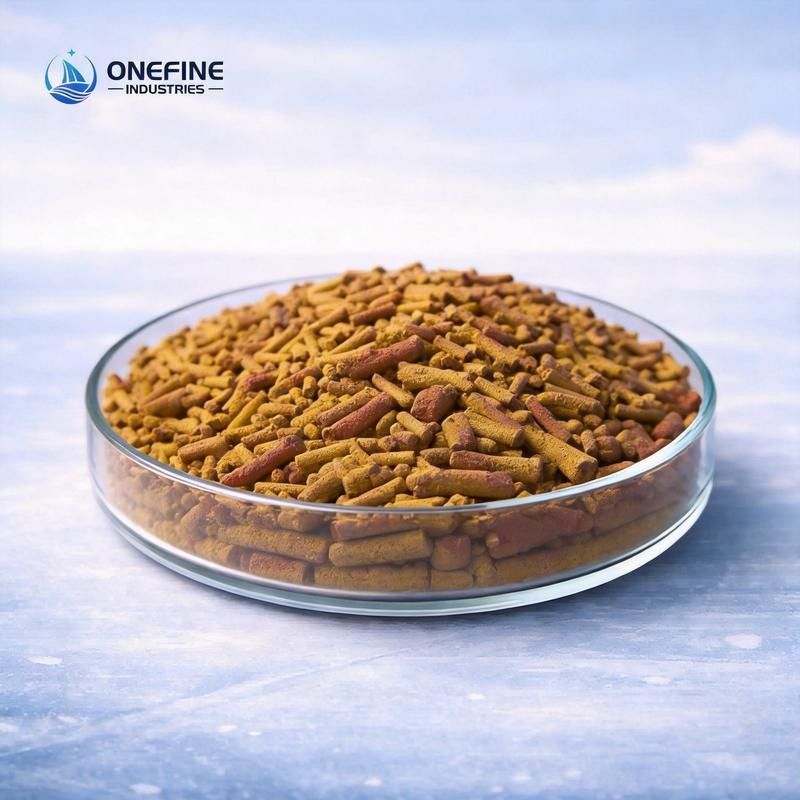
Iron Oxide Desulfurization Catalyst
High-efficiency iron oxide-based desulfurization catalyst for deep removal of H₂S from natural gas, biogas, syngas, coke oven gas, and various industrial gas streams. Features high sulfur capacity, excellent water resistance, and room-temperature operation — a cost-effective solution for both bulk and precision desulfurization applications.
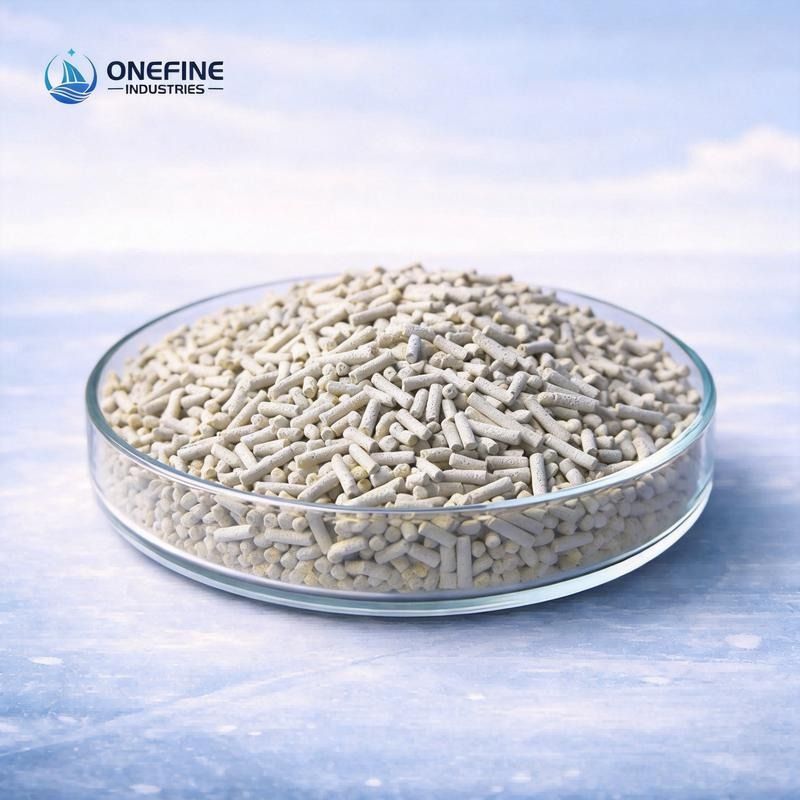
Zinc oxide desulfurization catalyst
High-purity zinc oxide (ZnO) desulfurization catalyst for fine removal of H₂S from natural gas, synthesis gas, hydrogen, and hydrocarbon feeds. Achieves outlet sulfur levels below 0.1 ppm through irreversible chemisorption. High sulfur capacity, long service life, and strong resistance to steam.
Related Reading
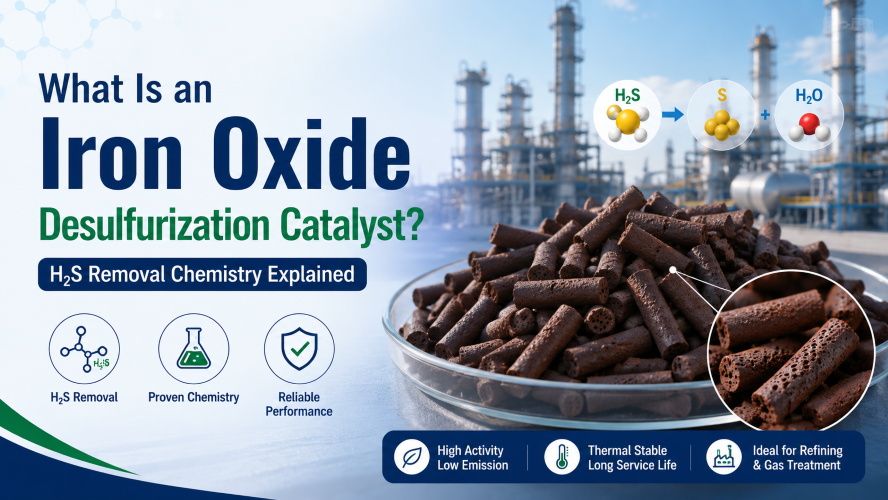
What Is an Iron Oxide Desulfurization Catalyst? H₂S Removal Chemistry Explained
Iron oxide desulfurization catalysts remove H₂S from natural gas, biogas, and syngas through a simple room-temperature chemisorption reaction. Here's how the chemistry works, where it's used, and how it compares to other desulfurization technologies.
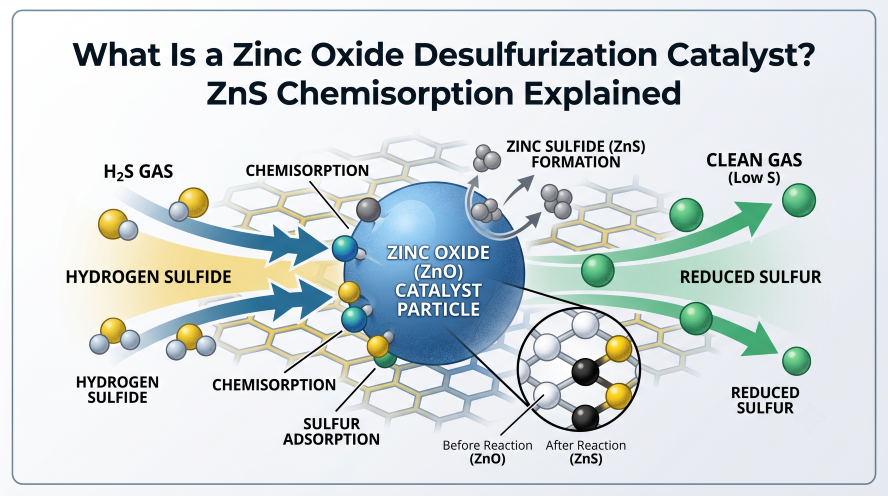
What Is a Zinc Oxide Desulfurization Catalyst? ZnS Chemisorption Explained
A plain-language guide to zinc oxide (ZnO) desulfurization catalyst: how it removes H₂S down to sub-ppm levels, where it fits in a desulfurization train, and how to decide if you need it.
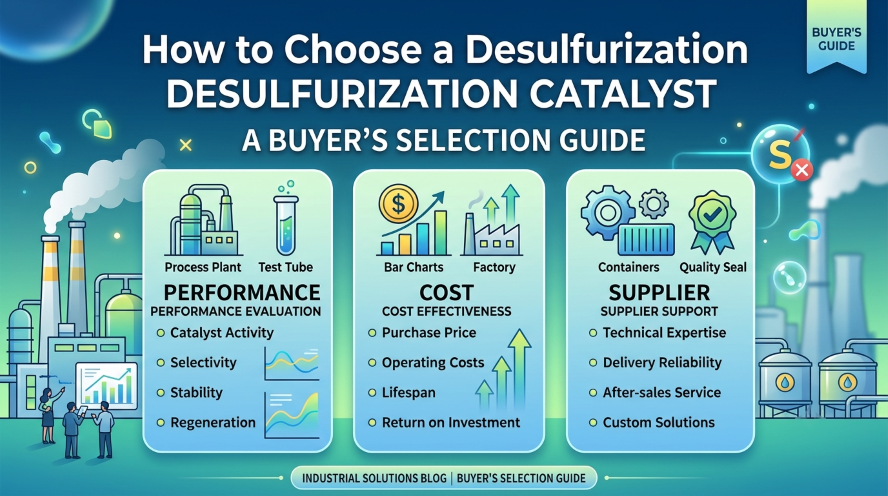
How to Choose a Desulfurization Catalyst: A Buyer's Selection Guide
With seven different desulfurization catalysts in play — each suited to a different feed condition or protection target — picking the right one comes down to a handful of questions about your process. This guide walks through the decision framework.