Ammonia Refining Desulfurization Catalyst vs Zinc Oxide Desulfurization Catalyst: Which One Fits Your Feed Gas Moisture?
Key Takeaways
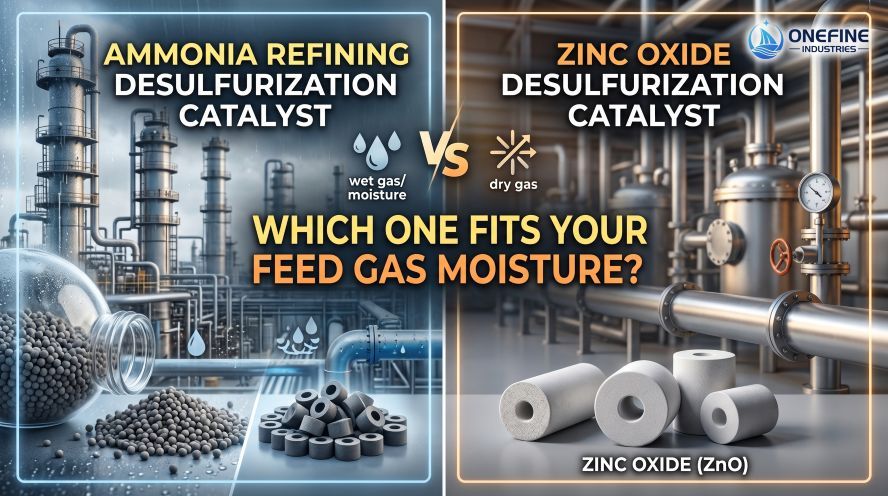
- Zinc Oxide Desulfurization Catalyst is a single-metal-oxide system that serves as the standard, cost-effective choice for dry to moderately humid feed gas.
- Ammonia Refining Desulfurization Catalyst utilizes a composite metal oxide system specifically built to reliably handle high-humidity or near-saturated streams.
- Research indicates plain zinc oxide reaction rates can decline as water vapor rises, whereas composite metal oxide promoters resist these moisture effects.
- Both products act as fine-desulfurization guard beds ahead of sensitive catalysts, but the correct choice depends entirely on the stream's moisture profile.
Both products sit in the same spot on a flow diagram — the fine desulfurization step just ahead of catalyst-sensitive equipment — and both get there by fixing sulfur onto a metal oxide bed. That similarity is exactly why buyers mix them up. The actual choice isn't about overall performance; it's about what condition your feed gas arrives in. A dry or moderately humid stream and a wet, near-saturated one don't put the same demands on a desulfurization bed, and that's the line that actually separates these two products, whether you're sizing a new guard bed or troubleshooting why an existing one underperforms.
What Each Catalyst Is Built For
Zinc Oxide Desulfurization Catalyst is a single-metal-oxide system. Its job is straightforward chemisorption: ZnO reacts with H₂S to form ZnS and water, pulling sulfur out of the gas stream and locking it into the solid bed. We've written about the mechanics of this reaction in more depth in zinc oxide catalyst basics — it's a well-established, widely used approach across ammonia, methanol, and hydrogen plants.
Ammonia Refining Desulfurization Catalyst works on the same underlying principle — fixing sulfur onto a metal oxide — but uses a composite metal oxide system rather than a single oxide. We go into what that composite structure is doing in ammonia refining catalyst basics. To be upfront: the exact formulation details (which secondary metal oxides are involved) aren't something we have independently verified published data on, so we won't guess at specifics here — if that level of detail matters for your project, that's a question for direct technical consultation.
Why Feed Gas Moisture Is the Real Selection Factor
This is the part that actually decides which product fits: feed gas moisture.
Zinc oxide desulfurization is well studied, and one documented variable in how well it performs is relative humidity in the gas stream. Published research on zinc-oxide-based desulfurization sorbents lists relative humidity alongside pore structure and surface area as a factor that influences desulfurization activity — plain ZnO isn't uniformly insensitive to it. Separately, comparative studies on zinc-oxide-type sorbents have found that while an undoped sorbent's reaction rate can decline as water vapor concentration rises under medium-temperature conditions, sorbents modified with additional metal oxide promoters were not affected by water vapor in the same tests. That's the general engineering logic behind why a composite oxide system — rather than plain ZnO — tends to be the more dependable choice for wet or near-saturated gas streams.
That lines up with how these two products are positioned on our site: for dry to moderately humid feed gas, Zinc Oxide Desulfurization Catalyst is the standard choice. For high-humidity or saturated gas streams, Ammonia Refining Desulfurization Catalyst is the better fit. It's not a strength ranking — it's a condition match.
Where They Sit in an Ammonia Plant's Purification Train
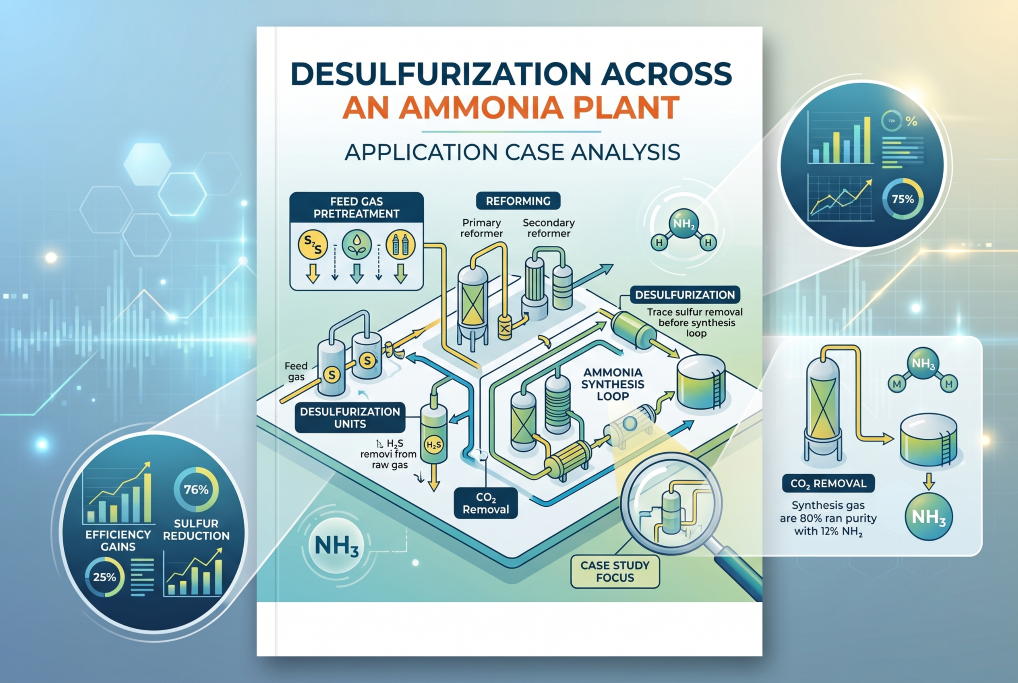
Both products typically show up in the same part of an ammonia plant — the feed gas purification train, ahead of reforming or shift catalysts that sulfur would otherwise poison. We've covered how this fits into the bigger picture, alongside the plant's other desulfurization stages, in Desulfurization Across an Ammonia Plant. The short version: which bed you load depends on the moisture profile of the specific gas stream feeding that section, not on a blanket "use this everywhere" rule.
How to Decide
A simple way to frame it:
- Feed gas is dry or moderately humid → Zinc Oxide Desulfurization Catalyst is the standard, cost-effective choice.
- Feed gas is high-humidity or near-saturated → Ammonia Refining Desulfurization Catalyst's composite oxide system is built to handle that condition more reliably.
- Not sure what your actual moisture profile looks like → that's worth confirming before committing to either bed, since loading the wrong one for a wet stream is a harder problem to catch than most other guard-bed mismatches.
If you're weighing this against the other desulfurization options on-site — iron oxide, arsenic-removal grades, ultra-precision catalysts — our desulfurization catalyst selection guide walks through the full decision tree.
Recommended Products from Sorbsieve
- Zinc Oxide Desulfurization Catalyst — single-metal-oxide ZnS chemisorption, the standard fine-desulfurization choice for dry to moderately humid feed gas (already linked above).
- Ammonia Refining Desulfurization Catalyst — composite metal oxide system built for high-humidity and saturated gas streams (already linked above).
FAQ
Does humidity actually damage a zinc oxide bed, or just slow it down? Based on the published research, the concern is reduced desulfurization activity and reaction rate under certain humidity/temperature conditions — not physical damage to the bed itself. It's a performance issue, not a failure mode.
Can I just oversize a Zinc Oxide bed instead of switching products for a wet stream? Oversizing changes residence time, not the underlying sensitivity to moisture reported in the literature. If your feed gas is consistently high-humidity or saturated, that's a composition question, not a sizing question — worth raising with our technical team before finalizing a bed design.
Do I need both catalysts in the same plant? Often, yes — different sections of an ammonia plant can have different moisture profiles at the desulfurization step. See our Desulfurization Across an Ammonia Plant application case for how that plays out across one real system.
Which one should I start with if I don't know my feed gas moisture yet? Get the moisture profile confirmed first. Guessing wrong on this one is harder to catch early than most other guard-bed mismatches, since both beds will show some initial H₂S removal before a moisture-related performance gap shows up.
Looking for Bulk Supply of Desulfurization Catalysts?
Sorbsieve is a trusted bulk supplier of zinc oxide, composite oxide, and other desulfurization catalysts for industrial buyers across the Middle East.
We provide:
- ✅ Container-level supply (20'GP / 40'GP / 40'HQ)
- ✅ Full documentation (COA / TDS / SDS / COO)
- ✅ Multiple packaging options
- ✅ Technical support for desulfurization catalyst selection and system optimization
- ✅ Fast quote response for industrial inquiries
Contact our team for bulk pricing, product samples, and technical consultation.
Related Products
Zinc oxide desulfurization catalyst
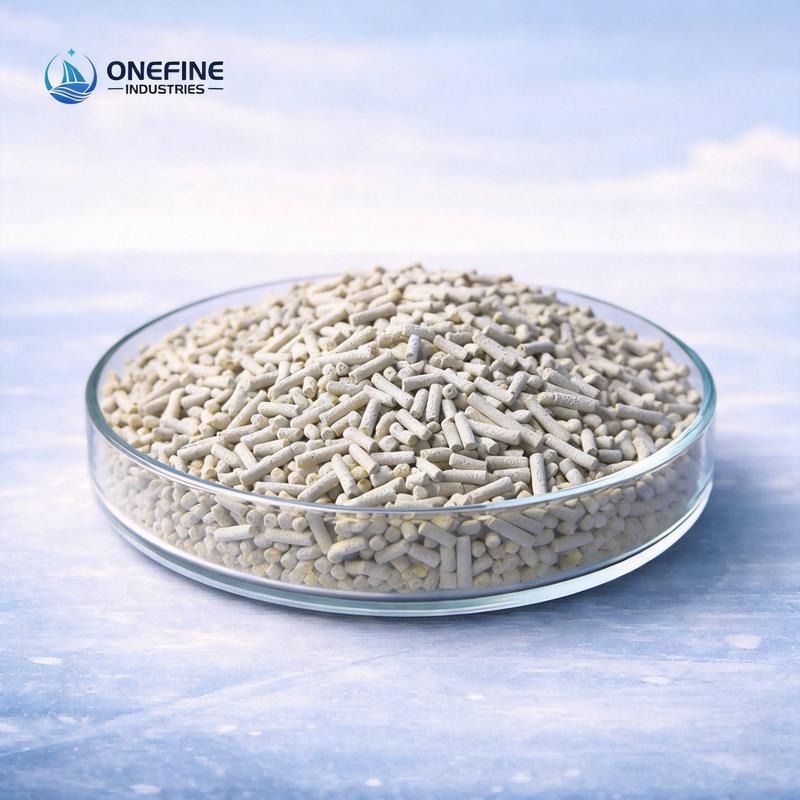
High-purity zinc oxide (ZnO) desulfurization catalyst for fine removal of H₂S from natural gas, synthesis gas, hydrogen, and hydrocarbon feeds. Achieves outlet sulfur levels below 0.1 ppm through irreversible chemisorption. High sulfur capacity, long service life, and strong resistance to steam.
Ammonia refining desulfurization catalyst
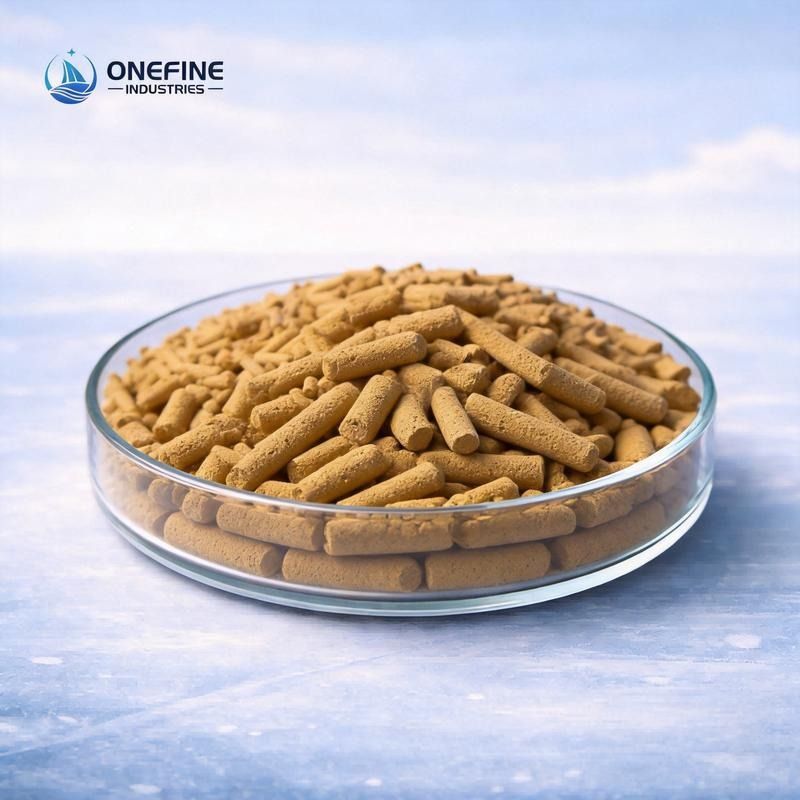
A composite metal oxide-based desulfurization catalyst with multiple promoters, designed for H₂S removal in ammonia refining units of sour water strippers at refineries. Reduces H₂S to below 0.5 mg/m³ under low-temperature conditions. Also removes HCl and organic sulfur impurities. Exceptional water resistance.
Related Reading
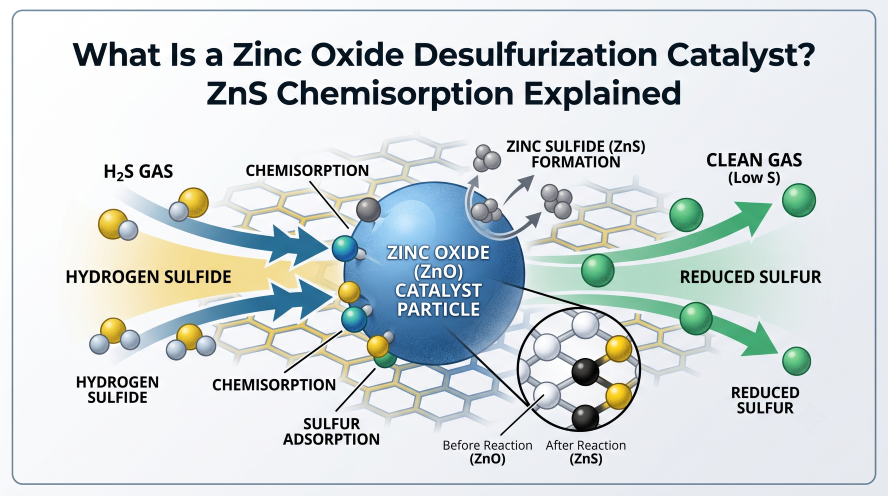
What Is a Zinc Oxide Desulfurization Catalyst? ZnS Chemisorption Explained
A plain-language guide to zinc oxide (ZnO) desulfurization catalyst: how it removes H₂S down to sub-ppm levels, where it fits in a desulfurization train, and how to decide if you need it.
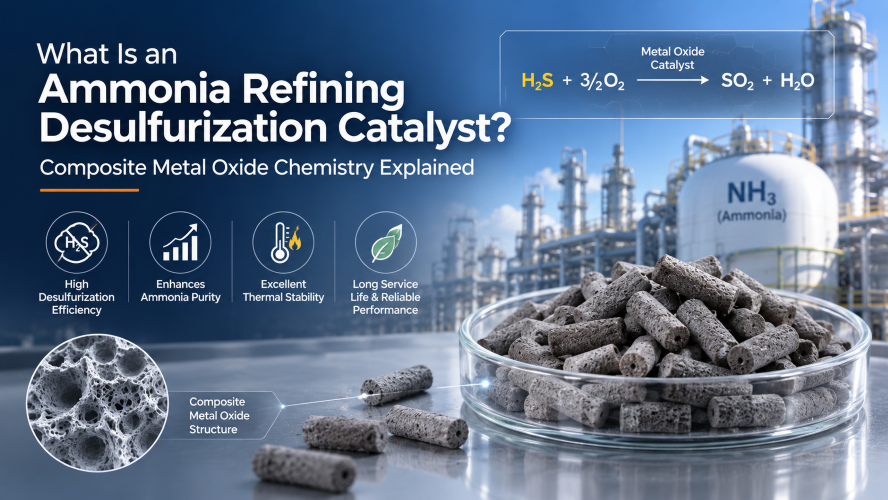
What Is an Ammonia Refining Desulfurization Catalyst? Composite Metal Oxide Chemistry Explained
Ammonia refining desulfurization catalysts use composite metal oxides to remove H₂S from wet, sour gas streams where conventional ZnO desulfurizers struggle. Learn how the chemistry works and when to choose this catalyst over standard alternatives.
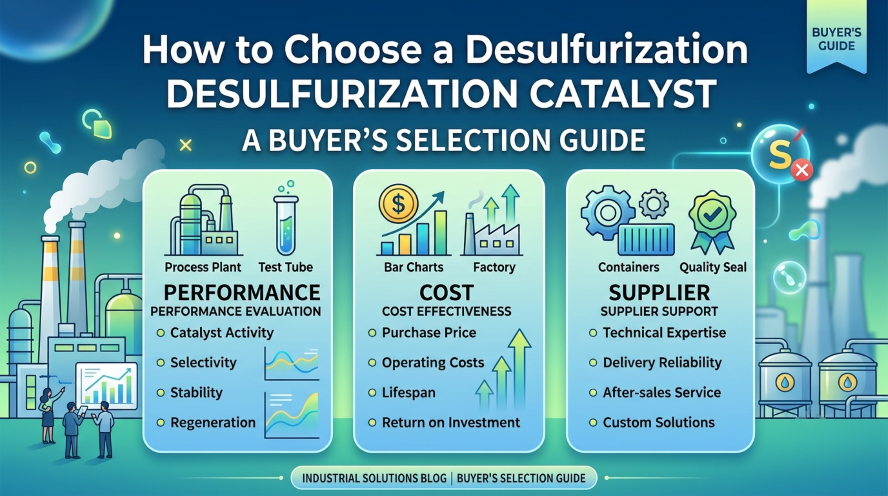
How to Choose a Desulfurization Catalyst: A Buyer's Selection Guide
With seven different desulfurization catalysts in play — each suited to a different feed condition or protection target — picking the right one comes down to a handful of questions about your process. This guide walks through the decision framework.