How Often Should You Regenerate a Co-Mo Hydrogenation Catalyst Before Replacement?
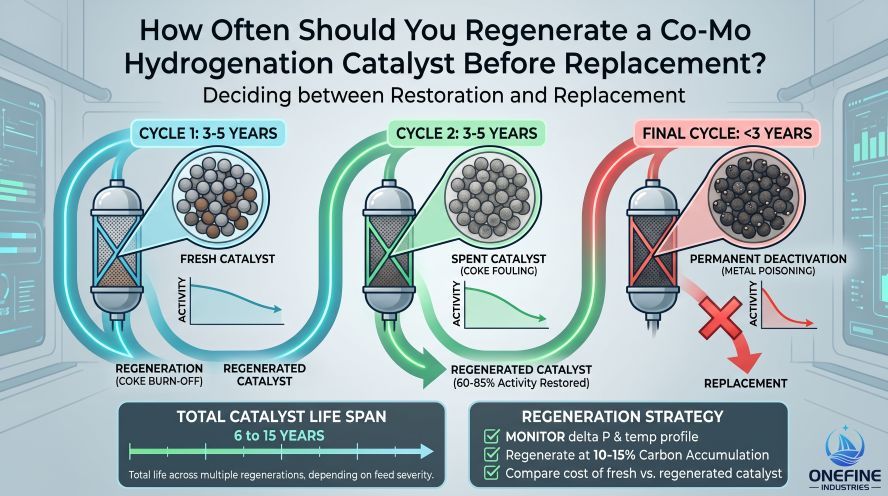
If you're running a Co-Mo hydrotreating unit, the question isn't really "when does the catalyst die." It's "how many more times can I regenerate this bed before regeneration stops being worth it." That's a different question, and it's the one buyers actually lose sleep over — because every unplanned catalyst change-out means downtime, and every unnecessary regeneration cycle burns margin you didn't need to spend. This guide walks through what actually deactivates a Co-Mo catalyst, the warning signs that a bed needs attention, what regeneration can and can't fix, and how to judge when it's time to stop regenerating and load fresh catalyst instead. If you need a primer on how the active phase itself is built first, our companion guide on what a Co-Mo Hydrogenation Catalyst is covers that ground.
What Causes a Co-Mo Catalyst to Lose Activity?
A Co-Mo Hydrogenation Catalyst deactivates through three overlapping mechanisms, and knowing which one dominates your unit changes the entire regeneration decision.
Key Takeaways
- Coke deposition is highly reversible; standard oxidative regeneration burns off carbon residues to restore hydrodesulfurization (HDS) activity.
- Metal poisoning from nickel, vanadium, and iron is permanent and cannot be regenerated, progressively narrowing the pore structure.
- Sintering of the active Co-Mo-S phase during high-temperature regeneration causes cumulative, irreversible surface area loss across successive cycles.
Coke deposition builds up as heavier feed fractions crack and leave carbon residues on the catalyst surface, blocking pore access to the active sites. This is the deactivation mode regeneration is built to reverse.
Metal poisoning happens when nickel, vanadium, and iron carried in the feedstock deposit on the catalyst and stay there. Unlike coke, these metals don't burn off — they permanently occupy active sites and progressively narrow the catalyst's pore structure. Feed quality has a direct bearing on how much of this a bed accumulates over its life.
Sintering of the active phase occurs during the high-temperature oxidative step used to burn off coke. Each regeneration cycle causes some agglomeration of the Co-Mo-S phase and a small, permanent loss of surface area — which is the fundamental reason a catalyst can't be regenerated indefinitely.
Signs Your Co-Mo Catalyst Needs Regeneration
Refiners rarely pull a catalyst on a fixed calendar. What actually triggers the decision is a pattern in operating data:
- Rising reactor temperature required to hold conversion. As active sites are lost, the unit needs a hotter bed to hit the same hydrodesulfurization (HDS) target — this is normal and expected, but the rate of temperature creep tells you how close you are to end-of-run.
- Product sulfur or nitrogen creeping toward spec limits even with temperature already raised close to the metallurgical or safety ceiling of the reactor.
- Increasing pressure drop across the bed, which often points to coke buildup or fines rather than pure activity loss, and can sometimes be addressed with a skim-and-reload rather than a full regeneration.
- A shortening interval between successive regenerations — if each regeneration is buying less run length than the last, that's the sintering effect compounding, not a feed problem.
How Regeneration Works — and What It Can't Restore
Standard regeneration is an oxidative decoking process: controlled combustion of the accumulated carbon under managed temperature and oxygen concentration, followed by re-sulfiding before the catalyst goes back into service. Done correctly, this step is well documented in the technical literature as capable of restoring a substantial share of the catalyst's original hydrodesulfurization and hydrogenation activity.
What it does not restore is metals fouling — nickel, vanadium, and iron deposits stay on the catalyst through every regeneration cycle, so a bed that's been exposed to metals-heavy feed will regenerate to a lower activity ceiling each time, even with a technically perfect burn. It also can't reverse sintering: the small, cumulative loss of active surface area from each high-temperature cycle is permanent by nature.
This is why two catalyst beds that started identical can end up on very different regeneration schedules — the deciding factor is usually feedstock quality, not the catalyst itself.
How Many Regeneration Cycles Before Replacement Makes More Sense?
There's no single number that applies across every unit, and treating this as a fixed rule is one of the more common planning mistakes we see buyers make. What the published operating data across middle-distillate hydrotreating units does show is a wide range — run lengths between individual regenerations commonly span roughly one to several years depending on unit severity and feed contamination levels, and catalysts are typically taken through a limited number of regeneration cycles, often somewhere in the low single digits, before the economics favor a full reload over another regeneration.
The practical way to make this call is to track activity recovery after each regeneration relative to the previous cycle. If a regeneration is still returning the bed to a run length close to its prior cycle, it's usually still worth doing. Once each successive regeneration buys a noticeably shorter run — or requires a start-of-run temperature that's uncomfortably close to your reactor's ceiling — that's the signal to plan a fresh catalyst change-out rather than another regeneration pass.
Co-Mo vs. Ni-Mo vs. Ni-Mo-W — Does Catalyst Choice Affect Regeneration Life?
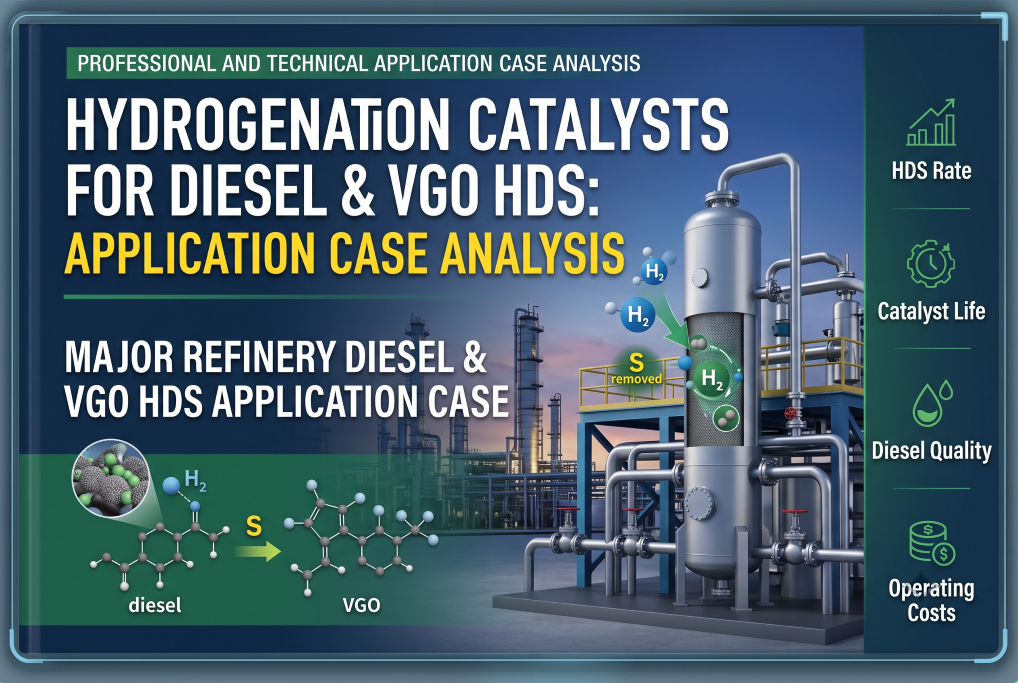
Buyers comparing hydrotreating catalysts often ask whether switching active-metal systems changes how often regeneration is needed. The short answer is that catalyst selection affects starting activity and selectivity more than it changes the mechanism of deactivation — coke, metals, and sintering apply across the Co-Mo, Ni-Mo, and Ni-Mo-W families alike. Where it does matter is feed-specific: units processing feeds with a heavier nitrogen or aromatics load sometimes see better cycle life from a Ni-Mo-W formulation, while straightforward HDS duty is often well served by standard Co-Mo. Our Hydrogenation Catalysts for Diesel & VGO HDS case walks through how this trio actually gets selected and run in a live HDS system. If you're deciding between the three for a new loading rather than troubleshooting an existing bed, that's a separate selection question worth working through with your technical contact before ordering.
One related consequence worth flagging: as a Co-Mo bed's activity declines toward end-of-run, organic sulfur slip downstream can increase slightly before the catalyst is changed out. Units running a polishing step such as a Zinc Oxide Desulfurization Catalyst downstream should expect that guard bed to absorb a bit more of the load as the upstream catalyst approaches replacement.
Recommended Products from Sorbsieve
- Co-Mo Hydrogenation Catalyst — standard cobalt-molybdenum HDS/hydrogenation catalyst
- Ni-Mo Hydrogenation Catalyst — alternative active-metal system for nitrogen-heavier feeds
- Ni-Mo-W Hydrogenation Catalyst — extended active-metal system for higher-severity applications
FAQ
Q: Can a Co-Mo catalyst be regenerated more than once?
A: Yes, most beds go through more than one regeneration cycle over their service life. Each cycle recovers activity lost to coking, but the ceiling on how much activity comes back tends to drop slightly with each pass because of accumulated metals fouling and sintering.
Q: What's the difference between in-situ and ex-situ regeneration?
A: In-situ regeneration burns off coke inside the reactor without unloading the catalyst, which is faster but gives less control over temperature uniformity across the bed. Ex-situ regeneration removes the catalyst to a specialized facility for a more controlled, uniform burn — generally the better option when maximizing activity recovery matters more than turnaround speed.
Q: Does feedstock quality affect how often I need to regenerate?
A: Significantly. Feeds carrying higher levels of nickel, vanadium, or asphaltenes accelerate metals fouling and coke formation, shortening the interval between regenerations regardless of how well the catalyst itself performs.
Q: How do I know if I should replace instead of regenerate?
A: Watch the trend across cycles rather than any single data point. If successive regenerations are returning shorter run lengths, or the start-of-run temperature needed to hit spec is creeping close to your reactor's design ceiling, that's a sign the catalyst has reached the point where fresh loading is the more economical choice.
Need a Custom Solution?
For bulk pricing and grade recommendation, please send your feedstock composition and reactor conditions to us. Our technical team will get back to you within 24 hours with a tailored solution.
[Contact Us →] | [Get a Quote →]
Looking for Bulk Supply of Co-Mo Hydrogenation Catalyst?
Sorbsieve is a trusted bulk supplier of Co-Mo Hydrogenation Catalyst and complete industrial adsorbents, serving industrial buyers across the Middle East.
We provide:
- ✅ Container-level supply (20'GP / 40'GP / 40'HQ)
- ✅ Full documentation (COA / TDS / SDS / COO)
- ✅ Multiple packaging options
- ✅ Technical support for Co-Mo Hydrogenation Catalyst selection and system optimization
- ✅ Fast quote response for industrial inquiries
Contact our team for bulk pricing, product samples, and technical consultation.
Related Products
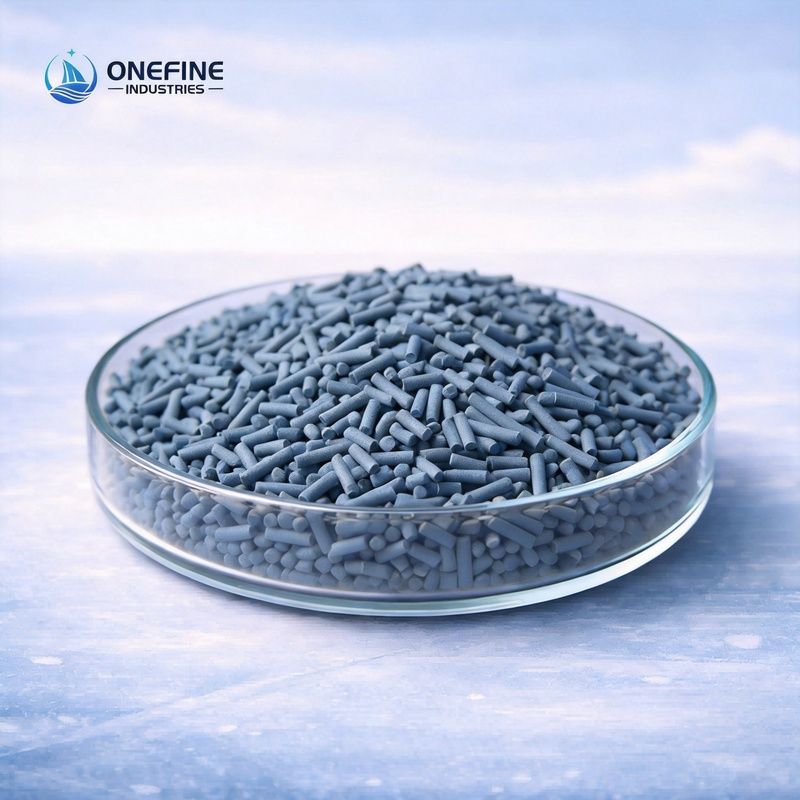
Co-Mo Hydrogenation Catalyst
A high-performance cobalt-molybdenum (Co-Mo) hydrogenation catalyst designed for hydrodesulfurization (HDS) and hydrotreating of petroleum fractions and synthesis gas. Features low light-off temperature, high mechanical strength, and excellent stability. Widely used in ammonia plant feed purification, naphtha pretreatment, refinery reforming feed desulfurization, and natural gas sweetening. Available with MOQ from 1 ton, customizable appearance, particle size, and active component loading.
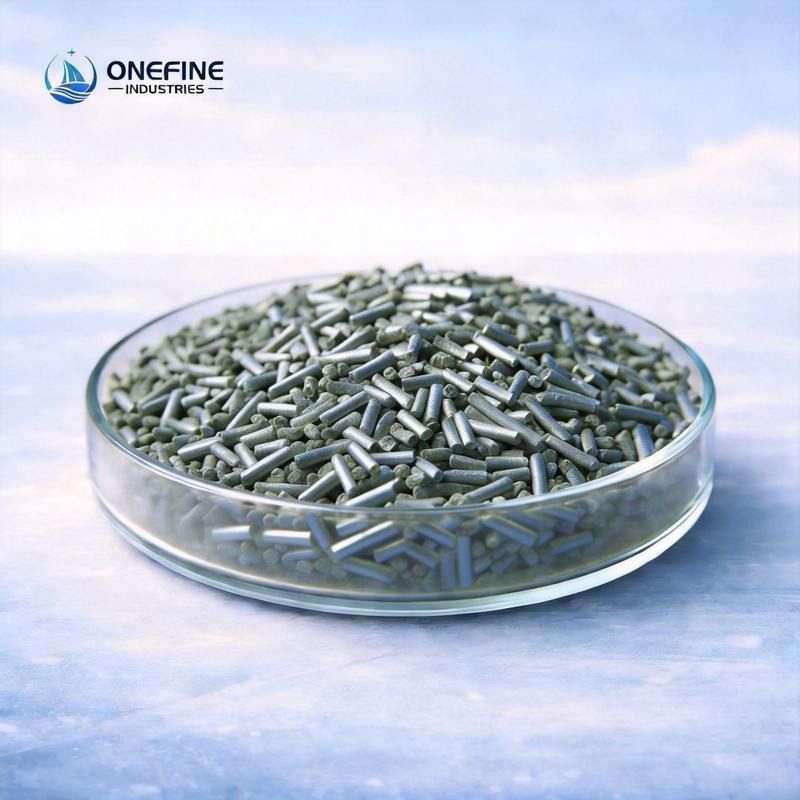
Ni-Mo Hydrogenation Catalyst
A high-performance nickel-molybdenum (Ni-Mo) hydrogenation catalyst designed for hydrodesulfurization (HDS) and hydrodenitrogenation (HDN) of medium to heavy petroleum fractions. Features superior hydrogenation activity, excellent stability, and long service life. Widely used in diesel hydrotreating, gas oil upgrading, and refractory sulfur removal. MOQ from 1 ton. Customizable appearance, particle size, and active component loading.
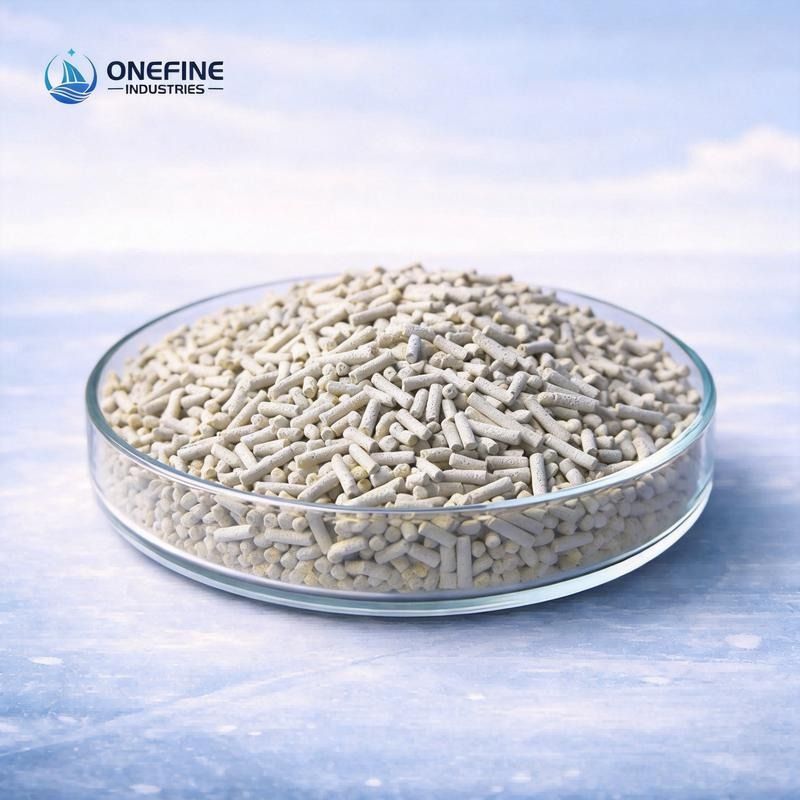
Zinc oxide desulfurization catalyst
High-purity zinc oxide (ZnO) desulfurization catalyst for fine removal of H₂S from natural gas, synthesis gas, hydrogen, and hydrocarbon feeds. Achieves outlet sulfur levels below 0.1 ppm through irreversible chemisorption. High sulfur capacity, long service life, and strong resistance to steam.
Related Reading
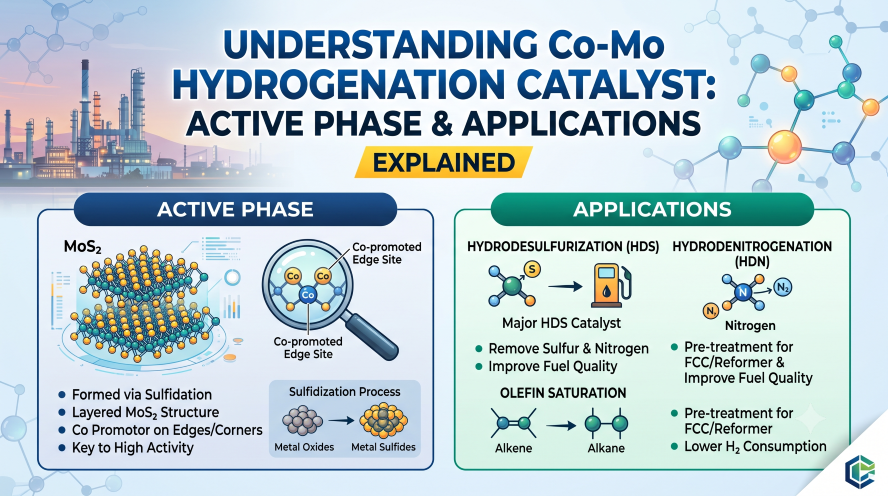
What is a Co-Mo Hydrogenation Catalyst? Active Phase & Applications Explained
A plain-language guide to how cobalt-molybdenum (Co-Mo) hydrogenation catalysts work, why the Co-Mo-S active phase matters, and where this catalyst is used across refining and gas processing.
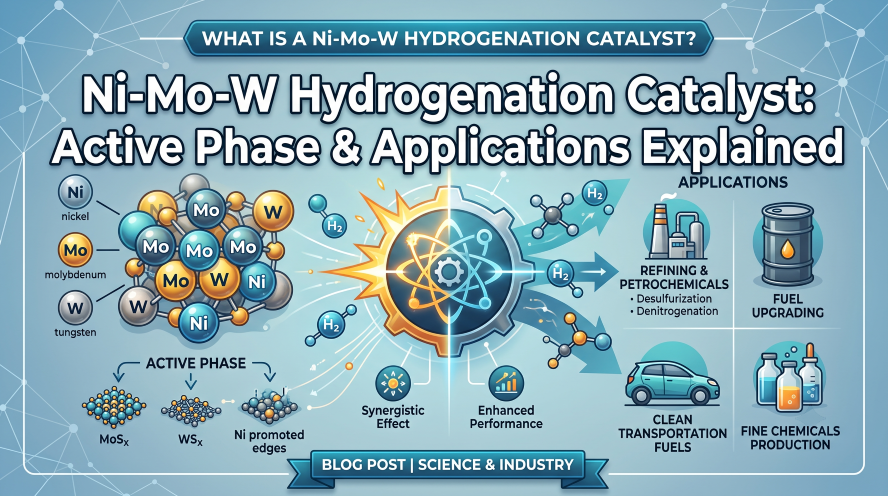
What is a Ni-Mo-W Hydrogenation Catalyst? Active Phase & Applications Explained
A guide to Ni-Mo-W trimetallic hydrogenation catalysts — how the active phase works, when to choose it over Ni-Mo or Co-Mo, and typical refinery applications.
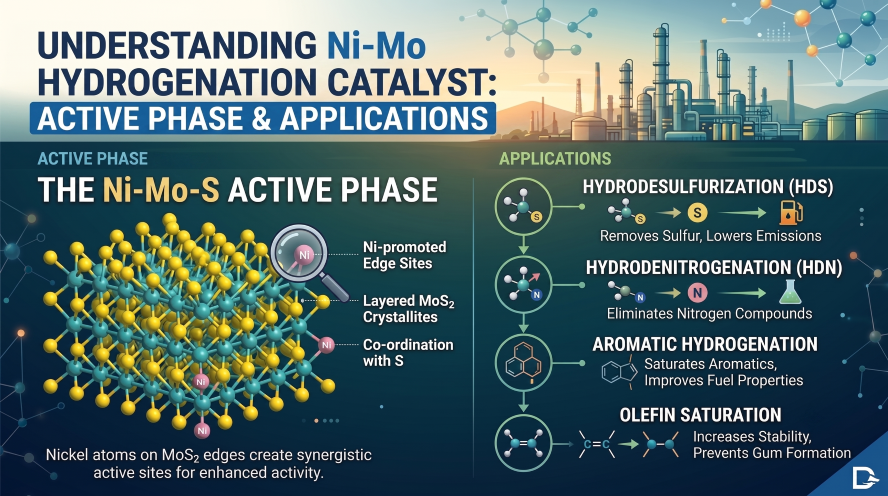
What is a Ni-Mo Hydrogenation Catalyst? Active Phase & Applications Explained
A plain-language guide to Ni-Mo hydrogenation catalysts — how the Ni-Mo-S active phase works, when to choose Ni-Mo over Co-Mo, and where it's used in refinery hydrotreating.