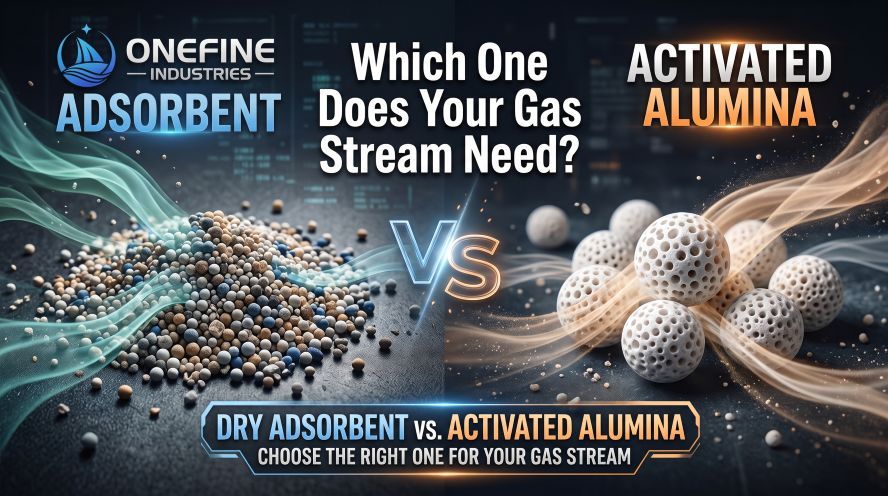
Dry Adsorbent vs Activated Alumina: Which One Does Your Gas Stream Need?
Key Takeaways
- Activated Alumina works purely through physical adsorption, making it thermally reactivatable and ideal for sweet, moisture-only streams.
- Dry Adsorbent combines physical moisture adsorption with chemical H₂S removal (chemisorption) in a single dual-function bed for sour, wet gas streams.
- While Activated Alumina undergoes repeated thermal regeneration cycles, the H₂S capacity of Dry Adsorbent is consumed during operation and must be managed on a replacement basis upon breakthrough.
Not every "drying" problem is just a moisture problem. If your gas stream carries H₂S alongside water vapor, a standard desiccant will dry the gas but let the sulfur pass straight through — leaving downstream equipment, catalysts, or pipeline specs exposed. Sorbsieve supplies both Dry Adsorbent and Activated Alumina as bulk industrial adsorbents, and the two solve different problems. This guide breaks down what each one actually removes, where each fits, and when you need both.
What Each Product Actually Removes
Activated Alumina is a physical adsorbent. Its high-surface-area, porous Al₂O₃ structure pulls water vapor out of a gas or liquid stream purely through physical adsorption — no chemical reaction involved. That same pore structure also picks up some trace contaminants (certain fluorides and heavy metals), but it is positioned as a desiccant and guard-bed adsorbent, not as a dedicated H₂S removal product.
Dry Adsorbent starts from a related base — Sorbsieve's own product data describes it as a modified activated-alumina-based adsorbent — but it is loaded with an active component that gives it a specific chemical affinity for H₂S, capturing it through chemisorption and holding it as a stable surface species within the bed, as covered in our dry adsorbent basics guide. That combination is the whole point of the product — it lets you handle a sour, wet gas stream in a single bed, instead of stacking a separate desiccant and a separate H₂S scavenger.
When Activated Alumina Is the Right Choice
As covered in our activated alumina basics guide, it fits applications where moisture is the only real contaminant of concern:
- Compressed air drying — pulling dew point down ahead of instrumentation or pneumatic equipment
- Liquid and gas dehydration — where the feed is sweet (no significant H₂S) and the spec is simply a dew point target
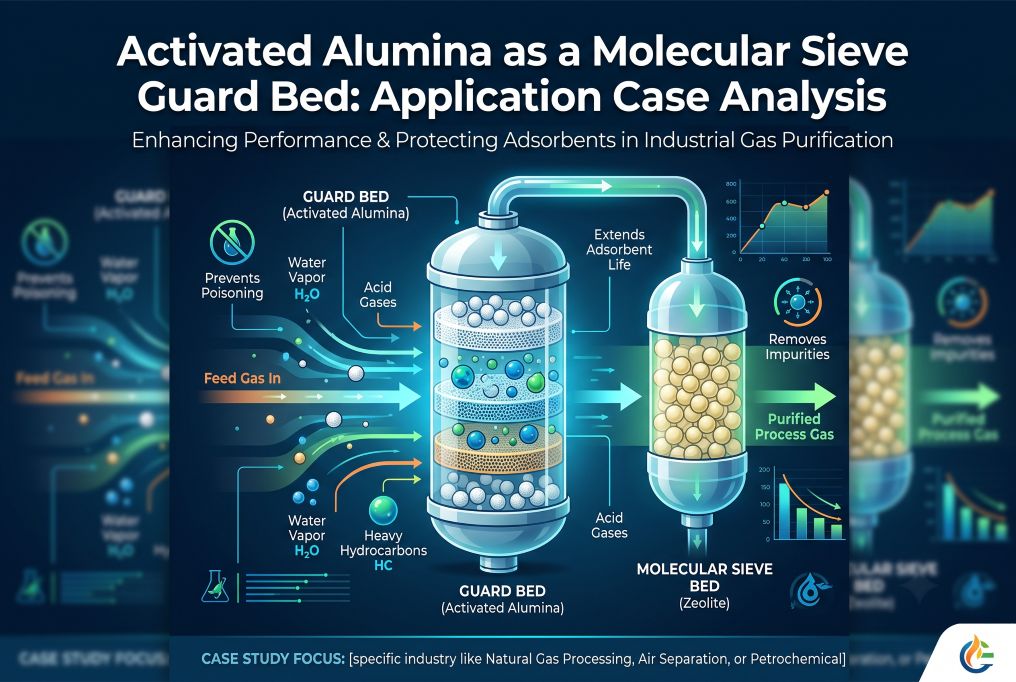
- Guard-bed protection — placed ahead of a molecular sieve bed to strip bulk moisture and extend the sieve's service life
Because it works through physical adsorption, Activated Alumina is thermally reactivatable and goes through repeated adsorption/regeneration cycles over its service life rather than being a one-time-use product.
When Dry Adsorbent Is the Right Choice
Dry Adsorbent is built for sour, wet gas streams where H₂S removal and dehydration both need to happen in the same step. Sorbsieve's product data lists applications spanning olefin feedstock purification, natural gas and refinery gas sweetening and drying, syngas purification, and landfill gas / biogas pretreatment — anywhere H₂S and water vapor show up together. Using a single dual-function bed instead of a separate desiccant plus a separate H₂S scavenger simplifies the vessel count and skid footprint.
Because H₂S capture happens through a chemical reaction rather than simple physical adsorption, that portion of the bed's capacity is consumed as it works. Simple thermal cycling can refresh the physically-adsorbed moisture side, but restoring chemisorbed H₂S capacity generally takes more than heat alone — which is why chemisorption-based H₂S media are typically managed on a replacement basis once breakthrough shows up, rather than being regenerated the way a straight desiccant is. Replacement timing, not thermal regeneration, is the practical maintenance model for the H₂S side of Dry Adsorbent.
Key Differences at a Glance
- Primary mechanism: Activated Alumina — physical adsorption only. Dry Adsorbent — physical adsorption (moisture) + chemisorption (H₂S)
- H₂S removal: Activated Alumina — not its job. Dry Adsorbent — yes, built-in
- Typical gas condition: Activated Alumina — sweet, moisture-only streams. Dry Adsorbent — sour, wet streams
- Service life model: Activated Alumina — thermally reactivated, multi-cycle use. Dry Adsorbent — H₂S capacity is consumed by the chemical reaction and managed on a replacement basis once breakthrough occurs
- Common role: Activated Alumina — primary desiccant or guard bed. Dry Adsorbent — combined desiccant + H₂S scavenger bed
Can You Use Both in the Same Train?
Yes — the two can work in the same plant, just not for the same job in the same vessel. One possible layout places Dry Adsorbent upstream to strip H₂S and bulk moisture from a sour feed, with Activated Alumina used elsewhere in the system (for example, ahead of a molecular sieve polishing bed) purely for additional moisture control on a stream that no longer carries significant H₂S. Which combination makes sense depends on your feed composition and downstream spec — our technical team can help map that out for your specific gas analysis.
Recommended Products from Sorbsieve
- Dry Adsorbent — dual-function H₂S and moisture removal (already linked above)
- Activated Alumina — physical desiccant and guard-bed adsorbent (already linked above)
FAQ
Can Activated Alumina remove H₂S from a gas stream? Not as its designed function. Activated Alumina is a desiccant and guard-bed adsorbent that works through physical adsorption, and it isn't specified for H₂S removal. If your stream contains H₂S that needs to be removed, you need a product built for chemisorption, such as Dry Adsorbent.
Is Dry Adsorbent regenerable the way Activated Alumina is? Not for its H₂S-removal function. Activated Alumina's moisture removal is physical adsorption, so it can be thermally reactivated and reused across multiple cycles. Dry Adsorbent's H₂S capture relies on a chemical reaction, and that portion of its capacity is consumed as it works — restoring it generally takes more than simple heat, which is why chemisorption-based H₂S media are typically managed on a replacement basis once breakthrough starts, rather than regenerated the way a desiccant is.
My gas stream is sweet (no H₂S) — do I still need Dry Adsorbent? No. If H₂S isn't present, Activated Alumina alone handles the moisture removal, and there's no need to pay for the added H₂S-capture function.
Can I order a small quantity to trial either product before committing to a bulk order? Yes. Sorbsieve's MOQ starts at 1 ton, which makes it practical to validate performance on your actual gas stream before scaling up to container-level supply.
Looking for Bulk Supply of Dry Adsorbent or Activated Alumina?
Sorbsieve is a trusted bulk supplier of Dry Adsorbent, Activated Alumina, and complete industrial adsorbents, serving industrial buyers across the Middle East.
We provide:
- ✅ Container-level supply (20'GP / 40'GP / 40'HQ)
- ✅ Full documentation (COA / TDS / SDS / COO)
- ✅ Multiple packaging options
- ✅ Technical support for adsorbent selection based on your gas composition
- ✅ Fast quote response for industrial inquiries
Contact our team for bulk pricing, product samples, and technical consultation.
Related Products
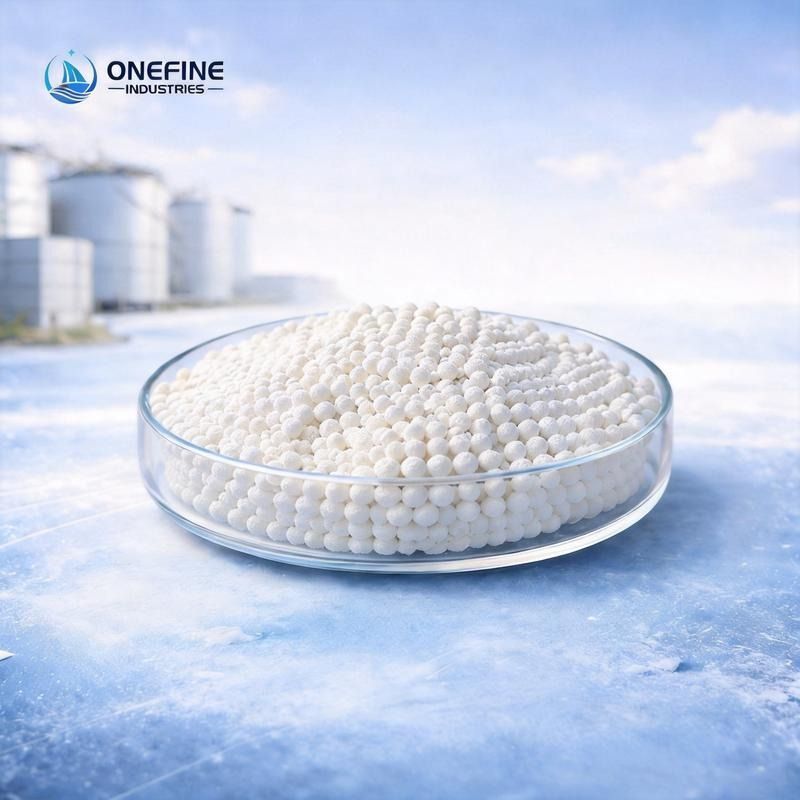
Dry adsorbent
Modified activated alumina-based adsorbent manufactured by ball-rolling process, loaded with high-content active components for simultaneous removal of H₂S and water from gas-phase and liquid-phase hydrocarbon streams. Features large pore diameter, high surface area, fast reaction kinetics, and excellent regenerability — the ideal adsorbent for impurity removal in olefin-containing feeds.
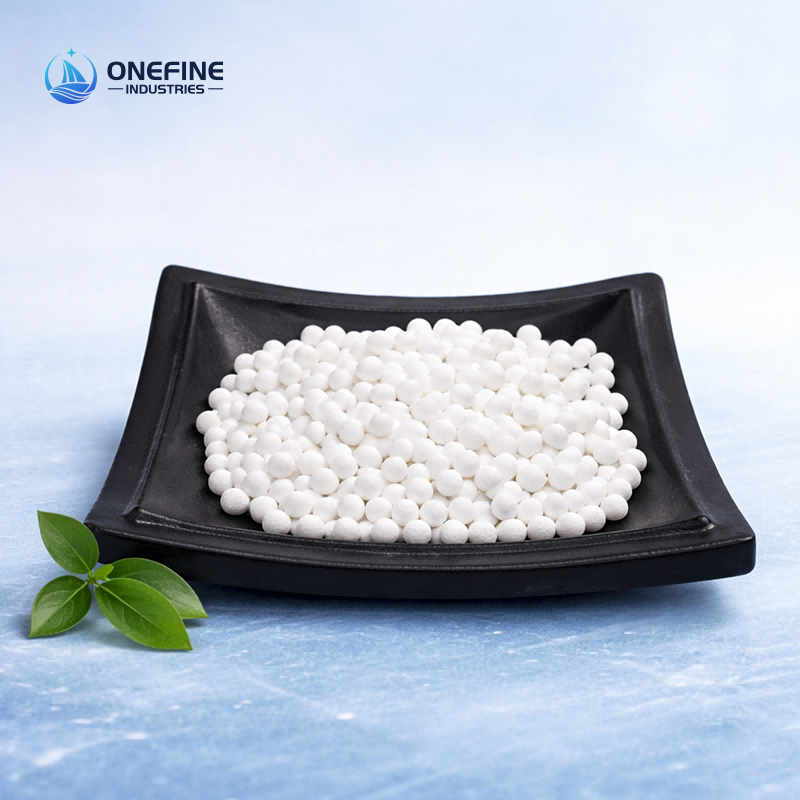
Activated Alumina for Purification
High-performance activated alumina (γ-Al₂O₃) adsorbent and desiccant for industrial gas/liquid drying, water defluoridation, and purification. White spherical beads with high surface area (≥300 m²/g), excellent crush strength, and full thermal regenerability. Available in multiple particle sizes for compressed air dryers, water treatment, and catalyst carrier applications.
Related Reading
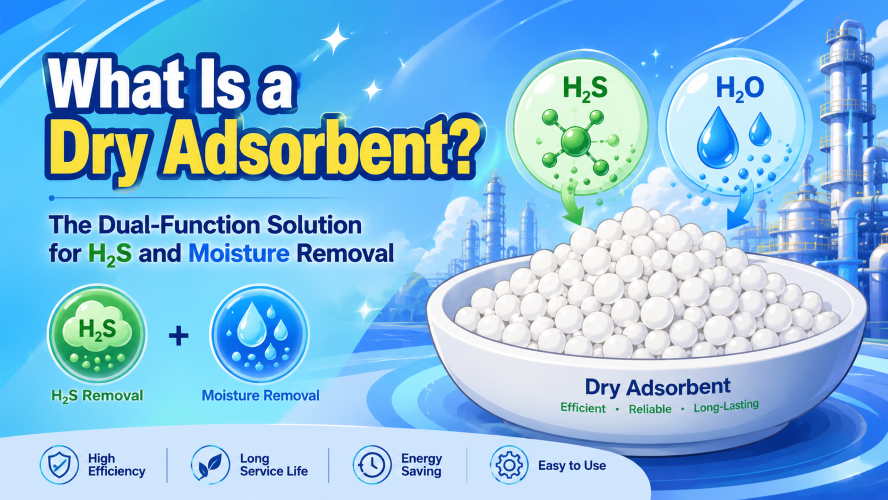
What Is a Dry Adsorbent? The Dual-Function Solution for H₂S and Moisture Removal
A dry adsorbent removes H₂S and moisture from hydrocarbon streams in a single, regenerable bed — ideal for olefin-containing feeds.
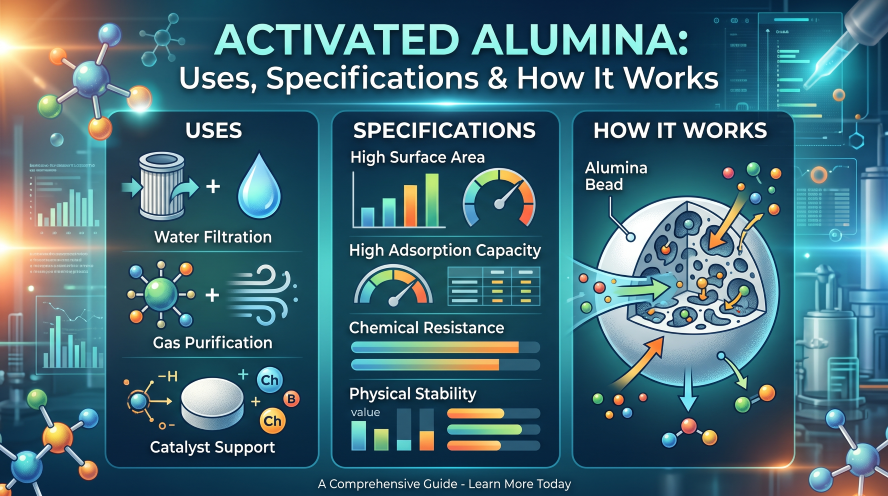
What is Activated Alumina? Uses, Specifications & How It Works
A practical guide to activated alumina (γ-Al₂O₃)—how it adsorbs moisture and fluoride, how it compares to silica gel and molecular sieve, and how to choose the right grade for your application.
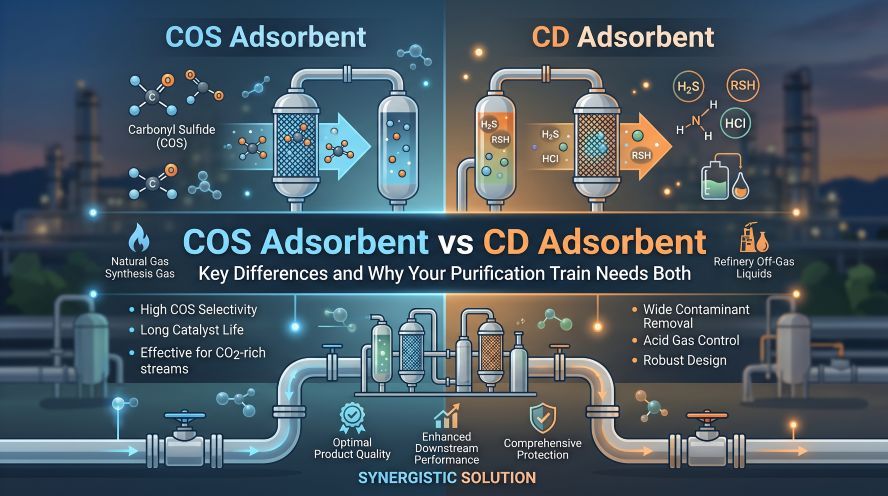
COS Adsorbent vs CD Adsorbent: Key Differences and Why Your Purification Train Needs Both
COS Adsorbent and CD Adsorbent are often mentioned together but aren't interchangeable — they're sequential stages in the same purification train, not competing alternatives. This guide explains what each product removes, why the sequence matters, and why "which one should I buy" is the wrong question to ask.