Ni-Mo-W vs Ni-Mo vs Co-Mo Hydrogenation Catalyst: How to Choose the Right One
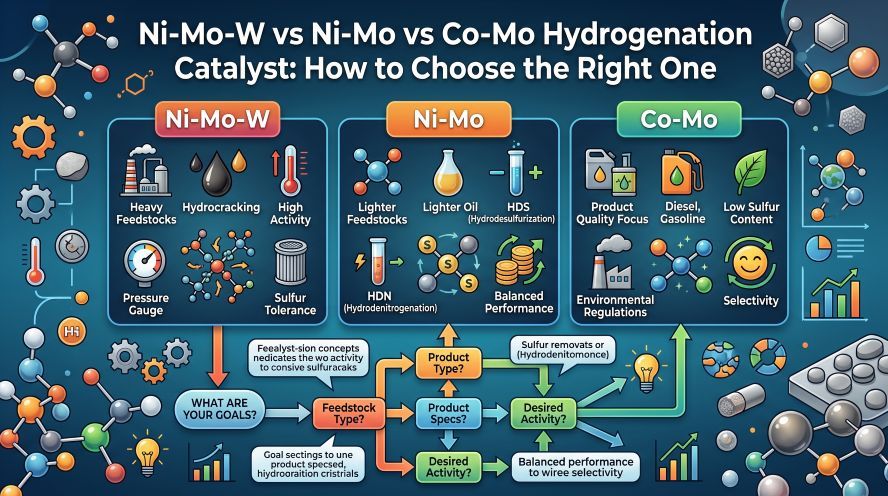
Refineries running hydrotreating units face a recurring question: which active metal combination actually fits the feedstock and product target — cobalt-molybdenum, nickel-molybdenum, or the tri-metallic nickel-molybdenum-tungsten system? These three catalyst families share the same alumina-supported sulfide platform, but their metal chemistry pushes performance in different directions. Picking the wrong one doesn't cause immediate failure — it shows up later as higher hydrogen consumption, shorter cycle length, or off-spec nitrogen and sulfur numbers. This guide breaks the decision down by feedstock type, target reaction, and operating constraint, so the choice is based on the actual unit conditions rather than habit or supplier default.
Key Takeaways
- Co-Mo Catalysts: Favor hydrodesulfurization (HDS) with lower hydrogen consumption, making them the standard for low-to-medium pressure units.
- Ni-Mo Catalysts: Deliver stronger hydrodenitrogenation (HDN) and aromatic saturation, providing reliable performance when hydrogen is constrained.
- Ni-Mo-W Catalysts: Utilize tungsten to boost HDS selectivity for refractory, sterically hindered sulfur species in high-severity ULSD applications.
Why the Active Metal Combination Changes Catalyst Behavior
All three catalyst types rely on the same molybdenum sulfide backbone, but the promoter metal — cobalt, nickel, or a nickel-tungsten combination — changes which reaction pathway gets favored. Cobalt promotion pushes the catalyst toward direct sulfur extraction, which is efficient but leaves nitrogen compounds relatively untouched. Nickel promotion instead strengthens the hydrogenation function, which is what nitrogen removal and aromatic saturation actually require, since nitrogen compounds typically need to be hydrogenated before the C-N bond can break. Adding tungsten to a NiMo base introduces a third metal that sharpens HDS selectivity specifically for the sterically hindered sulfur compounds that resist conventional catalysts — at the cost of a more complex and typically pricier formulation.
This is why the three catalysts aren't a simple "better vs worse" ranking. Each is structurally optimized for a different reaction, and the practical selection question is which reaction is the actual constraint in your unit.
Co-Mo Hydrogenation Catalyst: Best Fit for Sulfur-Limited, Lower-Pressure Units
Co-Mo Hydrogenation Catalyst delivers higher hydrodesulfurization selectivity for a given hydrogen consumption compared to nickel-based systems, which is exactly why it remains the workhorse in low-to-medium pressure diesel hydrotreaters. If the unit's main job is bringing sulfur down to spec and nitrogen content in the feed is low to moderate, Co-Mo typically gets there with less strain on the hydrogen balance.
The trade-off is sensitivity to feed composition. Co-Mo catalysts are more strongly inhibited by carbon monoxide partial pressure than nickel-based systems, and their HDN activity is comparatively limited — so as nitrogen content in the feed rises, Co-Mo's efficiency advantage narrows. It's the right default when sulfur removal is the primary target and the feedstock is relatively clean of nitrogen.
Ni-Mo Hydrogenation Catalyst: Better for Nitrogen-Heavy or Hydrogen-Constrained Feeds
Ni-Mo Hydrogenation Catalyst trades some of that raw HDS selectivity for meaningfully stronger hydrodenitrogenation and aromatic saturation performance. Nickel's hydrogenation strength makes it the more reliable choice for kerosene and lighter distillate cuts, and for any feedstock carrying more nitrogen or aromatics than a typical straight-run diesel.
Ni-Mo also tends to be the safer choice when a unit's hydrogen availability is limited, since it's less inhibited by carbon monoxide partial pressure than Co-Mo — some operators run a stacked Ni-Mo/Co-Mo bed specifically to manage this constraint. As feed gets heavier and richer in nitrogen, or as hydrogen becomes the limiting resource, Ni-Mo generally outperforms Co-Mo even though its per-pass HDS rate is lower.
Ni-Mo-W Hydrogenation Catalyst: The High-Severity, Refractory-Sulfur Option
Ni-Mo-W Hydrogenation Catalyst builds on the Ni-Mo platform by adding tungsten, which selectively boosts HDS reaction rates — particularly for refractory sulfur species — relative to HDN reaction rates. In practice, this makes tri-metallic Ni-Mo-W systems the option refineries reach for when the target is ultra-low sulfur diesel from harder-to-treat feedstocks, where conventional NiMo or CoMo alone would need much harsher operating conditions to hit the same sulfur spec.
The catalyst chemistry is more complex to manufacture, and that's reflected in cost. For a straightforward, moderate-severity diesel hydrotreater with manageable nitrogen content, the incremental performance from tungsten addition usually doesn't justify the price gap over standard NiMo or CoMo. Ni-Mo-W earns its place specifically in high-severity, refractory-sulfur scenarios — not as a general upgrade.
How to Match the Catalyst to Your Unit
Read our detailed technical breakdown at What Is a Ni-Mo-W Hydrogenation Catalyst?for the full active-phase mechanism. As a starting framework:
- Feed is low in nitrogen, sulfur removal is the main target, pressure is low-to-medium → Co-Mo is typically the more efficient choice
- Feed carries higher nitrogen or aromatics, or hydrogen supply is tight → Ni-Mo generally holds up better
- Feed contains refractory sulfur compounds and the target is ultra-low sulfur diesel at high severity → Ni-Mo-W's tungsten promotion earns its cost premium
- Uncertain or mixed feed composition → a stacked bed combining Ni-Mo (top) and Co-Mo (bottom) is a common refinery approach to hedge against both sulfur and nitrogen swings
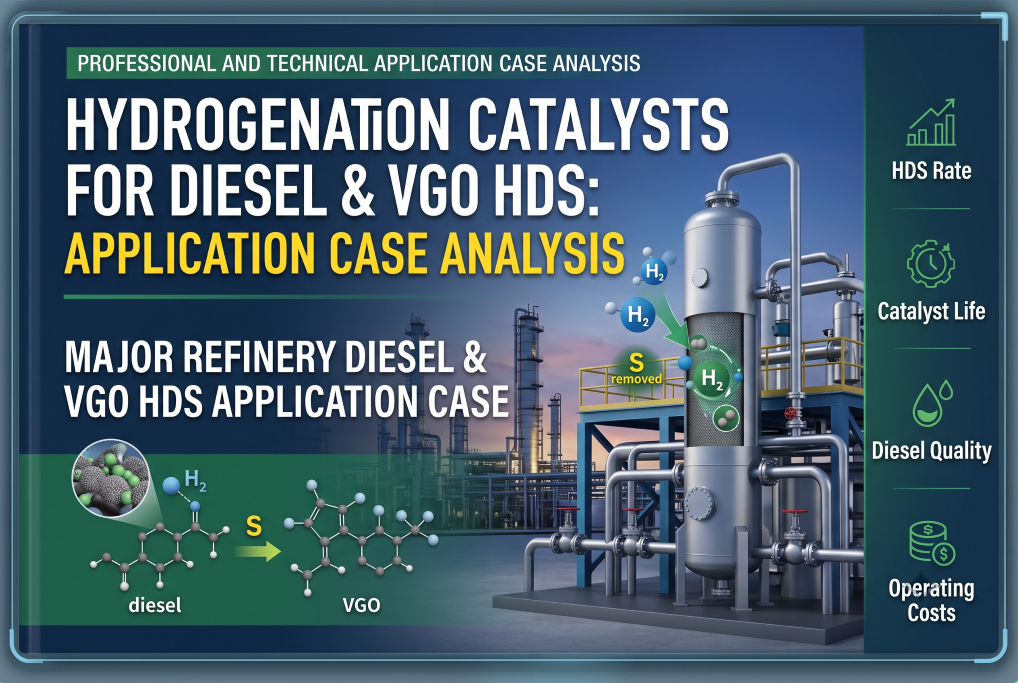
None of these are absolute rules — actual feed assay, unit pressure, and target product spec should always be confirmed with your process engineer before finalizing catalyst selection. Our Hydrogenation Catalysts for Diesel & VGO HDS application case walks through how these three catalysts were actually deployed across a real diesel and VGO hydrotreating train.
Recommended Products from Sorbsieve
- Co-Mo Hydrogenation Catalyst — Optimized for hydrodesulfurization in low-to-medium pressure diesel hydrotreating
- Ni-Mo Hydrogenation Catalyst — Stronger hydrodenitrogenation and aromatic saturation, better hydrogen-constrained performance
- Ni-Mo-W Hydrogenation Catalyst — Tri-metallic system for high-severity, refractory-sulfur ultra-low sulfur diesel applications
FAQ
Q: Can Co-Mo and Ni-Mo catalysts be loaded in the same reactor?
A: Yes — stacking Ni-Mo on top of Co-Mo is a recognized approach for feeds with variable nitrogen content or limited hydrogen availability, giving the unit some flexibility across both sulfur and nitrogen removal duties.
Q: Is Ni-Mo-W always the better-performing catalyst since it has more active metals?
A: No. More metals doesn't mean universally better — the tungsten addition specifically sharpens HDS selectivity for refractory sulfur compounds. For feeds without significant refractory sulfur content, standard Ni-Mo or Co-Mo often performs comparably at lower cost.
Q: Does switching catalyst type require reactor modifications?
A: Generally no for a straight swap within the same reactor design, but operating conditions (temperature, pressure, LHSV) typically need re-optimization for the new catalyst's activity profile. Confirm with your technical team before switching.
Q: How do I know which catalyst my current feedstock actually needs?
A: Start with a feed assay showing sulfur type, nitrogen content, and aromatics level. Our technical team can help match feed characteristics to the right catalyst — send us your feedstock composition and reactor conditions for a tailored recommendation.
Looking for Bulk Supply of Hydrogenation Catalysts?
Sorbsieve is a trusted bulk supplier of Co-Mo, Ni-Mo, and Ni-Mo-W hydrogenation catalysts and complete industrial adsorbents, serving industrial buyers across the Middle East.
We provide:
- ✅ Container-level supply (20'GP / 40'GP / 40'HQ)
- ✅ Full documentation (COA / TDS / SDS / COO)
- ✅ Multiple packaging options
- ✅ Technical support for hydrogenation catalyst selection and system optimization
- ✅ Fast quote response for industrial inquiries
Contact our team for bulk pricing, product samples, and technical consultation.
Related Products
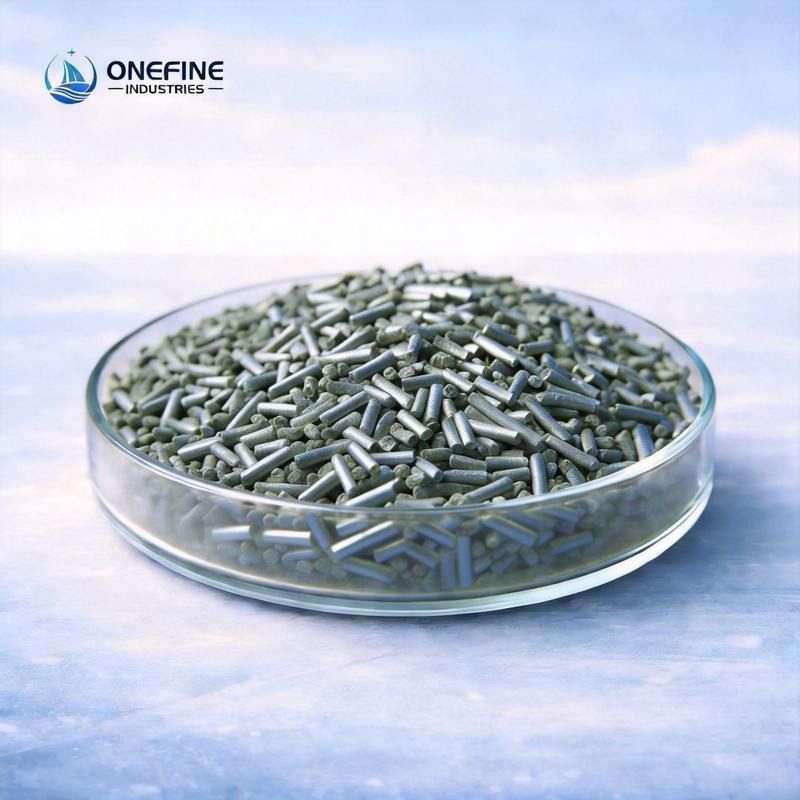
Ni-Mo Hydrogenation Catalyst
A high-performance nickel-molybdenum (Ni-Mo) hydrogenation catalyst designed for hydrodesulfurization (HDS) and hydrodenitrogenation (HDN) of medium to heavy petroleum fractions. Features superior hydrogenation activity, excellent stability, and long service life. Widely used in diesel hydrotreating, gas oil upgrading, and refractory sulfur removal. MOQ from 1 ton. Customizable appearance, particle size, and active component loading.
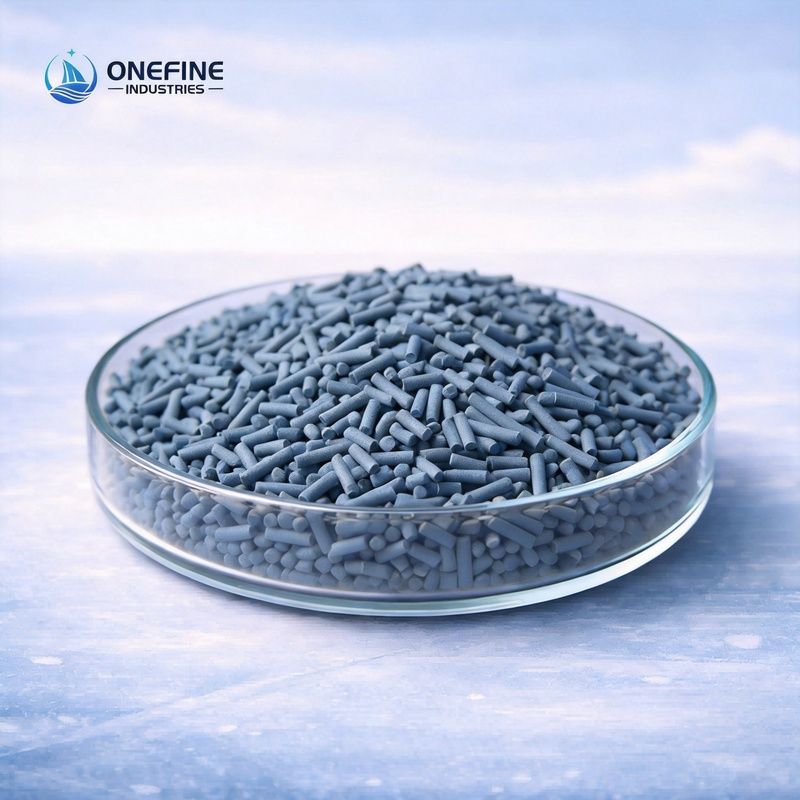
Co-Mo Hydrogenation Catalyst
A high-performance cobalt-molybdenum (Co-Mo) hydrogenation catalyst designed for hydrodesulfurization (HDS) and hydrotreating of petroleum fractions and synthesis gas. Features low light-off temperature, high mechanical strength, and excellent stability. Widely used in ammonia plant feed purification, naphtha pretreatment, refinery reforming feed desulfurization, and natural gas sweetening. Available with MOQ from 1 ton, customizable appearance, particle size, and active component loading.
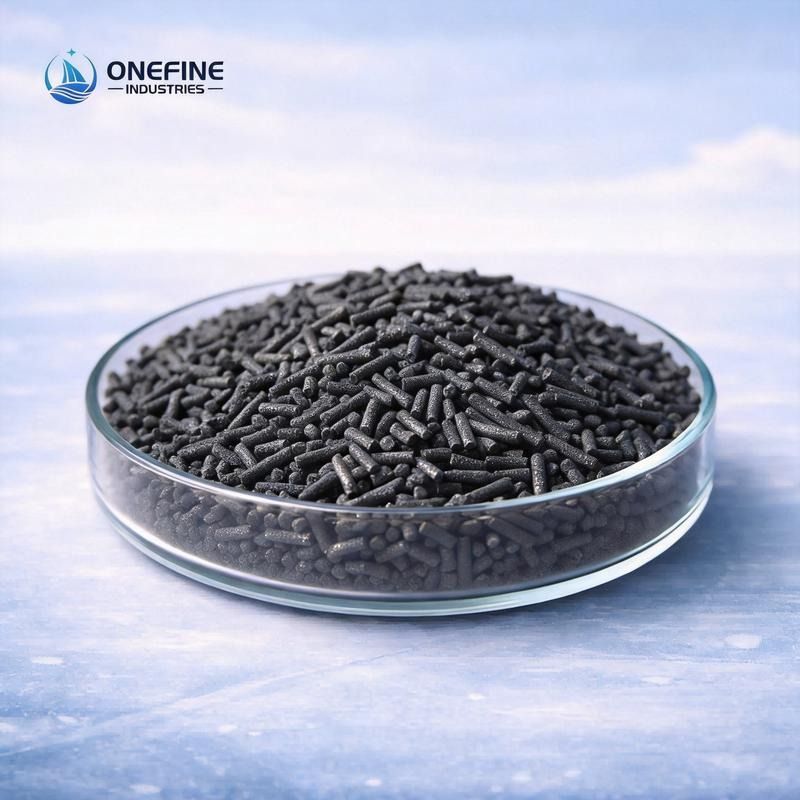
Ni-Mo-W hydrogenation catalyst
A trimetallic nickel-molybdenum-tungsten (Ni-Mo-W) hydrogenation catalyst engineered for ultra-deep hydrodesulfurization of challenging petroleum feeds. Combines the synergistic HDS activity of Mo-W mixed sulfide phases with Ni promoter for superior refractory sulfur removal. Widely used in diesel ULSD production, heavy gas oil upgrading, and severe hydrotreating service. Customizable appearance, particle size, and component loading.
Related Reading
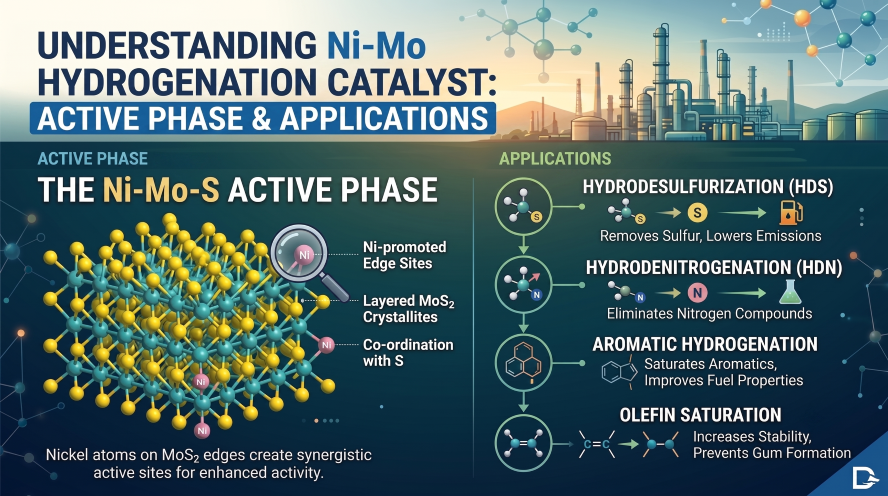
What is a Ni-Mo Hydrogenation Catalyst? Active Phase & Applications Explained
A plain-language guide to Ni-Mo hydrogenation catalysts — how the Ni-Mo-S active phase works, when to choose Ni-Mo over Co-Mo, and where it's used in refinery hydrotreating.
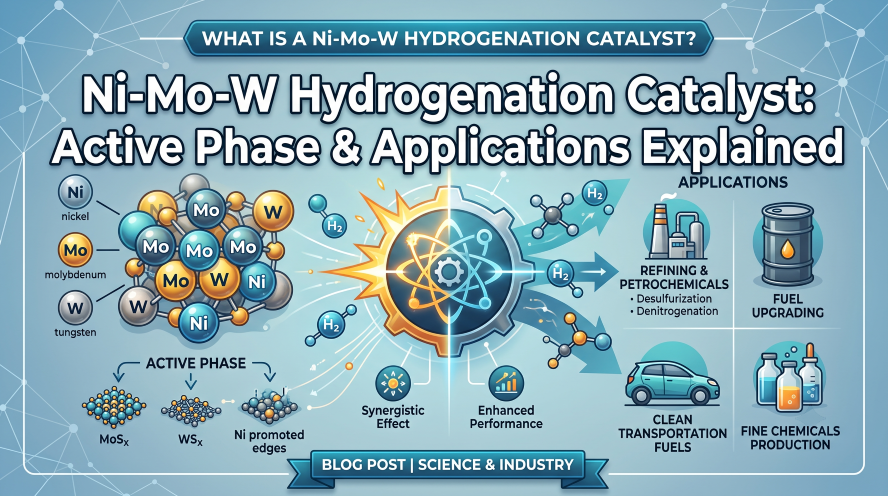
What is a Ni-Mo-W Hydrogenation Catalyst? Active Phase & Applications Explained
A guide to Ni-Mo-W trimetallic hydrogenation catalysts — how the active phase works, when to choose it over Ni-Mo or Co-Mo, and typical refinery applications.
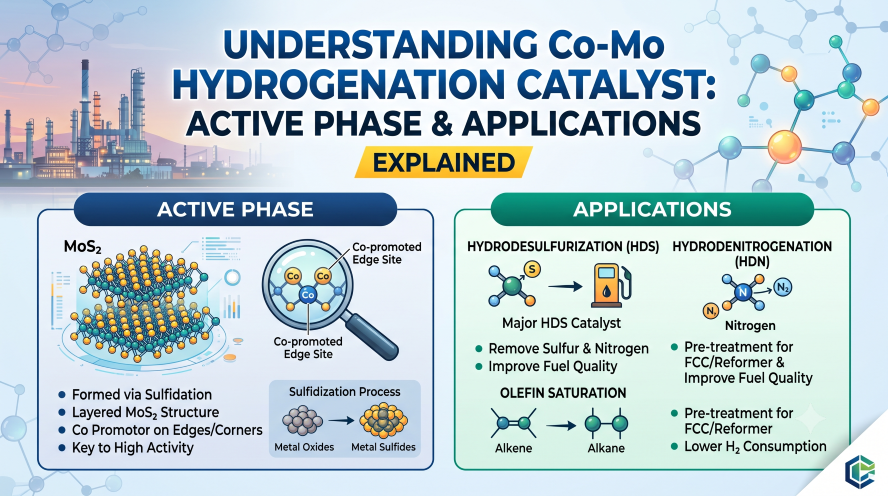
What is a Co-Mo Hydrogenation Catalyst? Active Phase & Applications Explained
A plain-language guide to how cobalt-molybdenum (Co-Mo) hydrogenation catalysts work, why the Co-Mo-S active phase matters, and where this catalyst is used across refining and gas processing.