Product Description
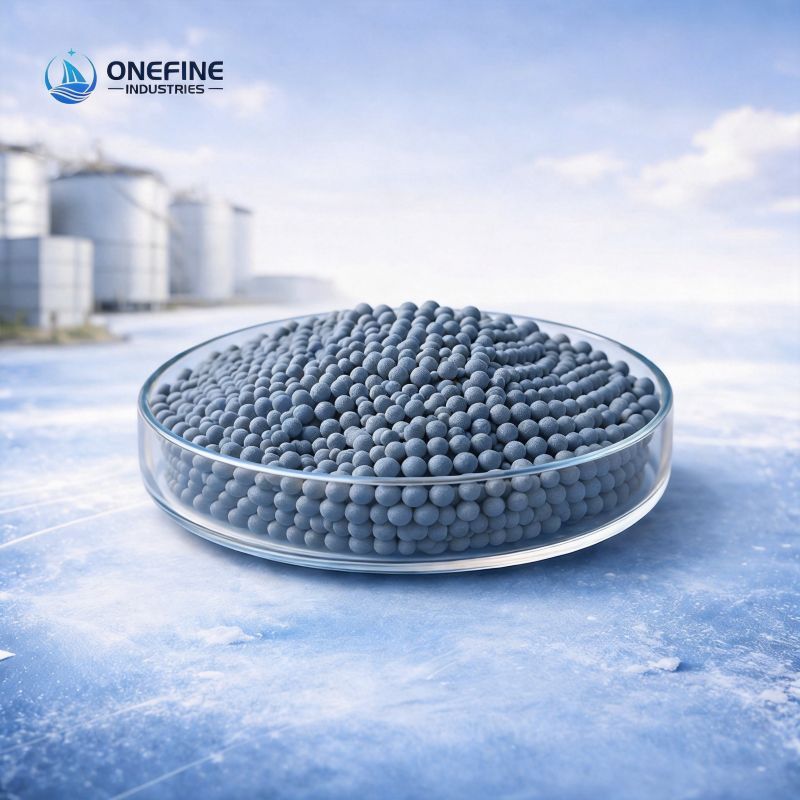
Deep Refining Catalyst
Product Overview
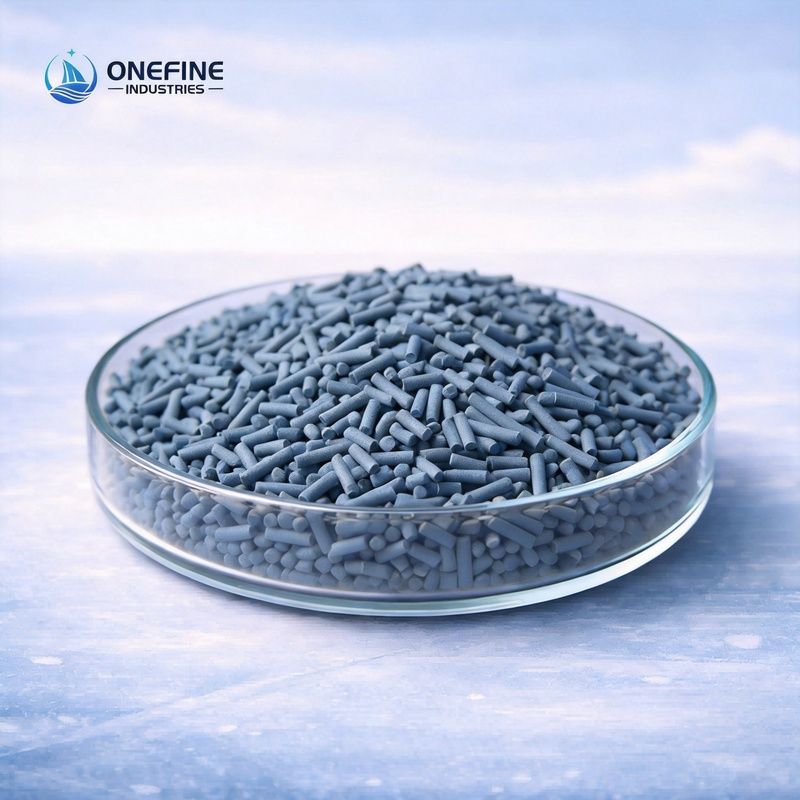
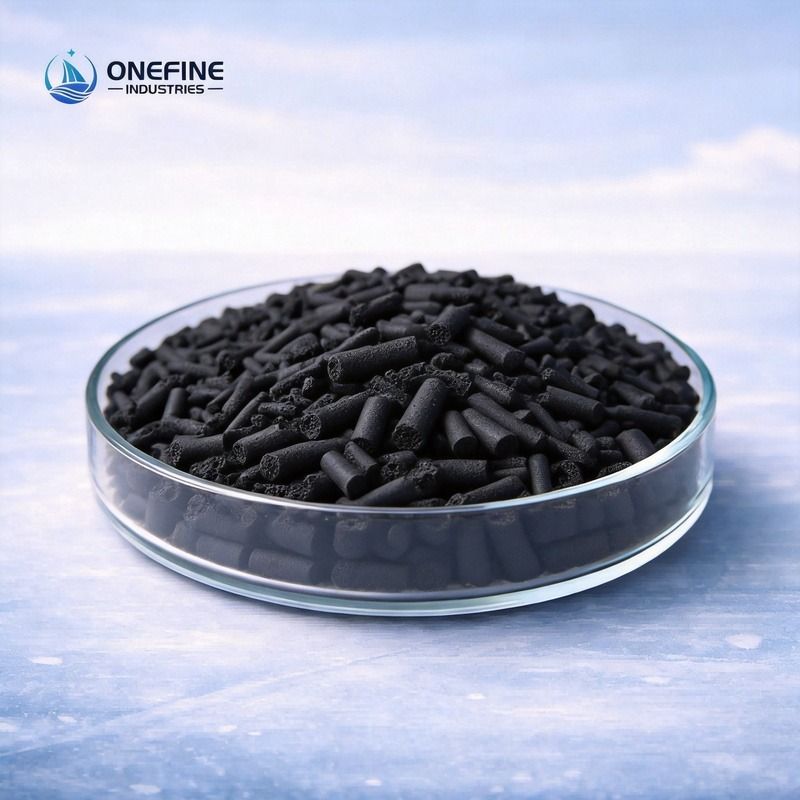
The Deep Refining Catalyst is an advanced catalytic purification solution engineered to meet the most demanding requirements of modern industrial refining. Featuring a dual-active-component system based on copper oxide and zinc oxide supported by a high-performance alumina substrate, this catalyst delivers exceptional deep purification performance across multiple industrial sectors.
Developed through rigorous research and optimization, our Deep Refining Catalyst addresses the growing industry need for higher purity standards in both liquid hydrocarbon streams and synthesis gas processing. The innovative formulation combines the synergistic effects of copper oxide and zinc oxide as active components, with copper oxide serving as both an active phase and an alkaline promoter that enhances reaction kinetics, enabling superior removal efficiency for multiple impurities including sulfur, arsenic, phosphorus, and oxygen.
The catalyst's alumina support provides a robust structural foundation with exceptional porosity, high dispersion characteristics, and extensive specific surface area. These attributes maximize active component utilization while contributing to excellent adsorption capacity and thermal stability, resulting in consistent performance over extended operation cycles and reduced operational costs.
Technical Principle
Dual-Active-Component Synergistic Mechanism
The Deep Refining Catalyst operates on the principle of synergistic catalysis between copper oxide (CuO) and zinc oxide (ZnO), creating a highly efficient purification system that exceeds the performance of single-component catalysts.
Zinc oxide serves as a primary active component with well-established sulfidation reactivity, reacting with sulfur compounds to form stable zinc sulfide through direct chemical combination. Copper oxide functions as both an active component and a performance enhancer, providing additional reactive sites for sulfur capture and contributing to overall desulfurization capacity.
The intimate contact between copper oxide and zinc oxide at the nanoscale creates interfacial regions with enhanced catalytic activity, where electronic interactions modify surface energy states and create additional active centers for impurity adsorption and reaction. This synergistic effect is particularly pronounced in removing complex sulfur compounds that are difficult to capture with single-component zinc oxide catalysts.
Copper Oxide as Alkaline Promoter: Electron Transfer Enhancement
A key technological innovation lies in the role of copper oxide as an alkaline promoter that fundamentally enhances desulfurization reaction kinetics. Traditional desulfurization catalysts often face limitations in low-temperature activity due to high reaction activation energy barriers. The incorporation of copper oxide addresses this challenge by accelerating electron transfer processes.
As an alkaline promoter, copper oxide modifies the electronic structure of the catalyst surface, creating electron-rich regions that facilitate electron transfer during desulfurization reactions. This lowers the activation energy required for sulfur compound dissociation, resulting in significantly improved reaction rates and enabling effective desulfurization at lower operating temperatures than conventional catalysts.
Copper oxide also increases the number of active centers by modifying the surface morphology of the zinc oxide phase, promoting the formation of defect sites and step edges active for sulfur adsorption. This increase in active center density translates to higher sulfur capacity and faster reaction kinetics. The electron transfer enhancement mechanism also improves arsenic and phosphorus removal at low temperatures.
Alumina Support: Porous Structure Advantages
The Deep Refining Catalyst's performance is significantly enhanced by its alumina (Al₂O₃) support, an integral component rather than merely a physical carrier.
The porous alumina support provides an extensive network of interconnected pores ranging from micropores to mesopores. This hierarchical pore structure ensures efficient mass transfer of reactant molecules to active sites, balancing accessibility with surface area for maximum component loading.
The high dispersion capability of alumina enables uniform distribution of active components across the support surface, preventing particle agglomeration and ensuring maximum active sites are accessible. The strong metal-support interaction also contributes to thermal stability, preventing active component sintering at elevated temperatures.
Key Features & Advantages
Deep Multi-Impurity Removal Capability
The Deep Refining Catalyst excels in simultaneous removal of multiple impurities, providing comprehensive purification in a single catalyst bed. Its formulation is specifically engineered to target sulfur, arsenic, phosphorus, and oxygen compounds.
For sulfur compounds, the catalyst achieves ultra-deep desulfurization to extremely low levels, meeting the most stringent product specifications. The dual-active-component system effectively captures both hydrogen sulfide and organic sulfur compounds including mercaptans, sulfides, disulfides, and thiophenes.
For arsenic and phosphorus removal, the catalyst demonstrates high efficiency, forming stable compounds that prevent downstream catalyst poisoning. Oxygen removal is another key capability, with the catalyst facilitating oxygen scavenging reactions to very low levels.
High Low-Temperature Activity and Precision Purification
One of the most significant advantages is the catalyst's exceptional low-temperature activity, enabled by the copper oxide promoter's electron transfer enhancement mechanism. Unlike conventional desulfurization catalysts requiring high operating temperatures, this catalyst delivers effective purification performance at significantly lower temperatures.
The lowered reaction activation energy means desulfurization and other purification reactions proceed at appreciable rates even at reduced temperatures, providing practical benefits including reduced energy consumption for preheating feed streams, extended catalyst life due to reduced thermal stress, and the ability to operate within temperature constraints imposed by process design.
The Deep Refining Catalyst also delivers high-precision purification, achieving extremely low residual impurity levels in treated streams. The synergistic interaction between copper oxide and zinc oxide creates a highly reactive surface with abundant active sites having strong affinity for target impurities, achieving deep purification to trace levels.
Mechanical Strength, Stability, and Ease of Operation
Mechanical strength is critical for industrial catalysts, particularly in fixed-bed applications where particles must withstand bed weight, fluid flow forces, and thermal cycling. Our Deep Refining Catalyst provides excellent mechanical strength with a strong alumina support matrix that resists crushing, attrition, and fragmentation.
The catalyst delivers consistent, reliable performance over extended operation. The strong metal-support interaction prevents sintering of active components at operating temperatures, preserving active site dispersion. The catalyst's high impurity capacity means it can accumulate substantial quantities before requiring regeneration.
Ease of operation is a key design consideration. Designed for conventional fixed-bed reactor configurations, the catalyst requires no specialized equipment or complex procedures. The wide operating window for temperature, pressure, and space velocity gives operators flexibility in managing process conditions.
Applications
Liquid Hydrocarbon Oil Deep Refining
The Deep Refining Catalyst is extensively applied in the deep refining of liquid hydrocarbon oils, serving as a critical purification step to meet stringent product quality and environmental regulations. Its ability to simultaneously remove sulfur, arsenic, phosphorus, and oxygen makes it particularly valuable for processing various liquid hydrocarbon streams.
In petroleum refining, the catalyst enables deep desulfurization of naphtha, diesel, and other middle distillate fractions, reducing sulfur content to ultra-low levels to meet low-sulfur fuel specifications. Beyond desulfurization, the catalyst's arsenic and phosphorus removal capabilities protect downstream processing catalysts from poisoning.
For petrochemical feedstock processing, the catalyst purifies feedstocks for ethylene production, aromatics extraction, and other high-value processes, where trace impurities can severely impact catalyst performance and product quality.
Synthesis Gas Deep Refining
In synthesis gas (syngas) processing, the Deep Refining Catalyst provides critical purification to protect downstream catalysts and ensure product quality. Syngas, produced through steam methane reforming, coal gasification, or biomass gasification, contains various impurities that can poison downstream conversion catalysts.
The catalyst effectively removes sulfur compounds from syngas streams, essential for protecting sensitive catalysts used in methanol synthesis, ammonia synthesis, Fischer-Tropsch synthesis, and other processes. Even parts-per-billion levels of sulfur can cause significant deactivation.
Beyond sulfur removal, the catalyst's ability to remove arsenic, phosphorus, and oxygen provides comprehensive downstream protection. Its high low-temperature activity is especially beneficial in syngas applications where operating temperatures may be constrained.
Technical Specifications
- Active Components: Copper oxide (CuO) and zinc oxide (ZnO) as primary active phases
- Support Material: High-purity alumina (Al₂O₃) with optimized porous structure
- Catalyst Type: Dual-active-component metal oxide catalyst with alkaline promoter
- Target Impurities: Sulfur compounds (H₂S, mercaptans, sulfides, disulfides, thiophenes), arsenic compounds, phosphorus compounds, oxygen
- Physical Form: Extrudates or tablets (available in multiple standard sizes)
- Mechanical Strength: High crushing strength and attrition resistance suitable for fixed-bed operation
- Thermal Stability: Stable structural properties and active phase dispersion under typical operating conditions
- Operating Temperature Range: Effective over a broad temperature range, with high activity at low temperatures
- Operating Pressure Range: Suitable for atmospheric to high-pressure applications
- Space Velocity: Compatible with a range of liquid hourly space velocities (LHSV) and gas hourly space velocities (GHSV) depending on application requirements
- Regenerability: Compatible with standard oxidative regeneration procedures for performance recovery
- Service Life: Extended operational lifespan with stable performance characteristics
- Packaging: Supplied in durable, moisture-resistant industrial packaging
Operating Guidelines
To achieve optimal performance and maximize catalyst service life, the following guidelines should be observed:
Catalyst Loading: Proper loading ensures uniform flow distribution and optimal performance. The reactor should be thoroughly cleaned and inspected before loading. Catalyst should be carefully loaded to avoid particle breakage and ensure uniform bed density.
Pre-Commissioning: Before introducing process feed, the catalyst bed should be dried and pre-treated, which may include thermal treatment under inert atmosphere to remove moisture and volatile components.
Process Control: Operating temperature should be maintained within the recommended range, with gradual increases during startup to avoid thermal shock. Pressure changes should be implemented gradually. Flow rates should be maintained within the design range.
Performance Monitoring: Regular monitoring of inlet and outlet impurity concentrations is essential for assessing catalyst performance and predicting remaining service life. Pressure drop across the catalyst bed should also be monitored.
Regeneration: When the catalyst reaches its impurity adsorption capacity, regeneration can be performed using standard oxidative procedures with controlled heating in an oxygen-containing atmosphere. Temperature should be carefully controlled during regeneration.
Packaging & Storage
Packaging: The Deep Refining Catalyst is supplied in heavy-duty, moisture-resistant packaging including sealed steel drums or bulk bags, depending on order quantity. Each package is clearly labeled with product identification, lot number, and handling instructions.
Storage and Handling: Store in a clean, dry, well-ventilated area, protected from direct sunlight, moisture, and extreme temperature fluctuations. Keep packages sealed until ready for use. Wear appropriate personal protective equipment when handling.
Spent Catalyst: Spent catalyst may contain adsorbed hazardous materials. Handle, transport, and dispose in accordance with all applicable regulations.
Why Choose Our Deep Refining Catalyst
Selecting the right catalyst for deep refining applications is a critical decision that impacts product quality, operating costs, and process reliability. Our Deep Refining Catalyst stands out as a superior choice for several compelling reasons.
First, the innovative dual-active-component technology, combined with the copper oxide promoter's electron transfer enhancement mechanism, delivers purification performance that sets industry standards. The ability to achieve ultra-deep removal of multiple impurities at low operating temperatures enables customers to meet the most stringent quality requirements while minimizing energy consumption.
Second, the catalyst's robust formulation based on high-quality alumina support ensures reliable, consistent performance over extended service life. The high mechanical strength, thermal stability, and resistance to deactivation reduce the risk of unplanned shutdowns and catalyst replacement costs.
Third, the versatility of the Deep Refining Catalyst makes it suitable for a wide range of applications across refining, petrochemical, and syngas industries. This single catalyst solution addresses multiple purification needs, simplifying procurement and inventory management.
Finally, our commitment to quality and comprehensive technical support ensures customers achieve maximum value from their catalyst investment. Rigorous quality control procedures ensure consistent, reliable performance, while our technical team provides tailored recommendations for catalyst application, loading, operation, and regeneration.
In an industrial landscape where purity standards are continuously rising and operational efficiency is paramount, our Deep Refining Catalyst provides the performance, reliability, and value that forward-thinking companies demand.
Related Products
Palladium Catalyst for Hydrogenation
High-Performance Palladium Catalyst for Hydrogenation, Deoxygenation, and Purification Applications
ZSM-5 Catalyst for VOCs...
High-Performance ZSM-5 Adsorbent for VOC Removal, Hydrocarbon Separation, and Industrial Gas Purification
Hydroconversion catalyst