
Product Guides
2026-07-15
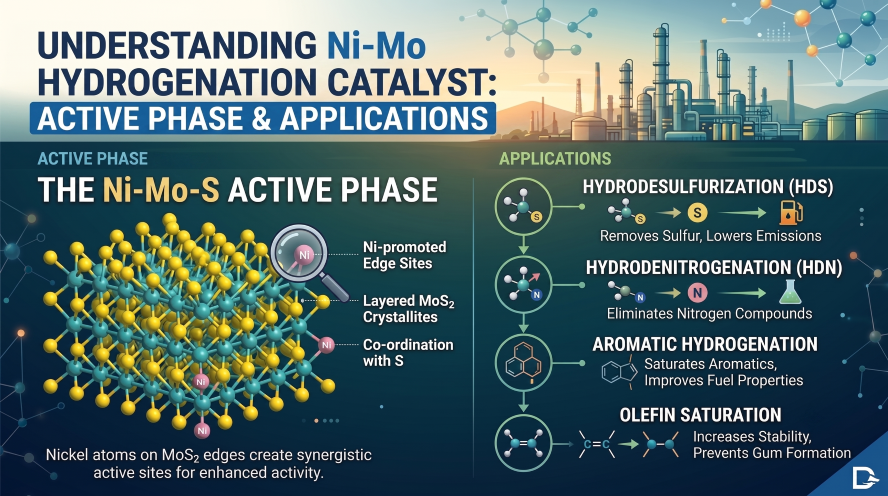
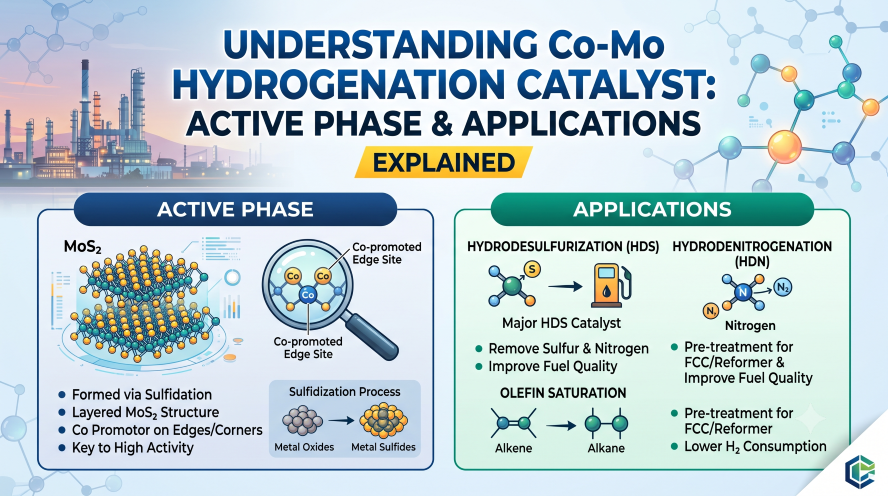
What is a Co-Mo Hydrogenation Catalyst? Active Phase & Applications Explained
A plain-language guide to how cobalt-molybdenum (Co-Mo) hydrogenation catalysts work, why the Co-Mo-S active phase matters, and where this catalyst is used across refining and gas processing.
Read More
Product Guides
2026-07-14
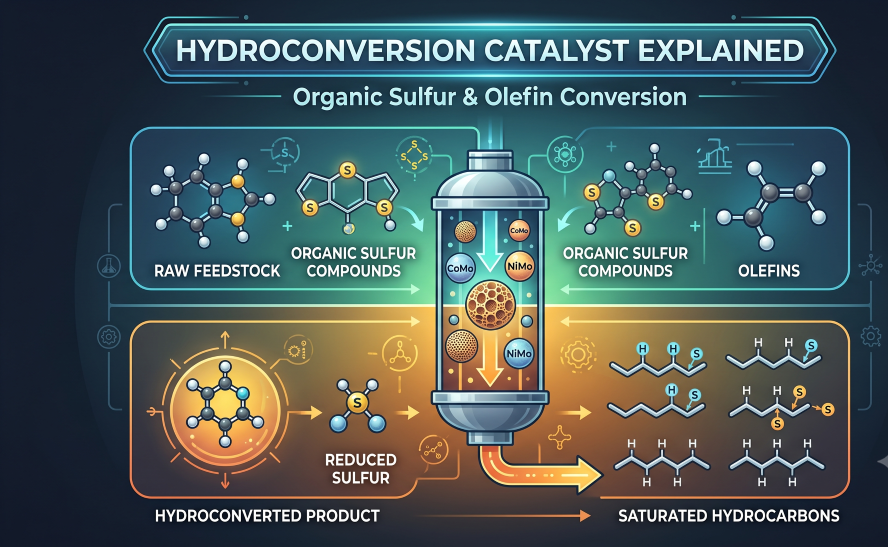
What is a Hydroconversion Catalyst? Organic Sulfur & Olefin Conversion Explained
A practical guide to hydroconversion catalysts — how they convert organic sulfur compounds and olefins in gas-phase feeds, where they're used, and how to select the right grade for your process.
Read More
Product Guides
2026-07-10
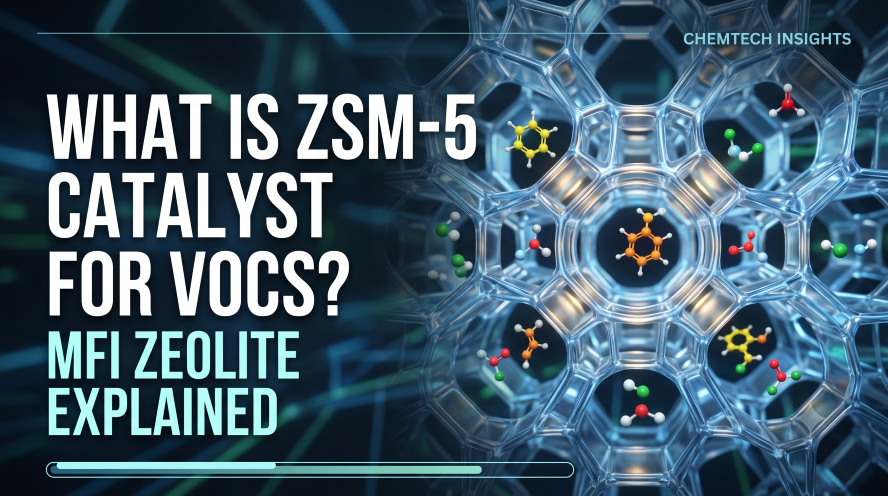
What is ZSM-5 Catalyst for VOCs? MFI Zeolite Explained
ZSM-5 is a high-silica MFI zeolite used to adsorb and catalytically oxidize volatile organic compounds (VOCs). Learn how its microporous structure and tunable acidity work, and how it's applied in industrial VOC treatment systems.
Read More
Product Guides
2026-07-09
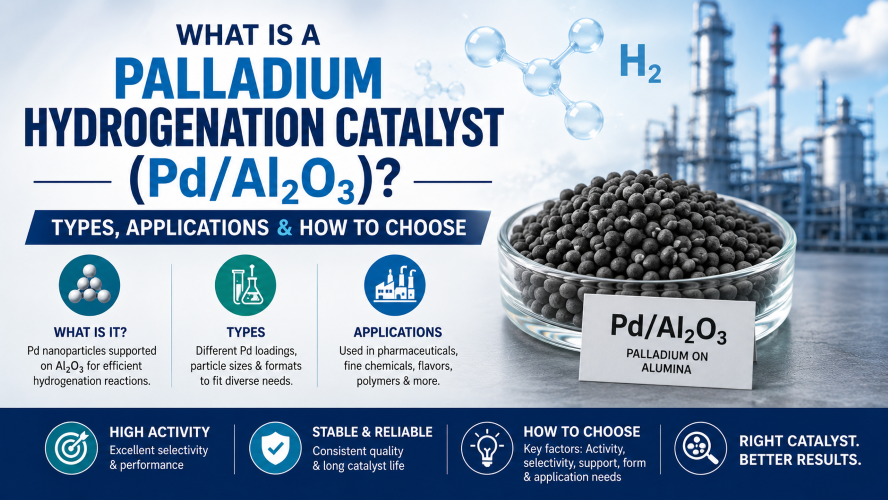
What is a Palladium Hydrogenation Catalyst? Pd/Al₂O₃ Explained
Palladium hydrogenation catalyst (Pd/Al₂O₃) is one of the most widely used noble metal catalysts in industrial chemistry. This guide covers how it works, Pd loading options, key applications, and regeneration & recovery.
Read More
Technical & Troubleshooting Guides
2026-07-08
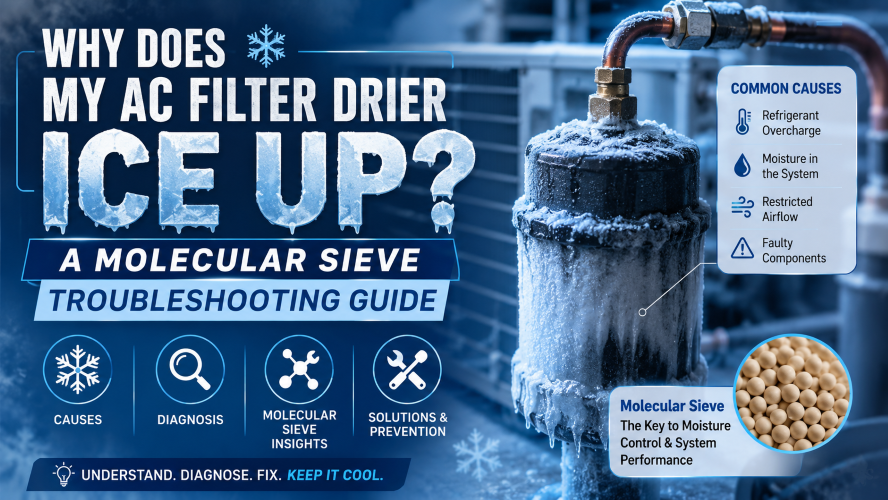
Why Does My AC Filter Drier Ice Up? A Molecular Sieve Troubleshooting Guide
A practical troubleshooting guide explaining why AC and refrigeration filter driers ice up — covering desiccant saturation, restriction, wrong molecular sieve type, and poor evacuation as root causes, plus step-by-step diagnosis and fixes.
Read More
Comparison & Selection Guides
2026-07-07
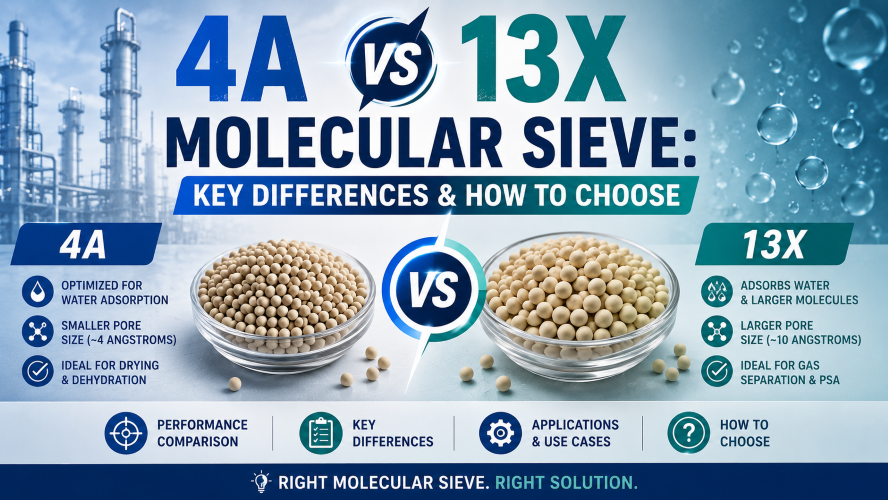
4A vs 13X Molecular Sieve: Key Differences & How to Choose
4A and 13X are two of the most widely used molecular sieve types, but they're built for different jobs. This guide breaks down the pore size, capacity, and application differences to help you choose correctly.
Read More
Comparison & Selection Guides
2026-07-06
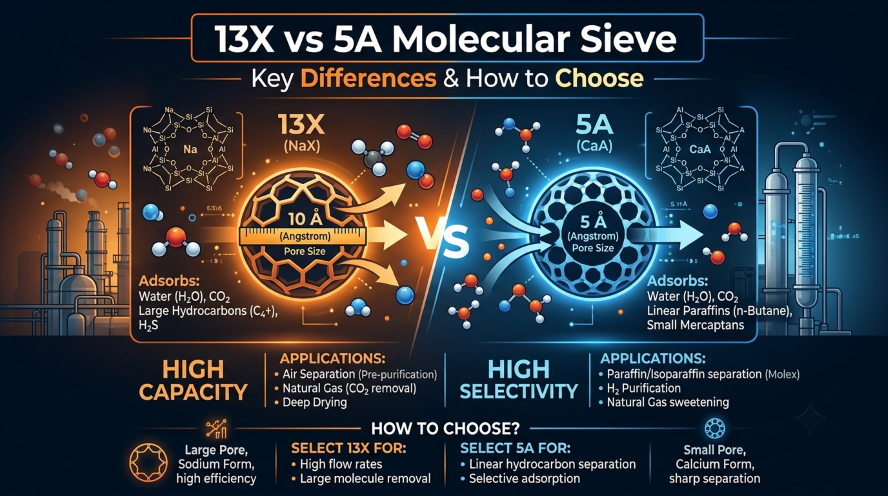
13X vs 5A Molecular Sieve: Key Differences & How to Choose
13X and 5A molecular sieve look similar on paper, but they're built for very different jobs. This guide breaks down the real differences — pore size, selectivity, and application — so you can pick the right one for your system.
Read More
Comparison & Selection Guides
2026-07-02
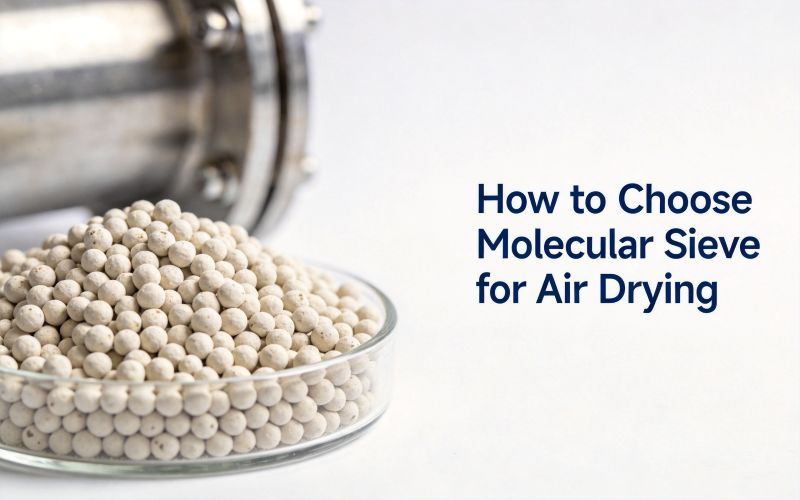
How to Choose Molecular Sieve for Air Drying
A practical guide to selecting the right molecular sieve for compressed air drying applications — covering dew point targets, contaminant removal, form factor, regeneration method, and common selection mistakes to avoid.
Read More
Comparison & Selection Guides
2026-07-01
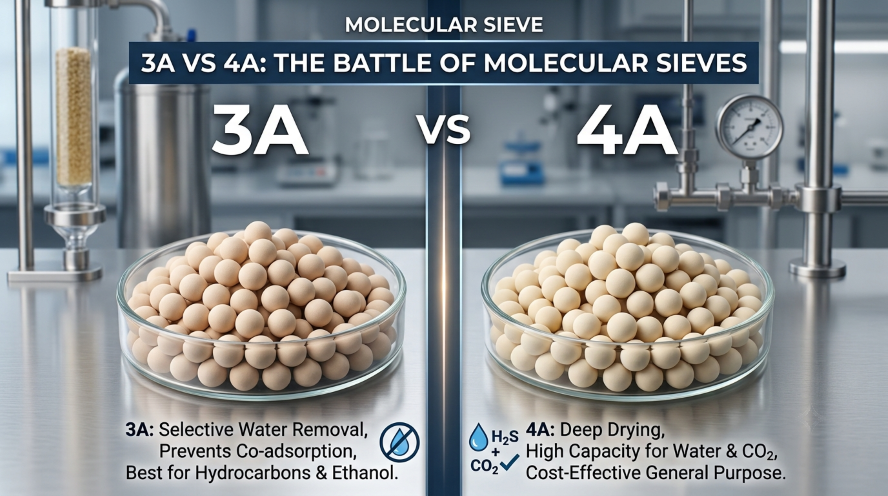
3A vs 4A Molecular Sieve: Key Differences & How to Choose
In-depth guide comparing 3A and 4A molecular sieves. Covers pore size differences, adsorption selectivity, capacity comparison, application scenarios for each type, and practical guidance on selecting the right molecular sieve for your industrial drying or gas separation needs.
Read More