Product Description
Cu-Zn-Al Low-Temperature Shift Catalyst
Product Overview
Our Copper-Zinc-Aluminum (Cu-Zn-Al) shift catalyst is a premium solution for low-temperature CO conversion in the chemical and petrochemical industries. Manufactured using advanced co-precipitation technology, this precisely engineered ternary system delivers exceptional performance across a wide range of operating conditions.
Specifically designed for low-temperature shift (LTS) applications, our catalyst efficiently converts carbon monoxide and water vapor into hydrogen and carbon dioxide. Unlike iron-chromium based catalysts that operate at medium-to-high temperatures, our copper-zinc-aluminum formulation excels at lower temperature ranges, enabling higher equilibrium conversion rates and improved process efficiency.
Through the synergistic interaction of copper, zinc, and aluminum components, this catalyst achieves an optimal balance of catalytic activity, thermal stability, sulfur resistance, and mechanical strength. The result is a reliable, long-lasting catalyst that reduces operational costs while maintaining consistent performance throughout its service life.
Suitable for diverse feedstocks ranging from natural gas and naphtha to refinery gas, residual oil, and coal-derived syngas, our Cu-Zn-Al shift catalyst provides versatile solutions for hydrogen production, syngas generation, ammonia synthesis, methanol synthesis, and various CO shift applications in petroleum refining.
Technical Principle
Copper-Zinc-Aluminum Catalytic Mechanism
The Cu-Zn-Al shift catalyst operates through a redox mechanism at the catalyst surface, where copper serves as the primary active phase for the water-gas shift reaction (CO + H₂O ⇌ CO₂ + H₂). Copper crystallites provide active sites for CO adsorption and activation, while zinc oxide facilitates water dissociation and hydrogen spillover. Aluminum oxide acts as a structural support, maintaining dispersion of active copper sites and preventing sintering during operation.
The ternary system creates a unique molecular microenvironment. Copper forms nanoscale crystallites highly dispersed on the zinc-aluminum oxide matrix, maximizing exposed active sites per unit mass and delivering superior low-temperature activity.
Co-precipitation Method Advantages
Our catalyst is manufactured using the co-precipitation method, where copper, zinc, and aluminum precursors are simultaneously precipitated under carefully controlled pH, temperature, and stirring conditions. This ensures uniform atomic-level distribution from the earliest formation stages.
Key advantages include consistent component distribution for predictable performance, high surface area with abundant active sites, strong inter-component interactions enhancing activity and stability, and controlled particle morphology optimizing mass transfer.
Synergistic Effects of Ternary Components
The exceptional performance arises from carefully balanced synergistic interactions among the three components:
Copper serves as the primary active phase for the water-gas shift reaction, providing sites for CO adsorption and activation. High dispersion, stabilized by zinc and aluminum, ensures maximum active metal utilization.
Zinc oxide acts as a structural promoter preventing copper crystallite sintering and maintaining active site dispersion. It also facilitates water dissociation and hydrogen spillover, enhancing reaction rates, and contributes to sulfur tolerance by acting as a sulfur sink that protects active copper sites.
Aluminum oxide provides the structural backbone, delivering mechanical stability and maintaining porous structure under operating conditions. It disperses copper and zinc phases, preventing agglomeration and preserving high surface area, while also enhancing thermal stability against temperature fluctuations.
Low-Temperature Activity Principle
The outstanding low-temperature activity stems from several fundamental characteristics. The copper-based active phase has intrinsically lower activation energy for the water-gas shift reaction compared to iron-based catalysts, enabling appreciable reaction rates at significantly lower temperatures.
High copper dispersion, achieved through co-precipitation and stabilized by the zinc-aluminum matrix, provides abundant accessible active sites even at lower temperatures, ensuring sufficient reaction rates for industrial applications.
Low-temperature operation also enables closer approach to thermodynamic equilibrium. Since the shift reaction is exothermic, lower temperatures favor higher CO conversion, achieving lower CO outlet concentrations than high-temperature catalysts and reducing downstream processing requirements.
Key Features & Advantages
Excellent Low-Temperature Activity
Our Cu-Zn-Al catalyst demonstrates exceptional activity at low operating temperatures, ideal for LTS processes. Highly dispersed copper active sites enable efficient CO conversion at temperatures significantly lower than iron-chromium catalysts. This capability allows higher equilibrium CO conversion, lower residual CO levels, improved process efficiency, and greater operational flexibility with energy savings.
Superior Thermal Stability
Engineered with advanced formulation and preparation, our catalyst exhibits excellent thermal stability. The alumina support and zinc oxide promoter prevent copper crystallite sintering during elevated temperature operation or thermal cycling. This resilience maintains active surface area and performance over extended operation, reducing deactivation rate and extending service life.
Outstanding Sulfur Resistance
Sulfur compounds can rapidly deactivate copper-based catalysts. Our formulation enhances sulfur tolerance through zinc oxide's sulfur scavenging action, which preferentially adsorbs sulfur compounds and protects active copper sites. This built-in protection significantly improves sulfur poisoning resistance, extending operational life with sulfur-containing feedstocks and providing a safety margin against breakthrough events.
High Mechanical Strength
Our catalyst delivers exceptional mechanical strength through controlled co-precipitation and alumina structural support. Particles exhibit high crush strength and attrition resistance, minimizing fines and dust during handling and operation. This mechanical robustness ensures consistent bed pressure drop and uniform gas flow distribution.
Extended Service Life
The combination of high activity, thermal stability, sulfur resistance, and mechanical strength translates to extended service life. Our catalyst maintains performance longer than conventional formulations, reducing replacement frequency and downtime costs. Slow deactivation ensures reliable performance and consistent CO conversion throughout the catalyst lifetime.
Wide Feedstock Adaptability
Our Cu-Zn-Al catalyst demonstrates remarkable versatility across diverse feedstocks including natural gas, naphtha, refinery gas, residual oil, and coal-derived syngas. This wide adaptability suits diverse industrial applications and provides operational flexibility for facilities switching between feedstocks.
Applications
Hydrogen Production
In hydrogen production plants, our catalyst maximizes hydrogen yield by converting CO to CO₂ and additional hydrogen. Following steam reforming or partial oxidation, the LTS reactor achieves deep CO conversion for high-purity hydrogen suitable for fuel cells, refinery hydroprocessing, and chemical manufacturing.
Syngas Production
For syngas facilities, our catalyst helps optimize H₂/CO ratios for downstream requirements. Adjustable shift reaction extent enables fine-tuning of syngas composition, with reliable performance ensuring predictable quality critical for precise H₂/CO ratio processes.
Ammonia Synthesis
In ammonia plants, our LTS catalyst achieves deep CO removal after high-temperature shift, reducing downstream CO removal system load and ensuring syngas meets strict purity requirements for efficient ammonia production.
Methanol Synthesis
Our catalyst produces syngas with appropriate H₂/CO/CO₂ ratios for methanol synthesis. Its low sulfur content prevents contamination of downstream methanol synthesis catalyst, while stable performance contributes to consistent syngas quality.
Petroleum Chemical CO Shift
In refining and petrochemical applications, our catalyst adjusts syngas composition and increases hydrogen production from refinery streams. Off-gases, residual oil gasification products, and other hydrocarbons are processed to maximize hydrogen recovery for hydrotreating, hydrocracking, and other processes.
Suitable Feedstocks
Compatible with natural gas, naphtha, refinery gas, residual oil, and coal-derived syngas, our catalyst provides reliable performance across diverse raw material sources.
Technical Specifications
- Catalyst Type: Copper-Zinc-Aluminum (Cu-Zn-Al) low-temperature shift catalyst
- Preparation Method: Co-precipitation method ensuring uniform component distribution
- Active Phase: Highly dispersed copper crystallites on zinc-aluminum oxide support
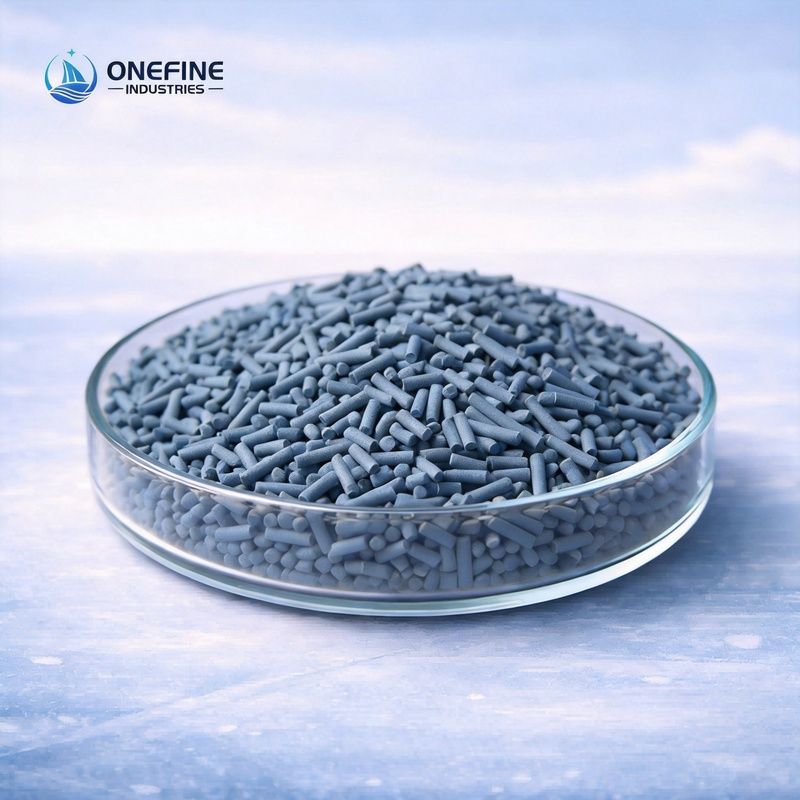
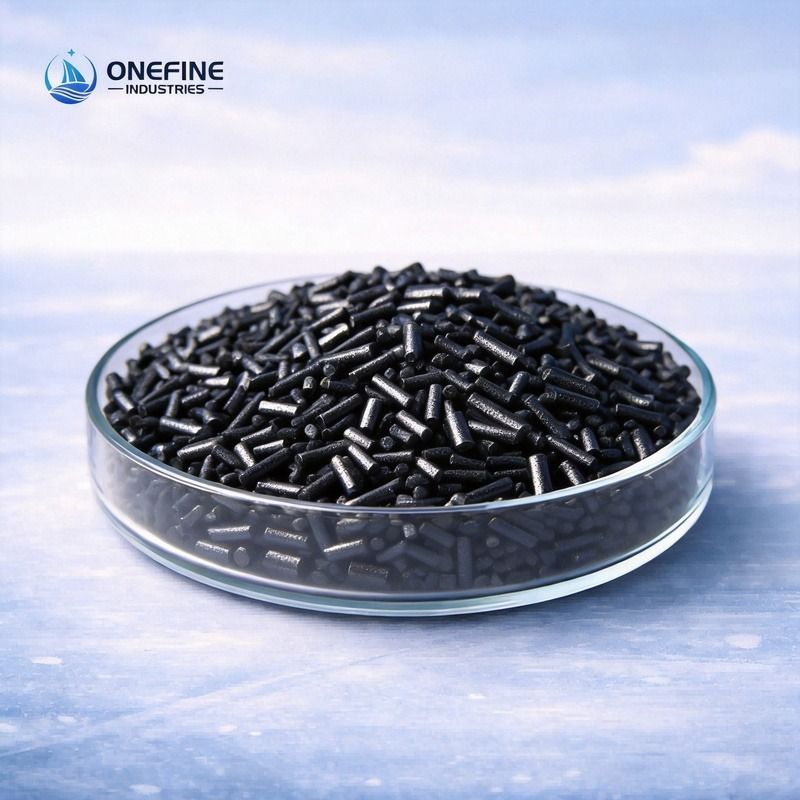
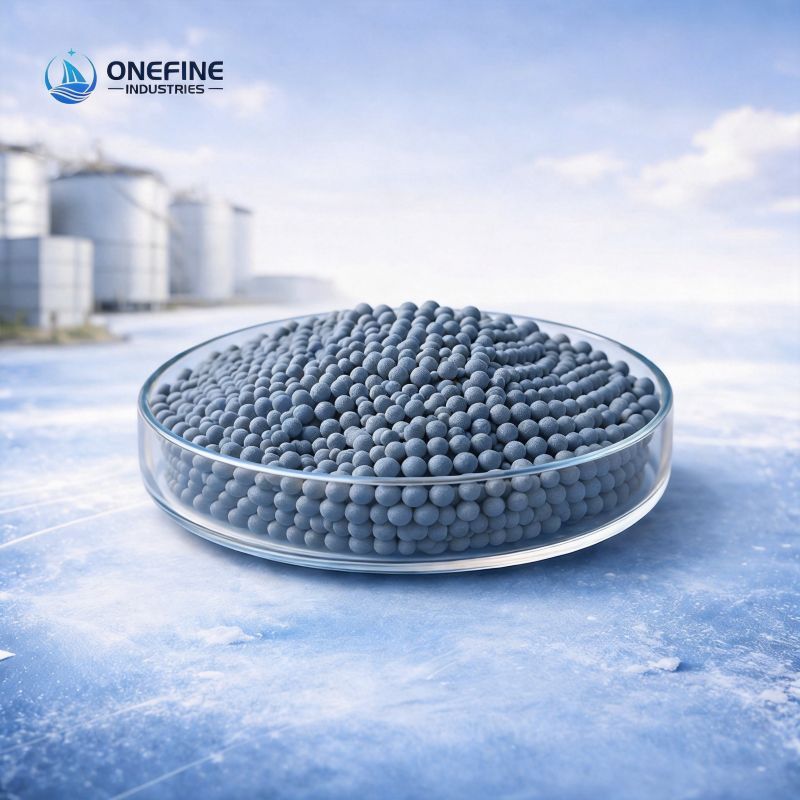
- Catalyst Shape: Extruded pellets (various shapes available for specific reactor requirements)
- Application: Low-temperature CO shift reaction for hydrogen and syngas production
- Operating Temperature Range: Optimized for low-temperature shift (LTS) service
- Key Components: Copper (active phase), Zinc oxide (promoter/stabilizer), Aluminum oxide (support)
- Physical Properties: High mechanical strength, low pressure drop, excellent attrition resistance
- Chemical Properties: High low-temperature activity, good thermal stability, enhanced sulfur tolerance
- Feedstock Compatibility: Natural gas, naphtha, refinery gas, residual oil, coal-derived syngas
- Suitable Processes: Hydrogen production, syngas generation, ammonia synthesis, methanol synthesis, petroleum refining CO shift
Operating Guidelines
Pre-startup Preparation
Ensure the reactor is clean, dry, and debris-free before loading. Inspect internals including support grids, screens, and sensors. Follow plant safety procedures during handling and loading.
Load carefully for uniform bed density and minimal attrition. Use sock loading or similar techniques. Avoid dropping catalyst from heights that could cause breakage. Level the bed surface and install hold-down or inert layers as required.
Reduction Procedure
Supplied in oxidized state, the catalyst requires in-situ reduction. Perform with controlled temperature ramp using dilute hydrogen. Monitor bed temperatures closely to prevent overheating and copper sintering.
Follow recommended procedures for gas composition, ramp rates, and hold times. Ensure adequate flow for uniform temperature distribution. Reduction is complete when the temperature wave passes through the entire bed with no further exotherm.
Normal Operation
Introduce feed gas gradually while maintaining parameters within design specifications. Monitor temperatures, pressure drop, and CO conversion regularly.
Maintain conditions within recommended ranges for optimal performance and life. Avoid sudden changes in feed composition, flow, or temperature. Regularly analyze feed gas composition, especially sulfur content.
Shutdown Procedures
For planned shutdowns, gradually reduce feed rate and temperature while maintaining protective gas atmosphere to prevent oxidation. Use passivation procedures if catalyst will be exposed to air.
For emergency shutdowns, isolate quickly and maintain positive inert gas pressure to prevent air ingress. Document conditions for restart assessment.
Packaging & Storage
Packaging
Our catalyst is carefully packaged in durable, moisture-resistant containers protecting against damage and contamination. Each container is labeled with product ID, batch number, net weight, and handling instructions. Options include standard drums, bulk bags, and specialized containers for large projects.
Storage Guidelines
Store in cool, dry, well-ventilated areas away from direct sunlight and heat sources. Keep storage clean and free of contaminants. Keep containers closed to prevent moisture absorption. Avoid storage near acids, bases, or reactive chemicals.
Handling Safety
Use personal protective equipment including gloves, safety glasses, and dust masks. Work in well-ventilated areas. Follow safety regulations for handling, storage, and disposal.
Why Choose Us
Proven Technical Expertise
With extensive experience in catalyst R&D and manufacturing, our team of chemists, engineers, and specialists delivers solutions meeting demanding industry requirements. Continuous R&D investment keeps our products at the forefront of catalyst technology.
Quality Manufacturing Standards
Manufactured in state-of-the-art facilities under strict quality control, every batch undergoes comprehensive testing. ISO-certified quality systems with rigorous process controls from raw material selection to final inspection ensure consistent quality and performance.
Customized Solutions
Our technical team works closely with you to understand process requirements and recommend optimal catalyst formulations tailored to your specific application, feedstock, and operating conditions.
Comprehensive Technical Support
We provide support throughout the catalyst lifecycle—from selection and sizing to loading supervision, startup assistance, and ongoing optimization. Our engineers answer questions, troubleshoot, and recommend strategies to maximize performance and service life.
Reliable Supply Chain
Robust manufacturing and inventory systems ensure reliable availability and timely delivery. Our global supply chain serves customers efficiently worldwide, whether for a single drum or bulk project quantities.
We are your trusted catalysis partner, dedicated to delivering solutions that drive your operational efficiency, profitability, and competitive advantage.
Related Products
Palladium Catalyst for Hydrogenation
High-Performance Palladium Catalyst for Hydrogenation, Deoxygenation, and Purification Applications
ZSM-5 Catalyst for VOCs...
High-Performance ZSM-5 Adsorbent for VOC Removal, Hydrocarbon Separation, and Industrial Gas Purification
Hydroconversion catalyst