Product Description
5th Generation Iron-Chromium Based CO Shift Catalyst
Product Overview
Our 5th Generation Iron-Chromium Based CO Shift Catalyst represents the forefront of shift catalyst technology, engineered to deliver exceptional performance across industrial applications. Manufactured using high-purity nitrate raw materials and advanced co-precipitation synthesis, this catalyst sets new benchmarks in low-temperature activity, sulfur resistance, mechanical strength, and operational longevity.
The CO shift reaction (CO + H₂O ↔ CO₂ + H₂) is fundamental to hydrogen, syngas, ammonia, and methanol production. As industry demands evolve toward greater energy efficiency, our 5th generation formulation addresses these challenges through decades of research and development in iron-chromium catalytic systems.
Through carefully balanced structural, electronic, and active promoters, our catalyst achieves optimized microporous architecture and pore size distribution, overcoming diffusion limitations that plague conventional formulations. This enables operation at significantly reduced inlet water-gas ratios, dramatically suppresses undesirable Fischer-Tropsch (F-T) synthesis side reactions, and extends service life through minimized sintering deactivation. Combined with excellent thermal stability, sulfur resistance, and mechanical integrity, this 5th generation catalyst delivers superior value across its entire lifecycle.
Technical Principle
Iron-Chromium Catalytic Mechanism
The iron-chromium based shift catalyst operates through a redox mechanism. Iron oxide serves as the primary active phase, while chromium oxide acts as a structural and electronic modifier. Under typical conditions, iron oxide (Fe₂O₃) is partially reduced to magnetite (Fe₃O₄), the catalytically active phase. Chromium oxide (Cr₂O₃) disperses finely within the iron oxide matrix, forming a solid solution that stabilizes active sites against thermal sintering.
In the catalytic cycle, water molecules adsorb onto the surface and dissociate into adsorbed oxygen and hydrogen. Carbon monoxide reacts with these oxygen species to produce carbon dioxide, which desorbs to complete the cycle. Chromium facilitates electron transfer within the catalyst lattice, enhancing the redox cycle rate and improving overall efficiency.
Co-Precipitation Method Advantages
Our catalyst is manufactured using the co-precipitation method, offering significant advantages over conventional impregnation or solid-state reaction approaches. Nitrate precursors of iron, chromium, and promoters are dissolved and simultaneously precipitated by adjusting pH and temperature under precise control.
This ensures atomic-level mixing and exceptional homogeneity throughout the catalyst matrix. The uniform distribution of active phases and promoters—unachievable through alternative methods—translates into consistent performance, improved structural stability, and enhanced deactivation resistance. The method also enables precise control over particle size, morphology, and pore structure, allowing tailored textural properties for optimal mass transport and maximum active site availability.
Promoter Functions
Structural Promoters
Structural promoters maintain physical integrity and pore architecture under high-temperature conditions. Acting as physical spacers within the matrix, they prevent agglomeration of active iron-chromium crystallites and preserve porous structure essential for mass transport, directly contributing to extended service life and sustained activity.
Electronic Promoters
Electronic promoters modify the electronic structure of active iron-chromium phases, enhancing intrinsic catalytic activity. By altering electron density at active sites, they facilitate adsorption and activation of reactant molecules and promote surface redox reactions. Our carefully selected electronic promoters lower the activation energy barrier, enabling high conversion rates at lower operating temperatures.
Active Promoters
Active promoters introduce additional catalytically active sites working synergistically with the primary iron-chromium phase. These may participate directly in the reaction mechanism or create new sites with different reactivity characteristics, broadening the effective operating temperature window and improving overall performance.
Pore Structure Optimization
A hallmark achievement of our 5th generation catalyst is its optimized microporous structure and pore size distribution. Through advanced co-precipitation and controlled thermal processing, we have engineered a pore architecture that minimizes diffusion limitations while maximizing active site accessibility.
Conventional shift catalysts often suffer from intraparticle diffusion resistance, where reactants cannot reach active sites deep within particles, reducing available sites and limiting conversion efficiency. Our optimized structure addresses this with a network of interconnected pores facilitating rapid mass transport.
The carefully tuned distribution balances micro- and mesoporosity: micropores provide high surface area for abundant active sites, while mesopores serve as transport channels for efficient diffusion. This hierarchical structure ensures the catalyst operates in the kinetic rather than diffusion-limited regime.
Low-Temperature Activity Principle
Exceptional low-temperature activity stems from the synergistic combination of optimized pore structure, enhanced active site dispersion, and electronic promotion. By minimizing diffusion limitations, our catalyst achieves higher effective utilization of active sites, enabling meaningful reaction rates at temperatures where conventional catalysts show negligible activity.
Electronic promoters modify iron-chromium active site properties, lowering the activation energy required for the shift reaction. A greater proportion of molecular collisions therefore possess sufficient energy to react at lower temperatures, dramatically improving low-temperature kinetics.
High active component dispersion—enabled by co-precipitation and structural promoters—ensures high density of accessible active sites even at reduced temperatures. This combination delivers excellent CO conversion performance at inlet temperatures significantly lower than conventional iron-chromium catalysts.
F-T Side Reaction Suppression Mechanism
Fischer-Tropsch (F-T) synthesis is an undesirable side reaction occurring over iron-based catalysts, where CO and H₂ react to form hydrocarbons, reducing product yield and complicating downstream separation.
Our 5th generation formulation incorporates specific promoters and structural modifications that effectively suppress F-T synthesis while maintaining high shift activity. The mechanism involves selective site blocking, electronic modification of iron sites to disfavor carbon-carbon bond formation, and optimized surface composition favoring the shift reaction pathway.
This selective inhibition ensures CO is preferentially converted to CO₂ and H₂ via the desired shift reaction, maximizing process efficiency and product yield.
Key Features & Advantages
5th Generation Advanced Formulation
Representing decades of research and industrial experience, our 5th generation iron-chromium shift catalyst incorporates the latest advances in catalytic science and manufacturing, delivering step-change improvements in activity, stability, and efficiency.
Excellent Low-Temperature Activity
Our catalyst exhibits exceptional low-temperature activity, enabling reduced inlet temperatures while maintaining high CO conversion. This translates into energy savings through reduced preheating and enables more favorable thermodynamic equilibrium for higher conversion per pass.
Low Water-Gas Ratio Operation
A defining advantage is the ability to achieve excellent performance at significantly lower inlet water-gas ratios than conventional catalysts. This reduces steam consumption, lowers operating costs, and decreases downstream separation equipment requirements.
Superior Sulfur Resistance
The catalyst demonstrates outstanding sulfur tolerance, making it suitable for sulfur-containing feedstocks without rapid deactivation. Our proprietary formulation maintains catalytic activity even with sulfur compounds, reducing the need for expensive upstream desulfurization.
High Mechanical Strength
Manufactured with optimized binders and processing, our catalyst pellets exhibit excellent mechanical strength and attrition resistance. This ensures minimal particle breakage during loading, operation, and regeneration, maintaining consistent bed pressure drop throughout service life.
Extended Service Life
The combination of optimized pore structure, structural promoters, and enhanced dispersion significantly slows sintering deactivation. The catalyst maintains activity and selectivity for longer periods, reducing replacement frequency and associated downtime costs.
F-T Side Reaction Inhibition
Our catalyst effectively suppresses Fischer-Tropsch side reactions, ensuring maximum selectivity toward desired shift products. This reduces downstream separation requirements, improves product purity, and increases overall process efficiency.
Low Intrinsic Sulfur Content
Manufactured using high-purity nitrate precursors and rigorous purification, our catalyst has inherently low sulfur content. It does not contribute to product stream contamination and achieves full activity more quickly after loading.
Applications
Our 5th Generation Iron-Chromium CO Shift Catalyst serves a broad spectrum of industrial processes requiring CO conversion.
Hydrogen Production
In hydrogen plants, our catalyst enables efficient CO conversion in both high and low-temperature shift reactors. Its high activity and sulfur tolerance suit diverse feedstocks, delivering high-purity hydrogen for refinery hydrotreating, fuel cell applications, and industrial uses.
Syngas Production
For syngas generation, our catalyst provides reliable CO conversion while maintaining desired H₂/CO ratios. Operation at reduced water-gas ratios allows precise syngas composition control for applications requiring specific specifications.
Ammonia Synthesis
In ammonia plants, shift conversion is critical for maximizing hydrogen production. Our catalyst delivers high CO conversion efficiency, excellent stability, and long service life, supporting continuous high-demand operations.
Methanol Synthesis
For methanol production, our catalyst ensures efficient shift conversion while suppressing side reactions that could contaminate syngas feed. Low F-T activity minimizes hydrocarbon byproducts that could impact methanol catalyst performance.
Petrochemical CO Shift
In petrochemical applications, our catalyst provides reliable performance and operational flexibility. Its robust nature and feedstock tolerance suit diverse operating conditions encountered in petrochemical complexes.
Compatible Feedstocks
Our catalyst works with natural gas, naphtha, refinery gas, residual oil, and coal. Its excellent sulfur tolerance and mechanical strength make it particularly well-suited for heavier, more sulfur-rich feedstocks where conventional catalysts deactivate rapidly.
Technical Specifications
- Catalyst Type: 5th Generation Iron-Chromium Based CO Shift Catalyst
- Active Phase: Iron-chromium oxide with multi-component promoter system
- Manufacturing Process: Co-precipitation method using high-purity nitrate precursors
- Promoter System: Structural, electronic, and active promoters for enhanced performance
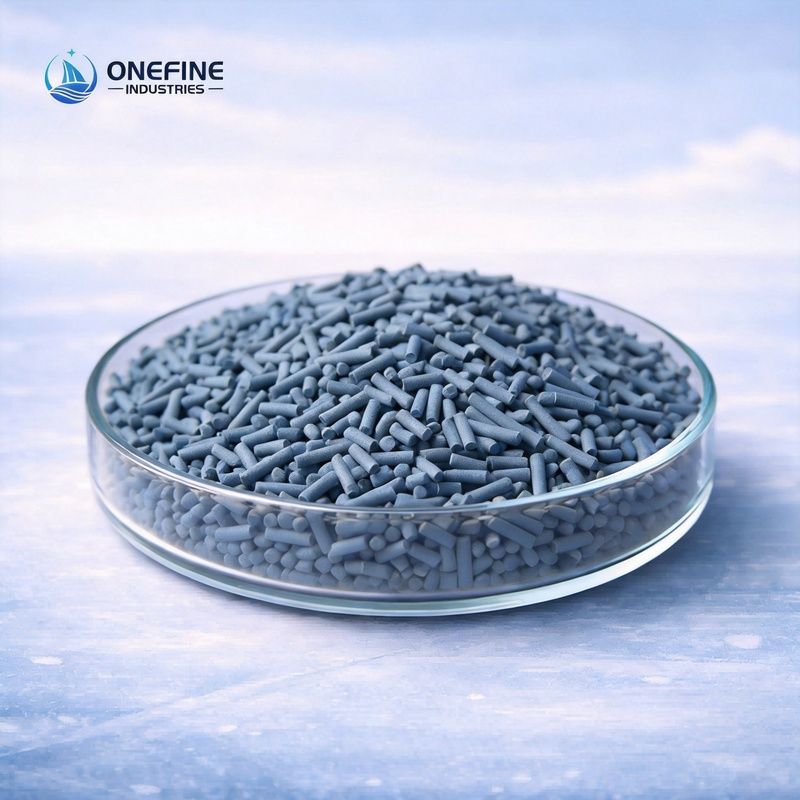
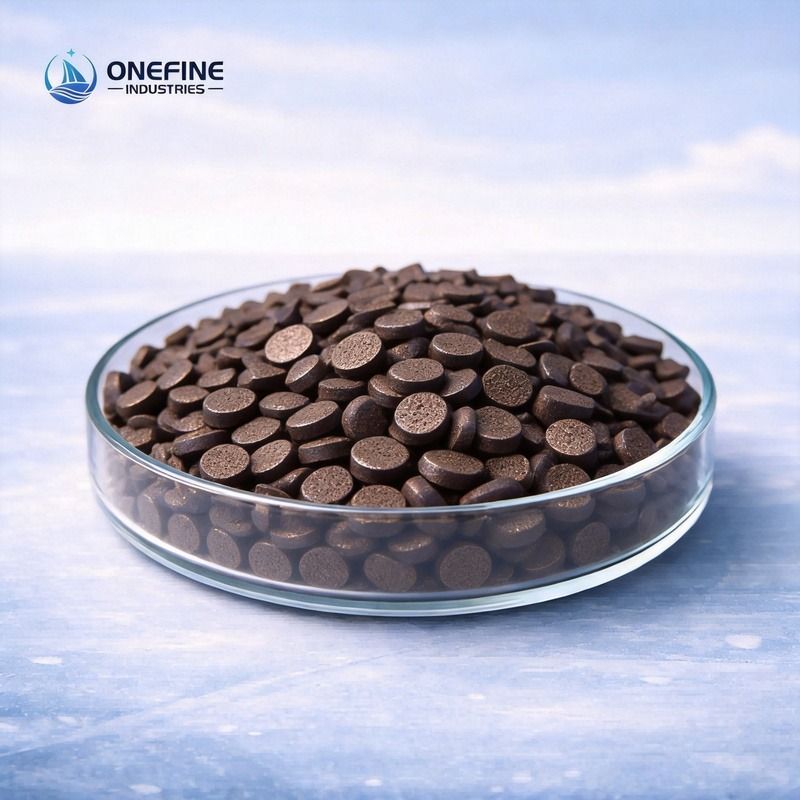
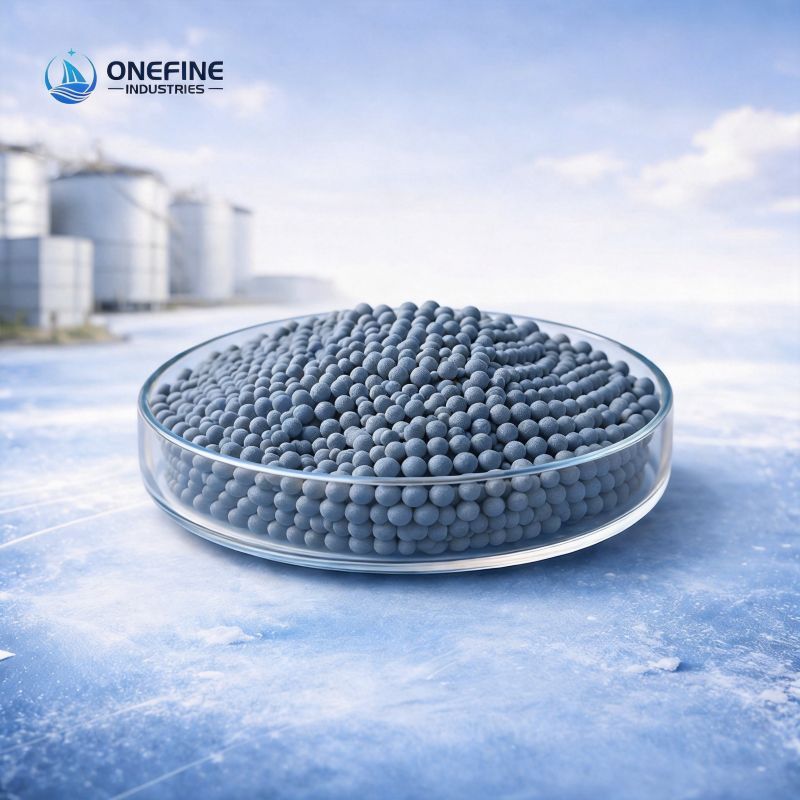
- Physical Form: Cylindrical pellets (or as specified by customer requirements)
- Active Component Dispersion: High dispersion level for enhanced activity and stability
- Pore Structure: Optimized hierarchical pore architecture with balanced micro- and mesoporosity
- Sulfur Content: Low intrinsic sulfur content for rapid activation and minimal contamination
- Mechanical Strength: Excellent crush strength and attrition resistance
- Thermal Stability: High resistance to thermal sintering and structural degradation
- Sulfur Resistance: Good tolerance to sulfur compounds in feed gas
- F-T Side Reaction: Significantly suppressed compared to conventional formulations
- Operating Temperature Range: Broad temperature window with excellent low-temperature activity
- Water-Gas Ratio: Capable of operation at reduced inlet water-gas ratios
- Service Life: Extended operational lifetime with slow deactivation rate
- Applicable Feedstocks: Compatible with natural gas, naphtha, refinery gas, residual oil, and coal-derived feedstocks
Operating Guidelines
Loading and Installation
- Ensure reactor vessel is clean and debris-free before loading
- Use appropriate equipment to minimize mechanical stress on particles
- Maintain uniform bed density to prevent channeling and ensure even distribution
- Install support media and hold-down layers as specified by process design
- Avoid dropping particles from excessive heights to prevent breakage
Activation Procedure
- Follow controlled temperature ramp schedule during initial startup
- Introduce reducing gas gradually to ensure proper phase reduction
- Monitor bed temperature and outlet composition to track progress
- Maintain appropriate water-gas ratio during activation
- Allow sufficient time before introducing full process feed
Normal Operation
- Operate within recommended temperature range for optimal performance
- Maintain water-gas ratio based on feed composition and requirements
- Monitor bed pressure drop regularly to detect fouling or bed movement
- Ensure uniform gas distribution for maximum efficiency
- Follow proper startup/shutdown procedures to minimize thermal shock
Performance Monitoring
- Regularly analyze inlet/outlet gas composition to assess conversion
- Monitor bed temperature profiles to detect hot spots or deactivation
- Track pressure drop trends to identify fouling or structural changes
- Maintain operating condition records for trend analysis
Packaging & Storage
Packaging
- Standard options: 25kg or 50kg sealed drums/bags
- Clear labeling: product name, specification, batch number, net weight, manufacturing date
- Materials protect against moisture, contamination, and physical damage
- Custom packaging solutions available upon request
Storage
- Store in dry, well-ventilated warehouse or covered area
- Protect from moisture, direct sunlight, and extreme temperature fluctuations
- Keep packaging sealed until use to prevent contamination
- Store away from acids, alkalis, and corrosive chemicals
- Avoid stacking heavy objects to prevent particle breakage
- Follow recommended shelf life guidelines
Why Choose Us
Our commitment to excellence in catalyst research, manufacturing, and customer support makes us a trusted partner globally.
With decades of catalyst development experience, our team remains at the forefront of shift catalyst technology. Our 5th generation formulation incorporates insights from fundamental research and practical industrial experience, delivering cutting-edge performance.
Every batch undergoes comprehensive quality testing to ensure consistent performance. Our state-of-the-art facilities evaluate physical properties, chemical composition, and catalytic performance, guaranteeing each shipment meets exacting quality standards.
We recognize every process is unique. Our technical team works closely with customers to optimize catalyst selection, loading patterns, and operating conditions, offering tailored solutions for specific requirements.
From initial selection through commissioning, operation, and regeneration, our support team provides expert guidance. We offer on-site assistance, process optimization, and troubleshooting to maximize value throughout the catalyst lifecycle.
Our catalysts operate in numerous industrial facilities worldwide, delivering consistent, reliable performance across diverse applications. The proven track record of our 5th generation formulation has earned global operator trust.
By enabling lower water-gas ratios and temperatures, our catalyst reduces energy consumption and emissions. Extended service life means fewer replacements, reducing waste and environmental impact.
Our 5th Generation Iron-Chromium Based CO Shift Catalyst delivers the performance, reliability, and value forward-thinking operators demand. Contact us to learn how this advanced catalyst can optimize your shift conversion process.
Related Products
Palladium Catalyst for Hydrogenation
High-Performance Palladium Catalyst for Hydrogenation, Deoxygenation, and Purification Applications
ZSM-5 Catalyst for VOCs...
High-Performance ZSM-5 Adsorbent for VOC Removal, Hydrocarbon Separation, and Industrial Gas Purification
Hydroconversion catalyst