Product Description
- Fine Desulfurization Catalyst
Product Overview
Our fine desulfurization catalyst is a high-performance multifunctional desulfurization solution based on premium activated carbon support. Designed for ultra-deep sulfur removal from various industrial gas and liquid streams, this catalyst effectively removes hydrogen sulfide (H₂S) and carbonyl sulfide (COS) from synthesis gas, liquefied petroleum gas, petroleum products, and CO₂ feedstock, while also removing small amounts of other organic sulfur compounds.
The catalyst features highly developed pore structure and extremely high specific surface area, providing abundant active sites for desulfurization reactions. Under the promotional effect of water film interfaces formed by trace moisture, the catalyst demonstrates excellent COS hydrolysis capability, converting COS into H₂S. The H₂S then reacts with trace oxygen to form elemental sulfur that deposits in the catalyst's micropores, achieving ultra-fine desulfurization performance.
This fine desulfurization catalyst delivers exceptional purification efficiency, long service life, and reliable operation across a wide range of operating conditions. It is an ideal choice for industries requiring ultra-low sulfur content in process streams, including petrochemical, chemical fertilizer, natural gas processing, and refining applications.
Core Technical Principles
The fine desulfurization catalyst operates through a combined mechanism of COS hydrolysis and H₂S oxidation, working synergistically to achieve ultra-deep sulfur removal.
COS Hydrolysis Reaction
In the presence of trace moisture, the catalyst facilitates the hydrolysis of COS:
- COS Hydrolysis: COS + H₂O → H₂S + CO₂
The water film formed on the catalyst surface plays a crucial role in promoting this reaction. The catalyst's high surface area and unique pore structure create optimal conditions for the hydrolysis reaction, enabling efficient conversion of COS to H₂S even at low concentrations. This hydrolysis function allows the catalyst to handle both inorganic and organic sulfur compounds simultaneously.
H₂S Oxidation Reaction
The H₂S from both the feed stream and COS hydrolysis reacts with trace oxygen in the presence of the catalyst:
- H₂S Oxidation: 2H₂S + O₂ → 2S + 2H₂O
The elemental sulfur produced by this reaction deposits in the catalyst's micropores, effectively removing sulfur from the gas or liquid stream. The catalyst's well-developed pore structure provides substantial capacity for sulfur deposition, ensuring long service life between regeneration or replacement cycles.
Activated Carbon Support Function
The premium activated carbon support provides multiple critical functions:
- High specific surface area offers abundant active sites and sulfur deposition space
- Developed pore structure facilitates mass transfer and reactant diffusion
- Surface chemical properties promote catalytic activity for both hydrolysis and oxidation reactions
- Excellent adsorption capability concentrates reactants on the catalyst surface, enhancing reaction efficiency
The combination of the activated carbon's adsorption properties and catalytic functionality creates a highly efficient desulfurization system that achieves ultra-low sulfur outlet concentrations.
Synergistic Reaction Mechanism
The catalyst's unique formulation enables a synergistic effect between COS hydrolysis and H₂S oxidation. As COS is hydrolyzed to H₂S on the catalyst surface, the H₂S is immediately oxidized to elemental sulfur in the same catalytic environment. This integrated approach ensures efficient removal of both organic and inorganic sulfur compounds in a single reactor stage, simplifying process design and reducing operational costs.
Key Features & Advantages
Exceptional Desulfurization Efficiency
The fine desulfurization catalyst delivers outstanding sulfur removal performance, achieving ultra-low outlet sulfur concentrations that meet the most stringent process requirements. Its dual-function capability of COS hydrolysis and H₂S oxidation ensures effective removal of both inorganic and organic sulfur compounds, providing comprehensive desulfurization in a single treatment stage.
High COS Conversion Rate
With its excellent hydrolysis activity, the catalyst achieves high COS conversion rates even at low temperatures and trace moisture conditions. The water film promotion mechanism enhances the hydrolysis reaction efficiency, ensuring that organic sulfur compounds are effectively converted and removed. This makes the catalyst particularly valuable for applications where COS is a significant sulfur component.
Large Sulfur Capacity
The catalyst's highly developed pore structure and high specific surface area provide substantial sulfur deposition capacity. This large sulfur capacity translates to extended service life between catalyst replacement or regeneration cycles, reducing operational costs and production downtime. The well-designed pore architecture optimizes sulfur deposition while maintaining mass transfer efficiency.
Multifunctional Sulfur Removal
Beyond H₂S and COS removal, the catalyst also effectively removes small amounts of other organic sulfur compounds. This multifunctional capability eliminates the need for multiple desulfurization stages in many applications, simplifying process flow and reducing capital and operating expenses. A single catalyst bed can handle mixed sulfur species commonly found in industrial process streams.
Wide Application Versatility
Suitable for various feedstocks including synthesis gas, liquefied petroleum gas, petroleum products, and CO₂ streams, the catalyst demonstrates consistent performance across diverse application scenarios. Its adaptability to different gas and liquid phase conditions makes it a versatile solution for multiple industries and process configurations.
Stable Operation & Long Service Life
The premium activated carbon support and optimized active component formulation ensure excellent catalyst stability and resistance to deactivation. The catalyst maintains high activity over extended operating periods, delivering consistent desulfurization performance throughout its service life. This reliability reduces the frequency of catalyst replacement and associated operational disruptions.
Low Operating Temperature Requirement
The catalyst exhibits high activity at relatively low operating temperatures, reducing energy consumption compared to high-temperature desulfurization processes. The low-temperature operation also minimizes side reactions and thermal degradation of process streams, preserving product quality while achieving effective sulfur removal.
Environmental & Operational Safety
By efficiently removing sulfur compounds, the catalyst helps operators meet environmental emissions regulations and protect downstream equipment and catalysts from sulfur poisoning. The solid sulfur deposition mechanism avoids the production of liquid sulfur waste streams that require additional handling, simplifying waste management and reducing environmental impact.
Application Scenarios
Synthesis Gas Purification
In synthesis gas production processes, sulfur compounds including H₂S and COS must be removed to protect downstream catalysts and meet process purity requirements. The fine desulfurization catalyst provides ultra-deep sulfur removal, ensuring syngas meets stringent purity specifications for applications such as methanol synthesis, ammonia production, and Fischer-Tropsch processes.
Liquefied Petroleum Gas (LPG) Treatment
LPG streams typically contain various sulfur compounds that must be removed to meet product specifications and prevent corrosion in downstream processing. The catalyst effectively removes both H₂S and COS from LPG, producing low-sulfur LPG that meets quality standards for fuel and petrochemical feedstock applications.
Petroleum Product Refining
In petroleum refining, various product streams require sulfur removal to meet environmental regulations and product quality standards. The fine desulfurization catalyst provides an effective solution for polishing sulfur from petroleum products, achieving ultra-low sulfur levels that comply with strict fuel specifications.
CO₂ Feedstock Purification
CO₂ streams from various sources, including flue gas recovery, fermentation, and hydrogen production, often contain sulfur impurities that must be removed before further processing or utilization. The catalyst efficiently removes H₂S and COS from CO₂ feedstock, making it suitable for applications such as urea production, food-grade CO₂, and carbon capture utilization and storage (CCUS).
Natural Gas Processing
Natural gas streams contain various sulfur compounds that require removal for pipeline transmission and end-use applications. The fine desulfurization catalyst provides effective sulfur polishing, ensuring natural gas meets pipeline specifications and protecting downstream processing equipment from corrosion and catalyst poisoning.
Petrochemical Plant Off-Gas Treatment
Petrochemical processes generate various off-gas streams containing sulfur compounds that must be treated before release or further processing. The catalyst efficiently removes these sulfur compounds, ensuring compliance with environmental emissions regulations and enabling recovery of valuable hydrocarbon streams.
Chemical Process Gas Treatment
Various chemical production processes require sulfur removal from process gas streams to protect catalysts, prevent corrosion, and ensure product quality. The fine desulfurization catalyst provides reliable desulfurization performance across a range of chemical process applications, delivering consistent ultra-low sulfur output.
Technical Specifications
- Catalyst Type: Activated carbon-based fine desulfurization catalyst
- Support: Premium activated carbon with highly developed pore structure
- Active Components: Optimized formulation for hydrolysis and oxidation
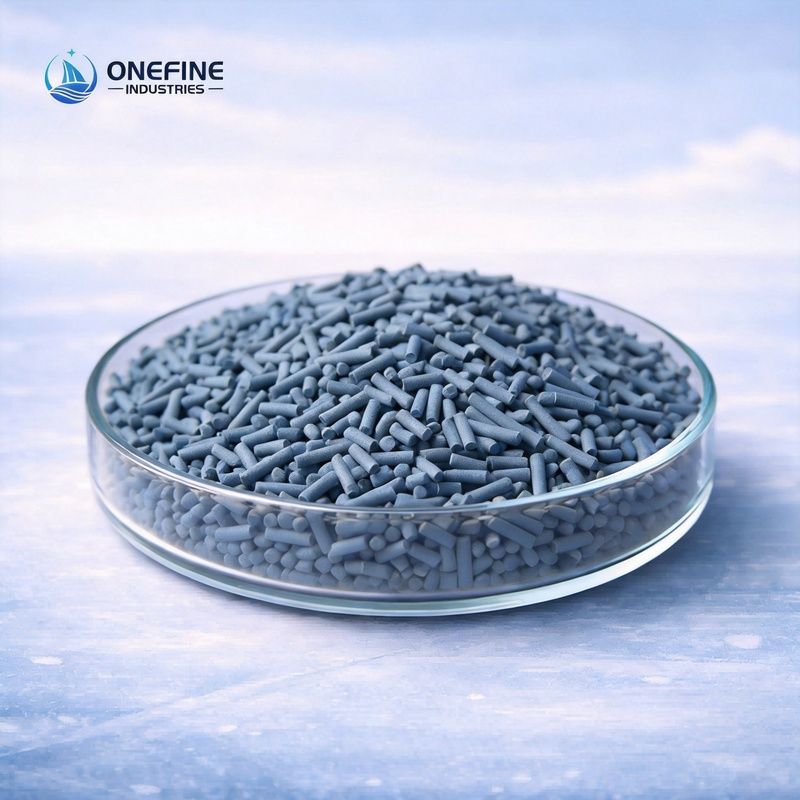
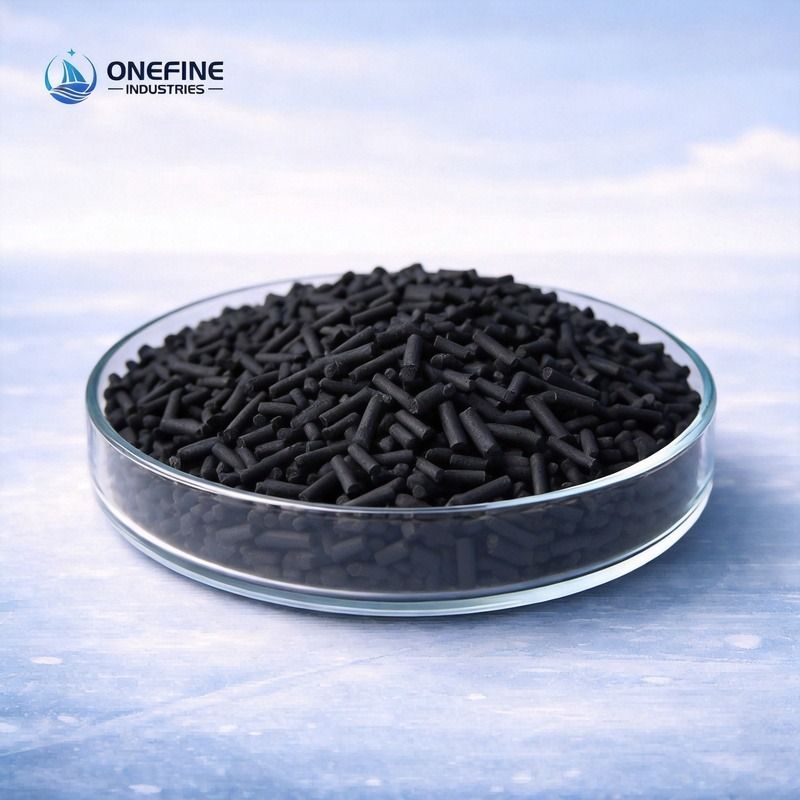
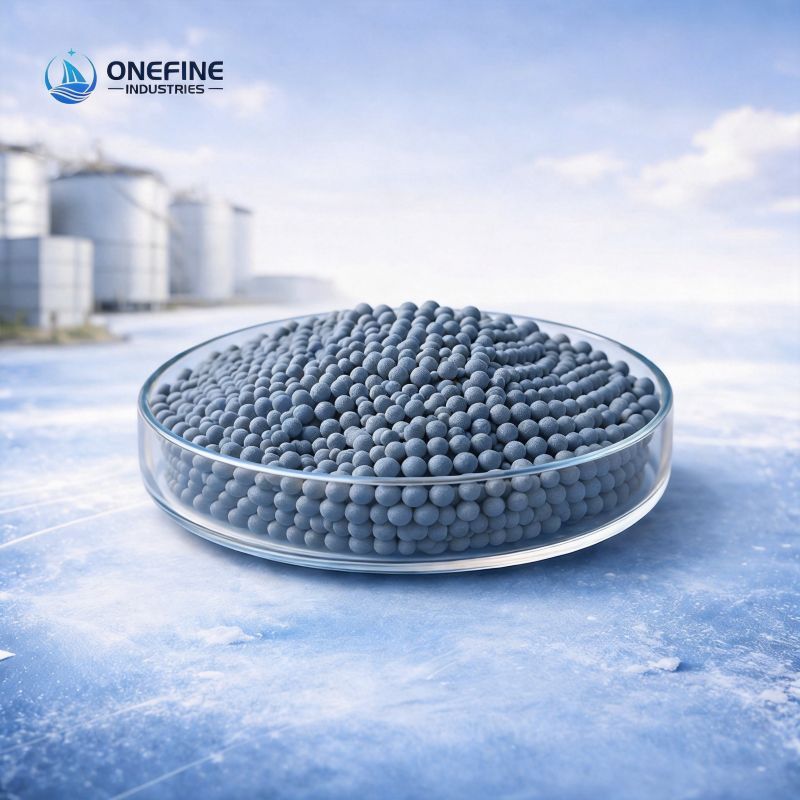
- Appearance: Cylindrical or spherical particles
- Specific Surface Area: Extremely high surface area for enhanced activity
- Pore Structure: Highly developed pore system with optimized pore size distribution
- Sulfur Capacity: High sulfur deposition capacity
- COS Conversion: High COS hydrolysis conversion rate
- H₂S Removal: Excellent H₂S oxidation and removal efficiency
- Operating Temperature: Suitable for low to moderate temperature operation
- Operating Pressure: Adaptable to wide pressure range
- Service Life: Extended service life with stable performance
Note: Detailed technical specifications are available upon request and can be customized based on specific application requirements and operating conditions.
Operating Instructions
Catalyst Loading
- Ensure reactor is clean and free of debris before catalyst loading
- Handle catalyst carefully to avoid breakage and dust generation
- Load catalyst uniformly to ensure even gas/liquid flow distribution
- Use appropriate support grids and hold-down materials to prevent catalyst movement
- Follow recommended bed height and configuration for optimal desulfurization performance
Startup Procedures
- Pre-humidify catalyst bed with appropriate moisture content before introducing feed
- Gradually introduce process stream at reduced flow rate initially
- Monitor bed temperature and outlet sulfur concentration during startup
- Increase flow rate and operating parameters gradually to design conditions
- Verify outlet sulfur levels meet specifications before normal operation
Operating Conditions
- Maintain operating temperature within recommended range for optimal activity
- Ensure adequate trace moisture content to support COS hydrolysis function
- Monitor and control oxygen content as required for H₂S oxidation
- Regularly monitor pressure drop across catalyst bed
- Test outlet sulfur concentration periodically to verify performance
- Maintain uniform flow distribution through catalyst bed
Regeneration Considerations
- Monitor catalyst activity through outlet sulfur concentration trends
- Plan regeneration or replacement when sulfur capacity approaches saturation
- Follow recommended regeneration procedures for optimal activity recovery
- Ensure proper safety procedures during regeneration operations
Shutdown Procedures
- Gradually reduce feed flow rate before shutdown
- Maintain appropriate bed temperature during cool-down
- Use inert gas for purging if required for maintenance
- Cool catalyst bed to ambient temperature before reactor opening
- Follow proper lockout/tagout procedures for maintenance work
Packaging & Storage
Packaging
- Available in various packaging sizes including drums, super sacks, or custom options
- Each package clearly labeled with product name, specifications, batch number, and production date
- Moisture-resistant packaging protects catalyst from humidity and contamination during transport and storage
- Packaging designed to prevent particle attrition during handling
Storage
- Store in dry, well-ventilated area away from direct sunlight
- Avoid contact with moisture, acids, alkalis, and other corrosive substances
- Keep packaging intact to prevent contamination and moisture absorption
- Store away from sources of ignition or high temperature
- Handle with care to avoid dropping or impact that could damage catalyst particles
- Extended shelf life under proper storage conditions
Related Products
Palladium Catalyst for Hydrogenation
High-Performance Palladium Catalyst for Hydrogenation, Deoxygenation, and Purification Applications
ZSM-5 Catalyst for VOCs...
High-Performance ZSM-5 Adsorbent for VOC Removal, Hydrocarbon Separation, and Industrial Gas Purification
Hydroconversion catalyst